
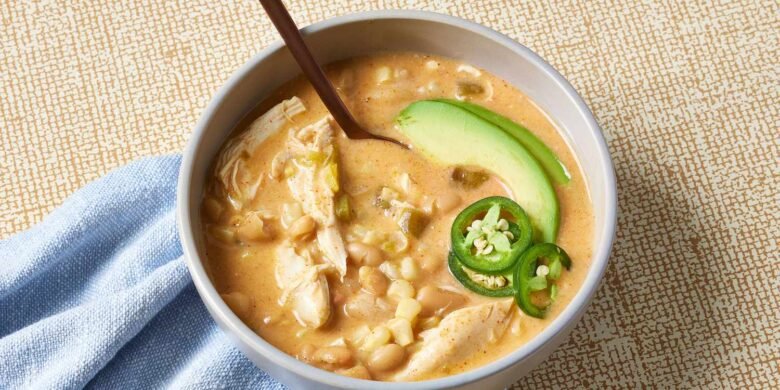
Chili is a dish that inspires a specific and heated loyalty — the kind of loyalty that makes people argue about beans, about tomatoes, about whether beef is the only correct protein, about whether anything not made in Texas qualifies as chili at all. The red chili partisans are vocal and numerous and occasionally unreasonable about their preferences, which is their right. But somewhere in the back of the conversation, quieter and less belligerent, is white chicken chili — a dish with no tradition of argument behind it, no regional politics attached to it, and a following built not on loyalty to a specific history but on the simpler grounds that it is delicious.
White chicken chili is not a regional dish with a protected origin. It appeared in American cooking in the late twentieth century as a lighter, cream-enriched alternative to the beef-and-red-chile tradition and has spread entirely on merit. Where traditional red chili is dark, deeply spiced, and built on the long cooking of tough beef, white chicken chili is lighter, brighter, and built on the combination of white beans, mild green chiles, tender chicken, and a creamy broth enriched with either cream cheese or sour cream at the end. It is warm and satisfying without being heavy. It is spiced without being aggressive. It is the kind of food that a large group of people with varying spice tolerances and preferences can all eat enthusiastically, which is a quality worth more than any amount of Texas authenticity.
The slow cooker version is specifically excellent — the long cook develops the flavors of the green chiles and the spices into the broth in a way that a thirty-minute stovetop version cannot achieve, and the beans, which in the slow cooker become creamy and fully integrated with the broth, produce a chili with a depth and body that is the defining quality of a well-made white chicken chili.
Why White Chicken Chili Belongs in the Slow Cooker
White chicken chili has two characteristics that make it specifically suited to the slow cooker’s method.
The beans. Great white chili requires beans that have absorbed the flavors of the broth around them and that have softened to the point where some of them partially dissolve into the liquid, thickening it naturally and contributing their starch to the body of the chili. This kind of bean integration is not achievable in thirty minutes on the stovetop — it requires the extended cook time that the slow cooker provides. After six to eight hours on LOW, the white beans in this chili have spent the entire cook surrounded by chicken broth, green chiles, cumin, and garlic, absorbing those flavors throughout. A portion of them have partially softened and contributed their starch to the broth, thickening it from the inside. The remainder hold their shape but are fully flavored — not the firm, slightly resistant beans that a thirty-minute stovetop chili produces, but soft, creamy, deeply flavored beans that are specifically what white chili should be.
The chicken. Chicken cooked low and slow in a flavorful broth for six to eight hours develops a tenderness and a depth of flavor that quickly cooked chicken does not. The chicken in slow cooker white chili absorbs the cumin and garlic and chile flavors throughout — not just on the surface but through every fiber. When it is shredded at the end of the cook and returned to the broth, the shredded pieces carry those flavors into every spoonful.
The cream cheese — which goes in at the very end, at KEEP WARM temperature — produces the creamy, slightly tangy broth that distinguishes white chicken chili from regular chicken and bean soup. The same careful handling as the Alfredo recipe: cool temperature, gradual addition, continuous stirring.
The Chicken
Boneless, skinless chicken breasts are the most commonly used chicken for white chili — their mild flavor allows the green chile and cumin profile to be primary, and they shred cleanly into long, white pieces that distribute evenly through the chili.
Boneless, skinless chicken thighs produce a richer, more flavorful chili. Dark meat’s higher fat content enriches the broth and the shredded thigh meat has more flavor than shredded breast meat. For the most satisfying white chili, thighs are the superior choice — the trade is that the finished chili is slightly less pristine in appearance (thigh meat shreds into smaller, less uniform pieces than breast meat) and slightly more indulgent.
Rotisserie chicken — shredded and added in the final thirty minutes of cooking — is the fastest option. The rotisserie method produces an excellent white chili with significantly reduced cook time. The broth will be slightly less enriched from the chicken’s absence during the long cook, but the convenience is considerable.
The preparation. Season the chicken with salt, cumin, garlic powder, and chili powder before adding to the slow cooker. The seasoning applied directly to the chicken seasons it from the inside out rather than relying entirely on the broth to flavor the meat.
The Beans
White beans are the defining ingredient that gives white chicken chili its character — both its color (the beans lighten the broth) and its texture (their starch thickens the chili naturally).
Cannellini beans (white kidney beans) are the most commonly used and produce the creamiest, most fully integrated result. Their large size means they partially dissolve into the broth during the long cook, contributing the natural thickening that makes white chili specifically satisfying. Canned cannellini beans, drained and rinsed, are the practical default.
Great Northern beans are the alternative most similar to cannellini — slightly firmer, slightly less starchy, but producing a very similar result. They hold their shape somewhat better through the long cook than cannellini.
Navy beans are smaller and starchier than both — they dissolve more readily into the broth and produce a thicker, smoother chili. For a chili with more visible whole beans and slightly less natural thickening, use Great Northern; for a creamier, more porridge-like consistency, use navy beans.
The two-bean trick. Mash one can of beans with a fork before adding — the mashed beans dissolve into the broth immediately and begin thickening the chili from the first hour of the cook. The remaining whole beans provide texture and visual presence. This technique, borrowed from stovetop white bean soups, produces a naturally thickened chili without any cornstarch or cream cheese required for body — those are used only for creaminess.
The Green Chiles
Green chiles are the flavor signature of white chicken chili — the mild, slightly smoky, slightly sweet chile note that distinguishes this chili from any other chicken and bean preparation.
Canned diced green chiles — mild, medium, or hot — are the standard and the most practical option. The mild variety produces a gentle, accessible chile flavor that most adults and many children find comfortable. Medium chiles add a clear but not aggressive heat. Two four-ounce cans for a full batch is the starting point.
Hatch green chiles — when in season (late summer) or available roasted and frozen — produce a significantly more complex, more specifically chile-flavored chili than standard canned chiles. The smoky, roasted character of Hatch chiles adds a depth that standard canned green chiles lack. If Hatch chiles are available, use them.
Fresh poblano peppers — roasted directly over a gas flame or under the broiler until the skin is charred, then peeled and diced — produce the most flavorful green chile component. Two medium poblanos replace the two cans. The charring produces a smoky depth that is specifically excellent in white chili.
Jalapeños — one or two, seeded and diced — add heat beyond what the mild green chiles provide. For a spicier version, add alongside the standard green chiles rather than replacing them.
The Spice Blend
White chicken chili’s spice profile is built differently from red chili — no dried red chiles, no dark chile powder, no chipotle. The spices are warmer and more aromatic, suited to the brighter, lighter profile of the white broth.
Ground cumin — one and a half teaspoons — is the defining warm spice. More cumin than might seem intuitive, because it mellows during the long slow cook and needs sufficient quantity to remain present in the finished chili.
Chili powder — one teaspoon — adds a mild chile warmth and complexity. Standard American chili powder (a blend of chile, cumin, garlic, and oregano) rather than pure ground chile.
Garlic powder — one teaspoon — adds aromatic depth that supplements the fresh garlic in the broth base.
Onion powder — half a teaspoon — adds a background sweetness and savory depth.
Dried oregano — half a teaspoon — adds the herbal note that bridges the cumin and the chile.
Smoked paprika — half a teaspoon — adds a subtle smokiness that compensates slightly for the absence of char from the dried red chiles of traditional chili.
Cayenne — a quarter teaspoon — adds background warmth.
Fresh garlic — four to five cloves, minced — adds aromatic depth that the dried garlic powder cannot replicate. Both forms together produce a more complete garlic note.
The Broth and the Cream
Chicken broth — three cups — is the liquid base. Good quality broth produces a more flavorful chili; bone broth produces the richest, most body-rich result.
The creamy finish. White chicken chili’s defining characteristic — the creamy, slightly tangy broth — comes from one of several options added at the KEEP WARM stage at the end of the cook.
Cream cheese — four to six ounces, cubed — is the most stable and most widely used option. Full-fat cream cheese melts smoothly into the warm broth at KEEP WARM temperature, producing a creamy, slightly tangy, stable sauce. The same logic as the Alfredo recipe: add at KEEP WARM, not during the active cook.
Sour cream — half a cup — produces a tangier, slightly lighter result than cream cheese. It must be tempered before adding — ladle a cup of warm broth into the sour cream and whisk until smooth, then stir back into the slow cooker. The tempering prevents curdling.
Heavy cream — half a cup — produces the richest result without the tang. Added directly to the warm broth at KEEP WARM temperature.
The “lighter” option. Greek yogurt, full-fat, tempered the same way as sour cream, produces the lowest-fat creamy finish. Its tang is the most assertive of the options and complements the cumin and green chile flavor profile well.
Tips for Perfect Slow Cooker White Chicken Chili
1. Season the chicken directly. Salt, cumin, garlic powder, and chili powder applied to the chicken before it goes into the slow cooker produce chicken that is seasoned from the inside out, not simply by the surrounding broth.
2. Mash one can of beans before adding. The partially mashed beans dissolve into the broth from the first hour of the cook, producing natural thickening without requiring any additional thickener at the end. The remaining whole beans provide texture.
3. Add cream cheese at KEEP WARM — not during the cook. Cream cheese added to a slow cooker running on LOW or HIGH during the braise melts unevenly and can become grainy or separate. Added at KEEP WARM temperature at the very end, stirred continuously, it produces the smooth, creamy broth the recipe requires.
4. Shred the chicken in the slow cooker. After removing the chicken to a cutting board, shred with two forks and return immediately to the slow cooker. Shredded chicken left out of the broth for more than a few minutes begins to dry out.
5. Use both dried and fresh garlic. Dried garlic powder provides consistent, evenly distributed background garlic flavor; fresh garlic provides the aromatic sharpness that dried cannot replicate. Both together produce a more complete garlic note than either alone.
6. Taste and adjust before the cream cheese goes in. The broth before the cream cheese is added is the correct moment to assess and adjust seasoning — the cream cheese will mellow and round the flavors after it is incorporated. If the spice level or salt level needs adjustment, this is the window to make those changes with the clearest view of what is needed.
7. Serve with acidic toppings. The cream cheese or sour cream makes the chili rich — the contrast of acidic, fresh toppings (lime juice, fresh pico de gallo, pickled jalapeños) is what prevents the richness from becoming cloying. The toppings are as important as the chili itself.
8. Squeeze lime at serving. Fresh lime juice over the bowl immediately before eating is the brightness hit that makes every other flavor more vivid. The same principle as fresh lemon in the chicken soup and the Greek lemon chicken.
Serving the White Chicken Chili
In a bowl — the standard and most satisfying presentation. A generous ladle of chili in a wide, deep bowl, with the toppings arranged across the top. Cornbread or tortilla chips alongside for dipping.
With the toppings bar. The self-serve toppings setup — sour cream, shredded cheddar, diced avocado, fresh cilantro, pickled jalapeños, lime wedges, hot sauce, tortilla chips — allows each person to finish their bowl to their preference. The toppings bar is the format that makes white chicken chili a party dish as well as a weeknight dinner.
Over rice. A scoop of steamed jasmine or white rice in the bottom of the bowl, the chili ladled over the top, absorbs the creamy broth in the way that makes the dish more substantial and more filling.
The Complete Table
Toppings — the bar:
- Sour cream or Mexican crema — essential richness
- Shredded Monterey Jack or cheddar
- Diced avocado or guacamole
- Fresh cilantro, chopped
- Lime wedges — for squeezing
- Sliced fresh or pickled jalapeños — for heat
- Diced red onion — for sharpness
- Hot sauce alongside
Sides:
- Warm cornbread — the most natural accompaniment
- Tortilla chips — for scooping and dipping
- Simple green salad with lime vinaigrette
- Warm flour tortillas
- Mexican rice
Drinks:
- A cold Mexican lager — Modelo, Pacifico
- A crisp Sauvignon Blanc or unoaked Chardonnay
- Sparkling water with lime
The Day-After White Chicken Chili Uses
Leftover slow cooker white chicken chili is one of the best refrigerator assets in cold weather cooking. Reheated gently with a splash of broth to loosen (it thickens significantly overnight as the beans continue to absorb liquid), it is better the next day — the flavors have integrated further and the beans have softened more completely. As a burrito filling — the chili spooned into a large flour tortilla with shredded cheese, diced avocado, and a drizzle of sour cream, folded and pressed in a skillet — it is one of the best burritos made from a slow cooker dish. Ladled over baked potatoes with shredded cheese and green onions, it becomes the best possible loaded baked potato. Used as the filling for a white chicken chili quesadilla — pressed between flour tortillas with Monterey Jack, cooked in a dry skillet until golden and crispy — it produces a quesadilla of specific excellence. The chili broth alone, strained of its beans and chicken and reduced by half, becomes an intensely flavored white chile broth suitable for cooking rice or as the base for a chicken and vegetable soup.
Easy Variations
- White chicken chili with corn. Add one cup of frozen or canned corn (drained) to the slow cooker at the start. The corn adds sweetness and a textural contrast against the beans and chicken. Particularly good with the Mexican crema and cilantro toppings.
- Spicy white chicken chili. Increase the cayenne to half a teaspoon, add one or two seeded jalapeños diced into the broth, and use medium or hot canned green chiles rather than mild. Finish with a drizzle of hot sauce and pickled jalapeños.
- White chicken chili with salsa verde. Add half a cup of good quality salsa verde (tomatillo-based) to the slow cooker alongside the broth. The tomatillo adds brightness, acidity, and a specifically green chile character that deepens the overall flavor profile.
- Turkey white chili. Replace the chicken with ground turkey, browned in a skillet first, or with leftover shredded turkey from Thanksgiving or any turkey roast. The turkey version is the most natural post-Thanksgiving use of leftover white meat and produces an outstanding white chili with the flavors of the slow cook fully developed.
- Slow cooker white chili with hominy. Replace one can of white beans with one can of hominy (drained). Hominy — dried corn kernels treated with alkali — adds a unique texture, a distinctly corn flavor, and a specifically Southwestern character that deepens the chili toward a posole-adjacent direction.
Make-Ahead and Storage
Make-ahead: White chicken chili is an ideal make-ahead dish. The entire recipe can be made up to three days ahead, stored without the cream cheese addition, and reheated with the cream cheese added fresh at serving. The flavors improve significantly over the first two days. This is specifically recommended for serving at a party — make Friday, reheat and add cream cheese Saturday, and the chili is at its best.
Refrigerator: Keeps in an airtight container for four to five days. The chili thickens considerably as the beans continue to absorb liquid during refrigeration — add a splash of broth when reheating to restore the correct consistency.
Freezer: Freeze without the cream cheese or sour cream for up to three months in airtight containers or freezer bags. Dairy-enriched chili separates and becomes grainy during freezing. Add fresh cream cheese when reheating from frozen. Thaw overnight in the refrigerator and reheat gently on the stovetop.
Shopping List
The Chicken
- 2 lbs (900g) boneless, skinless chicken breasts or thighs
The Beans
- 2 cans (15 oz / 425g each) cannellini or Great Northern beans, drained and rinsed
The Green Chiles
- 2 cans (4 oz / 115g each) diced mild green chiles (or 2 roasted poblanos)
The Broth
- 3 cups (720ml) good quality chicken broth
The Aromatics
- 1 medium yellow onion, diced
- 4–5 garlic cloves, minced
- 1 jalapeño, seeded and diced (optional)
The Spices
- 1½ tsp ground cumin
- 1 tsp chili powder
- 1 tsp garlic powder
- ½ tsp onion powder
- ½ tsp dried oregano
- ½ tsp smoked paprika
- ¼ tsp cayenne pepper
- 1½ tsp salt, plus more to taste
The Creamy Finish
- 4–6 oz (115–170g) full-fat cream cheese, cubed — added at KEEP WARM
For Serving
- Sour cream, shredded cheddar, diced avocado, fresh cilantro, lime wedges, hot sauce, tortilla chips
Slow Cooker White Chicken Chili
Two pounds of boneless, skinless chicken seasoned with cumin, chili powder, and garlic powder, slow-cooked on LOW for six to eight hours with cannellini beans (one can mashed for natural thickening, one can left whole), diced green chiles, chicken broth, onion, garlic, and a blend of warm spices. The chicken shredded and returned to the broth. Full-fat cream cheese cubed and stirred in gradually at KEEP WARM until the broth is smooth, creamy, and deeply flavored. Served in wide bowls with lime squeezed over the top and a full toppings bar of sour cream, shredded cheese, avocado, cilantro, and jalapeños alongside. The white chicken chili that needs no argument to justify its existence.
- Total Time: 6 hours 20 minutes
- Yield: 6–8 servings 1x
Ingredients
The Chicken
- 2 lbs (900g) boneless, skinless chicken breasts or thighs
- 1 tsp salt
- ½ tsp ground cumin
- ½ tsp garlic powder
- ¼ tsp chili powder
The Chili Base
- 2 cans (15 oz / 425g each) cannellini or Great Northern beans, drained and rinsed
- 2 cans (4 oz / 115g each) diced mild green chiles
- 3 cups (720ml) chicken broth
- 1 medium yellow onion, diced
- 4–5 garlic cloves, minced
- 1 jalapeño, seeded and diced (optional)
The Spice Blend
- 1½ tsp ground cumin
- 1 tsp chili powder
- 1 tsp garlic powder
- ½ tsp onion powder
- ½ tsp dried oregano
- ½ tsp smoked paprika
- ¼ tsp cayenne pepper
- ½ tsp salt, to start
The Creamy Finish
- 4–6 oz (115–170g) full-fat cream cheese, cut into 1-inch cubes — added at the very end
For Serving
- Fresh lime wedges
- Sour cream or crema
- Shredded Monterey Jack or cheddar
- Diced avocado
- Fresh cilantro, chopped
- Sliced jalapeños
- Tortilla chips or warm cornbread
Instructions
- Season and prepare the chicken. Pat the chicken dry and season on both sides with the salt, cumin, garlic powder, and chili powder. Set aside.
- Prepare the beans. Drain and rinse both cans of beans. In a small bowl, mash one full can of beans with a fork until mostly smooth — a few lumps are fine. Leave the second can whole.
- Build the slow cooker. Add the diced onion, minced garlic, and diced jalapeño (if using) to the slow cooker. Add both the mashed beans and the whole beans. Pour in the green chiles and chicken broth. Add all the spice blend ingredients and stir to combine.
- Add the chicken. Nestle the seasoned chicken pieces into the chili base, pushing them down so they are mostly submerged.
- Cook. Set to LOW and cook for 6 to 8 hours, until the chicken is completely cooked through and shreds easily, and the beans have softened and the broth has thickened from the dissolved mashed beans.
- Shred the chicken. Transfer the chicken to a cutting board and shred with two forks into bite-sized pieces. Return the shredded chicken to the slow cooker immediately and stir to combine.
- Taste and adjust. Before adding the cream cheese, taste the chili and adjust salt, spice, and seasoning. This is the correct moment — the cream cheese will mellow the flavors after it is added.
- Add the cream cheese. Switch the slow cooker to KEEP WARM. Add the cubed cream cheese to the chili. Stir continuously, allowing the cream cheese cubes to melt gradually into the warm broth. This takes two to three minutes of stirring — be patient and keep the heat at KEEP WARM to prevent the cream cheese from becoming grainy. The broth should become smooth, creamy, and slightly thickened.
- Taste again. After the cream cheese has fully incorporated, taste the chili one more time and adjust salt and seasoning.
- Serve. Ladle generously into wide bowls. Squeeze fresh lime over each bowl immediately before eating. Set out the full toppings bar and allow guests to finish their bowl to their preference.
Notes
- Mash one can of beans — it changes the texture of the entire chili. The partially mashed beans dissolve into the broth from the first hour of the slow cook, producing natural thickening without any cornstarch or additional thickener. The whole beans provide texture and visual presence. This two-bean approach is the single most impactful technique in white chicken chili and produces a chili that is noticeably more cohesive and satisfying than all-whole-bean versions.
- Add cream cheese at KEEP WARM — not during the slow cook. Cream cheese added to a slow cooker on LOW or HIGH during the braise melts unevenly and can separate into a grainy, slightly oily texture. At KEEP WARM temperature, stirred continuously and added gradually, it melts smoothly and produces the creamy broth the recipe requires. This instruction applies even if KEEP WARM feels like an inadequate temperature — the cream cheese melts very readily in the warm broth and the lower temperature is specifically what prevents graininess.
- Season the chicken directly. Cumin and garlic powder applied to the chicken before it goes into the slow cooker produces chicken that is seasoned from the inside out — not just by the surrounding broth. This is the step that makes the shredded chicken taste specifically of the chili rather than of neutral chicken that has been cooked in a flavorful broth.
- Taste before adding cream cheese — and after. The cream cheese mellows and softens the spice and salt flavors after it is incorporated. Taste before adding to assess the true spice level, and again after to confirm the final balance. The pre-cream-cheese window is the correct moment to add heat or salt; the post-cream-cheese tasting confirms the finished balance.
- Squeeze lime at serving — every bowl. The cream cheese-enriched chili is rich and slightly mellow. Fresh lime juice squeezed over the bowl immediately before eating adds the brightness that prevents the richness from becoming cloying and makes every other flavor more vivid. This is not optional.
- The chili thickens overnight. Refrigerated white chicken chili becomes significantly thicker as the beans continue to absorb liquid. Always add a splash of broth when reheating to restore the correct consistency. This thickening is not a sign of a problem.
- Toppings complete the dish. The chili is the foundation; the toppings are as important as the chili itself. Cool, acidic, crunchy, and fresh toppings — lime, cilantro, jalapeños, avocado, tortilla chips — provide the contrast that makes each spoonful interesting rather than uniformly rich.
- Prep Time: 15 minutes
- Cook Time: 6–8 hours (on LOW)
- Category: Comfort Food, Main Dish
- Method: Slow Cooking
- Cuisine: American
- Diet: Dairy-Free, Gluten-Free
Frequently Asked Questions
Why is my white chicken chili watery? Watery white chili has two common causes. First: the beans were not mashed before adding — the mashed bean technique dissolves starch into the broth from the start and is the primary natural thickening mechanism in this recipe. Second: the cream cheese was added at too high a temperature and separated, producing a greasy layer on top and watery liquid underneath rather than a creamy emulsified broth. For an already-watery chili: mix one tablespoon of cornstarch with two tablespoons of cold water and stir into the chili at KEEP WARM temperature. Alternatively, ladle out two cups of the chili beans and broth, blend until smooth, and stir back in — the blended beans thicken the chili naturally without any additives.
Can I use dried beans instead of canned? Yes — dried beans in a slow cooker are an excellent approach, but they require soaking overnight and a longer cook time. Soak one pound of dried cannellini or Great Northern beans overnight in cold water, drain and rinse, and add to the slow cooker with everything else. Cook on LOW for eight to ten hours — the beans need the full time to soften completely. Do not add salt or acidic ingredients (like the green chiles) at the start — acid prevents beans from softening. Add the green chiles and salt in the final two hours of the cook. The benefit of dried beans is the naturally thicker, more starchy broth they produce; the trade-off is the planning and the longer cook time.
Can I make this without cream cheese for a dairy-free version? Yes. For a dairy-free creamy white chili, replace the cream cheese with four ounces of full-fat coconut cream (the solid cream from a chilled can of coconut milk). The coconut cream melts smoothly into the broth at KEEP WARM temperature and adds creaminess with a very subtle coconut note that is less detectable than expected against the cumin and green chile flavors. Alternatively, blend one additional can of drained beans with a quarter cup of broth until very smooth and stir the resulting paste into the chili — this is the most neutral dairy-free thickening option and produces a chili that is thick and creamy without any dairy. Cashew cream (soaked raw cashews blended with water) is another excellent dairy-free alternative.
How do I make this spicier? Several approaches, combinable for maximum effect: use medium or hot canned green chiles rather than mild; add one to two additional seeded jalapeños or one seeded serrano pepper to the chili base; increase the cayenne from a quarter teaspoon to half a teaspoon or a full teaspoon; add one to two teaspoons of hot sauce (Tabasco, Crystal, or Frank’s RedHot) directly to the broth; add one canned chipotle pepper in adobo sauce, minced, for smoky heat alongside the standard green chile heat. Offer additional hot sauce at the table for individual heat adjustment.
Can I cook this on HIGH to save time? Yes — HIGH for three to four hours produces a cooked, shreddable chicken and a well-flavored chili. The beans will be somewhat less fully integrated with the broth than the six to eight-hour LOW version, and the overall depth of flavor will be slightly less developed. The cream cheese addition and the technique for adding it are identical regardless of cook setting. HIGH is a practical option for weeknights where the full eight hours is not available; LOW produces the best chili.
What is the best way to thicken the chili without cream cheese? Several options, in order of effectiveness: mash one full can of beans before adding (the primary technique in this recipe, producing thick, naturally starchy broth from the start); blend two cups of the finished chili and stir back in; add a cornstarch slurry (one tablespoon cornstarch mixed with two tablespoons cold water, stirred in during the final twenty minutes on HIGH); stir in a small amount of masa harina (corn flour) mixed with water — one tablespoon dissolved in two tablespoons of cold water — for a naturally corn-flavored thickener that is specifically appropriate for a Southwestern chili.
What makes white chili “white”? The “white” in white chicken chili refers to both the color of the chili and the ingredients that produce it. Traditional red chili is dark from dried red chiles (ancho, guajillo, New Mexico), dark from the long-browned beef, and dark from the tomatoes that form its base. White chicken chili uses white beans rather than kidney or pinto beans, chicken rather than beef, green chiles (which are mild and pale rather than dark and concentrated) rather than dried red chiles, and chicken broth rather than tomato-based sauce — producing a chili that is pale, creamy, and light in color. The cream cheese or sour cream finish reinforces the pale, creamy appearance. The “white” is accurate: the chili is genuinely and specifically a different palette from the red tradition.