
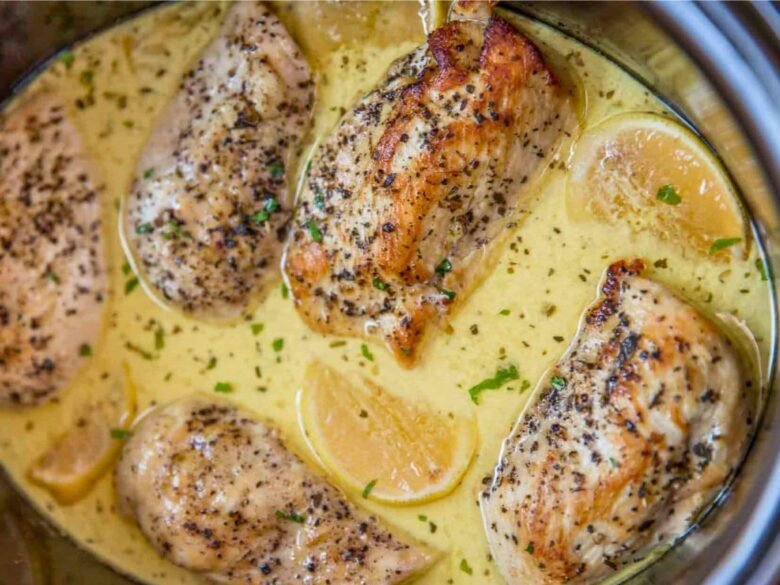
Some dishes exist in the category of simple things done well — not complex, not requiring unusual ingredients, not the product of technique that takes years to learn. They are dishes built on a combination of flavors so naturally complementary that the cooking method mostly just needs to not get in the way. Honey and lemon with chicken is one of those combinations. The honey brings warmth and sweetness and the specific caramelizing quality that makes a glaze. The lemon brings brightness and acidity and the citrus lift that prevents the honey from becoming cloying. The chicken — specifically the thigh, the cut that has the fat content to stay moist through the kind of cooking that takes time — absorbs both and emerges deeply flavored, tender, and finished under the broiler into something that looks considerably more deliberate than the fifteen minutes of active preparation that produced it.
Slow cooker honey lemon chicken thighs are weeknight cooking at its most honest: bone-in, skin-on chicken thighs marinated for however long the morning allows, placed in the slow cooker with a sauce of honey, lemon, garlic, and a few supporting ingredients, cooked on LOW for five to six hours until the chicken is fall-off-the-bone tender, then transferred to a baking sheet and glazed twice under the broiler until the honey has caramelized on the skin into a sticky, lacquered, blistered surface that is the most satisfying thing a chicken thigh can become.
There is nothing complicated about this recipe. The ingredients are pantry staples. The technique is as straightforward as cooking gets. What makes it worth writing about at this length is what happens when simple things are done correctly — when the honey and lemon are balanced against each other properly, when the chicken has had enough time in the slow cooker to develop the tenderness that thighs are capable of, and when the broiler is used at the end without hesitation. The result is not a simple thing. It is a finished dish that tastes like someone worked for it.
Why Honey Lemon Is a Combination Worth Understanding
Honey and lemon appear together across dozens of cuisines and hundreds of applications — in tea, in salad dressings, in glazes, in marinades, in desserts — because they solve each other’s problems with a precision that seems designed rather than discovered. Honey is sweet and thick and, without intervention, can read as one-dimensional. Lemon is tart and bright and, without intervention, can read as sour or thin. Together, the honey provides body and sweetness that fills in behind the lemon’s brightness; the lemon provides the acidity that prevents the honey from reading as simply sweet. The balance between the two produces a flavor that is complex in a way that neither ingredient achieves alone.
In a chicken glaze specifically, the combination works on two additional levels. Honey contains natural sugars — primarily fructose and glucose — that caramelize under heat at lower temperatures than sucrose, producing the sticky, deeply golden glaze that coats the chicken rather than running off it. Lemon juice’s acidity acts as a tenderizer during marinating, breaking down some of the surface proteins of the chicken and producing meat that is more yielding at the surface. Lemon zest — the essential oil compounds in the peel — adds the most aromatic, most volatile lemon character that the juice alone cannot provide.
The slow cooker applies this combination at low heat over hours, allowing the honey and lemon and the chicken’s own juices to build into a braising liquid that is simultaneously the cooking medium and the foundation for the final glaze. The broiler then applies the high heat that caramelizes the honey into the lacquered, blistered surface that neither the slow cooker nor the stovetop could produce alone.
The Chicken
Bone-in, skin-on chicken thighs are the correct and non-negotiable cut for this recipe. The reasoning is the same as in the Greek lemon chicken, the no-prep chicken legs, and every other bone-in chicken recipe in this series, with one specific addition for the honey lemon context.
The fat content of the skin is what allows the honey glaze to caramelize properly under the broiler. Chicken skin contains a significant amount of fat just beneath the surface. When the skin goes under the broiler, that fat renders and combines with the honey in the glaze to produce the caramelized, blistered surface — a process that requires the fat-honey combination and the high, direct heat simultaneously. Boneless, skinless chicken thighs under the broiler, glazed with honey, produce a moderately glazed surface that does not achieve the same visual impact. The skin is the vehicle for the glaze’s transformation.
The bone contributes to the braising liquid’s richness during the slow cook and keeps the thigh in its natural shape throughout the long cook rather than allowing it to flatten and compress. A bone-in thigh emerges from the slow cooker looking like a thigh; a boneless thigh can emerge as an amorphous piece of meat that the broiler cannot meaningfully rescue.
The size. Large chicken thighs — six to eight ounces each — are preferable to small ones. They have more surface area for the honey glaze, more meat relative to bone, and they are more forgiving in the slow cooker, staying moist longer into the cook time. Small thighs can overcook at the five-hour mark; large thighs are typically perfect.
The scoring. Three or four shallow cuts through the skin and into the flesh of each thigh — the same technique as the Greek lemon chicken — allows the honey and lemon marinade to penetrate below the surface during any marinating period and allows the braising liquid to enter the meat during the slow cook. Scored chicken thighs absorb more of the honey lemon character than unscored ones.
The Honey
Honey is a primary flavor in this recipe, not a background sweetener, and its quality and variety are more detectable here than in most applications.
A full-flavored honey — wildflower, clover, buckwheat, or any raw, unprocessed variety — contributes the aromatic complexity that makes the glaze taste specifically of honey rather than generically sweet. Processed, highly filtered honey has had most of its volatile aromatics removed in the interest of uniform, shelf-stable flavor. Raw honey retains these aromatics, which bloom under the broiler’s heat and produce a more complex caramelized glaze.
Buckwheat honey is the most assertive and the most complex — its dark color, molasses-adjacent sweetness, and pronounced flavor make it the choice for those who want the honey to be a clearly identifiable flavor note rather than a background sweetness. It produces a dark, intensely flavored glaze that is impressive.
Wildflower or clover honey is the most widely available and the most balanced — sweeter and lighter than buckwheat, with enough aromatic complexity to produce an excellent glaze without dominating the lemon.
The quantity. A third of a cup for a full batch of four to six chicken thighs is the calibrated starting point — enough to produce a genuinely honey-flavored glaze without making the chicken taste like a dessert. The lemon provides the counterbalance; the honey provides the glaze.
Honey substitutes. Maple syrup can replace honey and produces a maple-lemon chicken that is a different but equally excellent dish — the maple’s caramel notes pair beautifully with lemon. Agave nectar is sweeter than honey and produces a thinner glaze. Neither is a direct substitute for the specific flavor and caramelizing properties of honey.
The Lemon
Both the juice and the zest of the lemon are essential, for the same reasons as every other recipe in this series that uses lemon: the juice provides acidity, the zest provides the volatile aromatic oils that are the most lemon-flavored part of the fruit.
The ratio. The juice of one and a half to two lemons — approximately three to four tablespoons — is the correct quantity to balance a third cup of honey. More lemon tips the balance toward tart; less allows the honey to dominate. The balance should register as sweet-bright-citrus rather than sweet-sweet-citrus or simply sweet.
The zest. One lemon’s worth of zest — grated on the fine side of a box grater or a Microplane — added to the slow cooker at the start and to the glaze applied at the broiler stage provides the aromatic lemon character throughout the dish. Zest without juice is aromatic but lacks acidity; juice without zest is acidic but lacks aromatics. Both together is the correct approach.
Fresh lemon only. Bottled lemon juice is detectable in a recipe where lemon is a primary flavor — its flat, slightly cooked character lacks the brightness that fresh juice provides. For a dish named for lemon, fresh lemon is the correct ingredient.
Additional lemon at serving. A wedge of fresh lemon squeezed over the finished chicken immediately before serving is the brightness hit that makes every other flavor more vivid. The lemon in the glaze has caramelized and mellowed under the broiler; fresh lemon at serving is the raw, sharp note that completes the dish.
The Supporting Sauce
Beyond the honey and lemon, several supporting ingredients build the sauce that becomes the braising liquid and the glaze base.
Garlic — four to five cloves, minced or grated — is the aromatic backbone. The slow cook mellows its pungency into sweetness. Grated garlic integrates more completely into the sauce than minced.
Soy sauce — two tablespoons — adds umami depth and salt without adding any detectable soy flavor to the finished dish. It is the salt and savory depth that prevents the honey and lemon from reading as one-dimensional.
Dijon mustard — one teaspoon — adds a background sharpness and acts as a minor emulsifier. It does not make the dish taste of mustard; it makes the glaze more cohesive and slightly more complex.
Fresh ginger — one teaspoon, grated — adds a clean warmth that bridges the honey and lemon. Optional but excellent — the ginger version of this dish is slightly more complex and specifically good.
Red pepper flakes — a quarter teaspoon — add a background warmth that makes the sweet-sour combination more interesting. Not enough to register as spicy; enough to add a dimension.
Cornstarch — mixed into a slurry at the end — thickens the braising liquid into a pourable glaze consistency that coats the chicken effectively before the broiler finish.
The Broiler Finish
The broiler finish is the step that transforms slow cooker honey lemon chicken from pale-but-delicious to the golden, lacquered, caramelized result that justifies writing about it. Everything that follows has been said in previous posts in this series — because the same principle applies every time: the slow cooker produces tenderness; the broiler produces color and caramelization.
The glaze application. Transfer the chicken thighs to a foil-lined baking sheet skin-side up. Strain a portion of the braising liquid and mix with a tablespoon of additional honey and the cornstarch slurry. Brush the thickened glaze over each chicken piece generously.
The first broil. Four to five minutes under the preheated broiler, 5 to 6 inches from the element, until the glaze is bubbling and beginning to caramelize.
The second coat. Remove from the broiler, apply a second coat of glaze directly over the first, and return for one to two minutes until the second layer is caramelized, sticky, and beginning to char at the very thinnest edges.
The char at the edges is correct and desirable — it is where the honey has caramelized most completely and where the flavor is most concentrated. The overall surface should be golden to mahogany, with darker spots at the edges where the honey has reduced furthest. This is not burning; it is caramelization at its most developed.
Tips for Perfect Slow Cooker Honey Lemon Chicken Thighs
1. Score the chicken before marinating. Three to four shallow cuts through the skin and into the flesh of each thigh allow the honey and lemon to penetrate below the surface. Scored thighs absorb more of the flavor during marinating and during the slow cook.
2. Marinate if time allows — even thirty minutes. The honey and lemon marinade applied to the scored chicken for at least thirty minutes produces a more evenly flavored finished piece. Overnight in the refrigerator is best. If no time allows, apply directly and cook — still excellent, just less penetrating.
3. Skin-side up in the slow cooker. Arrange the chicken skin-side up so the skin remains above the braising liquid and has some chance of maintaining texture. Skin submerged in liquid for six hours becomes soft and waterlogged beyond what the broiler can rescue.
4. Do not add too much liquid. The honey and lemon and the chicken’s own juices produce adequate braising liquid. A quarter cup of additional broth or water is sufficient for the slow cook environment. Too much liquid dilutes the honey and lemon flavors in the braising liquid.
5. Thicken the braising liquid before glazing. The cornstarch slurry or a brief stovetop reduction thickens the braising liquid into a glaze consistency that coats the chicken before the broiler. Thin braising liquid applied directly to the chicken runs off and does not produce the lacquered surface.
6. Apply two coats of glaze under the broiler. The first coat sets and caramelizes; the second coat adds another layer of honey and deepens the color and flavor. Two coats always produces a better result than one.
7. Watch the broiler every second. Honey caramelizes quickly and burns before it chars at the right level — the window between ideal caramelization and scorching is under a minute. Stand at the oven from the moment the chicken goes in.
8. Squeeze fresh lemon at serving. The caramelized honey glaze is sweeter and less bright than the raw honey and lemon combination. A squeeze of fresh lemon over the finished chicken immediately before serving restores the brightness that caramelization reduced.
Serving the Honey Lemon Chicken Thighs
Over steamed jasmine rice is the most natural pairing — the rice absorbs the honey lemon sauce that drips from the chicken, and each spoonful combines the sweet-bright glaze with the clean, neutral rice in the way that makes this kind of dish specifically satisfying.
With roasted vegetables alongside — asparagus, broccoli, or green beans tossed in olive oil and roasted at high heat while the chicken is in the slow cooker — for a complete plate that requires almost no additional effort.
Over a simple green salad with a lemon vinaigrette — the honey lemon character of the chicken and the lemon vinaigrette create an intentional flavor harmony.
The presentation. A whole glazed chicken thigh placed on rice, with the reduced sauce spooned over the top, a lemon wedge alongside, and a scatter of fresh herbs — parsley, thyme, or fresh chives — over everything. Simple and complete.
The Complete Table
Sides:
- Steamed jasmine or basmati rice — the definitive pairing
- Roasted asparagus with lemon — citrus on citrus, specifically correct
- Honey glazed carrots — a sweet note that complements the honey chicken
- Steamed broccoli with garlic — simple and green alongside the richness
- Simple cucumber salad with rice vinegar — cool and acidic
- Mashed potatoes — for a more substantial plate
Garnishes:
- Fresh flat-leaf parsley or fresh thyme — scattered over the plate
- Lemon wedges — for squeezing at the table
- Toasted sesame seeds — if the ginger variation is used, specifically appropriate
- Thinly sliced green onions
Drinks:
- A crisp Riesling — the honey and lemon specifically suit a slightly sweet white
- A dry Rosé — particularly good with the lemon component
- Sparkling water with lemon — clean and complementary
The Day-After Honey Lemon Chicken Uses
Leftover slow cooker honey lemon chicken thighs, refrigerated in the braising liquid, keep for four days and are among the most versatile leftovers in this collection. Cold, the thighs can be reheated in the oven at 375°F (190°C) for fifteen minutes and the skin will partially re-crisp — or the meat can be pulled from the bone and used in multiple directions. Shredded honey lemon chicken over a rice bowl with sliced cucumber, edamame, and a drizzle of sesame oil produces an excellent weekday lunch bowl. Used as the filling for a quesadilla with Monterey Jack cheese and a drizzle of the reduced sauce as a dipping condiment, it becomes a fusion quesadilla of specific excellence. Tossed with cooked rice noodles, shredded cabbage, fresh cilantro, and a lime-sesame dressing, it becomes a honey lemon chicken noodle salad. The braising liquid, reduced to a glaze and stored separately, is a versatile condiment — for dipping spring rolls, drizzling over roasted vegetables, or glazing additional protein.
Easy Variations
- Honey garlic lemon chicken. Double the garlic to eight to ten cloves and add two tablespoons of hoisin sauce alongside the soy sauce. The extra garlic and hoisin deepen the sauce toward the honey garlic spectrum while keeping the lemon brightness. Serve with toasted sesame seeds and sliced green onions.
- Honey lemon chicken with herbs. Add a tablespoon each of fresh chopped rosemary and fresh thyme to the sauce. The herbs add a Mediterranean character that bridges this recipe toward the Greek lemon chicken territory — a specifically excellent combination.
- Spicy honey lemon chicken. Add one to two teaspoons of sriracha or gochujang to the sauce alongside the soy sauce and honey. The heat cuts through the sweetness and adds a complexity that makes the glaze more interesting. Finish with extra sriracha drizzled over the broiled chicken.
- Orange honey chicken. Replace the lemon juice and zest with orange juice and zest. Orange and honey are a natural combination — warmer, sweeter, and less bright than the lemon version. Reduce the honey slightly to compensate for the orange juice’s own natural sweetness.
- Honey lemon chicken with miso. Add a tablespoon of white miso paste to the sauce. The miso adds a fermented, savory depth that rounds the honey and lemon into something more complex. White miso is subtle enough to be a background note rather than a foreground flavor.
Make-Ahead and Storage
Make-ahead: The chicken can be scored, marinated in the honey lemon sauce, and refrigerated overnight — which is both practical and flavor-improving. On cooking day, transfer the chicken and marinade directly to the slow cooker and cook as directed.
Refrigerator: Cooked chicken thighs in the braising liquid keep for four days. The honey in the sauce acts as a mild preservative. Reheat in the oven at 375°F (190°C) for 15 to 20 minutes to restore some skin texture, or in the microwave at 70 percent power for 90 seconds per thigh.
Reheating the glaze. The glaze that caramelized under the broiler does not survive refrigeration in its caramelized state — it softens and becomes tacky rather than sticky and lacquered. For reheated leftovers, brush with a small amount of additional honey and slide under the broiler for two to three minutes to re-caramelize. The skin will not be quite as spectacular as the first day but will be significantly better than simply microwaved.
Freezer: Freeze cooked chicken thighs without the broiler glaze (the raw braised version) for up to three months. Thaw overnight in the refrigerator. Brush with fresh honey and glaze under the broiler before serving.
Shopping List
The Chicken
- 4–6 bone-in, skin-on chicken thighs (approximately 3 lbs / 1.4kg)
The Honey Lemon Sauce
- ⅓ cup (110g) raw honey
- Juice of 1½–2 large lemons (about 3–4 tbsp)
- Zest of 1 large lemon
- 2 tbsp soy sauce
- 4–5 garlic cloves, minced or grated
- 1 tsp Dijon mustard
- 1 tsp fresh ginger, grated (optional)
- ¼ tsp red pepper flakes
- ¼ cup (60ml) chicken broth or water
The Glaze Finish
- 1 tbsp additional honey (for the broiler glaze)
- 1 tbsp cornstarch + 2 tbsp cold water (for thickening)
For Serving
- Steamed jasmine rice
- Fresh flat-leaf parsley or thyme
- Lemon wedges for squeezing
Slow Cooker Honey Lemon Chicken Thighs
Bone-in, skin-on chicken thighs — scored and marinated in a sauce of raw honey, fresh lemon juice and zest, soy sauce, garlic, Dijon, and ginger — slow-cooked on LOW for five to six hours until fall-off-the-bone tender and deeply infused with the sweet-bright honey lemon flavor. The braising liquid thickened with a cornstarch slurry and combined with additional honey into a glaze. The chicken transferred to a baking sheet and glazed twice under the broiler until the honey has caramelized on the skin into a sticky, lacquered, mahogany-dark surface. A squeeze of fresh lemon over everything at serving. Served over jasmine rice with fresh herbs. The slow cooker chicken thigh that looks like someone worked for it.
- Total Time: 5 hours 25 minutes (plus marinating)
- Yield: 4–6 servings 1x
Ingredients
The Chicken
- 4–6 bone-in, skin-on chicken thighs (about 3 lbs / 1.4kg total)
- ½ tsp salt
- ¼ tsp black pepper
The Honey Lemon Sauce
- ⅓ cup (110g) raw honey
- 3–4 tbsp fresh lemon juice (about 1½–2 lemons)
- Zest of 1 large lemon
- 2 tbsp soy sauce
- 4–5 garlic cloves, minced or grated
- 1 tsp Dijon mustard
- 1 tsp fresh ginger, grated (optional)
- ¼ tsp red pepper flakes
- ¼ cup (60ml) chicken broth or water
The Glaze Finish
- 1 tbsp additional honey
- 1 tbsp cornstarch + 2 tbsp cold water, mixed into a slurry
For Serving
- Steamed jasmine rice
- Fresh flat-leaf parsley or thyme, chopped
- Lemon wedges
Instructions
- Score and marinate the chicken. Using a sharp knife, make three to four shallow cuts through the skin and into the flesh of each thigh. Season the chicken on both sides with salt and pepper. In a bowl or zip-lock bag, combine the honey, lemon juice, lemon zest, soy sauce, garlic, Dijon, ginger (if using), and red pepper flakes. Add the chicken and turn to coat completely. Marinate for at least 30 minutes at room temperature or refrigerate overnight for best results.
- Build the slow cooker. Pour the chicken broth or water into the slow cooker. Add the chicken thighs skin-side up, pouring all the marinade over the top.
- Cook. Set to LOW and cook for 5 to 6 hours, until the chicken is completely tender and reads 165°F (74°C) internally. The meat should pull easily from the bone when pressed.
- Make the glaze. Carefully transfer the chicken thighs to a foil-lined baking sheet, skin-side up. Pour the braising liquid into a small saucepan. Add one tablespoon of honey. Bring to a boil. Whisk in the cornstarch slurry and cook for 2 to 3 minutes, stirring, until the glaze is thick and glossy — coating the back of a spoon generously. Taste and adjust for sweetness and salt.
- First broil. Preheat the broiler to HIGH. Brush or spoon the thickened glaze generously over each chicken thigh. Slide the baking sheet under the broiler 5 to 6 inches from the element. Broil for 4 to 5 minutes, watching constantly, until the glaze is bubbling, deeply golden, and beginning to caramelize and char at the thinnest edges.
- Second coat and finish. Remove from the broiler. Apply a second generous coat of glaze over the first. Return under the broiler for 1 to 2 minutes until the second layer is caramelized, sticky, and mahogany-dark at the edges.
- Rest briefly. Allow the chicken to rest for 5 minutes — the glaze sets slightly and the juices redistribute.
- Serve. Place each glazed thigh over steamed jasmine rice. Spoon any remaining glaze over the rice. Scatter fresh herbs over the top. Squeeze fresh lemon generously over everything immediately before eating. Serve with additional lemon wedges alongside.
Notes
- Score the chicken — it matters. Three to four shallow cuts through the skin and into the flesh of each thigh allow the honey and lemon to penetrate below the surface during marinating and during the slow cook. Scored thighs are more evenly flavored throughout; unscored thighs have the sauce on the surface only.
- Marinate overnight for the best result. The honey and lemon marinade applied overnight produces a thigh that is flavored from the inside out — the lemon’s acidity penetrates the surface proteins and the honey’s sugars draw into the scored flesh. A thirty-minute minimum produces a good result; eight hours produces a noticeably better one.
- Skin-side up in the slow cooker — always. The skin positioned above the braising liquid maintains more texture through the long cook than skin submerged in liquid. More importantly, skin-side up is the correct position for the broiler finish — the glaze is applied to the skin surface, which is then exposed directly to the broiler’s heat.
- Watch the broiler every second from minute three. Honey caramelizes faster than any other sugar and burns before it looks burned — the surface goes from ideal to scorched in under sixty seconds under high heat. From the moment the chicken goes under the broiler, stand at the oven and watch. Three to four minutes is typically sufficient for the first coat; one to two minutes for the second.
- The char at the edges is correct. Dark spots — almost black — where the honey has caramelized most completely at the thinnest edge of the skin are not burning. They are the most intensely flavored part of the glaze, where the sugar has reduced furthest. The contrast between the dark edges and the golden center is the visual that makes this chicken look as good as it tastes.
- Squeeze fresh lemon at serving — every time. The caramelized glaze is sweeter and less bright than the raw sauce. Fresh lemon at the table restores the brightness that the broiler reduced and makes the dish taste specifically alive.
- The braising liquid is the glaze. Do not discard the liquid in the slow cooker after the chicken is transferred to the baking sheet. It is concentrated honey, lemon, garlic, and chicken juices — the foundation of the glaze that makes the broiler finish what it is.
- Prep Time: 10 minutes
- Cook Time: 5–6 hours (on LOW)
- Category: Dinner, Main Dish
- Method: Slow Cooking
- Cuisine: American
- Diet: Dairy-Free, Gluten-Free
Frequently Asked Questions
Can I use boneless, skinless chicken thighs instead of bone-in, skin-on? Yes — boneless, skinless chicken thighs produce a tender, flavorful result in this recipe, but the dish loses two of its most compelling elements: the bone’s contribution to the braising liquid’s richness and the skin’s transformation under the broiler into the caramelized, lacquered surface that makes the dish visually spectacular. Boneless, skinless thighs cook faster — check at the three to four-hour mark on LOW — and produce a somewhat thinner braising liquid. For the broiler finish, brush with glaze and broil for two to three minutes — the result is a moderately glazed surface rather than the dramatically caramelized skin of the bone-in version. If boneless thighs are preferred for ease of eating (no bone, no skin to manage at the table), they are an entirely acceptable option; they produce a different but still excellent dish.
My glaze burned under the broiler. How do I prevent this? Honey caramelizes at a lower temperature than most sugars and burns very quickly under direct broiler heat — faster than BBQ sauce, faster than teriyaki sauce, faster than any other glaze in this series. The most common cause of burning is the baking sheet placed too close to the broiler element — move it to a rack position 5 to 6 inches from the element rather than 3 to 4 inches. The second most common cause is leaving the kitchen — honey glaze under a broiler needs to be watched from the moment the sheet goes in, every second, beginning at the three-minute mark. If the glaze is caramelizing faster than expected, remove the chicken immediately rather than waiting for the ideal color. A slightly underdone glaze is better than a burned one.
How do I know when the chicken thighs are done? Three reliable indicators: an instant-read thermometer inserted into the thickest part of the thigh (not touching the bone) should read 165°F (74°C); the meat should pull easily from the bone when pressed with tongs; and the juices should run clear when pierced with a knife. For bone-in chicken thighs on LOW, five to six hours produces reliably done chicken — but the thermometer is the definitive check, particularly for very large thighs that may need the full six hours, or very small thighs that may be done at four and a half.
Can I make this with chicken breasts? Yes, with significant timing adjustments. Chicken breasts are leaner than thighs and overcook more easily in the slow cooker’s moist heat environment. For boneless, skinless breasts, cook on LOW for three to three and a half hours maximum — check at the three-hour mark with a thermometer and remove the moment they reach 165°F (74°C). Bone-in, skin-on breasts handle slightly longer — three and a half to four hours on LOW. The honey lemon sauce is equally excellent with breast meat; the primary difference is the narrower window for perfect cooking and the less rich braising liquid compared to thighs.
Is the ginger addition worth including? Yes — and it specifically elevates the recipe if the ingredients are available. Fresh grated ginger adds a clean, bright warmth that complements both the honey and the lemon in a way that makes the combined flavor more complex without adding any additional preparation time. The ginger is subtle enough in the finished dish that most people cannot identify it as a specific flavor — they simply find the sauce more interesting. Ground ginger can substitute (half a teaspoon) but produces a warmer, duller note than fresh. For the most vibrant result, use fresh ginger root grated on a Microplane.
Can I reduce the honey to make the dish less sweet? Yes — reduce to a quarter cup rather than a third for a less sweet result. The balance between honey and lemon is the central flavor dynamic of the dish; reducing the honey tips the balance toward the lemon and produces a brighter, tangier, less sweet result. Some cooks prefer this balance, particularly when serving the chicken over something neutral (plain rice) rather than a sweetened accompaniment. The glaze at the broiler stage will be slightly less dramatic in its caramelization with less honey — add an extra teaspoon of honey specifically to the broiler glaze even if the slow cooker quantity is reduced, to ensure adequate caramelization under the heat.
How do I store and reheat without losing the glaze texture? The caramelized honey glaze on the chicken skin does not survive refrigeration in its ideal state — it softens into a tacky, sticky coating rather than the lacquered, slightly crisp surface it was when first made. This is inevitable and is not a sign of a storage problem. To restore the glaze texture on reheated leftovers: arrange the chicken skin-side up on a baking sheet, brush a small amount of honey over the surface, and broil for two to three minutes until the honey re-caramelizes. The skin will not be quite as dramatic as the first day — some of the fat under the skin has already rendered — but it will be significantly more appealing than simply microwaved. The flavor is essentially unchanged.