
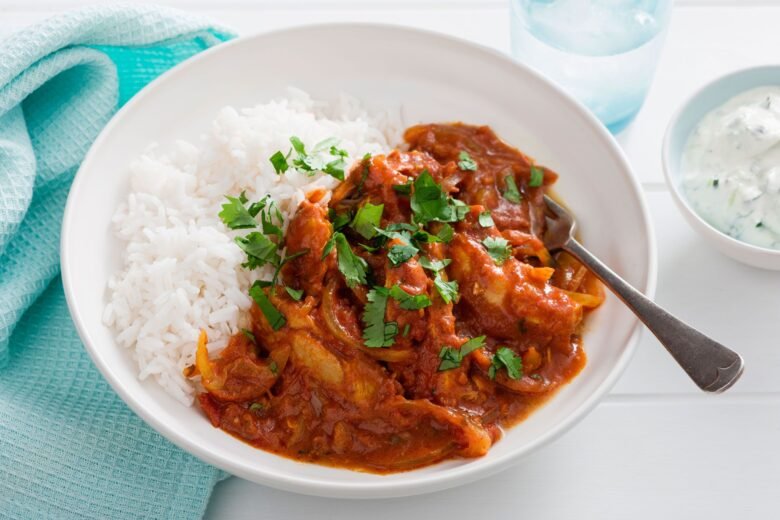
Chicken tikka masala has the distinction of being simultaneously the most popular Indian restaurant dish in the United Kingdom, one of the most debated dishes in food history, and a recipe that almost no one makes at home despite the fact that it is significantly better when made at home than when ordered from most of the establishments that serve it. The debate — whether it is a Scottish invention or a dish with genuine South Asian roots, whether the tikka in the name is authentic or decorative, whether it qualifies as Indian food at all — is interesting and unresolved. What is less debatable is that the combination of tender chicken, a spiced tomato and cream sauce, and warm aromatics has produced a dish of enormous and enduring global appeal.
The dump and go designation in this recipe’s title is not an apology — it is the primary selling point. Dump and go means that every ingredient goes directly into the slow cooker without the preliminary sautéeing of aromatics, without the blooming of spices in hot oil, without any preparation beyond opening cans and measuring spices. The slow cooker’s extended cook time allows the aromatics to soften and the spices to bloom during the braise rather than requiring that work to happen on the stovetop first. The result is a chicken tikka masala of genuine quality — spiced, deeply flavored, creamy — that takes fewer than ten minutes to assemble.
The cream goes in at the end. The spices do their work during the cook. The chicken, braised in the tomato-and-spice base for five to six hours, absorbs the flavors throughout rather than being coated on the surface. There is no stovetop step. There is no sautéeing. The slow cooker does everything except the rice.
The Authenticity Question and Why It Matters Less Than You Think
Chicken tikka masala’s origins are genuinely contested. The most widely repeated origin story attributes the dish to a Glaswegian chef named Ali Ahmed Aslam, who is said to have created the masala sauce in the 1970s in response to a customer who found his chicken tikka too dry — the cream sauce, improvised from a tin of condensed tomato soup, cream, and spices, was poured over the grilled chicken tikka and the dish was born. Glasgow even made a bid to register chicken tikka masala as a protected geographic indication — the Glaswegian equivalent of Champagne’s appellation controls.
The counter-argument holds that chicken tikka masala is simply the British version of butter chicken (murgh makhani) — the North Indian dish of tandoor-grilled chicken in a spiced tomato and cream sauce that Kundan Lal Gujral and his son Kundan Lal Jaggi created at Moti Mahal restaurant in Delhi in the 1950s. The differences between butter chicken and chicken tikka masala are subtle enough to support either argument.
What this history actually establishes is that chicken tikka masala is a hybrid dish — developed between cuisines, adapted to available ingredients and customer preferences, and refined over decades into the form most people recognize today. Attempting to make an authentic version is therefore slightly beside the point. What matters is making a version that is delicious — which is what this slow cooker recipe does.
The dump and go format does something interesting to the authenticity question: by not blooming the spices in hot oil first — the traditional starting step for most South Asian cooking — it produces a dish with a slightly different spice character than the restaurant version. The spices bloom in the liquid of the slow cooker during the long cook rather than in hot oil, producing a more integrated, less individually assertive spice profile. The result does not taste exactly like restaurant chicken tikka masala. It tastes like a very good version of the same idea — warm, deeply spiced, creamy — that was made at home with ten minutes of preparation.
The Spice Blend
The spice blend is where chicken tikka masala lives — the combination of aromatics that produces the characteristic warm, slightly smoky, gently sweet and savory flavor that the dish is known for.
Garam masala — one tablespoon — is the foundational spice blend. Garam masala varies significantly by brand and regional tradition, but most commercial versions contain cumin, coriander, cardamom, black pepper, cinnamon, cloves, and nutmeg in varying proportions. It is the warm, aromatic compound that gives the sauce its specifically Indian spice character.
Ground cumin — one teaspoon — reinforces the cumin note in the garam masala and adds an earthy, slightly smoky depth.
Ground coriander — one teaspoon — adds a citrusy, slightly floral warmth that lifts the heavier spices.
Turmeric — half a teaspoon — adds the golden color that is part of the dish’s visual identity and contributes an earthy, slightly bitter note.
Smoked paprika — one teaspoon — approximates the smokiness that the traditional tikka masala gets from the tandoor-charred chicken. Without a tandoor, smoked paprika does the most work of any spice toward the dish’s characteristic smoky undertone.
Chili powder or Kashmiri red chile powder — one teaspoon — provides the red color and the mild heat. Kashmiri red chile produces a deeper, more vibrant red color with less heat than standard chili powder; it is available at Indian grocery stores and is worth seeking if the visual intensity of the sauce is important.
Ground ginger — one teaspoon — provides the warming ginger note. Fresh ginger is more aromatic but the dump and go format uses ground for simplicity; ground ginger works well and distributes evenly through the sauce.
Garlic powder — one teaspoon — provides the garlic depth that is fundamental to the masala. Fresh garlic is more assertive; garlic powder distributes more evenly and is consistent with the dump and go format.
Salt — one and a half teaspoons — applied directly to the chicken and stirred into the sauce base.
The bloom question. Traditional Indian cooking blooms spices in hot oil or ghee before any liquid is added — this step releases fat-soluble aromatic compounds that dissolve into the cooking fat and distribute through the dish differently than water-soluble aromatics. The dump and go method skips this step. The result is a slightly less assertive spice presence in the finished dish — the flavors are more integrated and rounded rather than individually pronounced. For a more intensely spiced result from the dump and go format, increase all spice quantities by twenty-five percent.
The Tomato Base
The tomato base in chicken tikka masala provides the body, the acidity, and the red color of the sauce.
Crushed tomatoes — one can (fourteen to fifteen ounces) — are the most practical and most widely used tomato form for this recipe. They dissolve completely into the sauce during the slow cook and produce a uniform, smooth sauce base.
Tomato paste — two tablespoons — adds concentrated tomato flavor and depth, deepens the color, and thickens the sauce slightly.
Diced tomatoes can be substituted for crushed and produce a chunkier sauce. For a completely smooth restaurant-style sauce, blend the finished chili before adding the cream.
The acidity. Standard canned tomatoes can produce an acidic sauce when combined with the spice blend. A small pinch of sugar — half a teaspoon — rounds the acidity. Many traditional tikka masala recipes use this technique; it produces a slightly more balanced, less sharp finished sauce.
The Cream and the Finish
The cream in chicken tikka masala is what transforms the tomato-and-spice base into the characteristic pale orange, silky sauce.
Heavy cream — half a cup, added after cooking at KEEP WARM temperature — is the standard finishing dairy. It enriches the tomato sauce, moderates the spice intensity, and produces the glossy, coating sauce that makes tikka masala what it is.
Full-fat coconut milk — an equal substitution for the heavy cream — produces an excellent dairy-free version. Its slight sweetness complements the warm spices, and its fat content produces a similarly silky sauce.
The timing. The cream goes in after the slow cooker has finished cooking and has switched to KEEP WARM — the same logic as the white chili and the Alfredo. Heavy cream added during a five-to-six-hour slow cook can separate at the sustained temperature. Added at the end, stirred through the warm sauce, it produces the smooth, integrated, creamy tikka masala sauce the dish requires.
Greek yogurt as a lighter alternative. Full-fat Greek yogurt, stirred in after cooking with the same tempering technique as the sour cream in the white chili, produces a tangier, slightly lighter sauce. More authentic to some versions of the dish, which use yogurt in the sauce base.
Fresh cilantro — added after cooking, stirred through the finished sauce — is the herbal finish that is as much a visual marker as a flavor one. The bright green against the orange sauce is the presentation signal that this is a complete and specifically Indian-inflected dish.
The Chicken
Boneless, skinless chicken thighs are the best choice for the same reasons that apply throughout this series: fat content, moisture retention, and depth of flavor. Cut into two-inch pieces before adding to the slow cooker — the pieces should be small enough to cook through in the sauce and large enough to remain distinct and identifiable in the finished dish rather than shredding into the sauce entirely.
Boneless, skinless chicken breasts can be used and produce a leaner, slightly cleaner result. Cut into the same two-inch pieces. Check at the four-hour mark — breast meat can overcook in the slow cooker’s moist heat. The finished dish will be slightly less rich but equally flavorful.
The marinade option. Traditional chicken tikka is marinated in spiced yogurt before grilling. For the dump and go format, a brief yogurt marinade — two tablespoons of plain yogurt combined with half a teaspoon each of the spice blend, applied to the cut chicken pieces and left for thirty minutes to overnight — adds the authentic tangy note that the traditional tikka preparation provides. This step is entirely optional and consistent with the dump and go spirit only if the chicken is marinated the night before and placed in the slow cooker the next morning.
Making It a Complete Indian Meal
Chicken tikka masala is not a standalone dish — it is one component of a spread, and the other components matter to how the dish is experienced.
Basmati rice — steamed or cooked with a small amount of butter, cardamom pod, and bay leaf — is the correct accompaniment. Long-grain basmati rice, with its nutty, slightly floral aroma, is specifically suited to Indian sauces in a way that jasmine or generic long-grain rice approximates but does not match. Cook more rice than seems necessary — the sauce is worth soaking into every grain.
Naan or roti — warmed in a dry skillet or directly over a gas flame for thirty seconds per side — for tearing and using to scoop the sauce. Store-bought naan, briefly warmed, is excellent and requires no preparation.
Raita — plain yogurt combined with grated cucumber, fresh mint, cumin, and salt — provides the cooling, dairy-fresh contrast to the warm spiced sauce. A spoonful of raita alongside a bite of tikka masala and rice is the complete experience.
Mango chutney alongside — sweet, fragrant, and specifically complementary to the warm spices of the masala.
Tips for Perfect Slow Cooker Chicken Tikka Masala
1. Cut the chicken into uniform two-inch pieces. Uniform pieces cook evenly — no pieces overcooked while others are still underdone. Two-inch pieces are the correct size for the slow cooker’s extended cook: small enough to cook through in the sauce, large enough to remain as distinct pieces rather than shredding entirely.
2. Add cream at KEEP WARM — not during the cook. Heavy cream added to a slow cooker during a five-to-six-hour cook can separate. Added at KEEP WARM temperature after the cook, stirred through the warm sauce gradually, it produces the smooth, integrated cream sauce the dish requires.
3. Increase spices by twenty-five percent for a bolder result. The dump and go format produces a slightly more integrated, slightly less assertive spice profile than the stovetop version where spices are bloomed in hot oil. For a more intensely spiced result, increase all spice quantities by twenty-five percent. For a gentler, more crowd-friendly result, use the quantities as written.
4. Add a pinch of sugar. Half a teaspoon of sugar rounds the acidity of the canned tomatoes and produces a more balanced, less sharp finished sauce. This is the small adjustment that makes the sauce taste more like a restaurant version.
5. Add fresh cilantro at serving — not at the start. Fresh cilantro added to a slow cooker at the start of a five-to-six-hour cook loses its volatile aromatic character entirely. Added at serving, it is bright, herbal, and the visual and aromatic finish of the dish.
6. Blend for a smooth restaurant-style sauce. After the cook and before the cream is added, the sauce can be partially blended with an immersion blender for a smoother consistency. This is specifically recommended if diced tomatoes were used rather than crushed. The smooth sauce more closely resembles the restaurant version.
7. Taste and adjust before serving. The spice balance of a dump and go recipe cannot be precisely predicted because the spices bloom differently in the slow cooker than in hot oil. Taste before serving and adjust: more garam masala if the spice is too muted, a pinch of cayenne if more heat is desired, more salt if the sauce tastes flat.
8. Serve with both basmati rice and naan. The combination of rice and bread alongside tikka masala is the correct format — the rice absorbs the sauce, the naan scoops it. Both together produce the complete experience.
Serving the Chicken Tikka Masala
The bowl. Basmati rice in the bottom of a wide bowl, the chicken tikka masala spooned generously over the top of and around the rice — enough sauce to pool at the edges of the rice. A spoonful of raita alongside. Torn naan on the side. Fresh cilantro scattered over the top. This is the complete presentation.
Family style. A serving bowl of tikka masala at the center of the table, alongside a pot of basmati rice, a bowl of raita, a plate of warm naan, and a small dish of mango chutney. This is the most communal and most specifically Indian-influenced presentation.
For meal prep. The tikka masala over rice, portioned into airtight containers, reheats excellently and is one of the best meal prep dishes in this collection — the flavors deepen overnight and the reheated version is often more complex than the freshly made one.
The Complete Table
Essential accompaniments:
- Basmati rice — the definitive base
- Warm naan or roti — for scooping the sauce
- Raita (yogurt, cucumber, mint, cumin) — essential cooling contrast
- Mango chutney — sweet, fragrant, complementary
Additional sides:
- Saag (sautéed spiced spinach) — for a more complete Indian spread
- Chana masala (spiced chickpeas) — for a vegetarian addition
- Cucumber salad with lime and chili — cool and acidic
- Papadum — for crunch
Drinks:
- Mango lassi — the classic Indian drink alongside rich curries
- Cold Indian lager (Kingfisher, Cobra) — specifically complementary
- Sparkling water with cucumber — clean and refreshing
The Day-After Tikka Masala Uses
Leftover slow cooker chicken tikka masala is one of the most versatile leftover dishes in this collection, specifically because its sauce is the most flavorful thing in the refrigerator. The chicken and sauce, reheated and served over fresh rice, are better the next day — the flavors have integrated further overnight and the sauce has deepened. The sauce alone, separated from the chicken and thinned with a splash of broth, becomes the base for a tikka masala soup — add cooked chickpeas, a handful of spinach, and a squeeze of lemon for a complete weekday lunch. The shredded chicken from leftover tikka masala becomes the filling for tikka masala wraps in warm flatbreads with raita and shredded lettuce. Stirred through cooked rice with frozen peas and a fried egg on top, it becomes a tikka masala fried rice that uses every last drop of the sauce. The sauce stirred through scrambled eggs produces one of the most specifically excellent breakfast scrambles available.
Easy Variations
- Shrimp tikka masala. Replace the chicken with one and a half pounds of large shrimp (peeled and deveined) added in the final thirty to forty-five minutes of cooking. The shrimp cook through quickly in the warm sauce and become plump and deeply spiced. The base sauce braises without protein for the first four to five hours — add the shrimp only at the end.
- Vegetable tikka masala. Replace the chicken with two cans of drained chickpeas, one cauliflower cut into florets, and one large diced potato. The chickpeas and cauliflower absorb the sauce completely during the long cook and produce a hearty vegetarian tikka masala that is as satisfying as the chicken version.
- Butter chicken (murgh makhani style). Reduce the chili powder to half a teaspoon, add one tablespoon of butter to the slow cooker at the start and another tablespoon stirred in with the cream at the end. Replace the smoked paprika with sweet paprika. The result is closer to the butter chicken tradition — slightly sweeter, slightly less spiced, with the butter enriching the sauce beyond what cream alone produces.
- Tikka masala pasta. After the cook, stir the tikka masala sauce (without the cream) through cooked penne or rigatoni and finish with the cream stirred through the pasta. Top with fresh mozzarella and broil for three to four minutes. An unusual and specifically excellent fusion that works because the tikka masala’s spice profile suits pasta in the same way it suits rice.
- Extra-smoky tikka masala. Add half a teaspoon of liquid smoke and one minced chipotle pepper in adobo sauce alongside the standard spice blend. These additions approximate the tandoor’s char more closely than smoked paprika alone and produce a sauce with a significantly smokier character.
Make-Ahead and Storage
Make-ahead: Chicken tikka masala is one of the best make-ahead dishes in this collection. The sauce deepens and improves for up to three days in the refrigerator. Make without the cream, refrigerate, and add the cream fresh when reheating. The chicken, braised in the sauce for three days, absorbs even more of the spice blend and produces a richer, more deeply flavored result than the freshly made version.
Refrigerator: Keeps for four to five days. The sauce may separate slightly overnight — stir thoroughly when reheating. Reheat gently on the stovetop or in the microwave at 70 percent power in 60-second bursts. Add a splash of water or broth if the sauce is too thick after refrigeration.
Freezer: Freeze without the cream for up to three months. The cream-enriched version can separate during freezing. Add fresh cream when reheating from frozen. Thaw overnight in the refrigerator and reheat gently. The spice character is essentially unchanged after freezing.
Shopping List
The Chicken
- 2 lbs (900g) boneless, skinless chicken thighs, cut into 2-inch pieces
The Sauce
- 1 can (14 oz / 400g) crushed tomatoes
- 2 tbsp tomato paste
- 1 medium yellow onion, diced (optional for dump and go — see notes)
- 4 garlic cloves, minced (optional for dump and go — see notes)
The Spice Blend
- 1 tbsp garam masala
- 1 tsp ground cumin
- 1 tsp ground coriander
- 1 tsp smoked paprika
- 1 tsp chili powder (or Kashmiri red chile powder)
- 1 tsp ground ginger
- 1 tsp garlic powder
- ½ tsp turmeric
- ½ tsp sugar
- 1½ tsp salt
The Cream Finish
- ½ cup (120ml) heavy cream or full-fat coconut milk — added at the very end
For Serving
- Basmati rice
- Naan or roti (store-bought, warmed)
- Fresh cilantro
- Raita (yogurt, cucumber, mint, cumin)
- Mango chutney
Slow Cooker Chicken Tikka Masala (Dump and Go)
Boneless, skinless chicken thighs cut into two-inch pieces — combined in the slow cooker with crushed tomatoes, tomato paste, diced onion, garlic, and a full spice blend of garam masala, cumin, coriander, turmeric, smoked paprika, and chili powder — and cooked on LOW for five to six hours until the chicken is completely tender and the sauce is deeply spiced and fragrant. Heavy cream stirred in at KEEP WARM until the sauce turns the characteristic pale orange and becomes glossy and coating. Fresh cilantro scattered over the top. Served over basmati rice with warm naan, raita, and mango chutney alongside. Ten minutes of preparation. A genuinely excellent chicken tikka masala from a slow cooker.
- Total Time: 5 hours 15 minutes
- Yield: 4–6 servings 1x
Ingredients
The Chicken and Sauce
- 2 lbs (900g) boneless, skinless chicken thighs, cut into 2-inch pieces
- 1 can (14 oz / 400g) crushed tomatoes
- 2 tbsp tomato paste
- 1 medium yellow onion, diced
- 4 garlic cloves, minced
- ½ tsp sugar
The Spice Blend
- 1 tbsp garam masala
- 1 tsp ground cumin
- 1 tsp ground coriander
- 1 tsp smoked paprika
- 1 tsp chili powder (or Kashmiri red chile powder)
- 1 tsp ground ginger
- 1 tsp garlic powder
- ½ tsp turmeric
- 1½ tsp salt
The Cream Finish
- ½ cup (120ml) heavy cream or full-fat coconut milk
For Serving
- Basmati rice, freshly cooked
- Warm naan or roti
- Fresh cilantro, roughly torn or chopped
- Raita (plain yogurt, grated cucumber, fresh mint, pinch cumin)
- Mango chutney
Instructions
- Combine everything. Add the chicken pieces directly to the slow cooker. Add the crushed tomatoes, tomato paste, diced onion, minced garlic, and sugar. Add all the spice blend ingredients. Stir everything together until the chicken is coated and the spices and tomatoes are fully combined.
- Cook. Set to LOW and cook for 5 to 6 hours, until the chicken is completely tender and cooked through and the sauce is deeply fragrant and rich. The sauce will be more liquid than the final result — the cream will thicken it in the next step.
- Add the cream. Switch to KEEP WARM. Pour in the heavy cream (or coconut milk). Stir continuously for one to two minutes until the cream is fully incorporated and the sauce turns the characteristic pale orange-red and becomes glossy and coating. Taste and adjust seasoning — more garam masala if the spice needs lifting, more salt, a pinch of cayenne for heat.
- Optional blend. For a smoother, restaurant-style sauce, use an immersion blender to partially blend the sauce before adding the cream — blend a few passes through the sauce, leaving some texture from the chicken pieces.
- Serve. Spoon generously over basmati rice in wide bowls. Scatter fresh cilantro over the top. Serve with warm naan, a spoonful of raita alongside, and mango chutney in a small dish. Bring to the table immediately.
Notes
- Dump and go means everything in at once. No sautéeing the onion. No blooming the spices in hot oil. No stovetop step. Everything goes into the slow cooker raw and the extended cook does the work. The onion softens completely during the five-to-six-hour cook and becomes indistinguishable from the sauce. The spices bloom in the liquid of the slow cooker rather than in hot oil, producing a slightly more integrated, slightly less assertive spice profile than the stovetop version — which is appropriate for a weeknight dish intended to please a broad audience.
- Cream at KEEP WARM — always. Heavy cream added to the slow cooker during the cook can separate in the sustained heat. Added at KEEP WARM temperature after the cook, stirred continuously, it produces the smooth, glossy sauce the recipe requires.
- Kashmiri chile powder produces a more vibrant color. Standard chili powder produces an orange-red sauce. Kashmiri red chile powder — available at Indian grocery stores and online — produces a deeper, more jewel-red sauce with slightly less heat than standard chili powder. The color difference is immediately visible and specifically beautiful.
- The spice quantities are calibrated for broad accessibility. For a more intensely spiced result — closer to a restaurant version — increase all spice quantities by twenty-five percent and add a quarter teaspoon of cayenne pepper. The dump and go format’s integrated spice profile is a feature for weeknight cooking; a more assertive version is available by simply increasing quantities.
- Fresh cilantro at serving — not at the start. Fresh cilantro added to the slow cooker at the beginning of a five-to-six-hour cook loses its aromatic character entirely. Added at serving, it provides the bright, herbal, aromatic finish that is one of the most recognizable elements of the dish’s presentation.
- This dish improves overnight. The spice blend continues to integrate with the sauce during refrigeration. Day-two tikka masala is consistently more complex and more cohesive than the freshly made version — specifically worth making ahead.
- Serve with both rice and naan. The combination of rice for absorbing the sauce and naan for scooping it produces the complete experience. Rice or naan alone is incomplete — both together is the correct format.
- Prep Time: 10 minutes
- Cook Time: 5–6 hours (on LOW)
- Category: Dinner, Main Dish
- Method: Slow Cooking
- Cuisine: American, British, Indian
Frequently Asked Questions
Why does my sauce taste less spiced than restaurant tikka masala? Two reasons, both inherent to the dump and go format. First: the spices in this recipe bloom in liquid (the crushed tomatoes and the moisture released by the onion and chicken) rather than in hot fat — the traditional stovetop method blooms spices in hot oil or ghee, releasing fat-soluble aromatic compounds that distribute differently through the dish than water-soluble ones. The fat-bloomed version produces individually more assertive spice notes; the liquid-bloomed version produces more integrated, rounded flavors. Second: the heavy cream added at the end mellows and softens the spice intensity. For a more intensely spiced result: increase all spice quantities by twenty-five percent, add a quarter teaspoon of cayenne, and reduce the cream quantity slightly. The restaurant version is typically more aggressively spiced than a home version intended for broad palatability.
Can I use canned coconut milk instead of heavy cream? Yes — full-fat canned coconut milk is an excellent and specifically appropriate substitution that produces a dairy-free version of the dish. Use the full-fat variety, not light coconut milk, which is too thin to produce the characteristic sauce body. The coconut milk adds a subtle sweetness that complements the warm spices well, and its fat content produces a similarly silky sauce. Some versions of the dish in Indian communities outside the subcontinent use coconut milk rather than cream as a matter of tradition. The resulting sauce is slightly lighter in color (more yellow-orange than orange-red) and has a very subtle coconut note that is less detectable than expected against the assertive spice blend.
What is garam masala and can I make it myself? Garam masala is a spice blend foundational to Indian cooking — the name translates as “warm spice mixture.” Commercial garam masala typically contains cumin, coriander, cardamom, black pepper, cinnamon, cloves, and nutmeg in varying proportions depending on the brand and regional tradition. It varies significantly by brand — some are heavier on cardamom and cinnamon (sweeter, more floral), others are heavier on cumin and pepper (earthier, more savory). The brand you use will affect the character of the finished dish. To make a basic garam masala: combine one tablespoon each of ground cumin and ground coriander with one teaspoon each of ground cardamom and ground black pepper, half a teaspoon each of ground cinnamon and ground cloves, and a quarter teaspoon of ground nutmeg. Mix well and use as directed.
Can I make this with a yogurt marinade for the chicken? Yes — and it adds the authentic tikka note that distinguishes the dish from plain chicken masala. Combine two tablespoons of plain yogurt with half a teaspoon of garam masala, a pinch of turmeric, a pinch of salt, and a small amount of grated garlic and ginger. Toss the cut chicken pieces in this marinade and refrigerate for thirty minutes to overnight. Add the marinated chicken (including any yogurt that clings to the pieces) to the slow cooker with the other ingredients and proceed as directed. The yogurt marinade adds a tanginess and a slightly charred character — the char is absent from the slow cooker version but the tang remains and is specifically good.
Is this dish suitable for children? As written, with the standard spice quantities, the dish is mildly spiced — warm and aromatic but not hot. Most children who enjoy mild Indian flavors will eat it without complaint. The heat can be reduced further by reducing the chili powder to half a teaspoon and eliminating the cayenne. The cream in the sauce further softens any perceived heat. For a children’s version, serve with plain basmati rice and extra cream stirred through the sauce to moderate the spice intensity. Raita alongside also provides a cooling counterbalance if the spice is perceived as too strong.
Can I add vegetables to this recipe? Yes — several additions work well. Diced bell peppers (added at the start) soften into the sauce and add sweetness. Spinach (fresh or frozen, stirred in at KEEP WARM stage) wilts immediately into the warm sauce and adds green color and nutrition without affecting the flavor profile significantly. Chickpeas (canned, drained, added at the start) absorb the sauce and add protein and textural variation. Cauliflower florets (added in the final two hours) retain some texture while absorbing the spiced sauce. Potatoes (diced, added at the start) soften completely and become deeply spiced from the extended cook. The vegetarian variation in the easy variations section offers a fully plant-based version using chickpeas and cauliflower as the primary proteins.
What makes this different from butter chicken? Chicken tikka masala and butter chicken (murgh makhani) are closely related and frequently confused, but they have distinct characters. Butter chicken is typically slightly sweeter, less spiced, and richer — enriched with more butter and often a higher cream ratio, with a less assertive chile presence. The sauce is typically smoother and more uniformly orange. Chicken tikka masala is typically more assertively spiced, tangier from the tomatoes, and slightly less rich — it has a more complex, layered spice profile. In practice, the differences between a well-made butter chicken and a well-made chicken tikka masala are subtle enough that the two are often served interchangeably at restaurants. The dump and go slow cooker version in this recipe sits between the two traditions — it is spiced like tikka masala but enriched like butter chicken. The butter chicken variation in the easy variations section moves the recipe closer to the butter chicken end of the spectrum.