
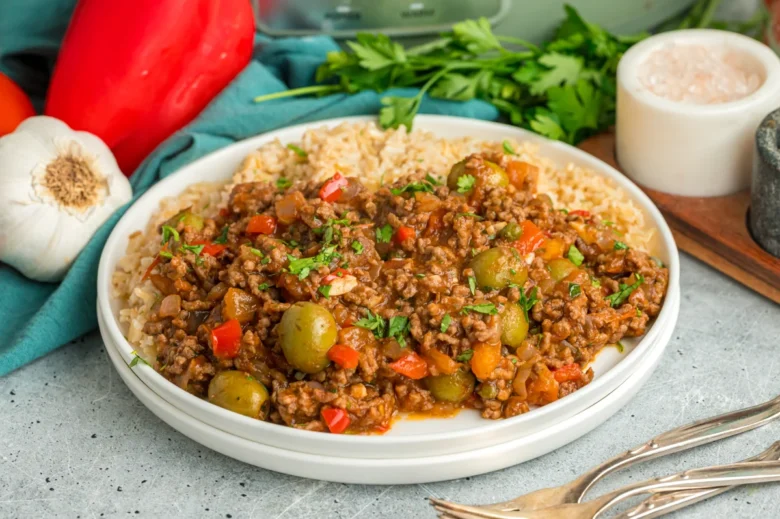
There is a category of dish that exists in almost every food culture — the weeknight ground meat dish that is made from simple, accessible ingredients, that takes less than an hour on the stovetop in its everyday form, and that has been refined over generations into something so well-balanced and so specifically flavored that it transcends its humble format entirely. Italy has Bolognese. Korea has doenjang jjigae. Mexico has picadillo. Cuba has the version that is the subject of this recipe — and the Cuban version is, on any honest assessment, one of the most underrated dishes in the entire canon of Latin American cooking.
Cuban picadillo is ground beef cooked with tomatoes, onion, garlic, cumin, oregano, and the two ingredients that set it apart from every other ground beef preparation in the world: green olives and raisins. The olives add a briny, savory punch that cuts through the richness of the beef and the acidity of the tomatoes. The raisins add a quiet, background sweetness that makes the dish taste more complex than any list of its ingredients suggests. The combination — beef, tomatoes, olives, raisins, warm spices — is the agridulce (sweet-sour) flavor principle that is one of the defining characteristics of Cuban cooking, inherited from the Spanish and African traditions that shaped the cuisine over centuries.
The slow cooker version takes this already excellent dish and deepens it. Ground beef cooked in a slow cooker for four to six hours in a tomato-based sauce develops a richness and concentration that stovetop picadillo, made in twenty-five minutes, cannot match. The beef absorbs the tomato and the spices and the brine from the olives over hours rather than minutes, becoming part of the sauce rather than a protein sitting in it. The raisins soften and swell and release their sweetness gradually into the dish. The olives maintain their character while giving up their brine to the sauce. The result is a picadillo of depth and integration that rewards the slow cooker format as thoroughly as any dish in this series.
The History and Character of Cuban Picadillo
Picadillo — from the Spanish picar, to chop or mince — is a dish found across the Spanish-speaking world in versions that vary significantly by country and region. The Cuban version is one of the most distinctive and the most beloved.
Cuban cuisine is the product of a complex history of cultural exchange: the indigenous Taíno people, Spanish colonizers, enslaved Africans brought to work the sugar plantations, and later waves of Chinese and other immigrants all contributed to a cuisine that is simultaneously simple and layered, humble and specific. The agridulce flavor principle — the sweet-and-sour balance that defines dishes like picadillo — comes from the Moorish-influenced Spanish cooking traditions that arrived with colonization and met African culinary traditions that also prized the combination of savory and sweet.
Cuban picadillo appears in every Cuban household, restaurant, and cafeteria as a foundational dish — served over white rice, used as the filling for papas rellenas (stuffed potato balls) and empanadas, piled onto bread as a sandwich filling, or simply eaten on its own as the kind of meal that requires no further justification. It is the dish that Cuban home cooks make when they want something comforting, quick, and deeply satisfying. In the slow cooker, it is all of those things with a depth that the stovetop version is simply not designed to achieve.
The Beef
Ground beef is the protein and the foundation of picadillo, and its fat content determines the richness and the texture of the finished dish.
80/20 ground beef — twenty percent fat — is the correct choice for Cuban picadillo. The fat renders into the sauce during the slow cook and enriches it with a depth that leaner beef cannot produce. Twenty percent fat is also what prevents the beef from becoming dry or granular during the four to six hour cook — the fat keeps the meat moist and yielding throughout.
85/15 ground beef is an acceptable alternative — slightly leaner but still with enough fat for a good result. The sauce will be a touch less rich.
90/10 or leaner is not recommended for slow cooker picadillo. The very low fat content of lean ground beef produces a drier, more granular texture during extended cooking and a noticeably less rich sauce. If lean beef is used, add a tablespoon of olive oil to the sauce.
Browning the beef before it goes in. Unlike some slow cooker ground beef recipes that add the raw beef directly, picadillo benefits from browning the beef in a skillet first — not to fully cook it, but to develop color and break it into small pieces. Raw ground beef added to the slow cooker clumps in a large mass and produces a grey, dense result. Browned beef, broken into small crumbles, distributes evenly through the sauce and develops the flavor compounds from the Maillard reaction that deepen the finished dish. This is the ten-minute step that most determines the quality of slow cooker picadillo.
Ground pork as a partial substitute. Replacing half the ground beef with ground pork — a common variation in Cuban cooking — adds a different fat profile and a slightly sweeter meat note that suits the agridulce character of the dish. Half beef, half pork picadillo is excellent and worth trying once the standard version is established.
The Sofrito
Cuban cooking is built on sofrito — the aromatic base of onion, garlic, and bell pepper that forms the flavor foundation of virtually every Cuban dish. In picadillo specifically, the sofrito is the most important non-beef element, and it is prepared before anything goes into the slow cooker.
Onion — one large yellow onion, diced — is the sweet, aromatic base.
Green bell pepper — one medium, diced — is the specifically Cuban addition to the standard onion-garlic sofrito. Green bell pepper’s slightly bitter, grassy note is a defining characteristic of Cuban cooking that distinguishes it from Mexican or Peruvian sofrito traditions. It is not optional in an authentic Cuban picadillo.
Garlic — four to five cloves, minced — is the aromatic backbone. A generous quantity.
The cooking process. The sofrito is sautéed in olive oil in the same skillet used to brown the beef — the residual fat from the beef enriches the sofrito and picks up any remaining browned bits from the skillet. Cook the sofrito over medium heat for four to five minutes until softened, translucent, and fragrant. Add the tomato paste and cook for a further one to two minutes until the paste darkens slightly. This cooking of the tomato paste — the same technique from the beef tips with gravy recipe — concentrates its flavor and eliminates the raw, slightly tinny edge of uncooked paste.
The Tomatoes
Tomatoes provide the sauce base and the acidity that balances the beef and the olives.
Crushed tomatoes — one fourteen-ounce can — is the most widely used form for picadillo. They dissolve into the sauce during the slow cook and produce a uniform, slightly chunky consistency that suits the dish. San Marzano crushed tomatoes are the most flavorful option.
Diced tomatoes produce a chunkier, more textured result — appropriate for those who prefer visible tomato pieces in the finished dish.
Tomato sauce — a smooth, sauced product — produces the most uniform, least textured result. Some Cuban cooks prefer this for a more refined presentation.
Tomato paste — two tablespoons, added to the sofrito — is always included regardless of which canned tomato form is used. It deepens the tomato flavor and adds color and body.
The Olives and Raisins: The Defining Ingredients
The olives and raisins are what make Cuban picadillo specifically Cuban picadillo rather than generic ground beef in tomato sauce, and they deserve the same careful attention as any other primary ingredient.
Green olives — specifically pimento-stuffed green olives or plain green olives in brine — are the briny, savory element. They should be added whole or halved, not chopped into invisibility. The brine itself — a tablespoon or two poured directly from the jar into the slow cooker — is as important as the olives. The olive brine adds salt, a concentrated olive flavor, and an acidity that integrates into the sauce and contributes the specifically Cuban character of the dish. Manzanilla olives are the most authentic; Castelvetrano olives (green, buttery, less briny) produce a milder, more delicate result.
The quantity. Half a cup of olives for a full batch is the standard starting point — enough to register clearly in every bite without dominating. More can be added if the briny, savory character is the preferred note; fewer for a more background olive presence.
Raisins — dark raisins, a quarter cup — are the sweet counterpoint. They should be added at the start of the slow cook and left to soften and swell in the tomato sauce throughout the braise. By the time the dish is done, the raisins are plump, soft, and completely integrated into the sauce — they are not garnish, they are part of the flavor architecture. Their sweetness should not be detectable as raisin-sweetness but as a general background sweetness that makes the dish taste complex rather than one-note.
The ratio. The correct ratio of olives to raisins produces a dish in which neither the briny nor the sweet note dominates — each pushes back against the other and the result is the agridulce balance that defines the dish. More olives than raisins produces a more savory, briny character. More raisins than olives produces a sweeter result. The recipe’s half cup of olives to quarter cup of raisins is the established, well-tested balance.
The Spice Blend
Cuban picadillo’s spice blend is warm, aromatic, and restrained — it flavors without overwhelming, supporting the agridulce character of the dish.
Ground cumin — one teaspoon — is the defining spice. Cuban cooking uses cumin throughout its savory dishes and picadillo is the most concentrated expression of this. A generous teaspoon produces a clearly cumin-forward dish; a half teaspoon produces a more background note.
Dried oregano — one teaspoon — adds an herbal, slightly bitter note that complements the cumin and the olives. Cuban oregano (also called Mexican oregano) is more assertive and citrusy than Mediterranean oregano; either works.
Ground coriander — half a teaspoon — adds a warm, slightly citrusy depth that bridges the cumin and the tomato.
Smoked paprika — half a teaspoon — adds color, a subtle smokiness, and a mild pepper note.
Bay leaves — two — perfume the braise in the background. Remove before serving.
Sazon seasoning — one packet, optional — is a widely used Cuban and Puerto Rican seasoning blend containing annatto (achiote), garlic, cumin, and coriander. It adds a specific orange color and a savory, slightly earthy depth that is authentic to Cuban-American cooking. Available in most Latin grocery stores and increasingly in mainstream supermarkets. If used, reduce the individual spice quantities slightly.
The Wine
A splash of dry white wine — a quarter cup — is a common addition to Cuban picadillo that adds brightness and a subtle complexity to the sauce. It is added to the skillet with the sofrito, allowed to reduce briefly, and then everything goes into the slow cooker. The wine is not strongly present in the finished dish — it is one of the background notes that makes the sauce taste more developed than it should for the time invested.
Dry sherry — a traditional Spanish cooking wine — is the most authentic Cuban option and adds a nutty, slightly oxidized complexity that is excellent in picadillo.
Dry white wine — any crisp white, nothing oaky — is the most widely accessible option.
Red wine vinegar — a tablespoon, if wine is not available — provides the acidity without the alcohol and produces an acceptable but less complex result.
Tips for Perfect Slow Cooker Cuban Picadillo
1. Brown the beef before it goes in. Raw ground beef in the slow cooker clumps, turns grey, and produces a flat-flavored result. Ten minutes of browning in a skillet — breaking the beef into small crumbles and cooking until no pink remains and some browning begins — transforms the texture and the flavor of the finished picadillo. This is the most consequential prep step in the recipe.
2. Cook the sofrito in the same skillet as the beef. The residual fat from the browned beef enriches the sofrito and picks up every flavor compound from the browning process. Do not wipe the skillet between the beef and the sofrito. The fond left from the beef — which cannot be deglazed the same way as a roast’s fond — flavors the sofrito as the vegetables cook.
3. Cook the tomato paste before it goes in. Tomato paste cooked in the olive oil with the sofrito for one to two minutes develops its flavor and loses its raw, slightly tinny edge. Raw tomato paste dumped directly into the slow cooker is detectable as a separate, unintegrated note in the finished dish. Cook it first.
4. Add the olive brine. The liquid in the olive jar is concentrated, seasoned olive brine — a ready-made flavoring agent that costs nothing extra and adds a specifically briny, savory depth to the picadillo. Add one to two tablespoons alongside the olives. This is the step that most home picadillo recipes omit and that most restaurant picadillos include.
5. Add the olives and raisins at the start. Both ingredients benefit from the full slow cook. The raisins need the full time to soften and release their sweetness into the sauce. The olives need time to give up their brine to the dish while maintaining their texture. Both added at the start produce the best integration.
6. Cook on LOW — four to six hours. Picadillo is a more forgiving dish than a roast or ribs in the slow cooker — ground beef cooks faster than whole cuts — but LOW for four to six hours produces a more developed, more deeply flavored sauce than a shorter cook on HIGH. The tomatoes break down more completely, the spices integrate more fully, and the olives and raisins have adequate time to contribute their full character to the dish.
7. Season at the end. The olive brine, the tomatoes, and the sazon all contribute sodium to the dish throughout the cook. Taste and adjust salt only after the full cook, when the flavors have concentrated and the final balance is apparent. Over-seasoning before the cook produces a very salty finished dish.
Serving the Cuban Picadillo
Cuban picadillo is a complete and self-sufficient dish that requires very little to complete the plate.
Over white rice is the definitive and most common serving — long-grain white rice, simply cooked, preferably fluffy and dry rather than sticky. The picadillo is spooned over the rice and the sauce soaks into the grains. This is the classic Cuban plate, eaten at tables across the country and its diaspora, and it is correct.
With black beans alongside — either served separately or spooned directly over the same plate as the picadillo and rice — is the full Cuban plate. Black beans cooked with sofrito and bay leaf, earthy and rich, alongside the savory-sweet picadillo and neutral white rice, is one of the great comfort food combinations in Latin American cooking.
Fried sweet plantains — maduros — on the side add a sweet, caramelized element that complements the agridulce character of the picadillo specifically and beautifully. Slice ripe (black-yellow) plantains on the diagonal and fry in oil until golden and soft — two to three minutes per side. The plantains’ sweetness echoes the raisins in the picadillo and makes the plate feel complete in a specifically Cuban way.
As an empanada filling. Cooled picadillo, spooned into empanada discs and baked or fried, is one of the great hand-held uses of leftover picadillo. The filing — already perfectly seasoned, slightly saucy, containing olive and raisin — produces empanadas that are specifically and extraordinarily good.
The Complete Table
Sides:
- Fluffy white rice — the essential pairing
- Cuban black beans — the full plate
- Fried sweet plantains (maduros) — the specifically Cuban accompaniment
- Tostones (fried green plantains) — crispy and neutral
- Yuca with garlic mojo — earthy and complementary
- A simple avocado salad with lime and salt
Occasions:
- Tuesday night dinner — the weeknight dish that does not eat like one
- Meal prep Sunday — scales beautifully, keeps all week, reheats perfectly
- Family gathering — serves eight from a single slow cooker batch
- Cuban themed dinner — with black beans, rice, maduros, and Cuban bread
- Empanada making session — the best empanada filling from this entire series
The Day-After Picadillo Uses
Leftover picadillo is one of the most versatile leftovers in this entire collection. Spooned into a hollowed-out baked potato and topped with a fried egg, it becomes the best possible loaded potato of the week. Packed into empanada discs and baked, it produces the empanadas described above. Stuffed into poblano peppers with rice and cheese and baked at 375°F (190°C) for 25 minutes, it becomes stuffed peppers of Cuban character. Scrambled through eggs with a handful of diced potato and served with hot sauce, it becomes the best possible breakfast hash. Used as the filling for papas rellenas — Cuban stuffed potato croquettes — it produces one of the great Cuban street foods from leftover slow cooker picadillo and mashed potato.
Easy Variations
- Picadillo with potatoes. Add two medium potatoes, peeled and cut into half-inch dice, to the slow cooker in the final two hours of cooking. The potato absorbs the sauce, adds starch and body to the dish, and is a common regional variation that makes the picadillo more substantial. Particularly good for stretching the batch further.
- Spicy picadillo. Add one or two chipotle peppers in adobo sauce, minced, to the sofrito before adding to the slow cooker. The chipotle adds smoky heat and a deeper, more complex chile note that transforms the character of the dish. Use the adobo sauce from the can as well — one tablespoon adds color and depth.
- Picadillo with capers. Add two tablespoons of capers alongside the olives. The capers add a more intense, pungent brininess that deepens the savory note of the dish. Common in some Cuban household versions.
- Picadillo with hard-boiled eggs. Add two to three hard-boiled eggs, halved, to the slow cooker in the final 30 minutes of cooking. The eggs absorb the sauce and add a richness and visual drama that is traditional in some Cuban and Puerto Rican versions.
- Picadillo for papas rellenas. Use the picadillo — slightly reduced by cooking the finished batch uncovered on HIGH for 20 minutes — as the filling for Cuban-style potato croquettes. Wrap a spoonful of filling in mashed potato, roll in breadcrumbs, and fry until golden. The best possible use of slow cooker picadillo beyond eating it over rice.
Make-Ahead and Storage
Make-ahead: Picadillo is one of the best make-ahead dishes in this collection. Made two days ahead and refrigerated, the flavors deepen significantly as the spices continue to integrate with the meat and the agridulce balance settles into the sauce. Day 3 picadillo is measurably better than Day 1.
Refrigerator: Keeps in an airtight container for up to five days. The sauce thickens during refrigeration — add a small splash of broth or water when reheating.
Freezer: Freezes exceptionally well for up to three months in airtight containers or freezer bags. Thaw overnight in the refrigerator and reheat gently on the stovetop with a splash of water to loosen. The flavors are essentially unchanged after freezing.
Meal prep. A full batch of slow cooker Cuban picadillo divided into portions over cooked white rice produces five to six complete lunch or dinner containers for the week. It reheats in 90 seconds in the microwave and tastes as good on Day 5 as Day 1. It is one of the best meal prep dishes in this series.
Shopping List
The Beef
- 2 lbs (900g) ground beef, 80/20
- 2 tbsp olive oil (for browning)
The Sofrito
- 1 large yellow onion, diced
- 1 medium green bell pepper, diced
- 4–5 garlic cloves, minced
- 2 tbsp tomato paste
The Sauce
- 1 can (14 oz / 400g) crushed tomatoes
- ¼ cup (60ml) dry white wine or dry sherry
- 1–2 tbsp olive brine from the olive jar
The Spices
- 1 tsp ground cumin
- 1 tsp dried oregano
- ½ tsp ground coriander
- ½ tsp smoked paprika
- 2 bay leaves
- 1 packet sazon seasoning (optional)
- Salt and black pepper to taste
The Signature Ingredients
- ½ cup (80g) green olives (pimento-stuffed or plain), whole or halved
- ¼ cup (40g) dark raisins
For Serving
- Fluffy white rice
- Cuban black beans (optional)
- Fried sweet plantains (optional)
- Fresh cilantro for garnish
Slow Cooker Cuban Picadillo (Ground Beef & Olives)
Two pounds of 80/20 ground beef browned in a skillet with a sofrito of onion, green bell pepper, garlic, and tomato paste, then slow-cooked on LOW for four to six hours with crushed tomatoes, cumin, oregano, green olives, dark raisins, and a splash of dry white wine — producing a deeply flavored Cuban picadillo in which the brine of the olives and the sweetness of the raisins achieve the agridulce balance that defines the dish. Served over fluffy white rice with black beans and fried sweet plantains alongside. The ground beef dish that rewards the slow cooker’s patience more than any other in this collection.
- Total Time: 4 hours 30 minutes
- Yield: 6–8 servings 1x
Ingredients
The Beef
- 2 lbs (900g) ground beef, 80/20
The Sofrito
- 2 tbsp olive oil
- 1 large yellow onion, finely diced
- 1 medium green bell pepper, finely diced
- 4–5 garlic cloves, minced
- 2 tbsp tomato paste
The Sauce
- 1 can (14 oz / 400g) crushed tomatoes
- ¼ cup (60ml) dry white wine or dry sherry
- 1–2 tbsp olive brine (from the olive jar)
The Spices
- 1 tsp ground cumin
- 1 tsp dried oregano
- ½ tsp ground coriander
- ½ tsp smoked paprika
- 2 bay leaves
- 1 packet sazon seasoning (optional)
- Salt and black pepper to taste
The Signature Ingredients
- ½ cup (80g) green olives, pimento-stuffed or plain, left whole or halved
- ¼ cup (40g) dark raisins
For Serving
- Fluffy long-grain white rice
- Fresh cilantro, roughly chopped
- Lime wedges
Instructions
- Brown the beef. Heat one tablespoon of olive oil in a large heavy-bottomed skillet over medium-high heat. Add the ground beef and cook, breaking it into small crumbles with a wooden spoon, until no pink remains and the meat is beginning to brown in places — approximately 8 to 10 minutes. Do not fully drain — leave a small amount of rendered fat in the skillet. Transfer the browned beef to the slow cooker.
- Cook the sofrito. Reduce heat to medium. Add the remaining tablespoon of olive oil to the same skillet. Add the diced onion and green bell pepper and cook, stirring occasionally, for 4 to 5 minutes until softened and translucent. Add the minced garlic and tomato paste and cook for a further 1 to 2 minutes, stirring constantly, until the tomato paste darkens slightly in color.
- Deglaze. Pour the white wine or sherry into the skillet and stir, scraping up any browned bits from the bottom. Allow to bubble and reduce for 1 minute. Pour the entire contents of the skillet into the slow cooker.
- Add everything. To the slow cooker, add the crushed tomatoes, olive brine, cumin, oregano, coriander, smoked paprika, bay leaves, and sazon packet if using. Add the green olives and raisins. Stir everything together until well combined.
- Cook. Set the slow cooker to LOW and cook for 4 to 6 hours, until the sauce is deeply flavored, slightly thickened, and the raisins are plump and soft. The dish is ready when the sauce has reduced and concentrated and the individual flavors have melded into a unified, complex whole.
- Finish and season. Remove and discard the bay leaves. Taste and adjust seasoning — salt and black pepper as needed. The olive brine and sazon contribute significant sodium; taste before adding salt. Stir everything once more to redistribute the olives and raisins evenly.
- Serve. Spoon generously over fluffy white rice. Garnish with fresh cilantro and lime wedges. Serve with black beans and fried sweet plantains alongside if desired.
Notes
- Brown the beef — always. This is the most important technique note in the recipe. Raw ground beef in the slow cooker produces a grey, flat-flavored, clumped result. Browning breaks the beef into small crumbles, develops flavor through the Maillard reaction, and produces a finished picadillo with a noticeably better texture and a deeper, more complex sauce.
- Green bell pepper is not optional. It is the defining aromatic of Cuban sofrito and is what distinguishes Cuban picadillo from Mexican or other Latin picadillo versions. Its slightly bitter, grassy note is structural to the flavor of the dish.
- Add the olive brine. The liquid from the olive jar is one of the most flavorful free ingredients in the recipe. One to two tablespoons added to the slow cooker contributes a concentrated brininess that deepens the entire sauce. Do not discard it.
- Do not chop the raisins. Whole raisins added at the start of the slow cook swell and soften into the sauce over four to six hours, becoming plump and integrated into the dish. Chopped raisins dissolve entirely and lose the textural presence that makes them identifiable — and the agridulce balance depends on encountering the raisin note as a specific, slightly sweet moment rather than a background sweetness.
- Taste for salt at the end only. The olive brine, crushed tomatoes, sazon, and Worcestershire all contribute sodium to the sauce during the long cook. The total salt level is not apparent until the cook is complete and the sauce has concentrated. Season only after tasting the finished dish.
- Day 2 picadillo is better than Day 1. The agridulce balance of the dish deepens and integrates overnight in the refrigerator. The olives’ brininess mellows slightly, the raisins’ sweetness distributes more evenly through the sauce, and the spices become more cohesive. Make it the day before if possible.
- Serve with white rice — not brown. Long-grain white rice, fluffy and dry, is the correct accompaniment for Cuban picadillo. Brown rice’s nuttiness and firmer texture compete with the complex flavors of the picadillo rather than providing the neutral, absorbent base the dish requires. White rice is the correct choice by tradition and by flavor logic.
- Prep Time: 15 minutes
- Cook Time: 4–6 hours (on LOW)
- Category: Dinner, Main Dish, Meal Prep
- Method: Slow Cooking
- Cuisine: Cuban
- Diet: Dairy-Free, Gluten-Free
Frequently Asked Questions
What makes Cuban picadillo different from other picadillo versions? The defining characteristics of Cuban picadillo specifically are the green olives, the raisins, the green bell pepper in the sofrito, and the agridulce (sweet-sour) balance that results from their combination. Mexican picadillo often uses potatoes and sometimes chiles but rarely olives or raisins. Puerto Rican picadillo is closely related to Cuban but uses different herbs and often capers. Spanish picadillo typically lacks the raisins. The Cuban version’s combination of briny olives and sweet raisins in the same dish — producing a sauce that tastes simultaneously savory, sweet, and acidic — is unique to the Cuban tradition and is what makes the dish specifically worth seeking out rather than making a generic Latin ground beef dish.
Can I skip the raisins or olives if I don’t like them? You can skip either, but the result is no longer Cuban picadillo — it becomes a well-seasoned ground beef tomato sauce, which is good but not what this recipe is for. The raisins and olives are the dish’s identity. If raisins are the concern: they dissolve so thoroughly into the sauce during the slow cook that many people who dislike raisins in other contexts do not notice them in picadillo — they contribute a background sweetness rather than a clearly identifiable raisin flavor. The same applies to the olive skeptic — the olives mellow significantly during the long cook and become part of the sauce’s savory depth rather than asserting themselves as a distinct olive flavor. Try the full recipe once before deciding to modify it.
Do I have to brown the ground beef first? Technically no — the dish is edible without browning. Practically, yes. Raw ground beef added to the slow cooker produces a grey, clumped, flat-flavored result that is noticeably inferior to browned beef in every respect: texture, color, depth of flavor, and sauce quality. The ten minutes of browning is the technique that separates a good slow cooker picadillo from an ordinary one. If browning is genuinely impossible, break the raw beef into the smallest possible pieces before adding, use the HIGH setting for the first hour to cook through before switching to LOW, and accept that the result will be acceptable rather than excellent.
What type of olives should I use? Pimento-stuffed manzanilla olives — the small, round, red-centered green olives sold in jars at every grocery store — are the most specifically Cuban and the most widely available option. They are the olive that appears in Cuban households universally. Plain green olives in brine work equally well. Castelvetrano olives — the bright green, buttery Sicilian variety — produce a milder, less briny result that some prefer. Kalamata olives (black, Greek) are an acceptable variation that produces a more complex, earthier note. Avoid olive bar olives that have been marinated in herbs and oil — their added flavors compete with the picadillo’s own spice profile.
Is sazon seasoning necessary? No — sazon is an optional addition that adds the specific color (from annatto/achiote) and the savory depth of commercial Cuban-American seasoning. Without it, the picadillo is excellent — the individual spices in the recipe cover the flavor profile. With it, the color is a deeper orange-red and the savory depth is amplified. It is available in the Latin foods section of most supermarkets (Goya brand is the most widely distributed) and at Latin grocery stores. If using sazon, reduce the added salt since sazon contains significant sodium.
Can I make this with ground turkey or chicken? Yes — ground turkey or chicken can replace the beef for a lighter version. Use dark meat ground turkey (not breast-only, which produces a dry result) and add one extra tablespoon of olive oil to compensate for the lower fat content. The flavor will be lighter and less rich than the beef version, but the agridulce balance of the olives and raisins translates well to poultry. The sauce will be thinner — reduce uncovered on HIGH for 20 to 30 minutes at the end of the cook if a thicker consistency is preferred.
What is the best rice to serve with Cuban picadillo? Long-grain white rice — specifically the fluffy, separate-grain style rather than sticky or arborio-style rice — is the correct accompaniment. Cuban white rice is typically cooked with a small amount of salt, sometimes with a bay leaf added to the cooking water, and served dry and fluffy so that the picadillo sauce can soak into the individual grains without the rice clumping or becoming sticky. Jasmine rice is an excellent choice. Basmati works well. The most authentic Cuban rice, cooked in the arroz blanco tradition, uses just water, salt, oil, and sometimes a small amount of garlic — nothing that would compete with the picadillo’s flavor.