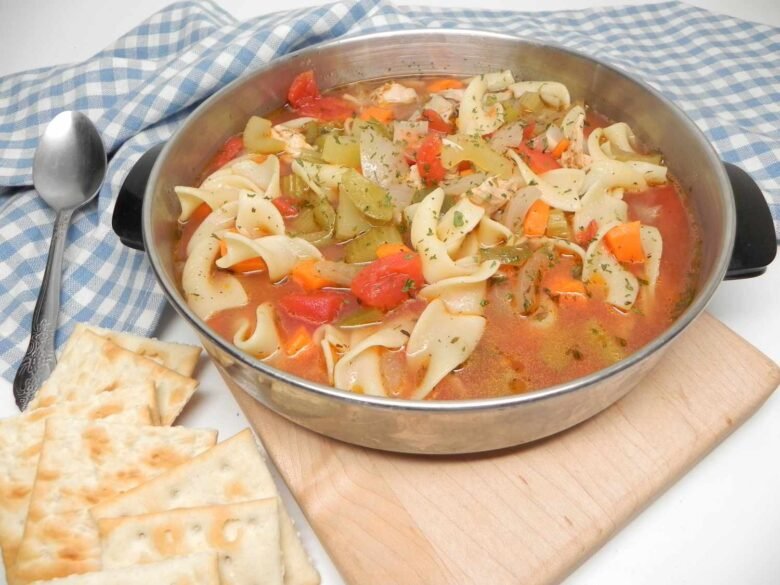
There are dishes that belong to a category beyond cuisine — beyond technique, beyond recipe, beyond any reasonable food writing about flavor profiles and ingredient ratios. Chicken soup is one of them. It is the dish that appears, without deliberation, at the moment when it is needed. When someone is sick. When someone is grieving. When the weather has turned and the house needs something warm at its center. When everything is difficult and the right response is to make something simple and good and give it to someone. Chicken soup is older than almost every cooking tradition it appears in, and it has survived because it does something that no other dish does as well: it is both medicine and comfort, nourishment and care, in the same bowl.
The slow cooker version is the right version of chicken soup for the cook who needs to make it without hovering — who needs to start it in the morning and have it ready in the afternoon, who needs to make a large batch that will feed the household for several days, who is making it for someone else and cannot be at the stove for six hours while it simmers. The slow cooker produces chicken soup in the way that chicken soup has always been made at its best: with time, with patience, with a low heat that coaxes flavor from the chicken bones and the vegetables gradually and completely, producing a broth that is clear, deeply golden, and specifically warm in a way that has nothing to do with its temperature.
The egg noodles are added at the end — cooked separately and stirred in, or cooked directly in the slow cooker in the final thirty minutes — because overcooked noodles are the most common disappointment in slow cooker chicken soup and are entirely preventable. Done correctly, the noodles absorb some of the broth, contribute their eggy richness to the soup, and produce the specific comfort of chicken and noodles that is, for most people, what chicken soup means.
Why Time Makes Better Chicken Soup
Chicken soup is one of the clearest demonstrations of a principle that applies throughout this series: time, at low temperature, develops flavor in ways that speed cannot replicate.
A chicken breast, cooked in salted water for twenty minutes, produces poached chicken in a pale, thin broth. The same chicken, simmered for three hours with bones, vegetables, and aromatics, produces something unrecognizably different — a broth that has turned golden from the fat and gelatin dissolved from the bones, that has absorbed the sweetness of the carrot, the depth of the celery, the aromatic warmth of the garlic and the thyme, that has a body from the dissolved collagen that makes it feel nourishing in the mouth rather than simply liquid. The chicken itself, having spent those hours cooking and then resting in the broth, is tender and deeply flavored rather than the neutral protein of quickly poached meat.
The slow cooker achieves this specific result — the long-simmered, deeply golden broth — without the attention that stovetop simmering requires. At LOW, the broth sits at approximately 190°F to 200°F (88°C to 93°C) throughout the cook — below the boiling point that clouds a broth and produces scum, but warm enough to extract flavor from the bones and vegetables completely over six to eight hours. The result is a clear, golden, deeply flavored broth that most stovetop cooks would be pleased to have produced in twice the time with twice the attention.
The chicken — ideally bone-in pieces that contribute their collagen to the broth — emerges from the slow cooker so tender that it shreds from the bone with the lightest touch. The broth it has been cooking in for six to eight hours is the clearest, most deeply flavored chicken broth most home kitchens will produce.
The Chicken
The chicken choice is the most consequential ingredient decision in this recipe, and bone-in is always the correct answer.
A whole chicken — three and a half to four and a half pounds — is the most traditional and most broth-producing choice. The combination of dark and white meat, the back with its concentration of connective tissue, the neck (if included), and the carcass all contribute differently to the broth and together produce a soup of complete, well-rounded chicken flavor. The whole chicken shreds easily after six to eight hours and distributes through the soup in pieces that have more flavor variation than uniform cuts.
Bone-in, skin-on chicken thighs — four to six pieces — are the most practical choice for a consistent, crowd-pleasing result. Dark meat’s higher fat and collagen content produces a richer broth than white meat alone. The skin adds fat and the bone adds gelatin. After six to eight hours on LOW, the thighs pull completely from the bone and shred into the soup.
Bone-in, skin-on chicken breasts — two to three large — produce a leaner, lighter broth with a cleaner flavor. The white meat shreds cleanly but can become slightly stringy if overcooked. For breast meat, check at the five-hour mark and remove the chicken if it begins to feel too firm.
A combination of thighs and drumsticks — the classic soup chicken combination — produces a balanced broth: rich from the dark meat fat and collagen, varied in texture from the different cuts.
What not to use. Boneless, skinless chicken breasts alone produce thin, pale broth and dry, stringy meat in the slow cooker. If boneless, skinless is the only option, reduce the cook time to three to four hours, check frequently, and accept that the broth will need to be supplemented with good quality store-bought broth.
The Vegetables
The vegetables in chicken soup serve two purposes: they contribute flavor to the broth during the long cook, and they provide the visible, textured components in the finished bowl. The trick is that these two purposes work best at different times — flavor contribution happens throughout the cook, while textured vegetables added too early become mush.
The mirepoix: carrots, celery, and onion — the classic French aromatic vegetable combination that is also, not coincidentally, the classic chicken soup vegetable combination. These three vegetables, in roughly equal parts, are the flavor backbone of the broth. Two to three carrots, three to four celery stalks, and one large onion constitute the standard full batch.
For broth flavor only: The initial vegetable load — the mirepoix plus the aromatics — goes into the slow cooker at the start and contributes its full flavor over six to eight hours. These vegetables will be soft and somewhat tasteless by the end of the cook; they are strained out or removed.
For texture and presence in the bowl: Fresh carrots and celery, cut into pieces the right size for a soup spoon, are added in the final two hours of the cook. These pieces retain some texture and appear in the finished bowl as the recognizable vegetables that make chicken soup look like chicken soup.
The approach: Most home cooks use one set of vegetables for the full cook rather than two separate additions, and the result is fine — soft vegetables in a deeply flavored broth. For the best combination of broth depth and vegetable texture, use the two-addition approach.
Other vegetables. Parsnip — one small, added at the start — adds a sweet, slightly peppery depth to the broth that is traditional in Ashkenazi Jewish chicken soup and is specifically excellent. Leek — the white and light green parts, halved lengthwise — adds a mild onion sweetness that is more delicate than yellow onion. Garlic — three to four cloves, smashed — adds aromatic depth. Turnip — a small piece, added at the start — adds a faintly bitter note that some traditional recipes include.
The Aromatics
Garlic — three to four cloves, smashed rather than minced — adds aromatic depth without becoming sharp during the long cook. Smashed cloves mellow and sweeten; minced garlic can become slightly acrid in extended cooking.
Fresh parsley — a handful of stems (the stems have as much flavor as the leaves, if not more, and hold up better during long cooking) added at the start, and fresh leaves chopped and added at serving for brightness.
Fresh thyme — four to five sprigs — is the herb that specifically complements chicken and contributes a warm, slightly earthy herbal note to the broth.
Bay leaves — two — provide the quiet background depth they contribute to every braise and stock.
Black peppercorns — eight to ten whole — add a gentle background warmth to the broth. Ground pepper added at the start produces a slightly different, less clean pepper note. Whole peppercorns strained out before serving is the cleaner approach.
A Parmesan rind — optional, but specifically excellent — added to the slow cooker with the vegetables adds a savory, slightly nutty umami depth to the broth that is subtle but noticeable and worth using whenever there is a rind available in the freezer.
The Broth Base
Chicken soup made entirely from water and the ingredients in the slow cooker is excellent. Chicken soup made with a combination of good quality chicken broth and water is more consistently excellent, particularly in cases where the chicken used is lean and boneless.
Water only. The purist approach — and correct if bone-in chicken pieces with good fat content are used. Six to eight hours at LOW extracts enough flavor from the chicken, bones, and vegetables to produce a deeply flavored, golden broth without assistance.
Half broth, half water. The most common and most reliably excellent approach. Four cups of good quality chicken broth plus four cups of water produces a soup that has the depth of long-cooked broth from the start and intensifies further during the cook. The additional broth compensates for any shortfall in bone or fat content from the chicken pieces used.
All store-bought broth. Acceptable when the chicken is boneless and skinless and the cook time is limited. The broth provides the flavor that the chicken cannot; the soup is good but not the same as the long-cooked version.
The Egg Noodles
The egg noodles are the element of chicken soup most likely to go wrong in the slow cooker — and the most preventable failure mode in the entire recipe.
The problem. Wide egg noodles added to the slow cooker at the start of a six to eight-hour cook absorb all the broth, swell to many times their original size, become soft and bloated, and produce a soup that is more paste than soup by the time it is served. This is not a slow cooker problem — it is a timing problem.
The solution. Egg noodles are cooked separately in a pot of salted water until just al dente, drained, and stirred into the finished soup immediately before serving. This produces noodles that are the correct texture — slightly firm, with some chew — and that do not continue to absorb broth during serving.
The alternative. For a one-pot approach, add the egg noodles to the slow cooker in the final twenty to thirty minutes of cooking, after the slow cooker has been switched to HIGH, and cook uncovered until the noodles are just tender. This method works but requires attention — noodles added ten minutes too early become overcooked, and the transition from HIGH back to serving temperature should happen quickly.
Wide vs medium egg noodles. Wide egg noodles have more presence in the bowl and absorb the broth more deeply in their folds. Medium egg noodles are the more commonly available option and are entirely correct. Both produce good soup; the wide variety produces a more substantial, more visually appealing bowl.
Storage note. If the soup will be stored and reheated over several days, keep the noodles separate. Store the broth and chicken without noodles; add freshly cooked noodles to each bowl when serving. Noodles stored in soup absorb the broth overnight and become swollen and soft by the next day.
Tips for Perfect Slow Cooker Chicken Soup with Egg Noodles
1. Use bone-in chicken. The bones are the broth. Their collagen converts to gelatin over six to eight hours, producing the golden, body-rich broth that distinguishes great chicken soup from good chicken broth. Boneless, skinless chicken produces pale, thin broth that cannot achieve the same depth regardless of cook time.
2. Start with cold water. Adding cold water rather than hot produces a cleaner, clearer broth. Cold water extraction is slower and more gradual than hot, which produces a more transparent, less cloudy result. This is the technique used in professional stock-making and it applies in the slow cooker.
3. Do not boil the broth. The LOW setting on the slow cooker holds the broth below boiling — approximately 190°F to 200°F (88°C to 93°C). At this temperature, the broth extracts flavor slowly and stays clear. If the slow cooker runs hot and the broth is bubbling vigorously, switch to KEEP WARM for the final hours. A boiling slow cooker produces a cloudy broth and can toughen the chicken.
4. Add fresh vegetables in the last two hours. The initial vegetable load contributes its flavor and softens beyond recognition by the end of the cook. Fresh carrot and celery pieces added in the final two hours retain texture and appear in the finished bowl as the recognizable vegetables of the classic presentation.
5. Remove the chicken and shred it before returning. After the long cook, transfer the chicken to a cutting board. Remove the skin and bones and shred the meat. Return the shredded meat to the broth. This step separates the clean meat from the bones rather than fishing for them in the finished soup.
6. Season at the end. The broth concentrates during the long cook — the salt level at the start does not reflect the salt level at the end. Season conservatively at the start (a teaspoon of salt) and taste and adjust aggressively at the end. Chicken soup specifically needs generous salt — unsalted chicken soup is one of the most common and most easily corrected disappointments in home cooking.
7. Add the noodles last — or separately. Cook noodles separately and add them to the bowl at serving, or add them to the slow cooker in the final twenty to thirty minutes on HIGH. Never add noodles at the start of the cook.
8. Squeeze a lemon into the finished soup. A tablespoon or two of fresh lemon juice stirred into the finished soup immediately before serving adds a brightness that makes every other flavor in the bowl more vivid. This is the small technique that most home cooks who have grown up eating chicken soup from a recipe have never been told about and that makes an immediately detectable difference.
Serving the Chicken Soup
The bowl. A deep, wide bowl — enough room for a generous portion of soup, several ladles of broth, and a handful of noodles. The soup should be ladled generously: this is not a restaurant portion, calibrated for profit. This is home cooking, calibrated for the person eating it.
The garnish. Fresh flat-leaf parsley, finely chopped, scattered generously over each bowl is the essential finish — it adds a bright, herbal note that the long-cooked herbs in the broth cannot provide. A crack of black pepper. Nothing else is needed.
What is needed alongside. Crusty bread, or good crackers, for the broth. Butter to spread on the bread. This is the complete picture.
For the sick person. A thermos. The broth poured hot into a prewarmed thermos, with the noodles in a separate container, is the correct delivery format. The broth stays hot. The noodles are added when it is time to eat. This is what the soup was made for.
The Complete Table
Sides:
- Crusty bread or a good baguette — mandatory
- Oyster crackers or saltine crackers — for the soup bowl
- A simple green salad — for a complete meal alongside
- Grilled cheese sandwich — the most specifically correct accompaniment to tomato soup’s cousin
Garnishes:
- Fresh flat-leaf parsley — essential
- Fresh dill — specifically excellent in chicken soup, adding a distinctly Eastern European herbal note
- A squeeze of fresh lemon — the technique most worth adding
- A small dollop of sour cream — for a richer, slightly tangy finishing note
- Freshly cracked black pepper
Drinks:
- Hot tea — chamomile, ginger, or green — alongside the soup when it is being made for the sick
- Sparkling water with lemon for a clean, non-competing pairing
The Day-After Chicken Soup Uses
Leftover chicken soup kept refrigerated for up to four days — always stored without the noodles — produces a week of excellent eating. The broth, which gels overnight in the refrigerator from the gelatin in the chicken bones, reheats to a clear, golden liquid of concentrated flavor. Day-two chicken soup is often noticeably more complex than the day it was made, as the flavors continue to develop. The broth alone, reheated and sipped from a mug with a small pinch of salt, is one of the most genuinely restorative things in the kitchen. The broth reduced by half in a small saucepan becomes the most flavorful cooking liquid in the house — for cooking rice, for making risotto, for deglazing a pan after searing chicken, for any application where good chicken stock improves the finished dish. The shredded chicken in the broth becomes the filling for chicken salad, chicken quesadillas, a chicken and vegetable stir-fry, chicken tacos with salsa verde, or simply piled onto toast with avocado and a pinch of salt.
Easy Variations
- Chicken soup with rice. Replace the egg noodles with long-grain white rice added in the final forty-five minutes of cooking directly to the slow cooker. The rice absorbs the broth beautifully and produces a heartier, more substantial soup — closer to what is sometimes called arroz caldo in Filipino cooking or avgolemono in its Greek form.
- Greek lemon chicken soup (Avgolemono). Whisk three egg yolks with the juice of two lemons in a bowl. Temper the mixture by whisking in a ladleful of hot broth from the slow cooker. Stir the tempered egg-lemon mixture back into the soup at the end of the cook, switched to KEEP WARM. The egg-lemon enriches the broth into a slightly thickened, silky, deeply lemony soup that is one of the great soups of the world.
- Italian wedding soup variation. Omit the egg noodles. Add small chicken meatballs (ground chicken mixed with Parmesan, breadcrumbs, garlic, and parsley, rolled into one-inch balls) to the slow cooker in the final two hours of cooking. Add a cup of small pasta (orzo, acini di pepe) in the final thirty minutes. Finish with freshly grated Parmesan and baby spinach stirred in at serving.
- Chicken tortilla soup. Add one can of diced tomatoes, one can of black beans, one can of corn, one diced jalapeño, and a tablespoon of chili powder to the slow cooker alongside the chicken. Replace the egg noodles with crispy tortilla strips. Top each bowl with avocado, sour cream, shredded cheddar, and lime.
- Cream of chicken noodle soup. In the final thirty minutes of cooking, stir in half a cup of heavy cream and two tablespoons of cream cheese. The cream enriches the broth into something thicker, more luxurious, and specifically comforting in cold weather.
Make-Ahead and Storage
Make-ahead: Chicken soup is the ideal make-ahead dish. Made two days before it is needed, the flavors develop and deepen in the refrigerator — the gelatin from the bones becomes more pronounced, the vegetable sweetness integrates further, and the overall flavor is more cohesive. For a sick family member expected over the weekend, make the soup Friday and it will be at its best Saturday.
Storage — without noodles. Always store the broth and chicken without noodles. Noodles stored in the broth absorb it overnight and become soft, swollen, and unpleasant by the next serving. Cook fresh noodles for each serving.
Refrigerator: The broth gels completely overnight from the gelatin — this is correct and is the mark of a well-made soup. Reheat gently in a saucepan over medium-low heat. The broth without noodles keeps for four to five days. With noodles already added, it keeps for two days before the noodles degrade noticeably.
Freezer: Freeze the broth and chicken without noodles in one-quart or one-gallon freezer bags for up to three months. Flatten the bags for efficient storage. Thaw overnight in the refrigerator or under cold running water. This is the freezer meal that most justifies making a large batch — the soup is ready in the time it takes to boil water for the noodles.
Shopping List
The Chicken
- 3–4 lbs (1.4–1.8kg) bone-in, skin-on chicken thighs, drumsticks, or a whole chicken
The Vegetables (for broth)
- 2 large carrots, halved
- 3 celery stalks, halved
- 1 large yellow onion, quartered
- 1 small parsnip (optional)
- 1 leek, white and light green parts (optional)
The Vegetables (for the bowl — added last 2 hours)
- 2 large carrots, peeled and sliced into ½-inch rounds
- 2 celery stalks, sliced into ½-inch pieces
The Aromatics
- 3–4 garlic cloves, smashed
- A small bunch of fresh parsley, stems and leaves separated
- 4–5 sprigs fresh thyme
- 2 bay leaves
- 8–10 whole black peppercorns
The Liquid
- 4 cups (960ml) good quality chicken broth
- 4 cups (960ml) cold water
- 1½ tsp salt (to start — more to finish)
The Noodles
- 8 oz (225g) wide egg noodles
The Finish
- Juice of ½ lemon — added at serving
- Fresh flat-leaf parsley, finely chopped — for garnish
Slow Cooker Chicken Soup with Egg Noodles
Bone-in, skin-on chicken pieces — thighs, drumsticks, or a whole chicken — slow-cooked on LOW for six to eight hours in a combination of chicken broth, cold water, carrots, celery, onion, parsnip, garlic, fresh thyme, parsley stems, bay leaves, and whole peppercorns. The chicken removed and shredded, the broth strained of aromatics and skimmed of fat. Fresh carrot and celery pieces added in the final two hours for texture. Wide egg noodles cooked separately in salted water, stirred in immediately before serving. A squeeze of fresh lemon and a generous scatter of fresh parsley over each bowl. Clear, golden, deeply flavored, and specifically warming. The chicken soup that fills the house with the right smell at exactly the right moment.
- Total Time: 6 hours 25 minutes
- Yield: 6–8 servings 1x
Ingredients
The Chicken and Broth Base
- 3–4 lbs (1.4–1.8kg) bone-in, skin-on chicken pieces (thighs, drumsticks, or whole chicken)
- 4 cups (960ml) good quality chicken broth
- 4 cups (960ml) cold water
- 1½ tsp salt (to start)
The Aromatics and Broth Vegetables (added at the start)
- 2 large carrots, halved lengthwise
- 3 celery stalks, halved
- 1 large yellow onion, quartered
- 3–4 garlic cloves, smashed
- A small bunch fresh parsley stems (reserve leaves for garnish)
- 4–5 sprigs fresh thyme
- 2 bay leaves
- 8–10 whole black peppercorns
- 1 small parsnip, halved (optional)
The Bowl Vegetables (added in final 2 hours)
- 2 large carrots, peeled and sliced into ½-inch rounds
- 2 celery stalks, sliced into ½-inch pieces
The Noodles
- 8 oz (225g) wide egg noodles, cooked separately
The Finish
- Juice of ½ lemon
- Salt and black pepper to taste
- Fresh flat-leaf parsley leaves, finely chopped
Instructions
- Build the slow cooker. Place the chicken pieces in the slow cooker. Add the halved carrots, halved celery stalks, quartered onion, smashed garlic, parsley stems, thyme sprigs, bay leaves, peppercorns, and parsnip (if using). Pour in the chicken broth and cold water. Add the salt.
- Cook. Set the slow cooker to LOW and cook for 6 to 8 hours, until the chicken is completely cooked through, tender, and pulling easily from the bones. Do not lift the lid during cooking.
- Add the bowl vegetables. Two hours before the end of the cook time, add the sliced carrot rounds and sliced celery pieces to the slow cooker. Replace the lid and continue cooking for the remaining two hours.
- Remove the chicken. Using tongs, carefully transfer the chicken pieces to a large cutting board or bowl. Allow to cool slightly — five minutes — until comfortable to handle.
- Strain and skim the broth. If desired for a cleaner presentation, ladle or pour the broth through a fine mesh strainer into a large bowl or pot, reserving the sliced carrot and celery pieces separately and discarding the halved aromatics and whole spices. Pour the strained broth back into the slow cooker. Alternatively, simply fish out the spent aromatics (halved vegetables, thyme stems, bay leaves) with tongs and leave the broth in the slow cooker. Skim any visible fat from the surface.
- Shred the chicken. Remove and discard the skin and bones. Shred the chicken meat into pieces using two forks or your hands. Return the shredded chicken and reserved carrot and celery pieces to the slow cooker.
- Season. Taste the broth and adjust seasoning generously — salt and black pepper. Chicken soup requires more salt than most soups because it is mild at its base. Stir in the lemon juice.
- Cook the noodles. Bring a large pot of heavily salted water to a boil. Cook the wide egg noodles according to package directions until just al dente — slightly firm. Drain. Do not rinse.
- Serve. Place a portion of noodles in each bowl. Ladle the hot chicken soup over the noodles generously — plenty of broth, plenty of chicken and vegetables. Scatter fresh parsley over the top. Crack black pepper over each bowl. Serve immediately with crusty bread alongside.
Notes
- Bone-in chicken is the broth. The collagen in the chicken bones converts to gelatin during the six to eight-hour slow cook, producing the golden, slightly viscous broth that distinguishes genuinely good chicken soup from hot chicken-flavored water. There is no substitute for bone-in chicken in this recipe. If boneless chicken is used, supplement with additional good quality chicken broth and accept a lighter, less gelatinous result.
- Cook the noodles separately — always. Egg noodles added to the slow cooker at the start of the cook absorb all the broth, swell enormously, and produce a paste rather than a soup. Added at the end separately, they are perfectly textured. This is the most important technique note in the recipe. If storing leftovers, keep noodles separate from the broth and chicken — cook fresh noodles for each subsequent serving.
- Season generously at the end. The long cook concentrates the broth and the salt level cannot be accurately predicted at the start. Always taste and season the finished soup aggressively — chicken soup that tastes flat almost always simply needs more salt. A teaspoon of salt at the start and a full taste-and-adjust session at the end is the correct approach.
- Add fresh lemon juice at serving. A tablespoon or two of fresh lemon juice stirred into the finished soup immediately before serving adds a brightness that amplifies every other flavor in the bowl. This is the technique that most experienced chicken soup makers use and that most recipes omit. Use it every time.
- The broth gels overnight — this is quality. Refrigerated chicken soup made with bone-in chicken will gel completely overnight, becoming a solid golden block of concentrated chicken goodness. This is the gelatin from the bones — the mark of a well-made soup and a sign that the broth will be deeply flavored when reheated. Warm gently and it returns to clear liquid.
- Fresh parsley at the end — not the start. Parsley stems added at the start contribute their flavor to the broth over the long cook. Parsley leaves added at the very end — immediately before serving — provide the bright, fresh herbal note that long-cooked parsley cannot. Use both: stems for the broth, leaves for the bowl.
- This soup is for someone. Make a large batch. Give most of it away. Keep enough for tomorrow’s lunch. This is what the recipe is for.
- Prep Time: 15 minutes
- Cook Time: 6–8 hours (on LOW)
- Category: Comfort Food, Main Dish
- Method: Slow Cooking
- Cuisine: American
- Diet: Dairy-Free, Gluten-Free
Frequently Asked Questions
Why did my broth turn out cloudy? Cloudy chicken soup broth is almost always the result of boiling rather than gentle simmering. When broth boils, the agitation causes fat and protein particles to emulsify into the liquid rather than rising to the surface — the result is a pale, opaque, slightly greasy broth that lacks the clarity of properly made chicken soup. The slow cooker on LOW typically holds below the boiling point, producing a clear broth naturally. If the slow cooker runs hot and the broth was bubbling vigorously, switch to KEEP WARM for the final hours of the cook. Additionally, skimming the surface during the first hour of cooking — removing the grey foam that rises from the chicken proteins — produces a cleaner, clearer finished broth. Some cloudiness from natural starches is normal and not a sign of a problem; a uniformly opaque, grey broth indicates boiling.
My noodles absorbed all the broth overnight. How do I fix this? This is the most common chicken soup storage mistake and it cannot be undone once it happens — the noodles have absorbed the broth and the broth cannot be recovered from them. The fix for next time is simple: store the soup without noodles, always. Keep the broth and shredded chicken in one container and cook fresh noodles each time the soup is served. For the current batch with absorbed noodles: add additional chicken broth or water to the pot, reheat gently, taste and season, and the soup is rescued. The noodles will have swollen significantly — if their texture is unacceptably soft, strain them out and cook a fresh batch of noodles in the restored broth.
Can I use store-bought rotisserie chicken instead of cooking raw chicken? Yes — and this is the correct shortcut for a weeknight when a six to eight-hour cook is not practical. Shred the rotisserie chicken and remove the bones. Add the bones and carcass to the slow cooker with the vegetables and water/broth and cook on LOW for four to six hours to extract the broth flavor. Strain, discard the bones and aromatics, and add the shredded meat back to the broth in the final thirty minutes. The result has less collagen from the pre-cooked bones (which have already been cooked once) but is still significantly better than a broth made without any bones at all. For the clearest, most flavorful broth, use raw bone-in chicken pieces — the rotisserie method is a practical and genuine alternative, not an equal one.
How do I make this taste more like my grandmother’s chicken soup? Grandmother’s chicken soup — whichever grandmother — typically has one or more of the following characteristics that distinguish it from a standard recipe: it uses a whole chicken rather than just pieces, producing a complete range of flavors from different muscles and bones; it includes parsnip, which adds a sweet depth that many modern recipes omit; it may include dill rather than parsley, which is specifically Eastern European in character; it is seasoned very generously with salt, more than feels comfortable; and it has been simmered for longer than the recipe suggests, sometimes four to six hours on the stovetop. The slow cooker version approximates all of these: use a whole chicken if possible, add the parsnip, substitute fresh dill for parsley in the garnish, season aggressively, and let it run for the full eight hours.
Can I make this in an Instant Pot instead of a slow cooker? Yes — pressure cooking produces excellent chicken soup in significantly less time. Place all ingredients except the noodles and final bowl vegetables in the Instant Pot. Cook on HIGH pressure for 25 minutes with a 15-minute natural pressure release. Remove the chicken, shred, and return to the broth. The Instant Pot version produces a clear, gelatinous broth comparable to the slow cooker version in much less time. Add the bowl vegetables and cook on SAUTE for five minutes until just tender. Add noodles, cook until tender, season, and serve. The Instant Pot is a genuinely good method for chicken soup when time is limited.
Should I add salt at the beginning or the end? Both — with very different quantities. At the start: add one to one and a half teaspoons of salt to season the broth lightly and draw some flavor from the vegetables. This is not the final seasoning — it is the cooking seasoning. At the end: taste the finished broth and add salt aggressively until the soup tastes fully seasoned, bright, and complete. Chicken soup typically needs considerably more salt than most cooks add — the mild, neutral base of chicken and vegetables absorbs salt and requires more than any recipe can specify in advance, because the salt level depends on the saltiness of the broth used, the size of the chicken, and personal preference. Taste, add, taste again. Stop when it is right.
What do I do with the leftover broth after the chicken is gone? The chicken soup broth, once the chicken and vegetables have been eaten, is one of the most useful cooking liquids in the kitchen. Use it to cook rice — the broth becomes the cooking liquid, and the rice absorbs it completely, producing the most flavorful simple rice side dish available. Use it as the base for any other soup — it starts the new soup at a higher flavor baseline than any store-bought broth. Reduce it by half in a saucepan for a concentrated chicken stock that can be frozen in ice cube trays and used to deglaze pans, enrich sauces, or add depth to any braising liquid. Warm a mug of it with a pinch of salt and drink it — as medicine, as comfort, or simply because it is good.