
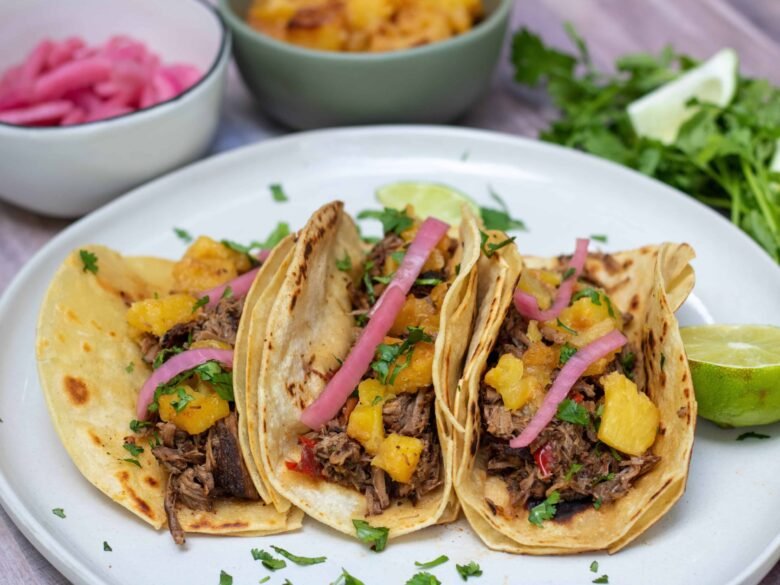
There is a version of taco night that involves a yellow packet of seasoning, a pound of ground beef browned in a pan, and a box of hard shells that everyone assembles in under twenty minutes. That version is not the subject of this recipe. That version has its merits — speed, simplicity, the particular nostalgia of something eaten on weeknights throughout childhood — but it is not what a taco can be when the beef has had eight hours rather than eight minutes and the flavors have built themselves into something with actual depth.
Slow cooker beef tacos with chipotle start where the packet version ends: with beef that is falling-apart tender, shredded into chunks that are juicy from the braising liquid, darkly flavored from the chipotle peppers and the cumin and the garlic, and carrying a warmth that builds rather than announces itself. The chipotle — dried jalapeños smoked over pecan or pine wood and packed in adobo sauce — is the ingredient that makes this recipe specifically itself. It adds a smokiness that approximates the open-fire cooking that defines great taco meat, a fruity, dried-chile heat that is different in character from fresh jalapeño or dried cayenne, and an adobo sauce that enriches the braising liquid with tomato, garlic, and vinegar already built in. One can of chipotle peppers in adobo sauce, added to the slow cooker with a chuck roast and a handful of other ingredients, produces braised taco beef that tastes like it was made somewhere with a real fire and a real understanding of flavor.
It is taco night upgraded. Set it up in the morning. Come home to a house that smells of chipotle and garlic. Pull the beef apart in two minutes. Build the tacos. Eat.
Why the Slow Cooker Makes the Best Taco Beef
Great taco meat — the kind served at taquerias with a proper kitchen rather than a steam table — is almost always braised or slow-roasted. The Mexican tradition of barbacoa (beef cheeks braised in chiles and broth, traditionally in an underground pit), birria (goat or beef braises in a dried chile sauce), and carnitas (pork braised in lard until falling apart) all share the same underlying principle: tough, collagen-rich meat, cooked long and slow in a flavored liquid until it yields completely and absorbs the flavors of everything around it.
The slow cooker replicates this principle more faithfully than any other residential cooking method. The enclosed, moist heat environment holds the liquid at the ideal braising temperature for eight hours without evaporation, producing beef that has absorbed the chipotle and cumin and broth throughout — not just on the surface, as a quick-seasoned ground beef would be. The collagen in the chuck roast converts to gelatin during the long cook, enriching the braising liquid and keeping the shredded beef moist after it is pulled from the bone. The chipotle’s smokiness and the dried chile’s fruity heat permeate the beef entirely.
The result is shredded beef taco filling that, assembled into a taco with warm tortillas and proper toppings, produces the specific experience of a good taqueria without leaving the house — and with far less labor than the Mexican braising traditions that inspired it.
Choosing Your Beef
The cut determines the texture and the richness of the braising liquid, and for slow cooker taco beef the answer is unambiguous.
Chuck roast — three to four pounds — is the correct cut. Chuck comes from the beef shoulder: a heavily worked, well-marbled muscle dense with collagen and connective tissue. Eight hours on LOW converts that connective tissue completely into gelatin, producing beef that shreds into generous, moist pieces with almost no effort and contributing the gelatin to the braising liquid that gives it body and richness. Chuck taco beef shreds into chunks that are yielding and juicy, absorbing the chipotle braising liquid completely. It is the closest home-kitchen equivalent to the beef cheeks used in traditional barbacoa.
Beef short ribs are an excellent and sometimes superior alternative. Bone-in short ribs braised in the chipotle liquid produce an exceptionally rich, deeply flavored beef with the bone contributing additional depth to the braising liquid. The meat pulls cleanly from the bone after eight hours and shreds perfectly. More expensive than chuck but worth using for a special occasion version.
Brisket — specifically the point cut rather than the flat, for its higher fat content — produces taco beef with a specific texture that is between sliced and shredded: it pulls into large, flat pieces rather than fine shreds. Brisket taco beef is excellent and produces a slightly different taco experience than chuck — the pieces are more substantial and the flavor is distinctly beefy. Cook on LOW for eight to nine hours.
The sear. A seared chuck roast before it goes into the slow cooker produces a darker, richer braising liquid. The Maillard browning on the surface of the roast colors the braising liquid and adds depth that unseared beef cannot provide. The fond deglazed from the skillet goes directly into the slow cooker and becomes part of the taco beef’s flavor. Ten minutes of searing is the most impactful optional step in this recipe.
The Chipotle
Chipotle peppers in adobo sauce are the defining ingredient of this recipe — the ingredient that makes it specifically worth making rather than simply another slow cooker shredded beef.
What chipotle is. Chipotle peppers are jalapeño peppers that have been allowed to ripen fully to red and then dried and smoked — traditionally over fruitwood or pecan — until they are dark, wrinkled, and intensely flavored. The smoking process converts the fresh jalapeño’s clean, bright heat into something smokier, deeper, and more complex. The fruity, dried-chile flavor of chipotle is genuinely distinct from any other chile and is irreplaceable in this recipe.
Chipotle in adobo. The canned form — chipotle peppers packed in adobo sauce — is the most widely available and most practical form for this recipe. The adobo sauce is a blend of tomato, garlic, vinegar, and spices in which the chipotles are packed; it is as flavorful as the peppers themselves and should be added to the slow cooker along with the peppers. One to two chipotles from the can, plus two tablespoons of the adobo sauce, is the starting point for a full batch — enough to produce clearly smoky, clearly chile-flavored beef without overwhelming heat. More chipotles produce more heat; the adobo sauce quantity can be increased independently of the peppers for more smokiness without additional heat.
Heat calibration. Chipotle heat is moderate — less aggressive than fresh jalapeño, more sustained in its warmth. One chipotle produces a warmth that most adults find comfortable and most children find at the edge of their range. Two chipotles produce a clearly spicy result that heat-lovers prefer. The heat can be adjusted by adding or removing peppers and by whether the seeds (which contain the majority of the heat) are included with the pepper or discarded. For a large batch serving mixed heat preferences, err toward one chipotle and offer hot sauce at the table for those who want more.
Dried chipotle powder is an acceptable substitute when canned chipotles are unavailable. One to two teaspoons of chipotle powder for a full batch produces a similar smokiness and heat, though without the depth of the adobo sauce. Add a tablespoon of tomato paste to compensate for the adobo’s tomato contribution.
The Braising Liquid
The braising liquid is what the beef spends eight hours in — and what it becomes is determined by what goes in at the start.
Beef broth — one cup — is the liquid base. Good quality broth produces a richer braising liquid; a bone broth produces the richest result of all, contributing additional collagen from the start.
Orange juice — the juice of one orange, approximately a quarter cup — is the unexpected and important addition. Orange juice is a traditional braising liquid in Mexican beef preparations — its acidity tenderizes the beef, its sugars add a background sweetness that balances the smokiness of the chipotle, and its citrus character lifts the entire braising liquid into a brighter register. The orange is not identifiable in the finished beef as orange-flavored — it simply makes the braising liquid taste more complex and the beef taste more vibrant.
Lime juice — the juice of one lime, added after the cook — is the finishing brightness. Fresh lime juice added after the slow cooker finishes cuts through the richness of the shredded beef and the fat in the braising liquid, producing the clean, acidic note that makes Mexican beef preparations taste specifically alive rather than simply savory.
Worcestershire sauce — one tablespoon — adds umami depth.
Cumin — one and a half teaspoons — is the defining spice of the taco beef flavor profile. Toasted, earthy, and specifically Mexican in character. Ground cumin is the standard form; a brief toasting of whole cumin seeds in a dry skillet before grinding produces a noticeably more complex, more fragrant result.
Smoked paprika — one teaspoon — reinforces the chipotle’s smokiness with a complementary spice note.
Garlic — five to six cloves, smashed — adds aromatic depth that mellows and sweetens during the long cook.
Dried oregano — one teaspoon, Mexican oregano specifically if available — adds the herbal note that grounds the chile and cumin. Mexican oregano is more assertive and citrusy than Mediterranean oregano; either works.
Bay leaves — two — provide background herbal depth. Remove before shredding.
Shredding the Beef
After eight hours on LOW, the chuck roast should be so tender that it can be shredded with two forks or simply pulled apart by hand.
Test for tenderness. Press the roast gently with tongs or a large spoon. It should yield completely — feeling soft and collapsing inward at the point of pressure. If there is any resistance, replace the lid and cook for another thirty to sixty minutes. Tough shredded beef is simply undercooked beef.
The shredding method. Transfer the roast to a large cutting board. Use two forks — one to hold the meat steady and one to pull — to shred into generous pieces. The goal is substantial chunks rather than fine, stringy shreds — pieces large enough to fill a taco with presence. Over-shredding produces a dry, stringy result as the smaller pieces lose moisture quickly.
Return to the braising liquid. After shredding, return the beef to the slow cooker and stir to combine with the braising liquid. This is the step that keeps the taco beef moist and flavorful on the taco table — the beef absorbs additional liquid as it sits. Taco beef that is shredded and immediately piled into tortillas without being returned to the liquid dries out quickly.
The broiler finish. For taco beef with crispy edges — a texture that approximates the carnitas char that makes the best versions so satisfying — spread the shredded and sauced beef in a single layer on a foil-lined baking sheet and slide under the preheated broiler for four to five minutes until the edges begin to caramelize and crisp. Return to the remaining braising liquid to keep the interior moist. This optional step produces a taco beef with two textures — crisp at the edges, juicy at the center — that is the closest slow cooker approximation of the taqueria experience.
Building the Taco
The quality of the taco assembly matters as much as the quality of the beef. Great taco beef in a poorly assembled taco is a failure.
The tortilla. Corn tortillas are the traditional and most correct vessel for this style of braised beef taco — their earthy, slightly chewy character and their structural integrity when warmed properly suit the juicy, substantial beef better than flour tortillas. Flour tortillas are more forgiving and more widely enjoyed; both are correct depending on preference. The non-negotiable point: the tortilla must be warmed. A cold corn tortilla cracks when folded. A warm corn tortilla bends, has a fragrant corn aroma, and integrates with the filling. Warm tortillas by charring briefly on each side over a gas burner flame, in a dry cast-iron skillet for thirty seconds per side, or wrapped in damp paper towels and microwaved for thirty to forty-five seconds.
The double tortilla. Traditional Mexican street tacos use two corn tortillas stacked — this is not extravagance but structural engineering. The double tortilla prevents the juicy braised beef from soaking through and tearing the bottom. Stack two warm tortillas, fill the center, fold and eat. The second tortilla is eaten with the remaining filling.
The toppings. Braised beef tacos require toppings that provide freshness, acidity, and contrast against the rich, smoky meat. The essential combination: diced white onion, chopped fresh cilantro, a squeeze of fresh lime juice. These three — and nothing more — are the toppings served with braised beef tacos across Mexico, and they are exactly right. The onion’s sharpness, the cilantro’s herbal freshness, and the lime’s acidity are precisely what the fatty, smoky beef requires.
Additional toppings. Sliced radishes for crunch. Pickled red onions for a more complex acidity and visual appeal. Crumbled Cotija cheese for a salty, crumbly dairy note. A thin smear of crema or sour cream for cooling richness. Avocado slices or guacamole for fat that amplifies the beef’s flavor. Tomatillo salsa verde for a bright, tangy, herbal sauce that is the most natural pairing for chipotle beef.
Tips for the Best Slow Cooker Beef Tacos with Chipotle
1. Sear the chuck roast before it goes in. The Maillard browning and the deglazed fond produce a darker, richer braising liquid that the taco beef absorbs over eight hours. An unseared roast produces pale, slightly flat braising liquid. The ten-minute sear is the most impactful optional step.
2. Do not skip the orange juice. Orange juice in a Mexican beef braise is not a novelty — it is a traditional ingredient with specific functions: acidity for tenderizing, sugar for balancing smokiness, citrus for lifting the flavor register. The finished beef does not taste of orange. It tastes more vibrant and more complex than the same beef braised without it.
3. Start with one chipotle and add from there. Chipotle heat accumulates significantly during an eight-hour braise. One whole chipotle pepper plus two tablespoons of adobo sauce is appropriate for a mixed crowd. Two peppers produce a clearly spicy result for heat-lovers. Start conservatively and offer hot sauce at the table rather than making the base too hot for some guests.
4. Return the shredded beef to the braising liquid. Shredded beef left on a cutting board dries out within minutes. Return it to the slow cooker, stir through the braising liquid, and hold on KEEP WARM. Taco beef should be saucy and moist when it reaches the tortilla.
5. Broil the shredded beef for the best texture. Four to five minutes under the broiler on a foil-lined baking sheet produces crispy, caramelized edges on the shredded beef that are the slow cooker’s approximation of carnitas char. Return to the liquid after broiling to keep the interior moist. This step is optional but worth doing.
6. Warm the tortillas properly. A cold tortilla is not a taco — it is a structural failure waiting to happen. Every tortilla should be warmed before filling: thirty seconds per side on a gas flame, thirty seconds per side in a dry cast-iron skillet, or wrapped in damp paper towels and microwaved for forty-five seconds for a batch.
7. Add fresh lime juice after the cook. The lime juice goes in after the slow cooker finishes — not at the start. Lime juice cooked for eight hours loses its volatile citrus aromatics entirely and contributes only residual acidity. Added after, it is the fresh, bright note that makes the taco beef taste specifically alive.
8. Taste and adjust before serving. The braising liquid reduces and concentrates during the long cook. Taste the beef in its liquid before assembling tacos and adjust: more salt if needed, a squeeze of additional lime juice for brightness, a pinch of cumin if the spice profile needs lifting.
Setting Up the Taco Station
The slow cooker beef taco is specifically well-suited to the self-serve taco station format — the most practical and most enjoyable serving setup for taco night.
The station components. The slow cooker on KEEP WARM in the center, lid off, with a slotted spoon or tongs for serving the beef. A plate of warm tortillas, wrapped in foil or a clean kitchen towel to stay warm. Individual bowls of toppings: diced white onion, chopped cilantro, sliced radishes, pickled red onions, Cotija cheese, crema or sour cream, sliced avocado, lime wedges. Two or three salsas — tomatillo, red chile, or whatever is preferred. A bottle of hot sauce for those who want more heat.
For a party. Keep the slow cooker on KEEP WARM for the duration. Replenish the tortilla plate from a foil packet in a low oven. The beef holds at the correct temperature and moisture level for hours. The host’s involvement ends at setup.
For family dinner. Same setup on a smaller scale — the slow cooker on the table is the most practical taco delivery mechanism that exists, keeping the beef warm and juicy through every round of taco building without any additional effort.
The Complete Table
Toppings:
- Diced white onion — essential
- Fresh cilantro, chopped — essential
- Fresh lime wedges — essential
- Sliced radishes — crunch and freshness
- Pickled red onions — complex acidity and visual drama
- Crumbled Cotija cheese — salty and dry
- Mexican crema or sour cream — cooling richness
- Sliced avocado or guacamole
- Salsa verde (tomatillo) — the most natural pairing with chipotle beef
- Red chile salsa — for depth and heat
Sides:
- Mexican rice — seasoned with tomato and cumin
- Refried beans — creamy and complementary
- Elote (Mexican street corn) — charred corn with crema, Cotija, and chili
- Black beans with epazote — simple and satisfying
- Simple jicama salad with lime and chili powder
Drinks:
- Mexican lager (Modelo, Pacifico, Tecate) — the definitive pairing
- Agua fresca — hibiscus, tamarind, or cucumber-lime
- Margarita on the rocks — for the adults at the table
- Horchata — sweet, cool, and specifically complementary to smoky chile beef
The Day-After Taco Beef Uses
Leftover chipotle shredded beef, refrigerated in its braising liquid, is one of the most versatile leftovers in this collection. The liquid keeps the beef moist for four days in the refrigerator and the flavor deepens overnight. The day after taco night, the beef becomes the filling for quesadillas — pressed between flour tortillas with Oaxacan cheese or mozzarella and cooked in a dry skillet until the cheese is melted and the tortilla is golden. It becomes the filling for burritos assembled with rice, beans, and crema. It is spooned over nachos with beans, cheese, jalapeños, and all the toppings. It is the base for a chipotle beef rice bowl with fresh pico de gallo and sliced avocado. It is stuffed into hash browns with fried eggs for a specifically excellent breakfast. The braising liquid, reserved separately and reduced on the stovetop, becomes a deeply flavored chile broth for dipping or for a quick soup base.
Easy Variations
- Barbacoa-style beef. Add one teaspoon of ground cloves, one tablespoon of apple cider vinegar, and a dried ancho chile (stem and seeds removed, torn into pieces) alongside the chipotle. The cloves and ancho are the defining additions that move the flavor profile from chipotle taco beef toward authentic barbacoa. Serve in corn tortillas with diced onion, cilantro, and lime only — the traditional accompaniments.
- Birria-style beef tacos. After shredding the beef, ladle the braising liquid into individual cups for dipping. Assemble the tacos, dip briefly into the hot braising broth, and fry in a dry skillet until the tortilla is crispy and the cheese (added to the filling) is melted. Birria tacos — quesabirria — are the dipping and frying taco format that has taken over taco culture, and the slow cooker chipotle beef is an excellent base for this preparation.
- Spicy habanero and chipotle beef. Add one seeded habanero alongside the chipotles. The habanero’s fruity, tropical heat combines with the chipotle’s smokiness in a way that is specifically excellent for heat-lovers. Seeds removed means significant heat; seeds included means serious heat.
- Honey chipotle beef. Stir two tablespoons of honey into the braising liquid before the cook. The honey adds a sweet counterbalance to the chipotle’s smokiness and produces a slightly sticky, caramelizing beef when broiled on the baking sheet — specifically good for those who prefer a sweeter taco filling.
- Beef and chorizo tacos. Add eight ounces of Mexican chorizo (fresh, not dried Spanish chorizo), browned and crumbled, to the slow cooker alongside the chuck roast. The chorizo enriches the braising liquid with its paprika, garlic, and vinegar, producing a more complex, more deeply spiced taco beef.
Make-Ahead and Storage
Make-ahead: Slow cooker beef tacos are the ideal make-ahead taco filling. The beef can be braised up to three days ahead and refrigerated in its braising liquid. Reheat gently in the slow cooker on LOW for one to one and a half hours or on the stovetop over low heat. The flavor improves significantly overnight — Day 2 chipotle beef is more balanced and more complex than Day 1.
Refrigerator: Shredded beef in its braising liquid keeps for four days in an airtight container. The beef continues to absorb the liquid during refrigeration — it will be even more flavorful and more moist on subsequent days than on the day it was made.
Freezer: Freeze in portions with braising liquid for up to three months. The chipotle and cumin flavors survive freezing with essentially no quality loss. Thaw overnight in the refrigerator and reheat gently. Frozen slow cooker taco beef is one of the best freezer meals in this collection.
Shopping List
The Beef
- 3–4 lbs (1.4–1.8kg) beef chuck roast
- 2 tbsp neutral oil (for searing)
- Salt and black pepper
The Braising Liquid
- 1 cup (240ml) beef broth
- Juice of 1 orange (about ¼ cup)
- 1 tbsp Worcestershire sauce
The Chipotle
- 1–2 chipotle peppers in adobo sauce, plus 2 tbsp adobo sauce (from one can)
The Spices and Aromatics
- 5–6 garlic cloves, smashed
- 1½ tsp ground cumin
- 1 tsp smoked paprika
- 1 tsp dried oregano (Mexican oregano preferred)
- 2 bay leaves
- Salt and black pepper to taste
The Finish
- Juice of 1 lime — added after cooking
For the Taco Station
- Corn tortillas (2 per taco, doubled)
- Diced white onion
- Fresh cilantro, chopped
- Lime wedges
- Sliced radishes
- Pickled red onions
- Cotija cheese, crumbled
- Mexican crema or sour cream
- Salsa verde or red salsa
Slow Cooker Beef Tacos with Chipotle
A three to four pound beef chuck roast — seared until deeply browned and the skillet deglazed — slow-cooked on LOW for eight hours in a braising liquid of beef broth, orange juice, chipotle peppers in adobo sauce, smoked paprika, cumin, oregano, garlic, and bay leaves. The beef shredded into generous, juicy chunks and returned to the braising liquid. Finished with fresh lime juice added after the cook for brightness. Optionally broiled for four to five minutes to produce caramelized, crispy edges. Served in doubled warm corn tortillas with diced white onion, fresh cilantro, lime wedges, salsa verde, and the full taco station setup. Taco night upgraded — from the packet version to the version that tastes like somewhere with a real fire.
- Total Time: 8 hours 35 minutes
- Yield: 8–10 tacos (serves 4–6) 1x
Ingredients
The Beef
- 3–4 lbs (1.4–1.8kg) beef chuck roast
- 2 tbsp neutral oil
- 1½ tsp salt
- ½ tsp black pepper
The Braising Liquid
- 1 cup (240ml) beef broth
- Juice of 1 orange (about ¼ cup / 60ml)
- 1 tbsp Worcestershire sauce
- 1–2 chipotle peppers in adobo sauce, roughly chopped
- 2 tbsp adobo sauce (from the can)
- 5–6 garlic cloves, smashed
The Spices
- 1½ tsp ground cumin
- 1 tsp smoked paprika
- 1 tsp dried oregano
- 2 bay leaves
- Salt to taste
The Finish
- Juice of 1 lime, freshly squeezed — added after cooking
For the Tacos
- Corn tortillas, 2 per taco, warmed
- Diced white onion
- Fresh cilantro, chopped
- Lime wedges
- Salsa verde or red salsa
- Sliced radishes, pickled red onions, Cotija cheese, crema (as desired)
Instructions
- Season and sear the beef. Pat the chuck roast completely dry with paper towels. Season generously on all sides with salt and black pepper. Heat the neutral oil in a large heavy-bottomed skillet over medium-high heat until shimmering. Sear the roast on all sides until deeply browned — 2 to 3 minutes per side. Transfer to the slow cooker.
- Deglaze the skillet. Pour a splash of beef broth (about ¼ cup) into the hot skillet and scrape every browned bit from the bottom. Pour into the slow cooker.
- Build the braising liquid. Add the smashed garlic cloves, chopped chipotle peppers, and adobo sauce to the slow cooker. Pour in the remaining beef broth, orange juice, and Worcestershire sauce. Sprinkle over the cumin, smoked paprika, and dried oregano. Add the bay leaves. The liquid should reach approximately halfway up the sides of the roast.
- Cook. Set the slow cooker to LOW and cook for 8 hours, until the beef is completely tender and falls apart when pressed gently with tongs. Do not lift the lid during cooking.
- Shred the beef. Transfer the roast to a large cutting board. Remove and discard the bay leaves. Using two forks, shred the beef into generous chunks — substantial pieces rather than fine shreds. Taste the braising liquid and adjust salt.
- Return to liquid. Return the shredded beef to the slow cooker and stir to coat with the braising liquid. Squeeze the lime juice over the beef and stir again. Switch to KEEP WARM.
- Optional broil. For crispy edges: spread the shredded beef in a single layer on a foil-lined baking sheet. Broil 6 inches from the element for 4 to 5 minutes until the edges are caramelized and beginning to crisp. Return the broiled beef to the remaining braising liquid and stir to recombine.
- Warm the tortillas. Toast corn tortillas one at a time over a gas flame for 20 to 30 seconds per side, or in a dry cast-iron skillet for 30 seconds per side, until warmed and lightly charred at the edges. Stack doubled (two tortillas per taco).
- Assemble and serve. Pile the beef generously into the doubled tortillas. Top with diced white onion, fresh cilantro, and a squeeze of lime. Add desired toppings — salsa verde, sliced radishes, Cotija, crema. Serve immediately.
Notes
- One chipotle or two? Start with one chipotle plus two tablespoons of adobo for a crowd-friendly heat level that is clearly smoky and flavored but not aggressive. Two chipotles produce a clearly spicy taco beef that heat-lovers will prefer. The adobo sauce itself adds smokiness and flavour without as much heat — increasing the adobo sauce quantity independently of the pepper count is the way to add more smokiness without adding more heat.
- Orange juice belongs in this braise. The orange juice adds acidity (tenderizing the beef), background sweetness (balancing the smokiness), and a citrus complexity that makes the braising liquid taste more vibrant. The finished beef does not taste of orange. It tastes of chipotle and cumin with a brightness that the braise without orange lacks.
- Lime juice goes in after cooking — always. Lime juice cooked for eight hours in the slow cooker loses its aromatic compounds entirely. Squeezed over the shredded beef after the cook and stir, fresh lime juice is the brightness that makes the taco beef taste specifically alive rather than simply savory.
- Return the beef to the braising liquid. Shredded taco beef left on a cutting board dries out within minutes. Return it to the slow cooker immediately after shredding and stir to coat. The beef should be saucy and moist when it goes into the tortilla.
- The broiler step is worth doing. Four to five minutes under the broiler produces caramelized, slightly crispy edges on the shredded beef that are the slow cooker’s best approximation of taqueria-style carnitas char. Return the broiled beef to the remaining liquid to keep the interior moist while the edges are crispy. The contrast of textures makes these tacos considerably more interesting.
- Double the tortillas. Two corn tortillas stacked is the traditional street taco format — a structural choice that prevents the juicy braised beef from soaking through. Eat the inner tortilla with the remaining filling in the second taco, or eat both together. Do not use a single corn tortilla with this much filling.
- Warm the tortillas — every time. A cold corn tortilla is a structural failure and a flavor failure. The thirty seconds it takes to warm each tortilla is mandatory, not optional.
- Prep Time: 15 minutes
- Cook Time: 8 hours (on LOW)
- Category: Dinner
- Method: Slow Cooking
- Cuisine: Mexican
Frequently Asked Questions
How spicy is this recipe? Can I adjust the heat? With one chipotle pepper and two tablespoons of adobo sauce — the starting quantity in this recipe — the finished taco beef is clearly smoky and flavored with a moderate warmth that builds rather than bites. Most adults find this comfortable; most children find it at the edge of their range. To reduce heat: use only the adobo sauce (no whole pepper) and remove the seeds from the chipotle before adding. To increase heat: add two whole chipotles with seeds, or add a seeded habanero alongside the chipotle. The adobo sauce contributes smokiness and tomato flavor with less heat than the pepper itself — increasing adobo sauce is the way to add smokiness without adding heat.
Can I use ground beef instead of chuck roast? Yes — ground beef slow cooker tacos are faster (three to four hours on LOW) and produce a different but equally valid taco filling. Brown the ground beef first as with the pasta sauce recipe, combine with the same braising liquid, and cook on LOW for three to four hours until the flavors have fully developed. The texture is finer and less substantial than shredded chuck — more like the seasoned ground beef taco of the packet-seasoning tradition, but with considerably more depth from the chipotle and the long cook. For the falling-apart, shredded taco filling that is the specific appeal of this recipe, chuck roast is the correct ingredient.
What is the difference between this and barbacoa? Traditional Mexican barbacoa is beef cheeks (or lamb, or goat, depending on the region) slow-cooked in a dried chile marinade, traditionally in an underground pit called a barbacoa. The dried chiles — typically guajillo, ancho, and pasilla — produce a complex, earthy, mildly spicy flavor profile that is different from chipotle’s smoky, more assertive character. The barbacoa-style variation in the easy variations section adds ancho chile and cloves to move this recipe toward the traditional flavor profile. This recipe uses chipotle — a specific and excellent ingredient — rather than a traditional dried chile mole base, making it Mexican-inspired rather than traditionally authentic. Both are excellent. They taste different and suit different occasions.
My beef is still tough after eight hours. What should I do? Continue cooking. Tough beef after eight hours in the slow cooker is undercooked beef — the collagen conversion that produces falling-apart tenderness takes time and temperature, and some chuck roasts, particularly larger or denser ones, need nine to ten hours on LOW. Test by pressing with tongs — the beef should yield completely with no resistance. If resistance is present, replace the lid and cook for another hour. Do not switch to HIGH — the high temperature tightens the muscle fibers before the collagen can fully convert, producing beef that is cooked through but still tough. More time on LOW is always the correct solution.
Can I make this ahead for a party? Yes — slow cooker chipotle beef tacos are ideal for party preparation. Braise the beef two to three days ahead and refrigerate in its braising liquid. On the day of the party, reheat in the slow cooker on LOW for one to one and a half hours until completely warmed through. Squeeze fresh lime juice over the beef after reheating. Set up the taco station and keep the slow cooker on KEEP WARM for the duration of the party. The beef holds beautifully for hours on KEEP WARM and the flavour deepens with every passing day in the refrigerator.
What tortillas should I use — corn or flour? Corn tortillas are the traditional and most specifically correct choice for this style of braised beef taco — their earthy, slightly chewy character and their structural integrity when warmed properly suit the juicy, substantial filling. They are also naturally gluten-free. Flour tortillas are more forgiving in their structural performance and more widely preferred in Northern Mexico and across the American Southwest — they are a legitimate and excellent choice, particularly for burritos or for guests who prefer their softer texture. The non-negotiable point applies to both: whatever tortilla is used must be warmed before filling. A cold tortilla of any variety is a structural and flavour failure.
Can I use the braising liquid as a sauce or soup? Yes — the braising liquid from eight hours of chipotle beef is one of the most flavorful cooking liquids in this collection. After straining and skimming the fat, it is ready to be used as a dipping sauce for birria-style tacos (see the birria variation), as the base for a quick tortilla soup (add chicken broth, torn corn tortillas, and toppings), or reduced on the stovetop to a concentrated chile sauce for spooning over assembled tacos or rice bowls. Never discard it.