
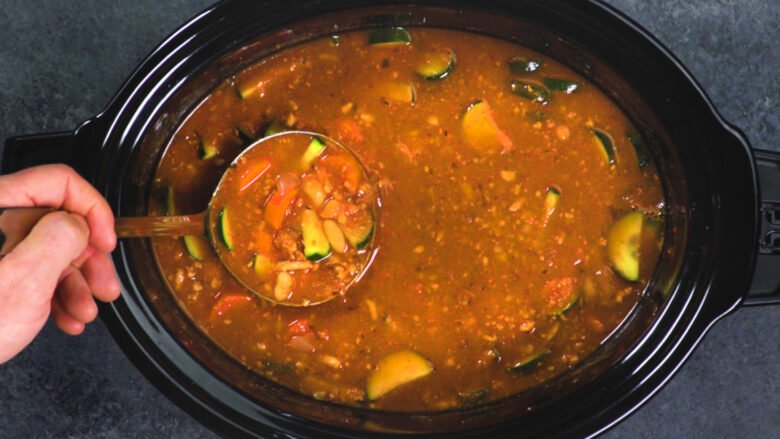
Some recipes exist to impress. This is not one of them. This is the other kind — the kind that exists to nourish, to comfort, to use what you have, and to make the house smell like someone who genuinely cares about the people in it has been cooking all day. Slow cooker turkey and vegetable soup is that recipe. It is honest, wholesome, deeply satisfying, and the kind of thing that gets made on grey afternoons when the world outside is cold and everyone inside needs something warm and simple and good.
It is also, quietly, one of the most versatile and forgiving recipes in the entire slow cooker repertoire. The vegetable combination is flexible. The turkey can be raw, leftover, or rotisserie. The broth can be homemade or store-bought. The herbs can come from the garden or the spice drawer. None of it needs to be exact, and all of it comes together into something that tastes considerably more considered than the effort involved.
If you have a leftover turkey carcass from Thanksgiving or a holiday roast, this soup is the most rewarding thing you can do with it. If you are starting from scratch with raw turkey, it is equally excellent. Either way, this is one of the most genuinely good bowls of soup a slow cooker can produce.
The Case for Turkey Soup
Chicken soup gets all the cultural credit — the reputation as the universal comfort food, the thing made when someone is sick or sad or in need of care. Turkey soup deserves equal standing, and in many ways surpasses its more famous cousin.
Turkey has a richer, slightly more complex flavor than chicken — particularly the dark meat, which has a depth that slow-cooked chicken thighs can approach but never quite match. A turkey-based broth, especially one made from a leftover carcass that has been simmered for hours with aromatics, has a body and savoriness that is genuinely extraordinary. It gels when chilled in the way that only a properly made bone broth does — silky, rich, and deeply nourishing.
The post-holiday turkey soup made from the carcass is one of the great traditions of American cooking — a way of extracting maximum value and nourishment from something that might otherwise be discarded. The slow cooker makes that process completely hands-off, producing in 8 to 10 hours what would take an attentive afternoon on the stovetop.
Starting from scratch with raw turkey pieces works just as beautifully for a year-round version of this soup, no holiday required.
The Turkey Options
This recipe accommodates several starting points, each producing a slightly different but equally excellent result.
Leftover cooked turkey is the easiest option. Shred or chop the meat and stir it in during the last 30–45 minutes of cooking to heat through without overcooking. Leftover turkey added too early becomes stringy and dry — the residual cook time in the slow cooker is all it needs.
Raw turkey pieces — thighs, drumsticks, or bone-in breast — go in raw at the start of cooking and simmer gently in the broth for the full cooking time, emerging tender and falling off the bone. Remove them at the end, shred the meat, discard the bones, and stir the shredded turkey back into the soup. Bone-in pieces produce a richer, more flavorful broth as the collagen leaches from the bones during cooking.
A leftover turkey carcass is the gold standard for broth richness. Add the carcass to the slow cooker with the aromatics and enough water to cover, and cook for 8–10 hours. Strain the broth, return it to the slow cooker, add fresh vegetables and the shredded turkey meat picked from the carcass, and cook for another 1–2 hours. The resulting soup has a depth of flavor that simply cannot be replicated with store-bought broth.
Rotisserie turkey or chicken is the most convenient option when time is the constraint. Add shredded rotisserie meat in the last 30 minutes. The flavor will be slightly less complex than a from-scratch version but the convenience is significant and the result is still genuinely good.
Building the Vegetable Base
The vegetable selection for this soup is deliberately classic — the combination that has been producing great soup for generations because it works.
Carrots provide sweetness, body, and the warm orange color that makes the soup look as comforting as it tastes. Cut them into rounds or half-moons about ½ inch thick — thin enough to cook through in the slow cooker but thick enough to retain their identity rather than dissolving into the broth.
Celery adds a mild, slightly grassy flavor and aroma that is fundamental to the character of a good turkey or chicken soup. The celery leaves, often discarded, are worth adding to the broth during cooking — they have a more concentrated celery flavor than the stalks and add depth.
Onion is the aromatic foundation. Yellow onion, roughly diced, softens completely during the long cook and melts into the broth, adding sweetness and depth.
Potatoes add body and substance that turns the soup from a broth with vegetables into a proper, filling meal. Yukon Gold potatoes are the best choice — their waxy, slightly creamy texture holds up beautifully during slow cooking without dissolving or becoming gluey. Cut into 1-inch cubes. Russet potatoes can be used but will soften more and thicken the broth slightly.
Parsnips are the underrated root vegetable that most people overlook in soup and immediately love when they try them. Their sweet, slightly earthy, subtly spiced flavor adds complexity to the vegetable base that carrots alone cannot provide. Treat them exactly like carrots — peel and cut into ½-inch rounds.
Garlic — a full head’s worth is not too much in a soup that cooks for 7 or 8 hours. The long cooking mellows and sweetens raw garlic completely, leaving a gentle, rounded garlic flavor throughout the broth.
Leeks can replace or supplement the onion for a more delicate, slightly sweet allium flavor. Wash them thoroughly — they trap grit between their layers — and use the white and pale green parts only.
The Broth
The broth is the soul of the soup and deserves thoughtful selection.
Homemade turkey or chicken bone broth is the best possible choice. If you have made the bone broth recipe from earlier in this series, this soup is its most natural application. The gelatin, collagen, and minerals in a well-made bone broth produce a soup that is noticeably richer and more nourishing than anything made with store-bought broth.
Good quality store-bought low-sodium chicken broth is the everyday option and perfectly good. Low-sodium is essential — the broth concentrates during the long slow cook and a sodium-heavy broth will produce a soup that is unpleasantly salty by the time it is done.
A mixture of broth and water is an acceptable approach, particularly if using a carcass or bone-in turkey pieces that will leach flavor into the liquid during cooking. Start with half broth, half water, and the turkey will enrich the liquid over the cooking time.
The Herbs
The herb profile of this soup is classic and deliberate.
Fresh thyme is the primary herb — its piney, slightly lemony warmth is the defining herbal note in turkey soup and pairs with the turkey and root vegetables better than almost any other herb. Add several sprigs during cooking and remove the woody stems before serving.
Bay leaves are the background herb that most people do not notice but immediately miss when absent. Two bay leaves added at the start and removed before serving add a subtle, slightly floral depth to the broth that makes it taste more complex.
Fresh parsley is the finishing herb — added at the end rather than during cooking to preserve its bright, clean flavor. Stir in a generous handful of chopped fresh parsley in the last few minutes before serving. It adds color, freshness, and a vegetable note that lifts the whole bowl.
Rosemary can be added in small amounts for a more assertive herbal character — particularly good if using turkey that has been seasoned with rosemary during a previous roast. Use sparingly — rosemary is potent and can dominate.
Dried herbs work in this soup when fresh are not available. Use half the quantity of dried compared to fresh — dried herbs are more concentrated. Add them with the other ingredients at the start rather than at the end.
Tips for the Best Slow Cooker Turkey Vegetable Soup
1. Use bone-in turkey pieces or a carcass when possible. The bones release collagen and gelatin into the broth during the long cook, producing a richer, more nourishing soup with better body. Boneless turkey breast produces a thinner, less flavorful broth.
2. Add delicate vegetables at the right time. Hardy root vegetables — carrots, parsnips, potatoes, celery — go in at the start and cook for the full duration. More delicate vegetables — zucchini, spinach, kale, corn — should be added in the last 30–45 minutes to prevent them from becoming mushy and losing their color.
3. Add cooked turkey at the end. If using leftover or rotisserie turkey, always add it in the last 30–45 minutes. Cooked turkey that sits in hot broth for 6–8 hours becomes dry, stringy, and unpleasant.
4. Season at the end. Broth concentrates and intensifies during the long slow cook. Seasoning aggressively at the beginning can result in an over-salted soup by serving time. Season lightly at the start and adjust at the end — always taste before serving.
5. Skim the fat if using raw turkey. Raw bone-in turkey pieces release fat and foam during the early stages of cooking. Skim the surface of the broth in the first hour if possible, or after the cooking is done. This produces a cleaner, clearer broth.
6. Finish with acid. A small squeeze of lemon juice or a splash of apple cider vinegar stirred in right before serving brightens the entire bowl and makes the flavors pop. It is the same technique used throughout this series — small addition, disproportionate impact.
7. Add noodles or pasta separately. If serving the soup with noodles or egg noodles, cook them separately and add to individual bowls at serving. Noodles cooked in the slow cooker for hours become bloated, mushy, and absorb too much of the precious broth.
Easy Variations
- Turkey noodle soup. Cook egg noodles or wide pasta separately. Add to individual bowls when serving and ladle the hot turkey soup over the top.
- Turkey and rice soup. Add ½ cup of long-grain white rice directly to the slow cooker in the last 1.5–2 hours of cooking. The rice thickens the soup slightly and makes it even more substantial.
- Turkey minestrone. Add 1 can of drained cannellini beans, 1 cup of diced zucchini, and 1 cup of chopped tomatoes in the last hour of cooking. Stir in a tablespoon of tomato paste with the other ingredients at the start.
- Lemon turkey orzo soup. Add orzo pasta and a generous squeeze of lemon juice in the last 20 minutes of cooking. Finish with a handful of fresh spinach and extra lemon zest at serving.
- Creamy turkey soup. Stir in ½ cup of heavy cream and 2 oz of cream cheese in the last 30 minutes of cooking for a richer, creamier version. Particularly good with sweet potato added to the vegetable base.
- Turkey tortilla soup. Add 1 can of fire-roasted diced tomatoes, 1 can of green chiles, 1 tsp of cumin, and 1 tsp of chili powder to the base. Serve with crispy tortilla strips, avocado, sour cream, and lime.
What to Serve Alongside
Turkey vegetable soup is a complete, nourishing meal on its own. A few simple accompaniments make it a fuller spread.
- Crusty bread or sourdough — for dunking into the broth, non-negotiable for many soup lovers
- Warm dinner rolls — softer than crusty bread, equally good for catching every drop of broth
- Grilled cheese sandwich — the classic soup companion
- A simple green salad — for those who want something fresh alongside the hearty soup
- Oyster crackers scattered over the top at serving for crunch
- A wedge of cornbread — particularly good with the turkey tortilla variation
Make-Ahead and Storage
Make-ahead: This soup is ideal for making 1–2 days ahead. The flavors develop and deepen overnight in the refrigerator. Reheat gently on the stovetop over medium heat, adding a splash of broth if the soup has thickened.
Refrigerator: Store in an airtight container for up to 4–5 days. The vegetables continue to soften slightly as the soup sits — which many people prefer. Reheat on the stovetop or in the microwave.
Freezer: Turkey vegetable soup freezes well for up to 3 months. If the soup contains potatoes, note that potatoes can become grainy after freezing — for a freezer-destined batch, omit the potatoes or substitute parsnips. Thaw overnight in the fridge and reheat on the stovetop.
Leftover soup as a base: A few days into the week, leftover turkey soup makes an excellent base for other dishes. Blend it partially for a creamy pureed soup. Use it as a braising liquid for vegetables. Add more broth and noodles for a completely new bowl.
Shopping List
Simple, affordable, and mostly produce and pantry staples.
The Turkey
- 2 lbs (900g) bone-in turkey thighs or drumsticks (for raw) — OR
- 3 cups (about 400g) shredded leftover or rotisserie turkey (added at end)
- Optional: leftover turkey carcass (for maximum broth richness)
Produce
- 3 medium carrots, peeled and sliced into rounds
- 3 stalks celery (with leaves if possible), sliced
- 1 large yellow onion, diced
- 2 medium parsnips, peeled and sliced into rounds
- 3 medium Yukon Gold potatoes, cut into 1-inch cubes
- 5 cloves garlic, minced
- 1 lemon (juice for finishing)
- Fresh thyme (a small bunch — 4–5 sprigs)
- Fresh parsley (a bunch, for finishing)
Broth & Pantry
- 6 cups (1.4L) low-sodium chicken or turkey broth
- 1 tsp Worcestershire sauce (optional, adds depth)
- 1 tbsp olive oil (optional, for sautéing aromatics first)
Spices & Seasonings
- 2 bay leaves
- 1 tsp dried thyme (if not using fresh)
- ½ tsp dried rosemary (optional)
- Salt and black pepper
- ¼ tsp white pepper (optional, gentler than black pepper in a delicate soup)
Optional Add-Ins
- 1 cup frozen peas (added in the last 15 minutes)
- 1 cup frozen corn (added in the last 30 minutes)
- 2 cups baby spinach or kale (added in the last 15 minutes)
- ½ cup dry egg noodles (cooked separately and added at serving)
Slow Cooker Turkey and Vegetable Soup
A deeply nourishing, vegetable-packed slow cooker turkey soup built from bone-in turkey pieces or leftover holiday turkey, simmered low and slow in a rich, herb-scented broth with carrots, parsnips, celery, potatoes, and garlic until everything is tender and the flavors have melded into something that tastes like pure care in a bowl. The best thing to do with a turkey carcass, and equally wonderful made from scratch any time of year. Better the next day, and the day after that.
- Total Time: 8 hours 20 minutes
- Yield: 6 – 8 servings 1x
Ingredients
The Turkey Base
- 2 lbs (900g) bone-in turkey thighs or drumsticks — OR — 3 cups shredded cooked turkey (added in last 30 minutes)
- 6 cups (1.4L) low-sodium chicken or turkey broth
The Vegetables
- 3 medium carrots, peeled and sliced into ½-inch rounds
- 2 medium parsnips, peeled and sliced into ½-inch rounds
- 3 stalks celery (with leaves), sliced
- 1 large yellow onion, diced
- 3 medium Yukon Gold potatoes, cut into 1-inch cubes
- 5 cloves garlic, minced
The Herbs
- 4–5 sprigs fresh thyme (or 1 tsp dried thyme)
- 2 bay leaves
- ½ tsp dried rosemary (optional)
- Large handful of fresh parsley, roughly chopped (added at the end)
Seasoning
- 1 tsp salt (plus more to taste at the end)
- ½ tsp black pepper
- 1 tsp Worcestershire sauce (optional)
To Finish
- Juice of ½ lemon
- Salt and pepper, to taste
- Fresh parsley, for garnish
Optional Add-Ins (Last 15–30 Minutes)
- 1 cup frozen peas
- 1 cup frozen corn
- 2 cups baby spinach or kale
Instructions
- Prepare the turkey. If using raw bone-in turkey pieces, pat them dry and season generously with salt and pepper. Place them in the bottom of the slow cooker insert. If using cooked leftover turkey, set it aside — it will be added at the end.
- Add the vegetables and aromatics. Add the carrots, parsnips, celery, onion, potatoes, and garlic to the slow cooker over or around the turkey pieces. Tuck in the thyme sprigs, bay leaves, and rosemary (if using).
- Add the broth and seasoning. Pour the broth over everything. Add the Worcestershire sauce if using. The broth should cover or nearly cover the vegetables and turkey — add water if needed to reach this level.
- Cook. Set the slow cooker to LOW and cook for 7–9 hours (if using raw turkey), or HIGH for 4–5 hours. If using cooked turkey, cook the broth and vegetables for 6–7 hours on LOW or 3–4 hours on HIGH before adding the turkey.
- Remove and shred the turkey (if using raw). Using tongs, carefully remove the cooked turkey pieces from the slow cooker and place on a cutting board. Let cool for 5 minutes. Remove and discard the skin and bones. Shred the meat into bite-sized pieces using two forks.
- Return the turkey to the soup. Add the shredded turkey meat back into the slow cooker. If using cooked leftover or rotisserie turkey, add it now. Stir to combine.
- Add optional vegetables. If adding frozen peas, corn, spinach, or kale, stir them in now. Replace the lid and cook on HIGH for a further 15–30 minutes until heated through and just wilted (for greens).
- Remove the herbs. Remove and discard the thyme sprigs and bay leaves.
- Taste and finish. Squeeze in the lemon juice and stir. Taste the soup and adjust seasoning — add salt, pepper, or a pinch more thyme as needed. Stir in the chopped fresh parsley.
- Serve. Ladle into deep bowls. Garnish with extra fresh parsley. Serve with crusty bread, warm rolls, or oyster crackers alongside.
Notes
- Bone-in turkey produces better broth. The bones release collagen during the long cook, giving the broth more body, richness, and that silky quality that sets a great soup apart from a merely good one. Use bone-in pieces whenever possible.
- Add cooked turkey late. Leftover or rotisserie turkey added at the beginning will become dry and stringy over 7–8 hours of cooking. Add it in the last 30–45 minutes — it only needs to heat through.
- Season at the end. The broth concentrates during long cooking. Season conservatively at the start and taste before serving — you will almost always need to add more salt at the end, and the right amount at the end is much easier to judge than at the beginning.
- Parsnips are worth using. Their subtly sweet, earthy flavor adds a complexity to the vegetable base that carrots alone cannot provide. If you have never added parsnips to turkey soup, this is the time to start.
- Yukon Gold potatoes hold up best. Their waxy texture survives the long cook without dissolving or going gluey. Russets can be used but will soften more and thicken the broth. Both are delicious — choose based on whether you prefer a thicker or clearer broth.
- The lemon juice at the end is essential. A small squeeze of fresh lemon juice brightens every flavor in the soup and adds a freshness that a long-cooked broth can lose. Do not skip it.
- This soup is better the next day. Make it ahead when you can. The flavors meld and deepen overnight and the broth develops a richness that takes time to build. Day-two turkey soup is a genuine reward for planning ahead.
- Prep Time: 20 minutes
- Cook Time: 8 hours (on LOW)
- Category: Dinner, Main Dish, Soup
- Method: Slow Cooking
- Cuisine: American
- Diet: Dairy-Free, Gluten-Free, Low-Carb