
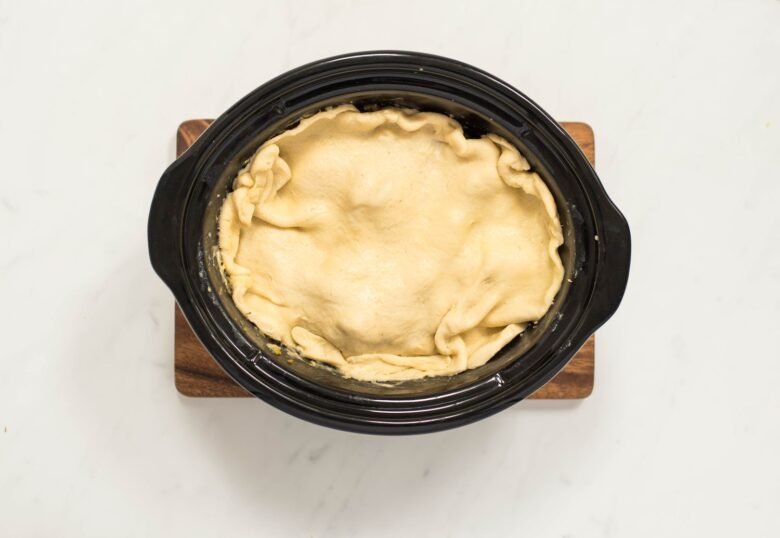
There are certain dishes that live in the category of pure, uncomplicated comfort — the kind of food that asks nothing of you except that you sit down, pick up a fork, and let it do its work. Chicken pot pie is one of those dishes. Turkey pot pie, made from leftover holiday turkey or fresh turkey pieces slow-cooked until tender, is the version that arguably does it even better.
This recipe focuses on the filling — the creamy, vegetable-rich, herb-scented interior that is the whole reason pot pie exists. And making it in the slow cooker is genuinely transformative. The gentle heat coaxes everything into a perfectly cohesive, velvety filling where the turkey is tender, the vegetables are just soft enough, and the sauce has the body and richness of something that required considerably more effort than it did.
The filling is deliberately versatile. Spoon it under a sheet of store-bought puff pastry and bake for 20 minutes for a classic pot pie. Pour it over buttermilk biscuits for a pot pie casserole. Ladle it straight into bowls and serve with crusty bread as a hearty stew. Or pile it into individual ramekins with pastry lids for dinner party presentation. The filling is the thing — what you do with it is entirely up to you.
The Beauty of a Filling-First Approach
Traditional pot pie requires making a pastry crust, blind baking it, making the filling separately, assembling the whole thing, and baking again. It is delicious but it is a project. Most people who love pot pie only make it a few times a year because of the effort involved.
This recipe separates the filling from the pastry component and handles each at its best. The slow cooker produces a filling that is richer and more deeply flavored than a quickly-made stovetop version — the long cook develops the broth, softens the vegetables gently rather than aggressively, and gives the turkey time to become truly tender rather than just cooked.
The pastry component — whether puff pastry, biscuits, pie crust, or simple drop dumplings — is handled separately and quickly, either in the oven or on the stovetop, and combined with the filling at serving time. Each element is done at its best, which is always better than doing everything at once.
The Turkey
This recipe works beautifully with two very different starting points and it is worth choosing intentionally.
Leftover cooked turkey is the traditional reason for making turkey pot pie — it is the great post-Thanksgiving or post-holiday use for leftover roast turkey. Dark meat, white meat, or a mixture all work well. Shred or dice the cooked turkey into roughly 1-inch pieces and stir it in during the last 30–45 minutes of cooking so it warms through without overcooking. Leftover turkey that has already been seasoned adds extra flavor depth to the filling.
Raw turkey thighs or breast cooked directly in the slow cooker produces a filling with a richer, more deeply flavored broth — the raw turkey releases its juices and collagen during cooking, which enriches the sauce in a way that pre-cooked turkey cannot. Place the raw turkey in the slow cooker at the start, shred it after cooking, and return the meat to the filling. Bone-in thighs are the best choice — they produce the most flavorful, tender meat and the richest broth.
Rotisserie chicken or turkey is the convenience option when speed is the priority. Add shredded rotisserie meat in the last 30 minutes. The flavor will be slightly less complex but the result is still excellent and the convenience is significant.
Building the Creamy Sauce
The sauce is what makes pot pie filling pot pie filling rather than just a turkey and vegetable stew. It needs to be creamy enough to coat everything and hold together under a pastry lid, but not so thick that it becomes gluey or heavy.
The roux base. Traditional pot pie sauce starts with a roux — butter and flour cooked together to form a thickening paste. In the slow cooker, this is handled by making a quick roux in a skillet before everything goes in, or by using a cornstarch slurry added in the last 30 minutes of cooking. Both work; the roux method produces a slightly richer, more buttery sauce while the cornstarch method is faster and equally effective.
Chicken or turkey broth is the liquid base. Low-sodium, as always — the sauce concentrates during cooking. A well-made homemade bone broth (from earlier in this series) produces an extraordinary pot pie filling.
Heavy cream or half-and-half added in the last 30 minutes of cooking adds the creaminess that distinguishes pot pie filling from a regular stew. The cream should not be added at the start — extended cooking can cause it to separate or become grainy. Stir it in at the end, along with the cornstarch thickener if using.
A tablespoon of Dijon mustard is the secret ingredient in a great pot pie sauce. It adds a sharp, slightly pungent depth that complements the cream and herbs without tasting remotely mustardy in the finished filling. It is the kind of addition that makes people ask why your pot pie tastes so much better than theirs.
Worcestershire sauce adds umami depth. Just a teaspoon — invisible in the finished filling but immediately missed in its absence.
The Vegetables
Classic pot pie vegetables are classic for a reason — the combination of peas, carrots, celery, onion, and potato is so well-calibrated to the dish that it barely needs improvement. A few notes on handling each:
Carrots and potatoes are the hardy root vegetables that go in at the start of cooking and benefit from the full duration. Cut them into ½ to ¾-inch pieces — small enough to cook through, large enough to maintain their identity in the finished filling.
Onion and celery provide the aromatic base. They soften completely during the long cook and meld into the sauce, adding sweetness and depth. Dice them small enough that they become part of the sauce rather than distinct pieces.
Frozen peas go in at the very end — 15 minutes before serving. Peas cooked for hours turn grey, mushy, and sweet in a way that ruins a filling. Added at the last moment, they are bright green, just tender, and perfectly fresh-tasting.
Mushrooms are an excellent optional addition — their earthy, umami depth adds complexity to the filling. Use cremini or button mushrooms, sliced and added at the start of cooking.
Corn adds sweetness and textural pops. Add frozen corn in the last 30 minutes.
Fresh or frozen pearl onions are a classic pot pie addition that adds a more luxurious feel — they hold their shape and have a sweeter, gentler flavor than diced onion.
The Pastry Options
The filling is the hero but the pastry is the partner. Here are the best options for getting the pastry element right with minimal additional effort:
Store-bought puff pastry is the fastest, most impressive-looking option. Thaw one sheet, cut it to fit your baking dish (or leave it in a square), brush with egg wash, and bake at 400°F for 18–20 minutes while the filling is warming in its dish. Serve the pastry over or alongside the filling. Puff pastry’s flaky, buttery layers against the creamy filling is genuinely spectacular.
Refrigerator biscuits — the canned variety — placed on top of the filling in a baking dish and baked at 375°F for 15–18 minutes is the most weeknight-accessible option. Golden, fluffy biscuits sitting on top of creamy turkey filling is deeply, unambiguously satisfying.
Homemade drop biscuits dropped directly onto the filling in the slow cooker in the last 45 minutes of cooking (on HIGH) is the true one-pot option. They steam and puff in the slow cooker’s humid heat, producing soft, almost dumpling-like biscuits that absorb the filling below them. Not crispy, but extraordinarily comforting.
Store-bought pie crust pressed into individual ramekins and baked blind before filling is the most traditional presentation for a dinner party. Time-consuming but the most visually classic pot pie result.
Crusty bread on the side — for when the filling is being served as a hearty stew and pastry would be too much. The simplest option and no less satisfying.
Tips for the Best Turkey Pot Pie Filling
1. Make the sauce thickener at the right time. If using a cornstarch slurry, whisk it with cold water before adding to the hot filling in the last 30 minutes. If making a roux, do it in the skillet during the browning step and add it to the slow cooker with the broth. Either way, the thickening needs to happen after the cream is added so the sauce reaches its final consistency.
2. Add cream and peas at the end. Both are delicate ingredients that suffer from long cooking. Cream can separate; peas turn grey and mushy. Stir the cream in for the last 30 minutes and the peas in for the last 15. The filling’s final texture and color depend on respecting this timing.
3. Season carefully and re-season at the end. The filling needs to be well-seasoned before it goes under a pastry lid — the pastry is bland and relies on the filling for all its flavor. Taste before serving and season assertively. A filling that tastes just right on its own will taste flat under pastry.
4. Don’t make the sauce too thick. Pot pie filling should be saucy enough to flow slightly when spooned — if it holds a stiff peak like mashed potato, it will be dry and gluey under the pastry. The right consistency is pourable but thick — it coats the back of a spoon and flows slowly.
5. Use bone-in turkey when starting from raw. As with every other recipe in this series, bone-in turkey pieces produce a richer, more flavorful broth than boneless. The collagen from the bones enriches the sauce during the long cook in a way that is immediately noticeable in the finished filling.
6. Let the filling cool slightly before adding pastry. If assembling a pot pie, allow the filling to cool for 10–15 minutes before it goes under the pastry lid. A very hot, steaming filling will make the pastry soggy before it has a chance to bake properly.
7. Make extra. This filling freezes beautifully without the pastry component. Make a double batch, eat half as pot pie, freeze the rest for a future weeknight. A ready-made pot pie filling in the freezer is one of the most useful things a home cook can have.
Serving Suggestions
- Classic pot pie — filling in a baking dish, puff pastry or pie crust lid, baked until golden
- Pot pie with biscuits — filling spooned into bowls, warm biscuits on top or on the side
- Pot pie casserole — filling in a 9×13 baking dish, drop biscuit topping baked directly on top
- Individual ramekin pot pies — elegant dinner party presentation with individual pastry lids
- Turkey pot pie stew — filling served straight from the slow cooker in deep bowls, crusty bread alongside
- Over mashed potatoes — creamy filling poured over buttery mashed potatoes for the ultimate comfort food double
Easy Variations
- Turkey and wild rice pot pie. Add ½ cup of cooked wild rice to the filling for a heartier, earthier variation. Wild rice’s nutty chewiness adds texture and a sophisticated depth.
- Turkey and mushroom pot pie. Double the mushrooms and add 1 tsp of dried thyme and ½ oz of dried porcini mushrooms rehydrated in warm water. A deeply savory, earthy variation.
- Curried turkey pot pie. Add 2 tsp of mild curry powder, ½ tsp of turmeric, and ½ tsp of ginger to the aromatics. Use coconut cream instead of heavy cream. A completely different flavor profile that is surprising and excellent.
- Turkey and leek pot pie. Replace the onion with 2 large leeks (white and light green parts, well-washed and sliced). Leeks have a more delicate, sweeter flavor than onion that suits the creamy filling beautifully.
- Chicken pot pie version. Replace the turkey with boneless, skinless chicken thighs. Everything else remains the same. Cook on LOW for 5–6 hours.
Make-Ahead and Storage
Refrigerator: Store the filling (without pastry) in an airtight container for up to 4 days. Reheat gently on the stovetop over medium-low heat, stirring and adding a splash of broth if needed to restore the right consistency. Re-season before serving.
Freezer: The filling freezes well for up to 3 months. Freeze without the pastry component — pastry does not freeze well once combined with a wet filling. Thaw overnight in the fridge and reheat on the stovetop. The potatoes can become slightly grainy after freezing — if making a freeze-intended batch, substitute sweet potato or parsnip which freeze better.
Assembled pot pie: A fully assembled pot pie (filling plus unbaked pastry) can be refrigerated overnight and baked the next day. This is an excellent dinner party make-ahead strategy — assemble everything cold, refrigerate, and bake to order.
Shopping List
The Turkey
- 2 lbs (900g) bone-in turkey thighs — OR — 3 cups shredded leftover or rotisserie turkey (added at end)
Produce
- 3 medium carrots, peeled and diced
- 3 stalks celery, diced
- 1 large onion, diced
- 2 medium Yukon Gold potatoes, cut into ¾-inch cubes
- 2 cups cremini or button mushrooms, sliced (optional)
- 4 cloves garlic, minced
- Fresh thyme (3–4 sprigs)
- Fresh parsley (for finishing)
- 1 cup frozen peas (added at end)
- 1 cup frozen corn (optional, added at end)
Dairy
- ½ cup (120ml) heavy cream or half-and-half (added at end)
- 3 tbsp unsalted butter (for roux or finishing)
Pantry
- 3 cups (720ml) low-sodium chicken or turkey broth
- 3 tbsp all-purpose flour (for roux) OR 2 tbsp cornstarch + 3 tbsp cold water (for slurry)
- 1 tbsp Dijon mustard
- 1 tsp Worcestershire sauce
Spices & Seasonings
- 1 tsp dried thyme
- ½ tsp dried rosemary
- ½ tsp dried sage
- Salt and black pepper
- 2 bay leaves
Pastry (choose one)
- 1 sheet store-bought puff pastry (thawed)
- 1 can refrigerator biscuits
- Store-bought pie crust
- Ingredients for homemade drop biscuits
Slow Cooker Turkey Pot Pie Filling
A rich, velvety slow cooker turkey pot pie filling — tender turkey, sweet carrots, soft celery, golden potatoes, and bright green peas in a creamy, herb-scented sauce with Dijon mustard depth and a touch of Worcestershire. Made with leftover holiday turkey or fresh turkey thighs, slow-cooked until deeply flavored and perfectly cohesive. Spoon it under puff pastry, over biscuits, into ramekins, or straight into bowls with crusty bread. The most comforting filling you will ever make, with almost no effort at all.
- Total Time: 8 hours 5 minutes
- Yield: 6 – 8 servings 1x
Ingredients
The Turkey Base
- 2 lbs (900g) bone-in turkey thighs (for raw method) — OR — 3 cups shredded cooked turkey (added in last 30–45 minutes)
- 3 cups (720ml) low-sodium chicken or turkey broth
The Vegetables
- 3 medium carrots, peeled and cut into ½-inch pieces
- 3 stalks celery, diced
- 1 large onion, diced
- 2 medium Yukon Gold potatoes, cut into ¾-inch cubes
- 2 cups cremini mushrooms, sliced (optional)
- 4 cloves garlic, minced
The Herbs and Seasoning
- 3–4 sprigs fresh thyme (or 1 tsp dried)
- ½ tsp dried rosemary
- ½ tsp dried sage
- 2 bay leaves
- 1 tsp salt (plus more to taste)
- ½ tsp black pepper
The Sauce (Added or Prepared Separately)
- 3 tbsp unsalted butter
- 3 tbsp all-purpose flour (for roux method)
- 1 tbsp Dijon mustard
- 1 tsp Worcestershire sauce
- ½ cup (120ml) heavy cream or half-and-half (added last 30 minutes)
- 2 tbsp cornstarch mixed with 3 tbsp cold water (alternative thickener — choose roux OR cornstarch)
Added at the End
- 1 cup frozen peas (last 15 minutes)
- 1 cup frozen corn (optional, last 30 minutes)
To Finish
- 2 tbsp fresh parsley, chopped
- Salt and pepper to taste
For Serving (choose your pastry)
- Store-bought puff pastry, thawed and baked separately
- Refrigerator biscuits, baked separately or on top of filling
- Homemade drop biscuits
- Crusty bread
Instructions
- Prepare the turkey. If using raw bone-in turkey thighs, season generously with salt and pepper. Place them in the bottom of the slow cooker. If using cooked turkey, set aside for later.
- Make the roux (if using). In a skillet over medium heat, melt the butter. Add the flour and whisk constantly for 2 minutes until the roux is pale golden and smells slightly nutty. Slowly whisk in 1 cup of the chicken broth until smooth. Add the Dijon mustard and Worcestershire sauce and whisk to combine. Pour this sauce base into the slow cooker.
- Add the vegetables and remaining broth. Add the carrots, celery, onion, potatoes, mushrooms (if using), and garlic to the slow cooker. Pour in the remaining chicken broth. Add the thyme sprigs, rosemary, sage, bay leaves, salt, and pepper. Stir to combine.
- Cook. Set the slow cooker to LOW and cook for 7–8 hours (if using raw turkey), or 5–6 hours (if using cooked turkey added later). The vegetables should be tender and the broth flavorful and slightly thickened.
- Shred the turkey (if using raw). Remove the cooked turkey thighs from the slow cooker. Discard the skin and bones. Shred the meat into bite-sized pieces and return to the slow cooker.
- Add cooked turkey (if using leftover). If using leftover or rotisserie turkey, stir it in now.
- Thicken the sauce (if using cornstarch method). If not using a roux, whisk together the cornstarch and cold water until smooth. Pour into the slow cooker and stir well.
- Add cream and corn. Stir in the heavy cream and frozen corn (if using). Replace the lid and cook on HIGH for 20–30 minutes until the cream is incorporated and the sauce has thickened to a creamy, coating consistency.
- Add peas. Stir in the frozen peas. Replace the lid and cook for a further 15 minutes until just heated through and bright green.
- Remove herbs and finish. Remove and discard the thyme sprigs and bay leaves. Stir in the fresh parsley. Taste and adjust seasoning generously — the filling should be well-seasoned, slightly saucy, and rich. It is ready to serve.
- Serve. Ladle the filling into bowls, over biscuits, under puff pastry, or into ramekins. Garnish with extra fresh parsley and a crack of black pepper.
Notes
- Roux vs cornstarch — both work. The roux method (butter and flour cooked together before adding to the slow cooker) produces a slightly richer, more buttery sauce with a rounder body. The cornstarch method is faster, gluten-free friendly, and equally effective at thickening. Choose based on what you have and how much time you want to spend at the stovetop.
- Add cream late. Heavy cream added at the beginning of a long slow cook can separate and become grainy. Adding it in the last 30 minutes preserves its creaminess and produces a silky, cohesive sauce.
- Peas go in last. Ten minutes is all they need — they should be bright green and just tender, not grey and mushy. This is non-negotiable.
- Season the filling well. Everything goes under a bland pastry lid. The filling needs to carry all the flavor for both components. Taste before serving and be generous with the seasoning — it should taste confidently flavored, not delicate.
- Don’t make the sauce too thick. The right consistency flows slowly from a spoon — it should not hold a shape. If it seems too thick after the cream is added, stir in a splash more broth.
- Bone-in turkey makes the best broth. The collagen from the bones enriches the sauce during the long cook. If you have the choice between boneless and bone-in, always choose bone-in.
- The Dijon mustard is essential. It does not make the filling taste mustardy — it adds a sharp, complex depth that makes the sauce taste more sophisticated and alive. Do not omit it.
- Prep Time: 20 minutes
- Cook Time: 7 hours 45 minutes (on LOW, including final additions)
- Category: Comfort Food, Dinner, Main Dish
- Method: Slow Cooking
- Cuisine: American
- Diet: Gluten-Free
Frequently Asked Questions
Can I use leftover Thanksgiving turkey for this recipe? Absolutely — this is one of the best uses for leftover Thanksgiving turkey in existence. Use a combination of dark and white meat for the best flavor balance. Shred or dice the cooked turkey into roughly 1-inch pieces and stir it into the slow cooker in the last 30–45 minutes of cooking — just long enough to heat through without drying out. If your leftover turkey was seasoned with herbs, garlic, or citrus during roasting, that seasoning will add extra depth to the filling. Leftover turkey pot pie filling is also an excellent reason to save the turkey carcass for broth.
My pot pie filling is too thin. How do I thicken it? Several options work well. The fastest fix is the cornstarch slurry — whisk 2 tablespoons of cornstarch with 3 tablespoons of cold water until completely smooth, stir into the filling, and cook on HIGH with the lid off for 20–30 minutes. Alternatively, remove 1 cup of the cooking liquid, whisk in 1 tablespoon of flour or cornstarch until smooth, and stir back into the filling. A third option is to simply cook uncovered on HIGH for 30–45 minutes to reduce and concentrate the sauce naturally.
My pot pie filling is too thick. How do I thin it? Stir in additional broth a splash at a time, stirring after each addition, until the filling reaches a flowing, coating consistency. Warm broth integrates more smoothly than cold. The right consistency should flow slowly from a spoon rather than holding a stiff shape — if it looks like mashed potato, it needs more liquid.
Can I put the puff pastry directly in the slow cooker? Puff pastry does not work in the slow cooker — it needs the dry, high heat of an oven to create its characteristic flaky layers through steam expansion. In the slow cooker’s moist environment, puff pastry would absorb the filling liquid and become a soggy, gummy layer rather than flaky pastry. Always bake puff pastry separately in the oven and serve it over or alongside the filling. Drop biscuits are the exception — they are designed to steam cook and work well added directly to the slow cooker in the last 45 minutes.
Can I make this recipe gluten-free? Yes — use the cornstarch thickener rather than the flour roux, and choose gluten-free biscuits, gluten-free puff pastry (available at specialty stores), or serve over rice or mashed potatoes for a naturally gluten-free pairing. All other ingredients in the filling are already gluten-free.
How do I prevent the pastry from getting soggy? Three things prevent soggy pastry. First, allow the filling to cool for 10–15 minutes before it goes under the pastry — steam from very hot filling condenses on the pastry underside and softens it before it can crisp. Second, bake the pot pie at a high enough temperature — 400–425°F — so the pastry sets and crisps quickly before the filling moisture can penetrate. Third, brush the pastry generously with egg wash before baking — the egg proteins set quickly in the oven heat and create a protective barrier between the pastry and the filling.
Can I freeze assembled pot pie? Yes — an unbaked assembled pot pie (filling plus unbaked pastry on top) can be frozen for up to 2 months. Assemble in a freezer-safe baking dish, wrap tightly, and freeze. Bake from frozen at 375°F for 55–65 minutes, covering with foil for the first 30 minutes to prevent the pastry from burning before the filling heats through. Do not freeze a baked pot pie — the pastry loses its texture completely upon thawing.
What is the difference between pot pie filling and chicken/turkey stew? The primary difference is the sauce. A stew has a brothy, thinner liquid. Pot pie filling has a thick, creamy, roux or cornstarch-thickened sauce that coats every ingredient and holds together under a pastry lid. The ingredient proportions also differ — pot pie filling typically has a higher ratio of sauce to vegetables and meat than a stew, and the sauce is enriched with cream and butter in a way that a stew is not. This filling sits comfortably at the pot pie end of the spectrum — thick, creamy, and perfectly designed for a pastry companion.
Can I add noodles or pasta to the filling? Pasta or noodles in the slow cooker for extended cooking times become mushy and absorb too much of the sauce. If you want a noodle element, cook egg noodles separately and stir them into the filling right before serving. This produces the classic turkey noodle pot pie filling texture — the noodles are al dente and the filling remains its proper saucy consistency.
How long does turkey pot pie filling keep in the refrigerator? Stored in an airtight container, the filling keeps well for up to 4 days. The sauce may thicken considerably as it chills — this is normal. Reheat gently on the stovetop over medium-low heat with a splash of broth, stirring until it returns to the right flowing, coating consistency. Re-season before serving as the flavors can mellow during refrigeration.