
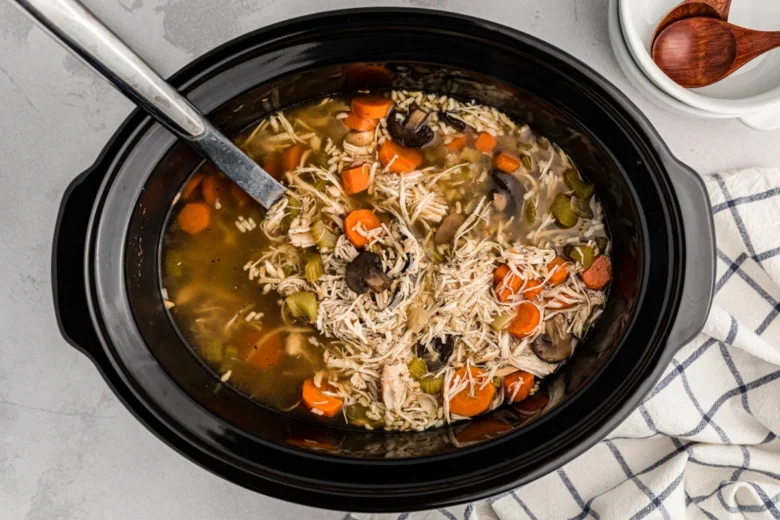
There is a particular kind of soup that sits in its own category — not a thin broth with a few ingredients floating in it, not a thick stew that eats like a meal in a bowl, but something in between. Substantial without being heavy. Brothy but full of body. The kind of soup that satisfies completely and still leaves you feeling nourished rather than stuffed. Turkey and wild rice soup is that soup.
Wild rice is the ingredient that makes this soup something special. It is not actually rice — it is the seed of an aquatic grass native to North America, and it has a nuttiness, a chewiness, and an earthiness that no other grain quite replicates. In a long-cooked soup, it absorbs the turkey broth and the aromatics and becomes something deeply savory and satisfying, with a slightly smoky, almost forest-floor depth that makes the broth taste significantly more complex than its ingredients suggest.
Paired with tender slow-cooked turkey, sweet carrots, earthy mushrooms, and creamy half-and-half stirred in at the end, this soup earns a place at the table any night of the week — and an especially prominent place the day after Thanksgiving when there is leftover turkey to use and the entire household is quietly grateful for something warm and uncomplicated.
Why Wild Rice Belongs in Soup
Wild rice is one of the most underused grains in everyday cooking, which is a genuine shame because it does things in a soup that nothing else can replicate.
Texture. Wild rice has a chewy, slightly firm texture even when fully cooked — a pleasant resistance that makes each spoonful feel more substantial. It does not become mushy or bloated the way white rice does in soup, and it does not disappear into the broth. It stays present, distinct, and satisfying throughout the bowl and through reheating.
Flavor. Wild rice has a nutty, slightly smoky, almost woodsy flavor that adds complexity to anything it is cooked in. In a turkey broth with mushrooms and herbs, that earthy depth becomes the foundation of a soup that tastes considerably more sophisticated than its ingredient list suggests.
Nutrition. Wild rice is significantly higher in protein and fiber than white rice, lower in carbohydrates, and rich in antioxidants. It adds genuine nutritional value beyond its role as a textural element.
It holds up to slow cooking. Unlike white rice, which can turn to mush after extended slow cooker cooking, wild rice needs a long cook — 5 to 6 hours on LOW is actually ideal for it, producing perfectly tender, slightly chewy grains that have absorbed the surrounding broth beautifully.
The Turkey
The same flexible approach applies here as throughout this series.
Raw bone-in turkey thighs placed in the slow cooker at the start produce the richest, most deeply flavored broth. The bones contribute collagen that enriches the liquid; the dark meat stays moist and tender through the long cook and shreds easily. This is the method that produces the best soup.
Leftover cooked turkey — the post-Thanksgiving version — is stirred in during the last 30 to 45 minutes. Shredded or roughly chopped, it heats through without overcooking and absorbs the wild rice broth beautifully.
Rotisserie chicken or turkey provides a convenient shortcut. Add shredded meat in the last 30 minutes. The flavor will be slightly less complex than a from-scratch version but perfectly good on a busy weeknight.
One note specific to this soup: the wild rice and mushroom combination produces such a deeply flavored broth that even a relatively modest amount of turkey protein creates a satisfying, complete soup. This is one recipe where a smaller amount of turkey goes further than you would expect.
The Wild Rice
Wild rice behaves differently from white or brown rice in a slow cooker and understanding those differences produces a better soup.
Pure wild rice vs wild rice blends. Pure wild rice — the actual aquatic grass seed — is darker, chewier, and more robustly flavored than wild rice blends, which typically contain a mixture of wild rice, long-grain white rice, and other varieties. For this soup, pure wild rice produces the best result. Wild rice blends work but the white rice component will overcook during the long slow cooker cooking time and become mushy. If using a blend, add it in the last 1.5 to 2 hours rather than at the start.
Do not rinse wild rice. Unlike white rice, wild rice does not need rinsing and benefits from going in with its natural surface compounds intact.
Wild rice expands significantly during cooking. One cup of dry wild rice produces approximately 3 to 3.5 cups of cooked wild rice. Do not over-add — a single cup of dry wild rice is the right amount for this recipe. Too much and the soup becomes thick and grain-dominated rather than brothy.
It can absorb a lot of liquid. Wild rice is a liquid-hungry grain. If the soup looks thinner than you’d like after the rice has cooked, it will look considerably thicker after 30 minutes of resting. Similarly, leftover soup may need a splash of broth to loosen it back to the right consistency when reheating.
The Mushrooms
Mushrooms are optional but highly recommended — they add an earthy, umami depth that amplifies the wild rice’s natural woodsy character and makes the whole soup taste more complex and satisfying.
Cremini mushrooms are the everyday choice — more flavorful than button mushrooms, widely available, and producing a clean, earthy contribution to the broth.
Shiitake mushrooms add a deeper, more distinctly savory umami note and a meatier texture. Their stems are tough and should be removed, but they can be simmered in the broth during cooking and removed before serving — they contribute significant flavor to the liquid.
A combination of cremini and shiitake produces the most complex, layered mushroom flavor in the finished soup.
Dried porcini mushrooms are the most powerful flavor booster available. Soak ½ oz of dried porcini in 1 cup of hot water for 15 minutes, then add both the soaked mushrooms (roughly chopped) and their soaking liquid (strained through a coffee filter to remove grit) to the slow cooker. The depth of flavor this adds to the broth is extraordinary.
Making It Creamy
The creamy version of turkey and wild rice soup is a classic — the richness of the cream against the earthy wild rice and savory turkey is deeply satisfying.
Half-and-half or heavy cream added in the last 30 minutes of cooking transforms the broth from a clear, clean turkey stock into something rich, silky, and slightly opaque. The cream should never be added at the start of cooking — extended heat causes it to separate and curdle.
Cream cheese stirred in at the end adds both creaminess and a slight tanginess that is wonderful in this soup. Cut 2 to 3 oz of full-fat cream cheese into small cubes and stir them into the hot soup in the last 20 minutes, stirring until completely melted and incorporated.
The roux option. For a thicker, more chowder-like consistency, make a quick roux (equal parts butter and flour) in a skillet and whisk it into the soup in the last 30 minutes. This produces a soup that is considerably thicker and more substantial — almost a turkey and wild rice chowder.
The brothy version. Simply skip the cream entirely. The wild rice naturally thickens the broth slightly during cooking, and the mushroom and turkey flavors are rich enough to produce a deeply satisfying soup without any dairy. This is the lighter, cleaner option.
Tips for the Best Slow Cooker Turkey and Wild Rice Soup
1. Use pure wild rice, not a blend. Blended wild rice contains white rice that will over-cook during extended slow cooking. Pure wild rice goes in at the start and needs the full 5 to 6 hours to cook properly.
2. Add the wild rice at the start — unlike most grains. This is a reversal of the usual slow cooker rule about adding starches late. Wild rice is robust enough to handle the full cooking time and actually benefits from it — the grains absorb the broth slowly, becoming tender but still chewy in the ideal way.
3. Do not add cream early. Dairy added at the start of a long slow cook separates and becomes grainy. Heavy cream, half-and-half, or cream cheese all go in during the last 20 to 30 minutes only.
4. Use mushroom soaking liquid for depth. If using dried porcini, always add the strained soaking liquid to the soup. It has a concentrated, almost meaty depth that elevates the broth dramatically.
5. Season at the end. Wild rice absorbs salt aggressively during cooking. Season the soup lightly at the start and taste carefully before serving — it often needs more salt than expected at the end, and the right amount is much easier to judge once everything has cooked and the flavors have developed.
6. Account for thickening. Wild rice absorbs broth continuously even after cooking stops. The soup will thicken considerably during resting and overnight in the fridge. Add a splash of warm broth when reheating to restore the right consistency.
7. Finish with fresh herbs and lemon. Fresh thyme or parsley added right before serving and a small squeeze of lemon juice brightens the soup and adds a freshness that long-cooked soups benefit enormously from.
Easy Variations
- Creamy turkey and wild rice. Stir in 1 cup of heavy cream or half-and-half in the last 30 minutes. Add 2 oz of cream cheese for extra richness and tang. This produces the classic Midwestern wild rice soup character.
- Turkey and wild rice chowder. Make a roux (3 tbsp butter + 3 tbsp flour) and whisk it into the soup in the last 30 minutes along with the cream. Produces a thick, hearty chowder-style soup.
- Lemon and herb. Add the zest and juice of one lemon, 2 tablespoons of fresh dill, and 1 tablespoon of fresh parsley at the end of cooking. A brighter, more herby variation.
- North woods style. Add ½ cup of dried cranberries and ¼ cup of toasted pecans scattered over each bowl before serving. A distinctly Minnesota-inspired version with sweet and nutty elements.
- Spiced wild rice soup. Add ½ teaspoon of turmeric, ½ teaspoon of cumin, and a pinch of cayenne to the aromatics. A warmer, more exotic spice profile that pairs well with the earthy wild rice.
- Vegetarian wild rice soup. Replace turkey with 2 cans of drained white beans and use vegetable broth. Double the mushrooms and add a Parmesan rind during cooking for umami depth.
What to Serve Alongside
Turkey and wild rice soup is substantial enough to be a complete meal. Simple accompaniments work best.
- Crusty sourdough or whole grain bread — for dunking into the broth
- Wild rice crackers — for a thematic pairing
- A simple kale salad with lemon dressing — the bitterness of the kale contrasts beautifully with the earthy, savory soup
- Warm dinner rolls — classic alongside a hearty soup
- A grilled cheese sandwich — the greatest soup companion in American cooking
- Cornbread — particularly good with the North woods variation
Make-Ahead and Storage
Make-ahead: This soup improves significantly overnight as the flavors meld and the wild rice absorbs more of the broth. Make it the day before — without the cream if using — refrigerate, add cream when reheating. One of the best make-ahead soups in this series.
Refrigerator: Store in an airtight container for up to 5 days. The wild rice will continue to absorb broth during refrigeration — the soup will be noticeably thicker after a night in the fridge. Reheat with a splash of broth and re-season before serving.
Freezer: Freeze without the cream component for up to 3 months. The wild rice holds up to freezing considerably better than white rice. Thaw overnight in the fridge, reheat on the stovetop, and stir in fresh cream just before serving.
Shopping List
The Turkey
- 2 lbs (900g) bone-in turkey thighs — OR — 3 cups shredded cooked leftover turkey (added at end)
Produce
- 1 large onion, diced
- 3 medium carrots, diced
- 3 stalks celery, diced
- 4 cloves garlic, minced
- 2 cups cremini mushrooms, sliced
- Optional: 4–6 shiitake mushrooms (stems removed), sliced
- Optional: ½ oz dried porcini mushrooms + 1 cup hot water for soaking
- Fresh thyme (4–5 sprigs)
- Fresh parsley (for finishing)
- 1 lemon (juice for finishing)
Grains
- 1 cup (185g) pure wild rice (not a blend)
Dairy
- 1 cup (240ml) heavy cream or half-and-half (optional, added at end)
- 2–3 oz full-fat cream cheese (optional, for extra creaminess)
Pantry
- 6 cups (1.4L) low-sodium chicken or turkey broth
- 1 tsp Worcestershire sauce
Spices & Seasonings
- 1 tsp dried thyme
- ½ tsp dried rosemary
- ¼ tsp dried sage
- 2 bay leaves
- 1 tsp salt (plus more to taste)
- ½ tsp black pepper
- ¼ tsp white pepper (optional)
Slow Cooker Turkey and Wild Rice Soup
A deeply nourishing, beautifully textured slow cooker soup built from tender turkey, nutty wild rice, earthy mushrooms, and sweet root vegetables in a rich, herb-scented broth — finished with a swirl of cream for a silky, satisfying bowl that is simultaneously light and deeply substantial. Wild rice’s natural nuttiness and chew give this soup a character that no other grain can replicate. The perfect post-Thanksgiving soup and a year-round comfort food essential.
- Total Time: 7 hours 20 minutes
- Yield: 6 – 8 servings 1x
Ingredients
The Turkey Base
- 2 lbs (900g) bone-in turkey thighs — OR — 3 cups shredded cooked turkey (added last 30–45 minutes)
- 6 cups (1.4L) low-sodium chicken or turkey broth
The Wild Rice
- 1 cup (185g) pure wild rice (not a blend), unrinsed
The Vegetables
- 1 large onion, diced
- 3 medium carrots, diced
- 3 stalks celery, diced
- 4 cloves garlic, minced
- 2 cups (about 180g) cremini mushrooms, sliced
- Optional: ½ oz dried porcini mushrooms, soaked in 1 cup hot water for 15 minutes (add mushrooms and strained liquid)
The Herbs and Seasoning
- 4–5 sprigs fresh thyme (or 1 tsp dried)
- ½ tsp dried rosemary
- ¼ tsp dried sage
- 2 bay leaves
- 1 tsp Worcestershire sauce
- 1 tsp salt (plus more to taste at end)
- ½ tsp black pepper
Added at the End (Optional — for creamy version)
- 1 cup (240ml) heavy cream or half-and-half
- 2 oz full-fat cream cheese, cubed (optional, for extra richness)
To Finish
- Juice of ½ lemon
- 2 tbsp fresh parsley, chopped
- Salt and pepper to taste
Instructions
- Add the base ingredients. If using raw bone-in turkey thighs, place them in the bottom of the slow cooker. Add the wild rice, diced onion, carrots, celery, minced garlic, and sliced cremini mushrooms. If using dried porcini, add the soaked and chopped mushrooms and their strained soaking liquid now.
- Add broth and seasoning. Pour the broth over everything. Add the thyme sprigs, rosemary, sage, bay leaves, Worcestershire sauce, salt, and pepper. Stir gently to distribute.
- Cook. Set the slow cooker to LOW and cook for 6 to 8 hours (raw turkey) or 5 to 6 hours (cooked turkey added at the end, with wild rice going in at the start). The wild rice is done when the grains have puffed and split slightly, revealing a lighter interior, and are tender but still pleasantly chewy.
- Shred the turkey (if using raw). Remove the cooked turkey thighs from the slow cooker. Discard skin and bones. Shred the meat into bite-sized pieces and return to the soup.
- Add cooked turkey (if using leftover). Stir in shredded leftover or rotisserie turkey. Cook on HIGH for 20–30 minutes until heated through.
- Add cream (if using). Stir in the heavy cream or half-and-half. If using cream cheese, add the cubed pieces and stir until completely melted and incorporated. Cook on LOW for a further 20 minutes until creamy and slightly thickened.
- Remove herbs and finish. Remove and discard the thyme sprigs and bay leaves. Squeeze in the lemon juice. Stir in the fresh parsley. Taste and adjust seasoning — add more salt, pepper, or lemon as needed. The soup should taste rich, earthy, and well-seasoned.
- Serve. Ladle into deep bowls. Garnish with extra fresh parsley and a crack of black pepper. Serve with crusty bread alongside.
Notes
- Pure wild rice only. Wild rice blends contain white rice that overcooks during the full slow cooker duration. Pure wild rice is designed for long cooking and benefits from every hour of it. If a blend is all that is available, add it in the last 1.5 to 2 hours only.
- Wild rice goes in at the start. Unlike most starches, wild rice is robust enough — and needs long enough — to go in at the beginning with the other base ingredients. It will be perfectly tender and chewy after the full cooking time.
- Add cream at the end. Dairy added during the long cook separates. Heavy cream, half-and-half, and cream cheese all go in during the last 20 to 30 minutes for a silky, stable result.
- The soup thickens considerably as it sits. Wild rice is an aggressive liquid absorber. The soup may look thin at the end of cooking and considerably thicker after 30 minutes of resting. When reheating, always add a splash of broth to restore the right consistency.
- Dried porcini are the secret upgrade. Half an ounce of dried porcini mushrooms soaked and added with their strained liquid adds a depth of umami to the broth that is immediately noticeable and impossible to replicate any other way. If you can find dried porcini, use them.
- Season at the very end. Wild rice absorbs salt during cooking and the broth concentrates. The soup will almost certainly need more seasoning at the end than it started with — always taste before serving.
- The lemon juice is essential. A small squeeze right before serving lifts the earthy, savory flavors and adds a brightness that prevents the soup from tasting heavy or one-dimensional. Do not skip it.
- Prep Time: 20 minutes
- Cook Time: 7 hours (on LOW)
- Category: Dinner, Main Dish, Soup
- Method: Slow Cooking
- Cuisine: American
- Diet: Dairy-Free, Gluten-Free
Frequently Asked Questions
Can I use a wild rice blend instead of pure wild rice? You can, with an important adjustment. Wild rice blends contain white or brown rice alongside the true wild rice, and those components will overcook and become mushy if cooked for the full 6 to 8 hours. If using a blend, start the soup with the turkey, vegetables, broth, and seasonings — but hold the rice blend until the last 1.5 to 2 hours of cooking, at which point the white rice component will cook through without becoming mush. The soup will still be excellent, just with a slightly different texture profile.
Why hasn’t my wild rice cooked through after the suggested time? A few variables can affect wild rice cooking time. The age of the rice matters — older wild rice that has been sitting in the pantry for a long time can take longer to hydrate and cook than freshly packaged rice. The temperature your specific slow cooker runs at also varies between models. If the wild rice is still too firm at the end of the suggested time, continue cooking in 30-minute increments on LOW, adding a splash of broth if the soup has become too thick. The grains are done when they have puffed and split, revealing a lighter, almost white interior, and feel tender when pressed between your fingers.
Is wild rice actually rice? No — despite its name and appearance, wild rice is not a rice at all. It is the seed of Zizania, an aquatic grass native to North America, particularly the Great Lakes region. It has been harvested and eaten by Indigenous peoples of North America for thousands of years. Its nutritional profile is significantly different from white rice — higher in protein, higher in fiber, lower in carbohydrates, and rich in antioxidants. It is technically closer to a seed or a cereal grain than to rice, and its cooking behavior reflects that difference.
Can I add white or brown rice to the soup along with the wild rice? White rice added at the start will overcook completely — avoid it. Brown rice can be added at the same time as the wild rice and will generally be cooked through by the end of the cooking time, though the texture will be softer than the wild rice. If you want to add both grains, cook the white rice separately and stir it in during the last 20 minutes. Brown rice can go in at the start.
How do I stop the soup from getting too thick? Wild rice absorbs liquid aggressively, both during cooking and during refrigeration afterward. Two approaches prevent an overly thick soup. First, use the full 6 cups of broth rather than reducing it. Second, monitor the consistency in the last hour of cooking and add additional broth if it has become thicker than you prefer. The soup will thicken further as it cools — always reheat with an extra splash of broth to restore the right pourable, brothy consistency.
Can I make this soup without the mushrooms? Yes — the mushrooms are optional. The soup will be lighter and less complex in flavor without them but still very good. If omitting mushrooms entirely, consider adding a teaspoon of soy sauce or Worcestershire sauce to compensate for the umami depth the mushrooms would have provided. An alternative is to use a richer, more deeply flavored broth — homemade turkey bone broth from earlier in this series, for instance — which adds complexity without needing the mushrooms.
Can I make this soup entirely in advance for a dinner party? Yes, with one consideration. Make the soup fully the day before, but hold the cream component until the day of serving. Refrigerate the soup overnight — the wild rice will continue absorbing broth and the flavors will deepen considerably. When reheating, add a splash of broth to loosen, bring to a gentle simmer, then stir in the cream in the last 20 minutes before serving. This is actually the recommended approach for the best-tasting result — overnight-rested wild rice soup is noticeably better than same-day.
How does this soup compare nutritionally to regular chicken noodle soup? Turkey and wild rice soup is generally more nutritious than chicken noodle soup by most measures. Wild rice contributes significantly more protein and fiber than egg noodles or white pasta, with fewer carbohydrates and a lower glycemic impact. Turkey, particularly the dark meat thighs used in this recipe, is higher in iron, zinc, and B vitamins than chicken breast. The mushrooms add antioxidants, and the vegetable base provides a wide range of vitamins and minerals. It is genuinely one of the more nourishing soups you can make, quite apart from being delicious.
Can I cook this soup on HIGH to save time? Wild rice specifically benefits from LOW, slow cooking — HIGH heat can cook the exterior of the grains faster than the interior, resulting in some grains that are mushy on the outside while still firm inside. If time requires it, cook on HIGH for 3 to 4 hours, but start checking the rice at the 2.5-hour mark and be prepared for slightly less even results than the LOW method produces. For turkey thighs, HIGH heat is less of a concern than for the rice — the main quality risk is the wild rice texture.