
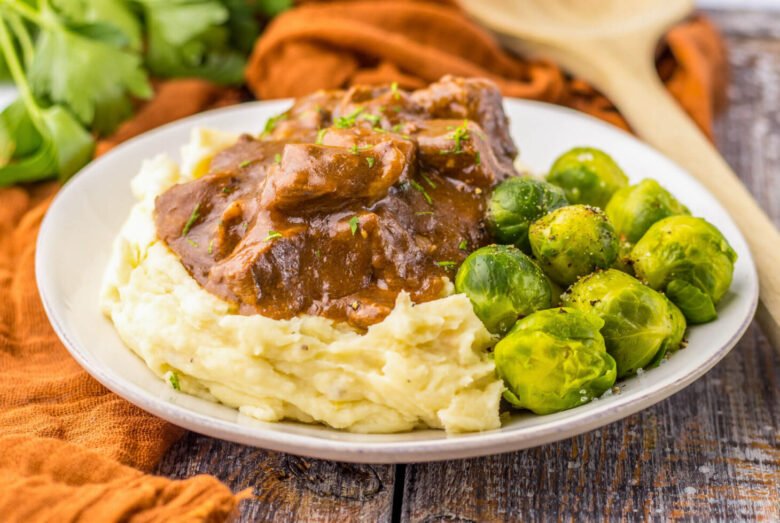
There is a category of dish that does not photograph dramatically, does not require unusual ingredients, and does not benefit from elaborate technique — and yet produces a response at the table that more complicated cooking rarely achieves. Beef tips with gravy is that dish. Tender cubes of beef, slow-cooked until they yield completely to a fork, bathed in a dark, rich, deeply savory gravy that has spent hours reducing and concentrating in the slow cooker — served over mashed potatoes or egg noodles until the gravy soaks into everything on the plate. It is the definition of comfort food, which is to say it is the definition of food people actually want to eat.
The slow cooker version of beef tips with gravy is not a compromise on the classic — it is the best version of it. The long, gentle braise does to beef tips exactly what it was designed to do: convert tough, inexpensive cuts of beef into something so tender they barely hold their shape, while simultaneously building the gravy from the inside out, extracting every bit of flavor from the beef, the broth, and the aromatics into a sauce that is dark, glossy, and rich in a way that quick stovetop gravies never quite achieve. The hours do the work. The result is extraordinary.
Why the Slow Cooker Makes Better Beef Tips
Beef tips — the cut, not a culinary term — refers to small cubes of beef, typically from tougher, more flavorful cuts: sirloin tips, chuck, stew meat, or round. These cuts share a common characteristic: they are heavily worked muscles, dense with connective tissue and collagen, which makes them chewy and tough when cooked quickly but profoundly tender and flavorful when cooked slowly with moisture over a long period.
The slow cooker provides exactly that environment. At its LOW setting, the temperature holds steady between 190°F and 200°F (88°C to 93°C) — warm enough to break down collagen into gelatin over time, but cool enough to never push the proteins into the tightening, squeezing contraction that produces dry, tough meat. The enclosed insert traps steam and moisture, maintaining a self-basting environment throughout the entire cook. The collagen in the beef dissolves gradually and enriches the braising liquid, thickening it naturally into the glossy, body-rich gravy that makes this dish what it is.
Stovetop beef tips can be excellent, but they require constant attention — monitoring the simmer, adjusting heat, adding liquid to prevent scorching. The slow cooker requires none of that. Set it, leave it, and return to beef that has transformed completely over hours of unattended cooking into something that took almost no effort to produce.
Choosing Your Beef
The cut of beef is the most consequential decision in this recipe, and the answer is not the most expensive option.
Sirloin tips are the traditional choice and the one most grocery stores stock specifically labeled for this dish. They are lean enough to hold their cube shape through the long braise and have good beefy flavor, but they contain less connective tissue than chuck, which means the gravy will not self-thicken as richly from the beef alone. Excellent choice — results in a cleaner, slightly leaner dish.
Chuck roast, cut into 1½ to 2-inch cubes, is the best overall choice for slow cooker beef tips with gravy. Chuck comes from the shoulder — a heavily worked, well-marbled muscle packed with collagen and connective tissue. During the long braise, that collagen converts entirely to gelatin, which dissolves into the braising liquid and produces a gravy with extraordinary body and richness without needing as much added thickener. Chuck beef tips become falling-apart tender while the gravy develops the silky, cling-to-everything consistency that makes this dish so satisfying. Buy a chuck roast and cube it yourself — it is less expensive than pre-cut stew meat and you control the cube size.
Stew meat from the grocery store is typically a mix of whatever the butcher had available — often a combination of chuck, round, and other cuts. It works, but the inconsistent cut sizes and mixed fat content can produce uneven results. If stew meat is the only option, check that the pieces are approximately uniform in size and trim any very large fat caps.
Round (bottom round, top round) is lean, holds its shape well, but lacks the fat and connective tissue that make chuck so exceptional in this application. Round beef tips will be tender but the gravy will need more support from added thickeners.
The cube size matters. Cut beef into 1½ to 2-inch cubes — large enough to stay intact through the long braise and produce satisfying pieces on the plate, small enough to cook through evenly and be fork-cuttable without a knife. Smaller cubes overcook and fall apart before the gravy has developed fully; larger cubes can remain tough in the center.
The Sear: Non-Negotiable
Of all the tips and techniques in this recipe, the sear is the one that separates good slow cooker beef tips from exceptional slow cooker beef tips — and the one most often skipped.
Searing the beef cubes in a hot skillet before they go into the slow cooker is not about cooking the beef through. It is entirely about the Maillard reaction — the complex chemical process that occurs when proteins and sugars in the beef are exposed to high, dry heat and produce hundreds of new flavor compounds: the deep brown crust, the roasted, caramelized notes, the darkened fond on the bottom of the pan that is, ounce for ounce, the most flavorful thing in the entire recipe.
That fond — the browned bits stuck to the skillet — is deglazed with beef broth and scraped directly into the slow cooker, where it colors and flavors the entire gravy throughout the long cook. The seared surface of the beef contributes roasted depth to every bite. The gravy turns dark and complex rather than pale and flat.
The sear takes 15 minutes. Work in batches — never crowd the pan, which causes steaming rather than browning. A hot, dry cast-iron or stainless skillet, a small amount of oil, and patience until each side develops a deep brown crust before turning. Do not rush it and do not skip it.
Building the Gravy
The gravy in slow cooker beef tips is not added at the end — it builds throughout the entire cook from the braising liquid, reducing and concentrating and absorbing the collagen from the beef over hours until it emerges from the slow cooker already most of the way to finished.
Beef broth is the base — use the best quality beef broth or stock available. The broth is the foundation of the gravy and its quality is directly detectable in the finished dish. Homemade beef stock is exceptional here. A good store-bought beef broth works well. Avoid generic, pale, low-sodium broths — they produce a thin, pale gravy that lacks the depth the dish requires.
Dry red wine — a generous splash — adds acidity, depth, and the complex tannin structure that makes beef braising liquid taste developed and layered rather than one-dimensional. A Cabernet Sauvignon, Merlot, or any full-bodied dry red wine works. Avoid “cooking wine” — the added salt and inferior flavor are detectable. If avoiding alcohol entirely, replace with additional beef broth and a tablespoon of balsamic vinegar for acidity and depth.
Worcestershire sauce — two tablespoons — adds the umami backbone and dark, savory depth that anchors the gravy. It is the ingredient that makes the gravy taste like it has been cooking for hours even before it has.
Tomato paste — a tablespoon, cooked briefly in the skillet with the aromatics — adds color, body, and a concentrated savory depth without adding any detectable tomato flavor to the finished gravy. It also helps the gravy develop a darker, richer color throughout the cook.
Onion and garlic — a large onion diced and several garlic cloves minced — are the aromatic foundation. They soften completely into the gravy over the long cook and are undetectable as discrete pieces in the finished dish, contributing only their sweetness and depth.
Fresh thyme and bay leaves — the classic braising herbs. They perfume the gravy throughout the cook and are removed before serving.
The thickener. The gravy needs a finishing thickener — either a cornstarch slurry stirred in during the final 30 minutes of cooking, or a quick flour-butter roux stirred into the strained cooking liquid after the cook. Both work. The cornstarch method is simpler and produces a glossy, clear gravy. The roux method produces a slightly more opaque, traditional gravy with a thicker body. Either is excellent.
Tips for Perfect Slow Cooker Beef Tips with Gravy
1. Sear the beef in batches. Never crowd the pan when searing. Overcrowded beef steams in its own moisture rather than browning. Work in two to three batches, leaving space between each piece, and sear until each side is deeply browned before turning. Patience at the sear pays dividends in the finished gravy.
2. Deglaze the skillet. After searing the beef and softening the aromatics, pour a splash of beef broth or red wine into the hot skillet and scrape every browned bit from the bottom with a wooden spoon. That fond is concentrated flavor — pour it all into the slow cooker. Nothing goes to waste.
3. Cook the tomato paste. Add the tomato paste to the skillet with the onion and garlic and cook it for 1 to 2 minutes before adding the liquid. Cooking tomato paste in fat concentrates its flavor and eliminates the raw, slightly acidic edge of uncooked paste.
4. Low and slow — always. Beef tips on HIGH in the slow cooker can cook through in 3 to 4 hours, but the texture is tighter, less yielding, and the gravy less developed than the same dish cooked on LOW for 7 to 8 hours. The collagen conversion and gravy development that make this dish special happen over time. Cook on LOW.
5. Don’t open the lid. Every time the slow cooker lid is removed, heat escapes and the temperature drops significantly — adding 20 to 30 minutes to the cook time. Leave the lid on throughout.
6. Thicken at the end. Add the cornstarch slurry in the final 20 to 30 minutes with the lid off and the slow cooker set to HIGH. Stirring in a thickener too early and cooking it for hours produces a starchy, gluey gravy. Added at the end, it produces a smooth, glossy, properly thickened sauce.
7. Season at the end, not just the beginning. The gravy concentrates significantly during the long cook — what tasted correctly seasoned at the start may taste underseasoned by the end as the beef releases flavor, or over-seasoned if the broth was already salted. Always taste and adjust the seasoning after thickening and before serving.
Serving the Beef Tips
Beef tips with gravy demand something substantial underneath to absorb the sauce.
Mashed potatoes are the classic and correct pairing — creamy, buttery, and built to absorb gravy. Spoon the beef tips and gravy generously over a mountain of mashed potatoes and serve with nothing to distract from it. This is the quintessential presentation.
Egg noodles — wide, buttered, slightly al dente — are the alternative that rivals mashed potatoes. The noodles absorb gravy differently, holding it in their curves and folds in a way that is deeply satisfying. A scatter of fresh parsley over the top and nothing more is needed.
White rice — plain, steamed — is the most neutral and practical option. The gravy does all the work. Rice absorbs it cleanly.
Polenta — soft, creamy, with Parmesan stirred through — is an excellent alternative that pairs well with the rich, wine-dark gravy and elevates the presentation.
Crusty bread on the side is non-negotiable regardless of the starch underneath — it is for the remaining gravy on the plate.
The Complete Table
Sides:
- Creamy mashed potatoes — the definitive pairing
- Buttered egg noodles — a close second
- Roasted green beans with garlic — simple and fresh against the richness
- Glazed carrots — sweet and bright
- Dinner rolls — for every last drop of gravy
- Steamed broccoli — clean, neutral, practical
Garnishes that elevate:
- Fresh flat-leaf parsley, finely chopped — the essential finish
- Crispy fried onions scattered over the top
- A knob of cold butter stirred into the gravy just before serving — adds gloss and richness
- Fresh thyme leaves
Drinks:
- The same red wine that went into the braise — Cabernet, Merlot, or Shiraz
- A full-bodied craft beer — a porter or amber ale
- Sparkling water with lemon for a clean contrast
The Day-After Beef Tips Pot Pie
Cold leftover beef tips and gravy, spooned into a deep baking dish with frozen peas and diced carrots stirred through, topped with a sheet of store-bought puff pastry or pie crust, egg-washed and baked at 400°F (200°C) for 25 to 30 minutes until the pastry is puffed and deeply golden — is one of the most satisfying pot pies you will ever eat. The gravy, already rich from hours of slow cooking, needs nothing added. The pastry does the rest. Keep leftovers specifically for this purpose.
Easy Variations
- Mushroom beef tips. Add 8 oz (225g) of sliced cremini or baby bella mushrooms to the slow cooker along with the beef. Mushrooms add earthy depth, soak up the gravy beautifully, and are one of the best natural pairings for slow-braised beef.
- Stroganoff-style. Stir ½ cup (120ml) of sour cream into the finished gravy just before serving — do not return to the heat after adding the sour cream, as it can curdle. Serve over egg noodles. The result is a deeply flavored beef stroganoff with the depth that only a slow-cooked braise produces.
- Red wine beef tips. Double the red wine in the braising liquid to ¾ cup (180ml) and reduce the beef broth slightly. The gravy turns deeper, darker, and more wine-forward — closer to a classic boeuf bourguignon.
- Spicy beef tips. Add 1 tablespoon of Cajun seasoning and a splash of hot sauce to the braising liquid. The heat and spice cut through the richness of the gravy and transform the dish into something with a Southern Cajun character.
- Beef tips with root vegetables. Add diced parsnips, turnips, and carrots to the slow cooker in the last 3 hours of cooking. They soften into the gravy and turn the dish into a complete one-pot meal.
Make-Ahead and Storage
Make-ahead: Beef tips with gravy is one of the best make-ahead dishes in this style of cooking. The flavors deepen considerably overnight and the gravy thickens naturally as it chills. Cook a day ahead, refrigerate, and reheat gently on the stovetop over low heat, adding a small splash of broth to loosen if needed.
Refrigerator: Leftovers keep in an airtight container for up to 4 days. The gravy will thicken significantly when cold — this is normal. It loosens again when reheated.
Freezer: Freeze in portions for up to 3 months. Thaw overnight in the refrigerator and reheat gently. The gravy may need a small splash of broth and a brief whisk after thawing to come back together.
Meal prep: Beef tips and gravy reheats exceptionally well, making it an excellent Sunday cook for weekday lunches or dinners. Portion over rice for ready-to-go containers that keep for 4 days.
Shopping List
The Beef
- 2–2.5 lbs (900g–1.1kg) chuck roast or sirloin tips, cut into 1½ to 2-inch cubes
- 2 tbsp neutral oil (for searing)
- Salt and black pepper
The Aromatics
- 1 large yellow onion, diced
- 4 garlic cloves, minced
- 1 tbsp tomato paste
The Braising Liquid
- 1½ cups (360ml) beef broth
- ½ cup (120ml) dry red wine
- 2 tbsp Worcestershire sauce
- 1 tsp Dijon mustard
- 4 sprigs fresh thyme
- 2 bay leaves
- 1 tsp onion powder
- Salt and black pepper to taste
The Thickener
- 2 tbsp cornstarch + 3 tbsp cold water (slurry)
For Serving
- Mashed potatoes or egg noodles
- Fresh flat-leaf parsley, finely chopped
Slow Cooker Beef Tips with Gravy
Cubes of chuck roast or sirloin tips, seared until deeply browned in a hot skillet and slow-cooked on LOW for 7 to 8 hours in a rich braising liquid of beef broth, red wine, Worcestershire, tomato paste, and fresh thyme — emerging fork-tender and coated in a dark, glossy, deeply savory gravy finished with a cornstarch slurry for perfect consistency. Served over creamy mashed potatoes or buttered egg noodles with a scatter of fresh parsley and the kind of silence at the table that means dinner is exactly right.
- Total Time: 8 hours 5 minutes
- Yield: 4–6 servings 1x
Ingredients
The Beef
- 2–2.5 lbs (900g–1.1kg) chuck roast or sirloin tips, cut into 1½ to 2-inch cubes
- 2 tbsp neutral oil
- 1 tsp salt
- ½ tsp black pepper
The Aromatics
- 1 large yellow onion, diced
- 4 garlic cloves, minced
- 1 tbsp tomato paste
The Braising Liquid
- 1½ cups (360ml) beef broth
- ½ cup (120ml) dry red wine (or additional broth + 1 tbsp balsamic vinegar)
- 2 tbsp Worcestershire sauce
- 1 tsp Dijon mustard
- 4 sprigs fresh thyme (or ½ tsp dried)
- 2 bay leaves
- 1 tsp onion powder
- Salt and black pepper to taste
The Thickener
- 2 tbsp cornstarch
- 3 tbsp cold water
For Serving
- Creamy mashed potatoes or buttered egg noodles
- Fresh flat-leaf parsley, finely chopped
Instructions
- Season and sear the beef. Pat the beef cubes completely dry with paper towels — moisture is the enemy of a good sear. Season generously on all sides with salt and black pepper. Heat the oil in a large heavy-bottomed skillet (cast iron or stainless) over medium-high heat until shimmering. Working in two to three batches, sear the beef cubes on all sides until deeply browned, 2 to 3 minutes per side. Do not crowd the pan. Transfer seared beef to the slow cooker.
- Build the aromatics. Reduce the heat to medium. Add the diced onion to the same skillet and cook for 3 to 4 minutes, scraping up any browned bits from the beef, until softened and translucent. Add the minced garlic and tomato paste and cook for a further 1 to 2 minutes, stirring, until the tomato paste darkens slightly in color.
- Deglaze. Pour the red wine (or balsamic broth substitute) into the skillet and scrape every browned bit from the bottom with a wooden spoon. Let it bubble and reduce for 1 minute. Pour the entire contents of the skillet into the slow cooker over the beef.
- Add the braising liquid. Pour the beef broth into the slow cooker. Add the Worcestershire sauce, Dijon mustard, onion powder, thyme sprigs, and bay leaves. Stir briefly to combine. The liquid should come approximately two-thirds of the way up the beef — add a small amount of additional broth if needed.
- Cook. Set the slow cooker to LOW and cook for 7 to 8 hours, until the beef is completely tender and yields easily to a fork with no resistance. Do not cook on HIGH.
- Discard aromatics. Remove and discard the thyme sprigs and bay leaves. Taste the cooking liquid and adjust seasoning with salt and pepper.
- Thicken the gravy. In a small bowl, whisk together the cornstarch and cold water until smooth. Stir the slurry into the slow cooker, replace the lid, and cook on HIGH for 20 to 30 minutes until the gravy is thickened, glossy, and coats the back of a spoon. Alternatively: strain the cooking liquid into a saucepan, whisk in the slurry, and bring to a boil on the stovetop for 2 to 3 minutes until thickened, then return the beef to the sauce.
- Rest and serve. Allow to rest with the lid off for 5 minutes. Taste one final time for seasoning. Serve generously over creamy mashed potatoes or buttered egg noodles, garnished with fresh flat-leaf parsley.
Notes
- Dry the beef before searing. Surface moisture on the beef prevents browning — it steams the meat instead. Pat every piece thoroughly dry with paper towels before it goes into the hot skillet. Dry beef browns; wet beef steams.
- Work in batches. Crowding the searing pan is the most common mistake in this recipe. Too many pieces of beef in the pan drops the temperature, traps steam, and prevents browning. The goal is a hard, dark sear on all sides — not grey, steamed meat.
- Deglaze every bit of fond. The dark crust on the bottom of the skillet after searing is the most concentrated beef flavor in the entire recipe. The deglaze step captures it entirely and deposits it directly into the gravy. Do not rush this step or leave any of it behind.
- Chuck beats sirloin tip for flavor. Sirloin tips hold their shape more neatly; chuck falls apart more readily but produces a richer, more unctuous gravy from its higher collagen content. Choose based on whether you want clean, defined beef pieces or a more rustic, falling-apart result.
- LOW only. Seven to eight hours on LOW produces a different dish than three to four hours on HIGH — the collagen conversion, the gravy development, and the depth of flavor are all functions of time at gentle heat.
- Thicken at the end. Cornstarch added too early breaks down during the long cook and produces a thin, starchy result. Add it in the final 20 to 30 minutes only.
- Cold butter finish. For an exceptionally glossy, restaurant-quality gravy, stir one tablespoon of cold unsalted butter into the finished gravy just before serving. The emulsification it creates adds sheen and a subtle richness that is extraordinary. Optional but highly recommended.
- Prep Time: 20 minutes
- Cook Time: 7–8 hours (on LOW)
- Category: Comfort Food, Dinner, Main Dish
- Method: Slow Cooking
- Cuisine: American
- Diet: Dairy-Free, Gluten-Free
Frequently Asked Questions
Do I have to sear the beef, or can I skip it? You can skip the sear and the dish will still be good — tender beef in a savory gravy. But the sear is what makes the difference between good and exceptional. The Maillard reaction during searing produces hundreds of flavor compounds that do not develop any other way, and the fond left in the skillet — deglazed and added to the slow cooker — is the darkest, most concentrated source of flavor in the entire recipe. If you have 15 extra minutes, sear the beef. The gravy will be dramatically deeper in color, complexity, and flavor. If time is genuinely not available, the dish works without it — but plan to sear next time.
What cut of beef is best for beef tips? Chuck roast, cut into cubes yourself, is the best all-around choice for slow cooker beef tips with gravy. It has the fat marbling and collagen content that convert to tenderness and a rich, body-full gravy during the long braise. Sirloin tips are the traditional named cut — leaner, they hold their shape more cleanly but produce a slightly less rich gravy. Pre-packaged stew meat from the grocery store works but is typically inconsistent in cut size and fat content. If buying chuck roast, look for good marbling throughout — the white fat running through the muscle is what produces the flavor and tenderness you want.
Why is my gravy thin even after adding the cornstarch slurry? A few possible causes. First, the cornstarch slurry must be whisked into cold water — not warm — before adding to the slow cooker; warm cornstarch can clump and not disperse evenly. Second, the slurry needs sufficient heat to activate — cook on HIGH for at least 20 to 30 minutes after adding it. Third, if the braising liquid was very thin to begin with (often the case with leaner cuts like round or sirloin), the gravy needs more thickener — increase to 3 tablespoons of cornstarch mixed with 4 tablespoons cold water. Alternatively, strain the cooking liquid into a saucepan and reduce it on the stovetop for 10 minutes before adding the slurry — the stovetop method gives more control over the final consistency.
Can I make this without alcohol? Yes, completely. Replace the red wine with an equal amount of additional beef broth plus one tablespoon of balsamic vinegar. The balsamic provides the acidity and depth that the wine contributes without any alcohol. Pomegranate juice is another non-alcoholic substitute that adds body and a subtle fruitiness that works well with beef. The finished dish will be slightly less complex than the wine version but still deeply flavored and excellent.
My beef is still tough after 7 hours. What happened? Tough beef after a long slow cook is almost always a sign of one of two things: the slow cooker was set to HIGH instead of LOW (high heat tightens muscle proteins before collagen has time to convert), or the beef was a lean cut — like round or sirloin tip — that has less collagen than chuck and therefore takes longer to break down. The fix in both cases is the same: more time. If the beef is tough at 7 hours, continue cooking for another 1 to 2 hours and check again. Collagen conversion in leaner cuts can require 9 to 10 hours on LOW. If the slow cooker was on HIGH, lower it to LOW immediately and continue cooking — the beef will eventually tenderize.
Can I add vegetables to the slow cooker? Yes. Potatoes (quartered Yukon Golds or baby potatoes) and large-cut carrots added in the last 3 to 4 hours of cooking become tender and absorb the gravy beautifully. Mushrooms added at the start cook down completely and enrich the gravy. Frozen peas stirred in for the final 10 minutes add color and sweetness without becoming mushy. Keep in mind that adding root vegetables turns this into a full one-pot meal — no separate starch needed alongside. If adding potatoes, reduce or eliminate the mashed potato side.
How do I reheat leftover beef tips without drying them out? The key is low, gentle heat with moisture. Reheat in a covered saucepan over low heat, stirring occasionally, with a splash of beef broth added to loosen the gravy — it thickens significantly when cold and needs a small amount of liquid to return to the right consistency. Microwaving works but can toughen the beef if reheated at full power — use 50 to 60 percent power in 90-second intervals, stirring between each, until heated through. Never reheat at a rapid boil — the vigorous heat tightens the beef fibers and the gravy can break.
Can I make this in an Instant Pot or pressure cooker instead? Yes. Sear the beef using the Sauté function, then add all the braising liquid ingredients. Cook on HIGH pressure for 35 to 40 minutes with a 15-minute natural pressure release. The beef will be tender and the flavors well developed, though the gravy will be somewhat thinner than the slow cooker version — it lacks the long hours of open reduction that concentrate the slow cooker gravy. After pressure cooking, use the Sauté function to reduce the liquid for 5 to 10 minutes before adding the cornstarch slurry. The Instant Pot version is excellent when time is limited; the slow cooker version is slightly richer and deeper from the extended cook.