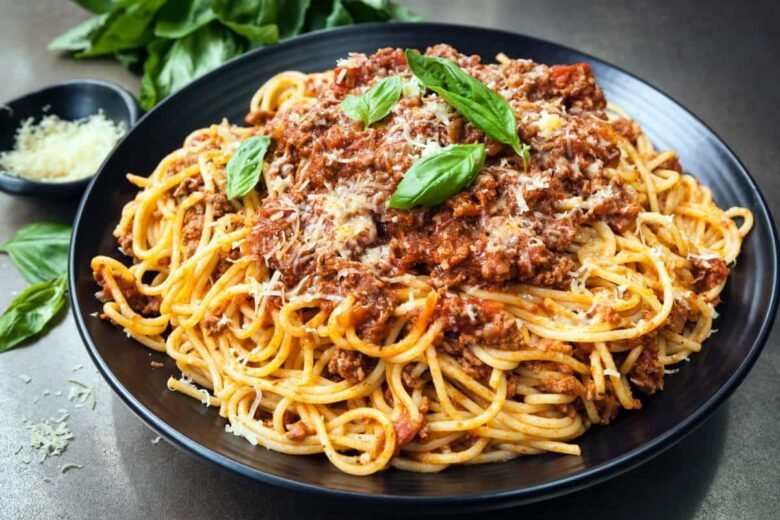
Bolognese is one of the great pasta sauces of the world — not because it is complicated or because it requires unusual ingredients, but because time transforms it. A true Bolognese is a slow affair. The meat cooks down. The wine reduces. The milk softens the acid. The tomato deepens. At the end of several hours, what started as a pan of browned meat and a few aromatics has become something rich, nuanced, and deeply satisfying in a way that a quickly made meat sauce never quite achieves.
The slow cooker is made for this recipe. Everything that makes Bolognese what it is — patience, gentle heat, long development — is exactly what the slow cooker delivers without asking anything of you in return. You spend fifteen minutes building the base, set the lid, and come back to a sauce that has done the work of a Sunday afternoon in a professional kitchen with none of the effort.
This version uses ground turkey in place of the traditional beef and pork combination. It is lighter, leaner, and has a cleaner flavor that lets the wine, milk, and aromatics come through with more clarity than the richer, fattier traditional version. It is also, in the honest assessment of anyone who has tried both, genuinely delicious on its own terms — not a substitute for traditional Bolognese so much as a parallel version that earns its place at the table.
Served over pappardelle, rigatoni, or tagliatelle with a generous shower of aged Parmesan and a glass of the wine you used in the sauce, this is one of the most satisfying meals a slow cooker can produce.
What Makes Bolognese Different from Meat Sauce
The terms get used interchangeably but they describe different sauces with fundamentally different characters.
A meat sauce is tomato-forward. It is a tomato sauce with meat in it — the tomato is the body, the flavor, the vehicle. It is quick to make, bright with acidity, and perfectly good.
Bolognese is meat-forward. The meat is the body and the subject; the tomato is a background player, added in modest quantity to provide depth and acidity without dominating. The distinguishing features of a true Bolognese are the soffritto (finely diced onion, carrot, and celery cooked down to sweetness), the wine (white or red, deglazed and reduced), the milk or cream (which softens the meat and rounds the acidity), and the time (which mellows and integrates everything into a cohesive whole).
A proper Bolognese is not red and saucy. It is pale, meaty, and almost creamy in texture — the sauce barely covering the pasta rather than drowning it. The pasta should be dressed with the sauce, not floating in it.
These distinctions matter because they determine how the slow cooker version is built. This recipe follows the Bolognese philosophy: meat first, aromatics cooked down to softness, wine reduced, a modest amount of tomato, milk added, and a long slow cook that does what time always does to good ingredients.
Building an Authentic Soffritto
The soffritto — finely diced onion, carrot, and celery cooked slowly in butter until completely soft and sweet — is the foundation of an authentic Bolognese and the step that most quick meat sauces skip entirely. It is also the step that makes the most difference to the finished sauce.
The vegetables must be cut small — almost a fine dice, closer to ⅛-inch than ½-inch pieces. This allows them to cook down completely and meld into the sauce during the slow cooker cooking time, becoming part of the body of the sauce rather than identifiable vegetable pieces. A soffritto cut too coarsely remains chunky and never fully integrates.
The soffritto should be cooked in a mixture of butter and olive oil — butter for richness and flavor, olive oil to raise the smoke point. Cook over medium-low heat, stirring frequently, for at least 10 minutes until the onion is completely translucent and starting to turn golden at the edges, and the carrot and celery are completely soft. The smell will change from sharp and raw to sweet and aromatic — that change is the signal that the soffritto is ready.
This step cannot be skipped or significantly shortened. A properly cooked soffritto is the difference between a Bolognese that tastes like it has been cooking all day and one that tastes like a quickly assembled sauce.
The Turkey
Ground turkey in Bolognese requires slightly different handling than in other recipes in this series because the sauce is built differently.
Use a combination of dark and white meat ground turkey if available. The dark meat provides fat and richness that compensates for the lighter character of turkey compared to beef. All white meat ground turkey breast produces a very lean sauce that can taste thin — the fat from dark meat is what gives Bolognese its characteristic richness.
93% lean ground turkey is the minimum fat content for a good Bolognese. The fat renders into the sauce during cooking and becomes part of the flavor and body of the finished dish.
Brown the turkey thoroughly and break it down fine. Bolognese should have a fine, almost crumbled meat texture — not large chunks. Use the back of a spoon or a wooden spatula to press and break the turkey into small pieces as it browns. The goal is a fine, sandy texture rather than distinct clumps.
Season the turkey during browning. Salt and pepper added while the meat browns seasons from the beginning, which is more effective than seasoning at the end.
The Wine
Wine is not optional in an authentic Bolognese. It is one of the primary flavor components, and the cooking process transforms it from alcohol into acidity, depth, and complexity.
White wine is traditional in the authentic Ragù alla Bolognese from Bologna. It produces a cleaner, more delicate flavor that suits turkey particularly well — the light, bright acidity of white wine complements turkey’s cleaner flavor where the deeper, more tannic character of red wine can sometimes overwhelm it.
Red wine produces a darker, richer, more robustly flavored sauce that works equally well and is perhaps more familiar to people accustomed to classic meat sauces. Use a light to medium-bodied red — Chianti, Sangiovese, or Pinot Noir.
The wine must be added to the hot pan and allowed to reduce almost completely before anything else is added. This process evaporates the alcohol, which would otherwise produce a sharp, boozy flavor in the finished sauce, leaving behind the wine’s more complex flavor compounds — its acidity, its fruit, its tannins — concentrated into the meat and soffritto.
Use wine you would drink. The quality of wine used in cooking is reflected in the finished dish, and a cheap, harsh wine produces a cheap, harsh sauce.
The Milk
Milk is the ingredient that most surprises people when they first encounter an authentic Bolognese recipe. It is not a dairy sauce — the milk is added in a modest amount and cooks into the meat during the simmering time, where it serves two specific purposes.
It tenderizes the meat. The proteins in milk break down the muscle fibers in the ground turkey, producing a more tender, almost velvety texture in the finished sauce.
It rounds the acidity. The natural acidity of the tomato and wine is mellowed and softened by the milk’s calcium and fat, producing a sauce with a rounder, gentler flavor profile than one without it.
The milk should be added after the wine has reduced — add it to the hot pan and let it reduce to almost nothing before adding the tomato. The amount is modest — half a cup — but its effect is immediately noticeable in the finished sauce.
Whole milk is the traditional choice. The fat content is important. Skim milk does not have the same tenderizing and rounding effect.
The Tomato
This is where Bolognese diverges most sharply from a standard meat sauce. The tomato in Bolognese is a supporting player, not the lead.
Use a modest amount of tomato. A single can of whole peeled San Marzano tomatoes, crushed by hand, is the right quantity for this recipe. This is considerably less tomato than a standard meat sauce uses — and that restraint is intentional. The tomato should add background depth and acidity without turning the sauce red or making it tomato-forward.
Tomato paste — a tablespoon or two — adds concentrated umami and helps deepen the color of the sauce to a warm, meaty brown rather than bright red.
San Marzano tomatoes specifically, as discussed throughout this series, have a sweetness and low acidity that is ideal in Bolognese where you want depth from the tomato without excess acidity fighting the milk and wine.
Tips for the Best Slow Cooker Turkey Bolognese
1. Build the soffritto properly — fine dice, fully softened. This is the single most important preparatory step. Coarsely cut soffritto that has not been fully cooked will remain as chunks in the finished sauce. Fine-cut, fully softened soffritto melts into the body of the sauce and disappears into the flavor. Ten minutes of patient cooking over medium-low heat is the investment that makes the difference.
2. Brown the turkey until genuinely golden. As with every turkey recipe in this series — real color on the meat before the slow cooker means real flavor in the finished sauce. Push the turkey into an even layer and let it sit undisturbed long enough to develop color before breaking it up.
3. Reduce the wine before adding anything else. Wine poured into the slow cooker without reducing first produces a boozy, harsh sauce. Add it to the hot skillet after the meat is browned and let it bubble and reduce until almost completely absorbed — the sharp alcohol smell will fade and the wine’s underlying flavor will concentrate into the meat.
4. Add the milk after the wine — and let it reduce too. This is the most frequently skipped step in home Bolognese recipes and the one that makes the most difference to the finished texture. Let the milk cook into the meat for 5 minutes before adding the tomato.
5. Cook on LOW for the full time. Bolognese is a long-cook sauce. Six to eight hours on LOW allows the fat to render slowly, the collagen in the meat to break down, and the flavors to fully integrate. HIGH heat rushes the process and produces a sauce that tastes assembled rather than developed.
6. Finish with butter. The traditional finishing touch for an authentic Bolognese is a knob of cold butter stirred into the hot sauce just before serving. It enriches the sauce, adds gloss, and rounds the flavors in a way that nothing else quite replicates. One to two tablespoons of cold, unsalted butter stirred vigorously into the finished sauce transforms it.
7. Dress the pasta in the sauce — don’t drown it. Add the cooked, drained pasta directly to the sauce (not the other way around) and toss vigorously over medium heat for 1 to 2 minutes, adding a splash of pasta cooking water to help the sauce coat every strand. The pasta finishes cooking in the sauce, which is the technique that produces that integrated, restaurant-quality result.
The Pasta
Bolognese with the right pasta shape is a completely different experience from Bolognese with the wrong one. The sauce has a specific character — rich, meaty, and clinging — that suits certain shapes far better than others.
Pappardelle is the traditional choice from Bologna and arguably the ideal pairing. Its wide, flat, silky ribbons have maximum surface area for the sauce to cling to and the right substantial chew to balance the richness.
Tagliatelle is the other traditional choice — narrower than pappardelle but equally good.
Rigatoni is the tubular option — the ridges catch the meaty sauce and the interior fills with it. An excellent choice for a more casual presentation.
Avoid spaghetti. Round, smooth strands do not hold Bolognese well — the sauce slides off. This is a dish where the pasta shape genuinely matters.
Easy Variations
- Traditional Bolognese blend. Replace half the ground turkey with ground pork for a richer, fattier, more classically flavored sauce that still benefits from the turkey’s lighter character in the other half.
- Turkey and pancetta Bolognese. Add 3 oz of diced pancetta to the soffritto at the start, letting it render before the turkey goes in. The pork fat from the pancetta adds the richness that ground turkey alone lacks and produces a noticeably more complex, deeper-flavored sauce.
- White Bolognese. Omit the tomato entirely and use all white wine. Increase the milk to 1 cup and add ½ cup of heavy cream at the end of cooking. A creamy, pale, deeply elegant variation.
- Mushroom Bolognese. Add 2 cups of finely chopped cremini mushrooms to the soffritto. The mushrooms provide both texture and umami depth that amplifies the turkey’s flavor.
- Spiced Bolognese. Add ¼ tsp of ground nutmeg, ¼ tsp of cinnamon, and a pinch of cloves to the soffritto — a hint of the medieval spicing that was traditional in early Italian meat sauces. Barely detectable but adds a warmth and complexity that is immediately noticed.
What to Serve Alongside
- Pappardelle or tagliatelle tossed with the sauce and finished with Parmigiano-Reggiano
- A simple arugula salad with lemon, Parmesan shavings, and olive oil — the peppery bitterness cuts through the richness perfectly
- Crusty ciabatta or focaccia — for mopping up every last trace of sauce from the bowl
- A glass of the wine you used in the sauce — the classic pairing
- Roasted asparagus or broccolini — a simple vegetable alongside the pasta
Make-Ahead and Storage
Make-ahead: Bolognese is one of the greatest make-ahead sauces in existence. It improves dramatically over 24 to 48 hours as the flavors deepen and integrate. Make it two days ahead for the best possible result.
Refrigerator: Store in an airtight container for up to 5 days. Reheat gently on the stovetop over medium-low heat, stirring and adding a splash of broth or water to loosen. Add the finishing butter fresh each time.
Freezer: Bolognese freezes beautifully for up to 3 months. Freeze in portions that match your household’s typical pasta night — 1 to 2 cups per portion. Thaw overnight in the fridge and reheat slowly on the stovetop. The sauce may separate slightly after freezing; stir vigorously over heat and it will come back together.
Shopping List
The Meat
- 2 lbs (900g) ground turkey, 93% lean (or half dark meat ground turkey if available)
- 3 oz (85g) pancetta, diced (optional but highly recommended)
The Soffritto
- 1 large onion, finely diced
- 2 medium carrots, finely diced
- 3 stalks celery, finely diced
- 4 cloves garlic, minced
- 2 tbsp unsalted butter
- 1 tbsp olive oil
The Liquids
- 1 cup (240ml) dry white wine (or light red wine)
- ½ cup (120ml) whole milk
- 1 cup (240ml) low-sodium chicken broth
The Tomato
- 1 can (28 oz) whole peeled San Marzano tomatoes, crushed by hand
- 2 tbsp tomato paste
Spices & Seasonings
- 1 tsp dried oregano
- 1 tsp dried thyme
- ¼ tsp ground nutmeg
- Salt and black pepper
- Pinch of red pepper flakes (optional)
To Finish
- 2 tbsp cold unsalted butter (for finishing)
- Fresh Parmigiano-Reggiano, freshly grated (for serving)
- Fresh basil or flat-leaf parsley (for serving)
For Serving
- 1 lb (450g) pappardelle, tagliatelle, or rigatoni
- Pasta cooking water (reserved before draining)
Slow Cooker Turkey Bolognese Sauce
A slow-cooked turkey Bolognese built the authentic way — fine-cut soffritto cooked to sweetness, turkey browned and broken down fine, white wine reduced into the meat, whole milk added to tenderize and round the acidity, a modest amount of San Marzano tomato for background depth, and eight hours on LOW to develop the kind of rich, meaty, deeply integrated sauce that only time can produce. Finished with cold butter and served over pappardelle with aged Parmesan. Lighter than the traditional beef and pork version but every bit as satisfying.
- Total Time: 7 hours 30 minutes
- Yield: 8 servings / approximately 6 cups of sauce 1x
Ingredients
The Soffritto
- 2 tbsp unsalted butter
- 1 tbsp olive oil
- 1 large onion, finely diced (⅛-inch pieces)
- 2 medium carrots, finely diced
- 3 stalks celery, finely diced
- 4 cloves garlic, minced
The Meat
- 3 oz (85g) pancetta, finely diced (optional)
- 2 lbs (900g) ground turkey, 93% lean
- Salt and black pepper
The Liquids
- 1 cup (240ml) dry white wine
- ½ cup (120ml) whole milk
- 1 cup (240ml) low-sodium chicken broth
The Tomato Base
- 1 can (28 oz) whole peeled San Marzano tomatoes, crushed by hand
- 2 tbsp tomato paste
The Seasoning
- 1 tsp dried oregano
- 1 tsp dried thyme
- ¼ tsp ground nutmeg
- ¼ tsp red pepper flakes (optional)
- Salt and black pepper to taste
To Finish
- 2 tbsp cold unsalted butter, cubed
- Salt to taste
To Serve
- 1 lb (450g) pappardelle, tagliatelle, or rigatoni
- Freshly grated Parmigiano-Reggiano
- Fresh basil or flat-leaf parsley
- Reserved pasta cooking water
Instructions
- Cook the soffritto. In a large skillet over medium-low heat, melt the butter with the olive oil. Add the finely diced onion, carrot, and celery. Cook, stirring frequently, for 10 to 12 minutes until completely softened and the onion is translucent and just beginning to turn golden at the edges. Add the garlic and cook for 1 minute more. Transfer to the slow cooker.
- Render the pancetta (if using). In the same skillet over medium heat, add the diced pancetta and cook for 3 to 4 minutes until the fat has rendered and the pieces are lightly golden. Transfer to the slow cooker with the soffritto.
- Brown the turkey. Increase the heat to medium-high. Add the ground turkey to the skillet in an even layer. Season generously with salt and pepper. Cook without moving for 3 to 4 minutes until the bottom develops real color. Then break it up with a spoon, pressing to create fine, small pieces, and continue cooking until golden and no pink remains — about 8 to 10 minutes total. Transfer to the slow cooker.
- Reduce the wine. Pour the white wine into the hot skillet. It will sizzle dramatically. Scrape up all the browned bits from the bottom. Let the wine bubble and reduce over medium-high heat until almost completely absorbed and the sharp alcohol smell has faded — about 4 to 5 minutes. Pour the reduced wine into the slow cooker.
- Reduce the milk. Pour the whole milk into the same skillet over medium heat. Let it simmer and reduce until almost completely absorbed — about 3 to 4 minutes. Pour into the slow cooker.
- Build the sauce. Add the hand-crushed San Marzano tomatoes, tomato paste, chicken broth, oregano, thyme, nutmeg, and red pepper flakes (if using) to the slow cooker. Stir everything together thoroughly.
- Cook. Set the slow cooker to LOW and cook for 6 to 8 hours. Stir once or twice during the cooking time if convenient. The sauce is done when the meat is very tender, the fat has rendered fully into the sauce, and the sauce has deepened to a rich, meaty brown with very little liquid remaining on the surface.
- Finish the sauce. Taste and adjust seasoning generously with salt and pepper. Drop the cold butter cubes into the hot sauce and stir vigorously until completely melted and emulsified into the sauce. The sauce should look glossy and slightly creamy.
- Cook the pasta. Cook the pasta in generously salted boiling water until 1 minute before al dente. Reserve 1 cup of pasta cooking water before draining.
- Dress the pasta. Add the drained pasta directly to the Bolognese sauce in the slow cooker insert or a large skillet. Toss vigorously over medium heat for 1 to 2 minutes, adding splashes of pasta cooking water as needed, until the sauce clings to every strand and the pasta finishes cooking in the sauce.
- Serve. Divide into bowls. Top with a generous shower of freshly grated Parmigiano-Reggiano, a few torn basil leaves, and a final crack of black pepper.
Notes
- Fine dice the soffritto vegetables. Roughly chopped vegetables remain as identifiable pieces in the finished sauce. Fine dice — ⅛-inch pieces — cook down completely and disappear into the body of the sauce, which is exactly what an authentic Bolognese requires.
- Cook the soffritto fully. Ten to twelve minutes of patient cooking over medium-low heat transforms the raw, sharp vegetables into sweet, softened aromatics that become the foundation of the sauce’s flavor. Rushing this step produces a sauce with a raw vegetable edge that never fully integrates.
- Reduce the wine and milk in the skillet, not the slow cooker. The slow cooker cannot reduce liquids efficiently. Both the wine and the milk must be reduced in the hot skillet before transferring to the slow cooker, or the finished sauce will taste boozy and thin.
- The nutmeg is traditional and essential. A quarter teaspoon of ground nutmeg in the sauce does not make it taste like nutmeg — it adds a warm, slightly floral background depth that has been part of the authentic Bolognese recipe since the first written records of it. Do not omit it.
- Bolognese is not red. A properly made Bolognese with the right quantity of tomato should be a pale, meaty brown — not the bright red of a marinara or meat sauce. If your sauce is very red, you have used too much tomato. The restraint is intentional and correct.
- The finishing butter is the professional touch. One to two tablespoons of cold butter stirred vigorously into the finished hot sauce enriches it, adds gloss, and rounds the flavors in a way that separates restaurant Bolognese from home Bolognese. This technique — called mantecatura — is used in every professional Italian kitchen. Do it.
- Day two is dramatically better. If you can make this sauce the day before and reheat it, do so. The flavors integrate, the fat distributes evenly through the sauce, and the whole dish tastes noticeably more developed and satisfying. Bolognese is one of the few dishes where the overnight version is categorically superior to the same-day version.
- Prep Time: 30 minutes
- Cook Time: 7 hours (on LOW)
- Category: Dinner, Main Dish
- Method: Slow Cooking
- Cuisine: American, Italian, Pasta
Frequently Asked Questions
What is the difference between Bolognese and meat sauce? The fundamental difference is proportion and philosophy. A meat sauce (or marinara with meat) is tomato-forward — the tomato is the dominant flavor and the meat enriches it. Bolognese is meat-forward — the meat is the dominant component and the tomato provides background depth. Authentic Bolognese uses a modest amount of tomato, significant amounts of wine and milk, and a long cooking time that develops the flavor of the meat rather than the tomato. The visual difference is also distinct: a good Bolognese is pale and meaty brown, not red and saucy. This recipe follows Bolognese philosophy throughout.
Why does Bolognese use milk? Can I skip it? Milk in Bolognese serves two specific purposes that nothing else replicates: it tenderizes the meat proteins, producing the soft, almost velvety texture characteristic of a good Bolognese, and it rounds the acidity of the wine and tomato, producing a mellower, more harmonious flavor profile. The milk should be added to the hot skillet and reduced to almost nothing before the tomato is added — at that point it is no longer milk in any recognizable sense, just its functional effects on the sauce. Skipping it produces a slightly sharper, less tender sauce that is still good but noticeably less rounded.
Can I use red wine instead of white? Yes — this is a matter of preference and tradition. The original authentic Bolognese from Bologna uses white wine; many Italian American versions use red. White wine produces a lighter, more delicate sauce that is particularly suited to turkey’s cleaner flavor. Red wine produces a deeper, more robustly flavored sauce with a darker color. Use a light-to-medium-bodied red if going that direction — something like Chianti or Pinot Noir rather than a heavy Cabernet. Either works well; the choice simply produces a different character in the finished sauce.
Why does my Bolognese look too red? A very red Bolognese almost always means too much tomato was used. Authentic Bolognese uses a modest, almost restrained amount of tomato — one can of whole peeled tomatoes for two pounds of meat is the upper limit. The tomato’s role is depth and background acid, not color and body. If you prefer a redder, more tomato-forward sauce, that is a completely valid preference — it just produces something closer to a meat sauce than a Bolognese.
Can I make Bolognese without wine? You can but the sauce will be missing a significant flavor component. Wine provides acidity, complexity, and a depth that is difficult to replace. If wine is not an option, substitute with one of the following: a splash of grape juice plus a splash of red wine vinegar (mimics wine’s sweetness and acidity), beef or chicken broth with a tablespoon of apple cider vinegar, or simply increase the amount of broth and tomato paste to compensate for the lost liquid and depth. None of these is a perfect substitute but all produce a usable sauce.
How fine should the meat be broken down? Authentic Bolognese has a fine, almost grainy meat texture — the sauce coats the pasta rather than having distinct chunks of meat throughout it. Press the turkey down with the back of a wooden spoon or spatula as it browns and break it up aggressively into very small pieces. The goal is a texture closer to coarse sand than to crumbled sausage. This fine texture is part of what allows the sauce to cling to the pasta properly and produces the characteristic Bolognese mouthfeel.
Can I freeze Bolognese sauce? Bolognese is one of the best pasta sauces for freezing. It stores for up to 3 months in the freezer with virtually no quality loss — it is actually one of those rare dishes that can taste better after freezing and thawing, as the flavors continue to develop during the freeze cycle. Freeze in 1 to 2 cup portions in airtight containers. Thaw overnight in the refrigerator and reheat slowly on the stovetop over medium-low heat, stirring and adding a splash of broth to loosen. Add the finishing butter fresh when reheating.
What is the best pasta for Bolognese? The pasta shapes that work best with Bolognese are wide, flat, or ridged shapes that give the meaty sauce something to cling to. Pappardelle and tagliatelle are the traditional choices from Bologna — their flat, ribbon-like shape catches the sauce on every surface. Rigatoni is an excellent tubular alternative — the ridges hold the sauce and the interior fills with it. Avoid smooth, round pastas like spaghetti or linguine — the sauce slides off rather than clinging, which produces an uneven, unsatisfying mouthful. For a formal dinner, fresh egg pasta (pappardelle or tagliatelle made fresh) is exceptional with this sauce.
How do I know when the Bolognese is done in the slow cooker? A properly finished Bolognese has several visual cues. The sauce will be a deep, warm meaty brown rather than red. The fat from the turkey and butter will have rendered and distributed through the sauce, giving it a slightly glossy appearance rather than a pool of separate fat on the surface. The meat will be very tender and have fully integrated with the soffritto and tomato — there should be no distinct pieces of vegetable visible. The liquid level will have reduced considerably — the sauce should be thick enough to hold on the back of a spoon. If the sauce still looks watery or red after 6 hours, cook uncovered on HIGH for 30 minutes to reduce.