
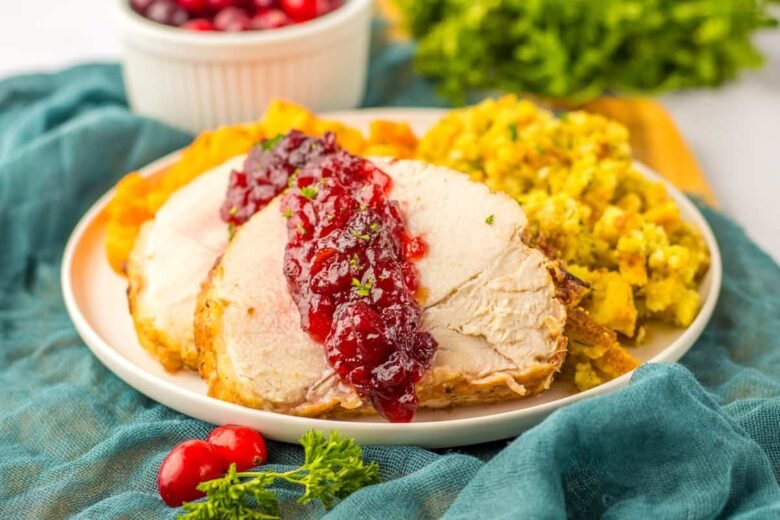
There is a particular kind of elegance that comes from simplicity — a dish that requires few ingredients, minimal technique, and almost no active effort, yet arrives at the table looking and tasting like something that deserved considerably more of all three. Slow cooker turkey tenderloin with cranberry glaze is that dish.
The turkey tenderloin is the most underrated cut in the poultry case. Nestled against the breastbone, it is the most tender muscle in the entire bird — lean, delicate, and forgiving in a way that turkey breast is not. It has no connective tissue to work through, no bones to navigate, no skin to worry about. It is essentially a boneless, skinless, naturally tender piece of turkey that is ready to absorb whatever flavors surround it during cooking.
Surrounding it with a cranberry glaze — tart, sweet, warmly spiced with orange zest and cinnamon — produces a dish that is simultaneously festive and weeknight-simple. The cranberry reduces and concentrates during the slow cook, coating the tenderloin in a deep ruby, slightly sticky sauce that looks dramatically more impressive than the effort involved. Finished under the broiler for four minutes to caramelize the glaze, this is the kind of dinner that gets photographed before it gets eaten.
It is perfect for Thanksgiving when the full bird feels like too much. Perfect for a Christmas dinner for two. Perfect for any weeknight when dinner should feel like a small celebration.
The Turkey Tenderloin
Most home cooks are familiar with chicken tenders, but turkey tenderloins — the larger, turkey-scale equivalent — are less commonly used and considerably less celebrated than they deserve.
Where it comes from. The turkey tenderloin is a small, separate muscle that runs alongside the breastbone beneath the main breast muscle. It is the same muscle that produces the chicken tender. Because this muscle does very little work during the bird’s life, it is exceptionally tender — more so than the breast meat surrounding it.
What it looks like. Turkey tenderloins are typically sold in pairs as a package, each tenderloin weighing approximately 12 to 16 ounces. They are oval-shaped, smooth, and pale pink in color, with no skin and no visible fat. A standard package of two tenderloins weighs about 1.5 to 2 pounds total and serves four to six people.
Where to find them. Most large grocery stores carry turkey tenderloins, particularly around the holiday season. They are sometimes labeled “turkey breast tenderloins” or simply packed alongside other turkey breast products. If unavailable, boneless turkey breast cutlets of even thickness make an excellent substitute.
Why the slow cooker is ideal. Turkey tenderloin’s lack of fat means it can dry out quickly when cooked at high heat in the oven. The slow cooker’s moist, low-heat environment is perfect for it — the tenderloin cooks gently and evenly, staying moist and tender throughout. The cranberry glaze creates an additional moisture layer that bastes the tenderloin continuously during cooking.
The Cranberry Glaze
The cranberry glaze is what makes this recipe memorable. Built from fresh or frozen cranberries, orange juice and zest, honey, brown sugar, warm spices, and a touch of Dijon mustard, it does double duty as both a braising liquid and a sauce. During cooking, it reduces and concentrates into a thick, deeply flavored glaze. After the broiler finish, it caramelizes on the surface of the tenderloin into something glossy and almost jam-like.
Fresh vs frozen cranberries. Both work equally well. Fresh cranberries are available from October through December; frozen cranberries are available year-round and go directly into the slow cooker without thawing. For a year-round version of this recipe, frozen cranberries make it accessible any time.
Orange. Orange and cranberry have one of the great natural flavor affinities in cooking — the citrus softens and brightens the tart berry in a way that makes both taste more of themselves. Use both the juice and the zest. The zest in particular adds a bright, aromatic note that the juice alone cannot produce.
Honey and brown sugar. The combination of honey and brown sugar produces a richer, more complex sweetness than either alone. Honey adds floral depth and helps the glaze develop that slightly sticky, glossy consistency. Brown sugar adds molasses warmth and caramelizes beautifully under the broiler.
Warm spices. Cinnamon and a pinch of allspice are the spice profile — warm, subtly festive, and perfectly calibrated to the cranberry and turkey combination without making the dish taste like a holiday candle.
Dijon mustard. One teaspoon of Dijon added to the glaze adds a sharp, savory depth that prevents the sauce from being one-dimensionally sweet. It is the same principle as the Dijon in the pot pie filling — invisible in the finished dish but immediately missed in its absence.
Apple cider vinegar. A small splash of cider vinegar adds brightness and keeps the glaze from tasting too sweet. It is the counterbalance that makes everything else taste more vivid.
Building the Glaze
The glaze can be approached two ways — both produce excellent results.
Method one — whole berry slow-cooked glaze. Add the cranberries whole to the slow cooker along with the other glaze ingredients. During cooking, the cranberries burst and break down naturally, producing a sauce with visible cranberry pieces and a slightly chunky, rustic texture. This is the more hands-off approach and produces a beautiful result.
Method two — pre-cooked smooth glaze. Combine the cranberries, orange juice, honey, brown sugar, and spices in a small saucepan and cook over medium heat for 10 minutes until the cranberries have burst and the sauce has thickened. Use an immersion blender to blend smooth, then pour over the turkey in the slow cooker. This produces a silkier, glossier sauce with a more refined appearance — ideal for a dinner party presentation.
Either approach works. Method one is faster and more casual; method two is more polished and photogenic.
The Broiler Finish
The broiler finish here serves a different purpose than in the turkey legs and turkey breast recipes. With those cuts, the goal was crisping the skin. With turkey tenderloin, which has no skin, the goal is caramelizing the glaze.
After the slow cooker is done, transfer the tenderloins to a foil-lined baking sheet. Spoon additional glaze from the slow cooker over the surface of each tenderloin. Slide under a preheated broiler set to HIGH, 6 inches from the heat, for 3 to 5 minutes until the glaze bubbles, deepens in color, and develops slightly caramelized, sticky edges.
The transformation is quick and dramatic — the glaze goes from a saucy coating to a lacquered, deeply ruby surface with caramelized edges that look like something from a restaurant carving station. Watch it continuously. The honey and sugar in the glaze can go from perfectly caramelized to burnt in under 60 seconds.
Tips for the Perfect Slow Cooker Turkey Tenderloin
1. Do not overcook. Turkey tenderloin is done at 165°F (74°C) and is at its best right at that temperature. Because it has no fat and no connective tissue to break down, there is no benefit to extended cooking past the target temperature — only the risk of drying out. Start checking at 3 hours on LOW for standard-sized tenderloins.
2. Nestle the tenderloins in the glaze. The tenderloins should be partially submerged in the glaze during cooking, not sitting above it on a trivet. The glaze braising the underside of the tenderloin while the top gets coated from the top produces even, thorough flavoring and keeps the meat moist throughout.
3. Baste once or twice during cooking. Unlike most slow cooker recipes where lifting the lid is discouraged, this recipe benefits from a quick baste partway through cooking — spoon the glaze over the surface of the tenderloins once or twice during the cooking time to ensure even coating and maximum flavor penetration.
4. Reserve glaze for serving. After removing the tenderloins for the broiler step, pour the remaining glaze from the slow cooker into a small saucepan and reduce it slightly over medium-high heat for 3 to 5 minutes. This produces a thicker, more intensely flavored sauce to serve alongside the carved tenderloin.
5. Rest before slicing. Even a modest 5 to 10 minutes of resting after the broiler finish allows the juices to redistribute. Turkey tenderloin carved immediately releases its juices onto the cutting board rather than keeping them in the meat.
6. Slice on an angle. Slicing the tenderloin on a slight diagonal produces wider, more attractive slices that show off the cranberry-glazed surface beautifully on the plate.
7. Serve the reduced glaze warm. The reduced glaze is the finishing touch that makes each plate sing. Spoon it generously over the sliced tenderloin or serve it in a warm jug alongside for guests to help themselves.
Easy Variations
- Maple cranberry glaze. Replace the honey with pure maple syrup for a deeper, more complex sweetness with a distinctly North American character. Reduce the brown sugar by half to compensate for the additional sweetness.
- Balsamic cranberry glaze. Add 1 tablespoon of aged balsamic vinegar to the glaze. The balsamic adds a sweet, complex acidity that pairs beautifully with both the cranberry and the turkey.
- Spiced cranberry port glaze. Replace 2 tablespoons of the orange juice with port wine. The fortified wine adds an almost jammy depth and a slightly more sophisticated flavor profile.
- Jalapeño cranberry glaze. Add 1 finely diced jalapeño (seeds removed for mild, seeds in for medium heat) to the glaze. The sweet heat against the tart cranberry and savory turkey is an unexpected combination that is genuinely excellent.
- Rosemary and cranberry. Add 2 sprigs of fresh rosemary to the slow cooker during cooking and remove before serving. The piney, herbal note of rosemary with cranberry and turkey is a classic combination for good reason.
- Pomegranate cranberry glaze. Replace half the orange juice with pomegranate juice. The pomegranate adds a deeper, slightly more complex tartness and produces a beautiful jewel-dark sauce.
What to Serve Alongside
Turkey tenderloin with cranberry glaze is festive enough for a holiday spread and elegant enough for a dinner party. Pairings should be warm, seasonal, and rich enough to stand alongside the sweet-tart glaze without competing with it.
- Creamy mashed potatoes — the cranberry glaze spooned over both the turkey and the potatoes is an extraordinary combination
- Wild rice pilaf — tying back to the wild rice soup earlier in this series, the nutty earthiness pairs beautifully
- Roasted Brussels sprouts with bacon — the bitterness and salt cut through the sweetness of the glaze
- Roasted sweet potato wedges — the sweetness echoes the glaze and the colors are stunning together
- Sautéed green beans with almonds — clean and simple alongside the more complex main
- Warm dinner rolls — for catching every drop of the reduced glaze
- A simple arugula salad with shaved Parmesan and a lemon vinaigrette — the peppery bitterness balances the sweet glaze perfectly
Make-Ahead and Storage
Make-ahead: The cranberry glaze can be made up to 3 days ahead and stored in the refrigerator. The turkey can be seasoned and placed in the slow cooker insert with the glaze the night before and refrigerated — a convenient morning-start approach.
Refrigerator: Store leftover sliced turkey tenderloin in an airtight container with some of the reduced glaze poured over it to keep it moist. Keeps for up to 4 days. Reheat gently in the microwave or serve cold — cold sliced turkey tenderloin with cranberry glaze on good bread or over a salad is excellent.
Freezer: The cooked tenderloin freezes reasonably well for up to 2 months. The glaze freezes beautifully separately — freeze in an ice cube tray for convenient portion-sized servings. Thaw overnight in the fridge and reheat gently.
Leftover ideas: Cold sliced turkey tenderloin with cranberry glaze on a toasted sourdough sandwich with arugula and brie is one of the best leftover turkey preparations imaginable. It is also excellent sliced thin over a grain bowl or shredded and folded into a quesadilla with the glaze as a dipping sauce.
Shopping List
The Turkey
- 2 turkey tenderloins (about 1.5–2 lbs / 680–900g total), fresh or thawed
The Cranberry Glaze
- 2 cups (200g) fresh or frozen cranberries
- ½ cup (120ml) fresh orange juice (about 2 oranges)
- 1 tsp orange zest
- ¼ cup (85g) honey
- ¼ cup (50g) packed brown sugar
- 1 tsp Dijon mustard
- 1 tbsp apple cider vinegar
- ½ tsp ground cinnamon
- Pinch of ground allspice
- Pinch of salt
The Seasoning Rub
- 1 tsp garlic powder
- 1 tsp onion powder
- ½ tsp smoked paprika
- ½ tsp salt
- ¼ tsp black pepper
- ¼ tsp dried thyme
For Finishing
- Fresh rosemary or thyme sprigs (for garnish)
- Fresh orange slices (for serving)
Slow Cooker Turkey Tenderloin with Cranberry Glaze
Tender, juicy turkey tenderloins slow-cooked in a sweet-tart cranberry glaze of fresh cranberries, orange juice and zest, honey, brown sugar, warm spices, and a touch of Dijon — then finished under the broiler until the glaze is caramelized, lacquered, and deeply ruby. Elegant enough for Thanksgiving or Christmas, simple enough for a weeknight celebration. The most visually stunning thing you can make in a slow cooker with almost no effort at all.
- Total Time: 3 hours 57 minutes
- Yield: 4 – 6 servings 1x
Ingredients
The Turkey Tenderloins
- 2 turkey tenderloins (about 1.5–2 lbs / 680–900g total)
The Dry Rub
- 1 tsp garlic powder
- 1 tsp onion powder
- ½ tsp smoked paprika
- ½ tsp salt
- ¼ tsp black pepper
- ¼ tsp dried thyme
The Cranberry Glaze
- 2 cups (200g) fresh or frozen cranberries
- ½ cup (120ml) fresh orange juice
- 1 tsp orange zest
- ¼ cup (85g) honey
- ¼ cup (50g) packed brown sugar
- 1 tsp Dijon mustard
- 1 tbsp apple cider vinegar
- ½ tsp ground cinnamon
- Pinch of ground allspice
- Pinch of salt
For the Broiler Finish
- Reserved glaze from the slow cooker (spooned over tenderloins before broiling)
For Serving
- Reduced glaze (from slow cooker, reduced in a saucepan)
- Fresh rosemary or thyme sprigs (for garnish)
- Fresh orange slices
Instructions
- Season the tenderloins. Combine the garlic powder, onion powder, smoked paprika, salt, pepper, and dried thyme in a small bowl. Pat the turkey tenderloins completely dry with paper towels. Rub the spice mixture all over each tenderloin, pressing firmly to adhere.
- Make the cranberry glaze. In a medium bowl, combine the cranberries, orange juice, orange zest, honey, brown sugar, Dijon mustard, apple cider vinegar, cinnamon, allspice, and salt. Stir well to combine.
- Assemble in the slow cooker. Pour half the cranberry glaze into the bottom of the slow cooker insert and spread evenly. Place the seasoned tenderloins on top, nestling them into the glaze. Pour the remaining glaze over and around the tenderloins so they are partially submerged.
- Cook. Set the slow cooker to LOW and cook for 3 to 4 hours, or HIGH for 1.5 to 2 hours, until the turkey registers 165°F (74°C) at the thickest point on an instant-read thermometer. Baste with the glaze once or twice during cooking if convenient. Do not overcook — turkey tenderloin has no fat to keep it moist past the target temperature.
- Rest and prepare for broiling. Carefully remove the tenderloins from the slow cooker and place on a foil-lined baking sheet. Pour the remaining glaze from the slow cooker insert into a small saucepan. Rest the tenderloins for 5 minutes while you preheat the broiler and reduce the glaze.
- Reduce the glaze. Bring the reserved glaze to a boil over medium-high heat. Cook for 3 to 5 minutes, stirring frequently, until reduced and thickened to a glossy, coating consistency. Taste and adjust — add a pinch more salt, a squeeze of orange juice, or a splash more cider vinegar if needed.
- Broil the tenderloins. Spoon 2 to 3 tablespoons of the reduced glaze over each tenderloin, coating generously. Place under a preheated broiler set to HIGH, 6 inches from the heat. Broil for 3 to 5 minutes, watching continuously, until the glaze is bubbling, caramelized at the edges, and deeply ruby in color. Do not walk away — the honey and sugar can burn very quickly.
- Rest and slice. Remove from the broiler and rest for 5 to 10 minutes. Slice on a slight diagonal into ½-inch pieces to reveal the glossy, caramelized glaze surface.
- Serve. Arrange the sliced tenderloin on a warm platter or individual plates. Spoon the reduced warm glaze generously over the slices. Garnish with fresh rosemary or thyme sprigs and fresh orange slices alongside.
Notes
- Turkey tenderloin is done at 165°F — monitor carefully. Unlike dark meat cuts that improve with extended cooking, turkey tenderloin has no fat or connective tissue to benefit from cooking past its target temperature. Overcooking produces dry, stringy meat. Use a meat thermometer and remove the tenderloins promptly at 165°F.
- Do not skip the dry rub. The spice rub under the glaze adds a savory foundation that prevents the dish from tasting one-dimensionally sweet. The contrast between the spiced meat and the sweet-tart glaze is what makes this dish so well-balanced.
- Baste during cooking. Unlike most slow cooker recipes where lifting the lid is discouraged, this recipe benefits from a quick baste once or twice — it ensures even glaze coverage and maximum flavor on every surface.
- The broiler step is transformative. The caramelized, lacquered surface of the glazed tenderloin after the broiler is what makes this dish visually stunning. It takes four minutes and the difference is dramatic.
- Watch the broiler closely. Honey and brown sugar caramelize and burn faster than almost anything else under a hot broiler. Stand at the oven and watch continuously from the moment the tenderloins go in.
- Reduce the glaze for serving. The glaze that remains in the slow cooker is somewhat thin from the turkey’s released juices. A 3 to 5-minute reduction concentrates it into a beautifully thick, intensely flavored sauce that is one of the best parts of the whole dish.
- Slice on the diagonal for presentation. Cutting the tenderloin on a slight angle produces wider, more visually interesting slices that show off the caramelized glaze surface. Straight cuts produce narrower slices that are less dramatic on the plate.
- Prep Time: 15 minutes
- Cook Time: 3 hours 30 minutes (on LOW)
- Category: Dinner, Holiday, Main Dish
- Method: Boiling, Slow Cooking
- Cuisine: American
- Diet: Dairy-Free, Gluten-Free
Frequently Asked Questions
What is a turkey tenderloin and where do I find it? A turkey tenderloin is a small, boneless, skinless muscle that runs alongside the breastbone beneath the main breast meat — the turkey equivalent of a chicken tender. It is the most naturally tender muscle in the bird, requiring no brining, trussing, or extended cooking to become juicy and delicious. Turkey tenderloins are typically sold in pairs per package at approximately 12 to 16 oz per tenderloin, totaling 1.5 to 2 lbs per package. Find them in the fresh poultry section of most large grocery stores, particularly from October through December, or frozen year-round. If unavailable, evenly-thick boneless turkey breast cutlets are the best substitute.
Can I use chicken breast instead of turkey tenderloin? Yes — large, boneless, skinless chicken breasts or chicken tenderloins can be substituted with a reduction in cooking time. Chicken breasts should be checked at the 2 to 2.5 hour mark on LOW; chicken tenderloins (which are smaller) should be checked at 1.5 to 2 hours. The cranberry glaze works beautifully with chicken and the technique is identical. The result is slightly different in flavor — chicken has a milder, less distinct character than turkey — but equally delicious.
My cranberry glaze is too tart. How do I fix it? Cranberry tartness varies between batches and between fresh and frozen berries. If the glaze tastes sharper than you’d like, add more honey or brown sugar a tablespoon at a time, tasting after each addition, until the balance is right. A small amount of additional orange juice also softens tartness without adding sweetness. The Dijon mustard and apple cider vinegar in the glaze are intentional tartness contributors — if the overall balance is too acidic, reduce these slightly in your next batch.
Can I make the cranberry glaze ahead of time? Yes — the glaze keeps well in an airtight container in the refrigerator for up to 5 days. Make it in a small saucepan (for the smooth version) or simply combine the raw ingredients and refrigerate (for the whole-berry version). If refrigerating the whole-berry version, the cranberries will begin to break down slightly over time — this is fine and produces a slightly more textured glaze. Warm the glaze gently before using if it has thickened in the fridge.
How do I prevent the turkey tenderloin from drying out? Turkey tenderloin dries out when overcooked past 165°F. Three things prevent this: first, use a meat thermometer and remove the tenderloins promptly at 165°F rather than relying on time alone; second, nestle the tenderloins in the glaze rather than elevating them above it — the braising liquid keeps the underside moist throughout cooking; third, rest the tenderloins for at least 5 minutes before slicing to allow the juices to redistribute. If using HIGH heat, check for doneness at 1.5 hours — HIGH heat is faster than expected for this small, lean cut.
Can I make this recipe for Thanksgiving instead of a whole turkey? Absolutely — and for a small gathering it is one of the most elegant, low-stress ways to serve turkey. Two packages of tenderloins (4 tenderloins total, approximately 3 to 4 lbs) will serve 8 to 10 people and can be cooked simultaneously in a large 7-quart slow cooker. The cooking time remains the same. The cranberry glaze is a natural Thanksgiving accompaniment and eliminates the need for a separate cranberry sauce. The reduced glaze can serve double duty as both the finishing sauce and a condiment for the table.
What is the difference between turkey tenderloin and turkey breast? Turkey breast is the large, primary white meat muscle of the bird, typically sold bone-in or boneless and weighing several pounds. It is versatile but can dry out during cooking due to its density. Turkey tenderloin is a smaller, separate muscle beneath the breast that is inherently more tender and cooks faster. Tenderloin has a more delicate, fine-grained texture than breast meat and is more forgiving of slight overcooking. The two are interchangeable in most recipes but require different timing — tenderloin cooks in roughly half the time of a full bone-in breast.
Can I use cranberry sauce from a can instead of fresh cranberries? Yes, with adjustments. Whole berry cranberry sauce from a can (not the smooth jelly type) can replace the fresh cranberries. Reduce the honey and brown sugar by half, as canned cranberry sauce is already sweetened. Omit the apple cider vinegar. The flavor will be slightly less fresh and vibrant than the from-scratch version but still very good and considerably more convenient. Stir the canned sauce together with the orange juice, zest, Dijon, spices, and a splash of broth to thin it to a pourable consistency before adding to the slow cooker.
What should I do with leftover cranberry glaze? The reduced cranberry glaze has many excellent applications beyond this recipe. Serve it as a condiment alongside cold turkey sandwiches. Spoon it over cream cheese with crackers as an appetizer. Use it as a glaze for roasted pork tenderloin or pork chops. Stir it into yogurt or oatmeal for a tart, sweet breakfast. Thin it slightly with orange juice and use it as a salad dressing base. Warm it and serve over vanilla ice cream as a quick dessert sauce. It keeps in the fridge for up to 2 weeks and in the freezer for 3 months.