
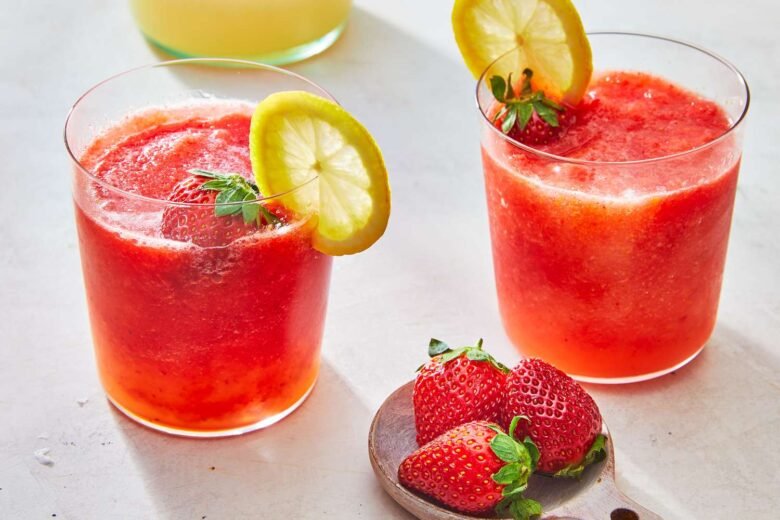
Strawberry lemonade is already one of the great drinks — the kind that requires no explanation, no cultural context, no seasonal justification. Ripe strawberries, fresh lemon juice, sugar, water. The combination is so direct and so good that it has been on restaurant menus and in home pitchers for as long as both ingredients have been widely available. It does not need improvement. What it needs is a slow cooker, which does not improve it so much as it transforms it into something you can make for twelve people at once, from frozen strawberries in the middle of winter, in a version that works both hot and cold depending entirely on what the occasion demands.
Slow cooker strawberry lemonade begins with fresh or frozen strawberries cooked down in the slow cooker with sugar and a small amount of water until they have completely released their juice, softened into a jammy, intensely flavored compote, and filled the house with a strawberry fragrance so concentrated it borders on perfume. That compote is then strained, combined with fresh lemon juice, adjusted for sweetness and tartness, and served either warm — as an unusual, deeply satisfying hot drink for a cold day — or cooled and poured over ice as the best strawberry lemonade most people will have encountered. The slow cooker does in two hours without attention what stovetop strawberry syrup-making does in thirty minutes with constant stirring and the risk of scorching.
The warm version is the one this recipe is specifically known for. It is not a common drink in most households, and that novelty is part of its appeal — warm strawberry lemonade, fragrant and slightly sweet and brightly tart, served in a ceramic mug on a cold afternoon, is one of those drinks that makes people stop and ask what they are drinking before they have finished the cup.
Why the Slow Cooker Works for Strawberry Lemonade
Strawberry lemonade made from scratch requires a strawberry syrup — cooked strawberries reduced with sugar until the juice is extracted, concentrated, and sweet enough to balance the lemon. The stovetop version of this process requires attention: the sugar and fruit combination can scorch if left unattended, the heat needs constant management, and the window between a perfectly reduced syrup and an overcooked, jammy mess is narrow.
The slow cooker eliminates all of that. At LOW temperature, strawberries cook down slowly and gently, releasing their juice gradually rather than violently boiling it away. The sugar dissolves completely and evenly into the released juice. The natural pectin in the strawberries thickens the syrup without scorching or caramelizing past the desired point. After two hours, the result is a deeply colored, intensely flavored strawberry compote sitting in its own syrup — ready to be strained into the cleanest, most strawberry-forward flavored base imaginable.
The slow cooker also works for a warm serving format in a way that the stovetop does not. Stovetop strawberry lemonade can be kept warm, but it requires a pot on a burner and someone managing the heat. The slow cooker keeps the finished, combined drink warm on KEEP WARM for as long as the gathering lasts, with no further attention required.
For the cold serving format, the slow cooker produces a strawberry base so concentrated and so clearly flavored that diluting it with cold water and lemon juice over ice produces a strawberry lemonade that is in an entirely different category from store-bought versions.
Fresh vs Frozen Strawberries
The strawberry choice is the most practically important decision in the recipe, and the answer is more nuanced than most recipes acknowledge.
Fresh strawberries at peak ripeness — deeply red throughout, fragrant, slightly soft at the tip — produce the most intensely flavored, most complexly fruity strawberry base of any option. The season for peak strawberries is short and specific: late spring to early summer, when local varieties are available. During that window, fresh strawberries in this recipe produce a base so good it is worth making specifically to capture the season. Use two pounds, hulled and halved. No need to slice them finely — the slow cooker breaks them down completely regardless of starting size.
Frozen strawberries are the revelation of this recipe and the ingredient that makes it genuinely year-round. Frozen strawberries are picked at peak ripeness and frozen immediately — their flavor is frequently more consistent and more intensely strawberry than out-of-season fresh strawberries shipped thousands of miles and picked underripe. For slow cooker strawberry lemonade, frozen strawberries are used directly from frozen — no thawing required — and produce a base that is indistinguishable from fresh in the finished drink. They also release more liquid as they thaw during the cook, which means the resulting syrup is naturally thinner and requires slightly less added water. Frozen strawberries are the practical choice for nine months of the year and not a compromise.
Out-of-season fresh strawberries — the large, pale, slightly watery variety available in grocery stores year-round — are the one option worth avoiding. Their flavor is thin and their color pale, and the slow cooker concentrates whatever flavor they have — which, in this case, means concentrating thinness into a less-satisfying result. If fresh strawberries are not in season, frozen is the correct choice.
The Lemon Component
The lemon in strawberry lemonade is not a background note — it is half the drink’s identity. The tartness of fresh lemon juice is what prevents strawberry lemonade from becoming strawberry juice, and its quality and quantity are the variables that determine whether the finished drink is balanced, over-sweet, or appropriately tart.
Freshly squeezed lemon juice is the only acceptable form for a recipe where lemon is a primary flavor. Bottled lemon juice — even good quality bottled juice — has a cooked, slightly flat quality that is immediately detectable in a drink this simple. Fresh lemon juice is bright, clean, aromatic, and contributes the essential oil compounds from the lemon peel that no bottled version preserves. Four to five large lemons produce approximately three-quarters of a cup of juice — the quantity needed for a full batch. Squeeze them fresh, immediately before adding to the strawberry base.
Lemon zest — the finely grated outer peel of one lemon, added to the slow cooker with the strawberries — contributes the essential oil compounds that give lemon its most aromatic, floral quality. These oils are largely absent from the juice alone. Adding zest to the strawberry base during the slow cook infuses the oils into the syrup and produces a lemon note that is rounder, more fragrant, and more complex than lemon juice alone. One lemon’s worth of zest is the correct quantity — more can become bitter from the white pith beneath.
The tartness calibration. The lemon juice is added to the strained strawberry base after cooking — not during the slow cook, where its aromatic compounds would cook off. The correct quantity varies slightly depending on the sweetness of the strawberries and personal preference for tartness. Add three-quarters of a cup as the starting point, taste, and adjust. A great strawberry lemonade should make you notice the tartness before the sweetness — sweet comes first on most palates, so the tartness needs to be assertive enough to register clearly through the sweetness of the strawberry base.
The Sweetener
Strawberry lemonade requires sugar — the acidity of the lemon juice demands a sweetener to balance it, and the strawberry flavor is enhanced rather than obscured by a moderate level of sweetness.
Granulated white sugar — added directly to the slow cooker with the strawberries — is the most neutral choice and the one that produces the cleanest, most straightforwardly strawberry-lemon flavor. The sugar dissolves completely into the strawberry juice during the cook. Half a cup for a full batch is the starting point — the finished lemonade can always be sweetened further at serving.
Honey — added after cooking to preserve its aromatic compounds — produces a floral sweetness that complements the strawberry in a specific and excellent way. Honey strawberry lemonade has a rounder, more complex sweetness than the sugar version. Add two to three tablespoons after straining and taste before adding more.
Simple syrup — equal parts sugar and water, combined and stirred until the sugar dissolves — is the most controllable sweetener for the cold serving version. Made separately and kept alongside the pitcher, it allows each glass to be sweetened individually. This is the correct approach for a cold lemonade stand-style serving where preference varies widely.
Stevia or monk fruit sweetener — for a reduced-sugar version, these natural sweeteners can replace white sugar at a reduced quantity (both are considerably sweeter than sugar — follow package conversion guidelines). The flavor of the finished lemonade is slightly different with these sweeteners but entirely acceptable.
The Warm Version
The warm serving format is the unusual and most interesting version of this recipe — and the one that makes it distinctly more than just a slow cooker shortcut for standard strawberry lemonade.
Warm strawberry lemonade occupies a flavour space between hot fruit tea and a warm juice drink — bright with lemon acidity, fragrant with strawberry, slightly sweet, and warming in the way that only hot drinks achieve in cold weather. It is not a common drink in North American homes, but it is an established tradition in parts of Europe — particularly in Scandinavia, where warm berry drinks are a standard winter offering — and once encountered it becomes immediately obvious why.
The warm version is served directly from the slow cooker at the KEEP WARM temperature — which holds the drink at approximately 160°F (71°C), hot enough to serve but well below the boiling point that would drive off the volatile aromatic compounds from the lemon and strawberry. For the warm version, the lemon juice is added to the slow cooker rather than to a pitcher — it warms through without boiling and maintains its brightness because the KEEP WARM temperature is low enough to preserve its character.
Garnish for the warm version. A thin lemon wheel on the rim of the mug, a fresh or frozen strawberry on a cocktail pick, and a sprig of fresh mint if available — the mint’s cooling aromatic creates an interesting contrast against the warmth of the drink. A cinnamon stick, which might seem counterintuitive, adds a subtle spice note that bridges the warm format beautifully.
The Cold Version
The cold serving format is the one most readers will default to — and it is exceptional precisely because the slow cooker produces a strawberry base more concentrated and more flavorful than any cold-process alternative.
The method for the cold version. After straining the strawberry compote, combine the strained syrup with the fresh lemon juice in a large pitcher. Add cold water to taste — starting with one to two cups and adjusting to the desired strength and tartness. Refrigerate until completely cold, at least two hours, before serving over ice. The flavor develops and mellows slightly during refrigeration — Day 2 cold strawberry lemonade is often more balanced than the day it was made.
Ice. For the cold version, ice is essential — not for temperature alone but for dilution. As the ice melts slightly, it softens the intensity of the concentrated base and produces the drinkable, refreshing consistency that great lemonade has. Serve over crushed ice for the most refreshing result; large ice cubes for a slower dilution that keeps the drink stronger longer.
Sparkling water. Replacing the still cold water with sparkling water or club soda at serving produces a strawberry sparkling lemonade that is one of the best non-alcoholic summer drinks in existence. The carbonation cannot survive the slow cooker, so it is always added at the cold serving stage — but a splash of sparkling water poured over the strawberry lemon base in each glass immediately before serving is the variation most worth trying.
Strawberry lemonade slushie. The strained, sweetened strawberry base combined with fresh lemon juice, poured into ice cube trays and frozen, then blended from frozen with a small amount of cold water — produces a strawberry lemonade slushie of extraordinary flavor that bears no resemblance to the artificially flavored versions sold in convenience stores.
Tips for Perfect Slow Cooker Strawberry Lemonade
1. Do not add lemon juice to the slow cooker for the cold version. For the cold version, the lemon juice is added after straining and cooling — not during the slow cook. Lemon juice heated for two hours loses much of its fresh, bright character. The strawberry base slow-cooks alone; the lemon goes in at the end. For the warm version, the lemon juice is added after the cook, to the finished base kept on KEEP WARM.
2. Use more strawberries than seems necessary. Two pounds of strawberries for a full batch is not excessive. Strawberries release a significant amount of water as they cook and that water dilutes the base before it is strained. More strawberries means a more concentrated, more flavorful base. This is one recipe where erring on the generous side with the primary ingredient produces a noticeably better result.
3. Strain thoroughly. Press the cooked strawberry compote through a fine mesh strainer firmly, using the back of a spoon, to extract every drop of juice. The more juice extracted, the more concentrated and flavorful the base. The solids left in the strainer — soft, sweetened strawberry pulp — are not waste: spread on toast, swirl into yogurt, or blend into a smoothie.
4. Taste and adjust after straining. The sweetness and tartness of the strawberry base varies by berry ripeness, sugar quantity, and personal preference. Taste after straining and before adding lemon juice, then taste again after adding lemon. The adjustment window is always before serving.
5. For the cold version, refrigerate fully before serving. Warm strawberry lemonade poured over ice produces a diluted, temperature-inconsistent drink. Cool the base completely in the refrigerator, combine with cold water and lemon juice, then serve over ice. The two hours of refrigeration are not optional — they are part of the recipe.
6. Fresh lemon juice only. Bottled lemon juice is detectable in a drink this simple. The lemon is one of two primary flavors. Use fresh.
7. The zest makes a difference. One lemon’s worth of zest added to the slow cooker with the strawberries infuses the essential oils from the peel into the base during the cook. These oils are what make lemon taste fully like lemon rather than just tart. The zest is a two-minute step with a meaningful impact on the finished drink.
Serving the Strawberry Lemonade
The warm version. Slow cooker on the counter on KEEP WARM, a ladle, ceramic mugs, a small bowl of lemon wheels and fresh mint sprigs for garnishing. The warm version is particularly suited to a fall or winter brunch where a non-coffee warm drink is needed, a children’s party where hot chocolate is too rich, or any occasion where something unusual and specifically good is worth making.
The cold version. A large glass pitcher filled with the strawberry lemonade and ice, a stack of glasses, a bowl of fresh strawberries and lemon slices for garnishing. For a party, a large dispenser with a spigot is the most practical serving vessel — fill it with ice and strawberry lemonade and let guests serve themselves. A small pitcher of sparkling water alongside allows guests to top their glass with fizz if they prefer.
Both versions together. For a gathering that spans morning into afternoon — a bridal shower, a birthday brunch, a holiday party — offering both the warm and cold versions from the same batch (split and adjusted separately) is an unusual and impressive presentation that accommodates every guest.
The Complete Table
Food pairings — warm version:
- Shortbread cookies — buttery and simple against the tart-sweet warmth
- Lemon poppyseed muffins — the lemon note in both creates intentional harmony
- Scones with clotted cream and strawberry jam — the drink mirrors the jam
- Crepes with fresh strawberries and whipped cream
Food pairings — cold version:
- Strawberry shortcake — the definitive summer pairing
- Grilled chicken salad with strawberries and balsamic
- Watermelon feta salad — bright, summery, correct
- Cheese and charcuterie board — the tartness cuts through richness
Occasions:
- Summer garden party — the cold version in a large dispenser
- Spring brunch — either version depending on the weather
- Children’s birthday party — cold version with sparkling water for a festive fizz
- Valentine’s Day — the deep pink-red color is specifically appropriate
- Baby shower — elegant, inclusive, beautiful color
Spiked variations for adults:
- Strawberry lemonade vodka — 1.5 oz vodka per glass, cold version
- Strawberry lemonade rosé — top each glass with a splash of chilled rosé
- Strawberry lemon gin fizz — 1.5 oz gin, splash of sparkling water, cold version
- Warm strawberry lemonade with bourbon — 1 oz bourbon per mug, warm version
The Day-After Strawberry Lemonade Uses
Leftover strawberry lemonade — and the strawberry pulp left in the strainer — are both worth keeping deliberately. The strained pulp, combined with Greek yogurt and a drizzle of honey, becomes a strawberry fool that takes two minutes and tastes like it didn’t. The leftover cold lemonade, poured into popsicle molds and frozen, produces strawberry lemonade popsicles of extraordinary flavor — the concentrated slow cooker base comes through powerfully in frozen form. The remaining lemonade, reduced in a small saucepan to half its volume, becomes a strawberry lemon syrup for pancakes, waffles, or drizzling over vanilla ice cream. The slow cooker strawberry pulp blended smooth and strained again produces a coulis elegant enough for plating.
Easy Variations
- Strawberry mint lemonade. Add a generous handful of fresh mint leaves to the slow cooker with the strawberries for the last 20 minutes of cooking — not at the start, as mint over-cooked becomes bitter and grassy. Strain with the strawberry compote. The mint infuses into the base and produces a strawberry mint lemonade that is one of the most refreshing drinks in this entire series.
- Strawberry basil lemonade. Replace the mint with six to eight large fresh basil leaves added in the final 15 minutes of cooking. Basil and strawberry is one of the great unexpected flavor pairings — the herbal, slightly anise note of basil lifts the strawberry in a way that is sophisticated and genuinely surprising to first-time tasters.
- Strawberry raspberry lemonade. Replace half the strawberries with fresh or frozen raspberries. The raspberry adds a more intense berry tartness and a deeper, slightly darker color. The finished drink is more tart and more complex than the straight strawberry version.
- Pink strawberry lemonade with hibiscus. Add two bags of hibiscus tea, steeped in the strained base for ten minutes after cooking. The hibiscus deepens the color toward a vivid magenta and adds a tart, floral note that makes the lemonade taste more complex. Remove the tea bags after ten minutes.
- Sparkling strawberry lemonade. For the cold version, replace all still water with sparkling water or club soda added per glass at serving. The carbonation cannot be added in advance — it must go in at the moment of pouring. The result is one of the best sparkling non-alcoholic drinks in this recipe collection.
Make-Ahead and Storage
Make-ahead: The strawberry base (before lemon juice is added) can be made up to three days ahead and refrigerated. The lemon juice is always added fresh, immediately before serving, for maximum brightness.
Refrigerator — cold version: Fully assembled cold strawberry lemonade keeps for three to four days in an airtight pitcher or container. The flavor deepens slightly overnight. Stir before serving as the strawberry base can settle slightly.
Refrigerator — warm base: The strained warm base (before lemon juice is added) keeps for five days. Reheat gently in the slow cooker on LOW for one hour, add fresh lemon juice, and serve.
Freezer: The strained strawberry base — before lemon juice is added — freezes beautifully for up to three months in airtight containers or in ice cube trays for single-serve convenience. Thaw overnight in the refrigerator, add fresh lemon juice, and serve. The concentrated base is more compact than the finished drink, making freezer storage efficient.
The strawberry pulp: The pressed pulp from the strainer keeps refrigerated for three days or freezes for three months. Use in smoothies, swirl into yogurt, blend into salad dressings, or spread on toast as a quick strawberry jam. Do not discard it.
Shopping List
The Strawberry Base
- 2 lbs (900g) fresh or frozen strawberries, hulled (no need to thaw if frozen)
- ½ cup (100g) granulated white sugar (adjust to taste)
- ½ cup (120ml) water
- Zest of 1 large lemon
The Lemon Component
- ¾ cup (180ml) fresh lemon juice (about 4–5 large lemons) — added after cooking
For the Cold Version
- 1½ to 2 cups (360–480ml) cold water or sparkling water (to dilute to taste)
- Ice for serving
For the Warm Version
- ½ to 1 cup (120–240ml) warm water (to dilute to preferred strength)
The Sweetener (optional at serving)
- Additional sugar, honey, or simple syrup to taste
For Serving — Warm
- Lemon wheels, fresh mint sprigs, cinnamon sticks for garnish
For Serving — Cold
- Fresh strawberries, lemon slices for garnish
- Sparkling water or club soda alongside (optional)
Slow Cooker Strawberry Lemonade (Warm or Iced)
Two pounds of fresh or frozen strawberries slow-cooked on LOW for 2 hours with sugar, water, and lemon zest until they have completely released their juice and cooked down into a deeply colored, intensely flavored compote — then strained firmly through a fine mesh strainer and combined with freshly squeezed lemon juice. Served warm directly from the slow cooker in ceramic mugs on a cold day, or cooled, diluted with cold water or sparkling water, and poured over ice in tall glasses for the most concentrated, most strawberry-forward lemonade most people will encounter. One slow cooker base, two completely different drinks, both outstanding.
Ingredients
The Strawberry Base
- 2 lbs (900g) fresh or frozen strawberries, hulled (frozen used directly from frozen)
- ½ cup (100g) granulated white sugar
- ½ cup (120ml) water
- Zest of 1 large lemon (added to slow cooker)
The Lemon (added after cooking)
- ¾ cup (180ml) fresh lemon juice (4–5 large lemons) — never bottled
For the Cold Version
- 1½–2 cups (360–480ml) cold still or sparkling water, to taste
- Ice for serving
For the Warm Version
- ½–1 cup (120–240ml) warm water, to taste
Optional at Serving
- Additional sugar, honey, or simple syrup to taste
- Lemon wheels, fresh strawberries, mint for garnish
Instructions
Making the Strawberry Base (both versions)
- Load the slow cooker. Add the strawberries, sugar, water, and lemon zest to the slow cooker. If using frozen strawberries, add them directly from the freezer — no thawing needed. Stir briefly to combine.
- Cook. Set the slow cooker to LOW and cook for 2 hours, until the strawberries have completely broken down, released all their juice, and the liquid is a deep, vivid red. The mixture will look like a loose compote. Do not lift the lid during cooking.
- Strain. Set a fine mesh strainer over a large bowl or pitcher. Pour the strawberry compote into the strainer and press firmly with the back of a spoon to extract every drop of juice. Work thoroughly — the more juice extracted, the stronger and more flavorful the base. Reserve the pressed pulp for another use (see notes).
- Taste the base. Taste the strained strawberry syrup before adding lemon juice. It should be sweet and intensely strawberry-flavored. Adjust sweetness with additional sugar or honey if needed.
For the Warm Version
- Return to slow cooker. Pour the strained strawberry base back into the slow cooker on KEEP WARM. Add the fresh lemon juice and ½ to 1 cup of warm water to dilute to the desired strength. Stir to combine. Taste and adjust — more lemon for tartness, more honey for sweetness.
- Serve warm. Ladle into ceramic mugs. Garnish with a lemon wheel, a fresh strawberry, and a sprig of mint. Serve immediately.
For the Cold Version
- Combine and chill. Pour the strained strawberry base into a large pitcher. Add the fresh lemon juice and 1½ to 2 cups of cold still water (or sparkling water added per glass at serving). Stir well. Taste and adjust sweetness and tartness.
- Refrigerate. Refrigerate for at least 2 hours until completely cold. The flavor improves slightly overnight.
- Serve over ice. Fill tall glasses with ice. Pour the cold strawberry lemonade over. Garnish with a fresh strawberry on the rim and a lemon slice. For a sparkling version, top each glass with cold sparkling water just before serving.
Notes
- Frozen strawberries go in from frozen. No thawing required. They release more liquid as they thaw during the cook, which contributes to the base volume naturally. Thawed frozen strawberries are mushier and harder to strain than ones that went in frozen and cooked slowly.
- Do not add lemon juice to the slow cooker. For the cold version, lemon juice added to the slow cooker for a 2-hour cook loses its fresh, bright character entirely. It goes in after straining. For the warm version, it goes in after the cook on KEEP WARM — the low temperature preserves its brightness.
- Strain firmly. The pressed strawberry compote holds a significant amount of juice that casual straining misses. Press firmly and repeatedly with the back of a large spoon until the pulp in the strainer is dry and pale. Every drop of juice extracted is concentrated flavor.
- The pulp is not waste. Pressed, sweetened strawberry pulp spread on toast is a two-minute jam. Swirled into plain yogurt it becomes a fruit-on-the-bottom yogurt of extraordinary quality. Blended into a smoothie it adds concentrated strawberry flavor. Do not discard it.
- Two pounds of strawberries is the correct quantity. The instinct when making a fruit-based drink for the first time is to wonder if two pounds is too much. It is not. Strawberries release a large proportion of their weight as water during cooking, and that water dilutes the base. Two pounds produces enough concentrated syrup for a full batch that still has strong strawberry flavor after dilution.
- For the cold version, refrigerate fully before serving. Warm lemonade poured over ice produces a diluted, temperature-inconsistent drink immediately. Two hours in the refrigerator produces a cold lemonade that is consistently flavored and properly chilled throughout.
- Fresh lemon juice is the ingredient. In a drink with two primary flavors — strawberry and lemon — the quality of both is directly detectable. Bottled lemon juice has a cooked, flat quality that is immediately apparent in something this simple. Squeeze the lemons fresh.
- Category: Drinks, Summer
- Method: Slow Cooking
- Cuisine: American
- Diet: Dairy-Free, Gluten-Free, Vegan
Frequently Asked Questions
Can I use frozen strawberries without thawing them first? Yes — and in fact adding them directly from frozen is the recommended method. Frozen strawberries added to the slow cooker while still solid thaw and release their juice gradually during the cook, which produces a more controlled, even extraction than strawberries that have already thawed and become mushy before they go in. The slow cook effectively thaws and cooks them simultaneously, producing a cleaner, more uniformly cooked compote. Thawed frozen strawberries go in as a wet, partially broken-down mass that can produce an uneven result. Use them straight from the freezer.
Why does the recipe say not to add lemon juice to the slow cooker? Lemon juice contains volatile aromatic compounds — the ones that make lemon smell and taste like fresh lemon — that begin evaporating immediately when exposed to sustained heat. Added to the slow cooker at the start of a two-hour cook, those compounds are largely gone by the time the lid comes off and the drink is ready. What remains is the citric acid — the sourness of lemon without its brightness or fragrance. Added after the cook to the strained base or to the warm drink on KEEP WARM, every aromatic compound is fully preserved and the lemon note in the finished drink is clean, bright, and immediately recognizable as fresh lemon. The lemon is always a post-cook addition in this recipe regardless of which version is being made.
My lemonade tastes more sweet than tart. How do I fix it? Add more fresh lemon juice — start with an additional tablespoon and taste after each addition. The correct balance for strawberry lemonade varies significantly by personal preference and by the sweetness of the specific strawberries used. Strawberries at peak ripeness produce a sweeter base that needs more lemon to balance; underripe or off-season strawberries produce a tarter base that may need less. The tartness should be assertive — it should register before the sweetness on the palate. If the drink tastes primarily sweet with a faint lemon note, it needs more lemon. If it makes you wince slightly before the sweetness comes in, the balance is correct.
Can I make this into a cocktail? Yes — the strawberry lemonade base, both warm and cold, is an outstanding cocktail base. For the cold version: vodka is the most neutral addition (1.5 oz per glass) and lets the strawberry-lemon flavor remain primary; gin adds a herbal, botanical complexity that pairs well with the strawberry; rosé wine splashed over the top adds a wine note and turns the drink a deeper pink. For the warm version: bourbon (1 oz per mug) is the most complementary spirit — its vanilla and caramel notes pair unexpectedly well with warm strawberry lemonade and make it a genuinely sophisticated cold-weather cocktail. All spirits are added per mug at serving, not to the slow cooker batch.
How do I make a sparkling version? Sparkling water or club soda cannot be added to the slow cooker or to the batch in advance — the carbonation evaporates within minutes in any warm environment. For the cold version, add sparkling water per glass at the moment of serving: fill a glass with ice, pour three-quarters full with cold strawberry lemonade base, and top with cold sparkling water. For a more effervescent result with smaller, more persistent bubbles, use chilled club soda straight from the refrigerator. For a slightly ginger-spiced sparkling version, use ginger beer rather than plain sparkling water — the ginger note adds a pleasant warmth that bridges the summer fruit flavor of the lemonade in an interesting direction.
Can I reduce the sugar for a less-sweet version? Yes. The sugar in this recipe serves two functions: sweetening and drawing out juice from the strawberries (osmosis — the sugar draws moisture out of the fruit during cooking). Reducing the sugar to a quarter cup still produces adequate juice extraction while producing a less sweet base. Taste after straining and add sweetness at the end with honey, simple syrup, or additional sugar dissolved in warm water — adding sweetness after the fact gives more precise control than adjusting the slow cooker quantity. A version made with minimal sugar in the cooker, sweetened lightly per glass at serving with simple syrup, is the most customizable approach for a mixed gathering with varying sweetness preferences.
Can I make a large batch for a party? Yes — the recipe scales directly. A double batch (four pounds of strawberries, one cup of sugar, one cup of water) fits in a large 8-quart slow cooker and produces enough base for sixteen to twenty servings. Scale the lemon juice proportionally — one and a half cups for a double batch — and taste and adjust before serving. For a large party cold version, the double batch base can be made the day before and refrigerated; combine with lemon juice and cold water on the day of the party. The warm version of a double batch holds well on KEEP WARM for up to three hours after the cook, making it practical for events with staggered arrival times.
What do I do with the strawberry pulp left in the strainer? The pressed strawberry pulp is sweetened, cooked-down strawberry that has given up most of its juice but retains all of its fiber and some of its flavor. It is not waste. Spread it directly on toast or English muffins as a quick jam — it sets slightly once refrigerated. Stir it into plain Greek yogurt for a fruit-on-the-bottom effect. Blend it smooth with a small amount of water and strain once more through a fine mesh for a strawberry coulis suitable for plating desserts. Add it to a smoothie for a concentrated strawberry punch. Fold it into whipped cream for a strawberry fool. Refrigerate for up to three days or freeze for up to three months.