
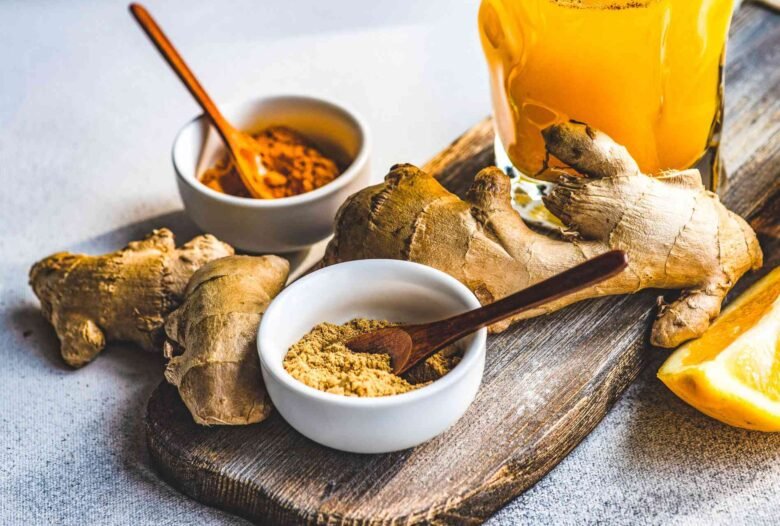
Wellness tea is a category that has accumulated a great deal of noise — powdered supplements in expensive packets, celebrity-endorsed tonics in glass bottles at prices that suggest the ingredients were sourced from a single remote valley and hand-carried to the production facility. The actual ingredients of the most effective wellness teas are not rare. They are not expensive. They have been used in traditional medicine systems across Asia and the Middle East for thousands of years and they are sitting in the produce section of every grocery store alongside the onions and the garlic: fresh ginger root, fresh turmeric root, black pepper, lemon, and honey.
Slow cooker ginger turmeric wellness tea is made from those ingredients and nothing else — no powders, no supplements, no complicated sourcing. What the slow cooker does to them is the same thing it does to every ingredient it touches: it gives them time. Two to three hours at a sustained low temperature draws every bioactive compound, every volatile aromatic, every warming, anti-inflammatory, and digestion-supporting constituent out of the ginger and turmeric and into the water, producing a tea that is more concentrated, more completely extracted, and more bioavailable than anything steeped for five minutes on a stovetop.
The finished drink is not subtle. It is warming and slightly spicy from the ginger, earthy and slightly bitter from the turmeric, bright from the lemon, sweetened by the honey. The black pepper — an ingredient that will raise questions from first-time readers — is there for a specific biochemical reason that has nothing to do with making the tea spicy: piperine, the active compound in black pepper, enhances the bioavailability of curcumin (turmeric’s primary active compound) by up to 2,000 percent. The black pepper is in every serious ginger turmeric tea recipe because without it, most of the curcumin passes through the body without being absorbed. It takes four to five whole peppercorns. The tea does not taste of pepper.
This is the wellness tea that does what wellness teas are supposed to do.
The Ingredients and Why They Matter
Every ingredient in ginger turmeric wellness tea is there for a reason, and understanding those reasons produces a better drink than following the recipe blindly.
Fresh ginger root is the foundational ingredient — the aromatic backbone and the primary source of heat in the tea. Ginger has been used medicinally for over three thousand years across Ayurvedic, Traditional Chinese, and Middle Eastern medicine traditions, valued for its warming properties, its support of digestion and nausea relief, its anti-inflammatory gingerols and shogaols, and its cardiovascular effects. In slow cooker tea, fresh ginger root is used in generous quantity — a large thumb-sized piece, approximately two to three inches — sliced into thin rounds to maximize surface area and extraction. The slow cooker extracts ginger’s compounds more completely than a brief steeping, producing a tea in which the ginger note is warming, clear, and sustained rather than sharp and fleeting.
Fresh turmeric root is the defining wellness ingredient — the one that gives the tea its characteristic golden color and its most discussed bioactive compound: curcumin. Turmeric root looks like a smaller, more intensely orange version of ginger root, and is increasingly available in grocery stores alongside it. If fresh turmeric root is unavailable, ground turmeric — one teaspoon per batch — is an acceptable substitute, though it produces a slightly more bitter, less nuanced result than the fresh root. Fresh turmeric should be handled with care: it stains hands, cutting boards, and light-colored fabric instantly and persistently. Wear gloves when slicing it or wash hands immediately after handling.
Black pepper is the biochemistry ingredient — present not for flavor but for the piperine compound that dramatically enhances curcumin absorption. Four to five whole black peppercorns per batch is the correct quantity. It is not enough to make the tea taste of pepper. It is enough to make the turmeric work as intended.
Fresh lemon — the juice of one lemon and, optionally, several thin rounds of lemon added to the slow cooker — is the brightness ingredient. Lemon juice added after the cook preserves its aromatic compounds and provides the clean, sharp citrus note that balances the earthiness of the turmeric and the heat of the ginger. Lemon also provides vitamin C that enhances the absorption of some of ginger’s and turmeric’s compounds.
Honey is the sweetener and a medicinal ingredient in its own right. Raw honey has documented antibacterial and anti-inflammatory properties that complement the ginger and turmeric base. It is added after the cook — not at the start — because honey’s beneficial enzymes and aromatic compounds are degraded by sustained heat. Added to the warm finished tea per cup, it sweetens gently and contributes its own properties fully intact.
Cinnamon — one stick, optional — adds a warm sweetness and is a complementary ingredient in many traditional wellness tea formulations. It also moderates blood sugar and adds an aromatic warmth that makes the tea more approachable for those new to turmeric’s assertive earthiness.
Cayenne pepper — a very small pinch, optional — amplifies the warming quality of the ginger and adds the same kind of absorption-enhancing effect as black pepper for curcumin. For those who enjoy a genuinely warming, spicy tea, a pinch of cayenne transforms the drink into something that generates warmth from the inside in a way that is immediately felt.
Fresh vs Ground Turmeric
The choice between fresh turmeric root and ground turmeric is the most practically important ingredient decision in this recipe, and the answer depends on what is available rather than which is definitively superior.
Fresh turmeric root produces a brighter, more complex, less bitter result than ground turmeric. The fresh root’s aromatic compounds — the ones that give fresh turmeric its floral, slightly citrusy quality beneath the earthiness — are largely absent from the dried, ground version. Fresh turmeric also contains essential oils and moisture that interact with the slow cooker’s extended extraction process differently than powder does. The color of tea made with fresh turmeric is a clear, warm amber-gold. It is the superior ingredient when available.
Ground turmeric is the accessible substitute and works well. One teaspoon of ground turmeric replaces a one-inch piece of fresh turmeric root. The tea made with ground turmeric is slightly more opaque, slightly more bitter, and slightly less nuanced in flavor — but it is still an excellent wellness tea and significantly more accessible than fresh turmeric in many locations. Ground turmeric also stains the slow cooker insert a vivid yellow that requires soaking to remove — this is expected and not a sign of damage.
The staining. Fresh turmeric root stains hands and surfaces an intense orange-yellow that is persistent. Wear gloves when handling and slicing. Cut on a surface that can be bleached or is already stained. The slow cooker insert stains golden-yellow from both fresh and ground turmeric — this is cosmetic and does not affect the function or flavor of future recipes. A paste of baking soda and white vinegar scrubbed into the stained surface removes most of the discoloration.
The Water
Water is the base of this tea, and its quality affects the finished drink more directly than in recipes where the water is diluted by other flavors.
Filtered water produces the cleanest, most clearly flavored tea. Tap water with high chlorine or mineral content introduces off-notes that are detectable in a tea with this many subtle flavor layers. If the tap water in your area tastes good to drink straight, it will produce excellent wellness tea. If it does not, filtered water is worth using here.
The quantity. Four cups of water for a full batch produces a tea of the correct concentration for the ingredient quantities in this recipe — strong enough to be flavorful and warming, diluted enough to drink comfortably. For a more concentrated result — to be diluted with hot water per cup at serving, similar to the chai concentrate method — use two cups of water and dilute one-to-one at serving.
Bone broth as the base. An unusual variation worth knowing: replacing half the water with unsalted bone broth or vegetable broth produces a savory-sweet wellness tonic that is more nutrient-dense and more substantive than the water-based version. This version is less tea-like and more tonic-like — best served in small quantities, warm, as a between-meal drink. The ginger-turmeric-broth combination is traditional in some South Asian and Southeast Asian wellness formulations.
The Slow Cooker Advantage for Wellness Teas
Most wellness tea recipes call for simmering the ingredients on the stovetop for ten to twenty minutes — a reasonable approach that produces a good result. The slow cooker method produces a better result for a specific set of reasons.
Extended extraction. Two to three hours at LOW temperature extracts a higher proportion of the bioactive compounds from ginger and turmeric than a ten-minute simmer. The extended time allows the slow, complete extraction of compounds that require more than a brief heat exposure to fully release — particularly the fat-soluble curcumin in turmeric and the shogaols in ginger that form when the more volatile gingerols are converted by sustained heat.
Temperature control. The slow cooker at LOW holds the water at approximately 180°F to 190°F (82°C to 88°C) — below boiling but hot enough for full extraction. Boiling water extracts aggressively but also drives off volatile aromatic compounds and can make ginger tea harsh and overly sharp. The slow cooker’s below-boil temperature produces a more rounded, less aggressive ginger note.
Batch production without attention. Four cups of wellness tea made in the slow cooker requires no stovetop presence, no stirring, no monitoring. Set it and walk away. The stovetop method requires attention to maintain a simmer without boiling. For a batch made to last the week — refrigerated and reheated cup by cup — the slow cooker is the only practical method.
The batch week approach. This is the most practical application of this recipe: make a full batch on Sunday, strain, cool, and refrigerate. Each morning, pour one cup into a small saucepan and warm gently, or microwave in a mug for ninety seconds. Add a squeeze of fresh lemon juice and a teaspoon of honey per cup. The wellness tea is ready in under two minutes on any morning of the week. One slow cooker session produces seven mornings of warming, properly extracted wellness tea.
Tips for Perfect Slow Cooker Ginger Turmeric Wellness Tea
1. Slice the ginger and turmeric thinly. Surface area is extraction area. Thin slices — approximately ⅛ inch thick — expose the maximum interior surface of the root to the water, producing the most complete extraction in the shortest time. Thick chunks extract unevenly — the center remains underextracted while the edges over-extract. Slice thinly. A mandoline or the thinnest setting on a box grater produces the ideal result.
2. Include the black pepper — it is not optional. Piperine from black peppercorns is what makes the turmeric in this tea bioavailable rather than decorative. Without it, most of the curcumin passes through the body unabsorbed. Four to five whole peppercorns contribute their piperine without making the tea taste of pepper. Every serious ginger turmeric tea recipe includes black pepper. Include it.
3. Do not add honey or lemon juice to the slow cooker. Both are added after the cook — honey per cup at serving, lemon juice after straining. Honey’s beneficial enzymes and aromatic compounds are degraded by sustained heat; its antibacterial properties diminish significantly above 95°F (35°C). Lemon juice’s bright, volatile aromatics cook off during a long slow cook. Both are most effective and most flavourful added at the end.
4. Strain through a fine mesh strainer. The cooked ginger and turmeric solids should be strained completely before serving. A fine mesh strainer removes the fibrous root pieces and, if ground turmeric was used, the fine turmeric particles that produce a gritty texture in the cup. For the clearest, most elegant result, strain twice or line the strainer with a single layer of cheesecloth.
5. Do not boil. The LOW setting on the slow cooker is the correct temperature for wellness tea extraction. Boiling drives off volatile aromatic compounds from the ginger and produces a harsher, less nuanced result. If the tea is bubbling vigorously at any point, switch to KEEP WARM.
6. Start with less turmeric than you think you need. Turmeric is intensely earthy and, in excess, becomes bitter in a way that is difficult to correct. One to two inches of fresh root (or one teaspoon ground) for a four-cup batch is the correct range. The tea should taste of ginger and turmeric in balance — earthy and warming, not bitterly medicinal. If the turmeric note is too assertive, dilute with additional hot water and a squeeze of lemon.
7. Make it weekly. The single best use of this recipe is as a weekly batch. The flavor of the tea actually improves over the first day as the extracted compounds integrate in the refrigerator. Day 2 and Day 3 wellness tea is more balanced and more rounded than the day it was made.
Serving the Wellness Tea
Ginger turmeric wellness tea is not a party drink — it is a personal, daily drink. Its serving format reflects that.
A morning ritual. The most natural and sustainable way to incorporate this tea is as a morning drink before or alongside breakfast. Warm, with a squeeze of fresh lemon and a teaspoon of raw honey stirred in, it is the first thing that goes into the body for the day — warming, slightly stimulating from the ginger, and setting a tone of intention for what follows.
A cold-weather evening drink. Warm ginger turmeric tea in the evening, slightly stronger than the morning version, with an extra squeeze of lemon and a tablespoon of honey, is one of the genuinely comforting end-of-day drinks — particularly during cold and flu season when the anti-inflammatory and immune-supporting properties of the ingredients are most actively relevant.
A recovery drink. Athletes and those recovering from illness frequently use ginger turmeric tea specifically — the anti-inflammatory properties of curcumin and gingerols are well-documented and relevant to exercise recovery and general inflammation. A cup served warm after a workout, with a pinch of cayenne for increased circulation, is a genuinely functional recovery drink.
As a tonic shot. The slow cooker batch, strained and reduced further on the stovetop to half its volume, produces a concentrated tonic. Poured into shot glasses and taken as a one-ounce daily wellness shot — the format made popular by juice bars — it is the most efficient delivery method for the bioactive compounds in the recipe and requires no mug or time commitment.
The Complete Context
Pairs well with:
- Plain oatmeal or overnight oats — the warming morning complement
- Soft-boiled eggs and avocado toast — a complete, nutrient-dense morning
- Plain Greek yogurt with honey — complementary flavors and textures
- Ginger snaps or ginger biscuits — the ginger note in both is intentional
- A small square of dark chocolate — the bitterness of both is complementary
Best occasions:
- Cold and flu season — the most relevant time for the anti-inflammatory and warming properties
- Winter mornings — as a warming alternative or complement to coffee
- Post-workout recovery — specifically for the curcumin and gingerol content
- Fasting windows — naturally very low calorie (the honey is added per cup and can be omitted)
- Travel and jet lag — ginger’s anti-nausea properties make it specifically useful in transit
Who it is for:
- Anyone wanting a daily anti-inflammatory drink without supplements
- Those reducing coffee or caffeine intake — the ginger provides alertness without caffeine
- Cold and flu season households
- Anyone who has bought expensive wellness tonics and wondered if there was a simpler version
The Day-After Wellness Tea Uses
The strained ginger and turmeric solids left in the strainer are not without further use. The pressed ginger pulp, added to a pot of rice or congee during cooking, contributes a gentle ginger warmth. Stirred into salad dressings — a tablespoon of pressed ginger pulp with olive oil, rice vinegar, soy sauce, and sesame oil — it produces one of the best ginger dressings without any additional effort. The turmeric pulp stirred into scrambled eggs or a tofu scramble adds color and a mild earthy warmth. Leftover wellness tea that has gone slightly past its preferred drinking window can be used as the liquid base for cooking rice, lentils, or soup — the ginger and turmeric flavor carries through and adds depth without being assertive.
Easy Variations
- Golden milk tea. Replace half the water with whole milk or oat milk and reduce the ginger slightly. Add a cinnamon stick and a pinch of cardamom. The result is a creamy, spiced golden milk — the Ayurvedic turmeric milk — made in the slow cooker. Finish with honey and a pinch of black pepper per cup.
- Ginger turmeric green tea. After straining the ginger-turmeric base, steep two bags of green tea in the warm liquid for three minutes before serving. The green tea adds antioxidants, a slight grassy note, and a gentle caffeine lift without the intensity of black tea.
- Ginger turmeric lemon detox tea. Add the zest of one lemon and four slices of fresh lemon to the slow cooker alongside the ginger and turmeric. The lemon peel oils infuse into the base and produce a more citrus-forward tea that is particularly good cold over ice with extra lemon juice stirred in.
- Spiced ginger turmeric chai. Add two cardamom pods, a cinnamon stick, and four cloves to the slow cooker alongside the ginger and turmeric. Replace one cup of water with one cup of whole milk or oat milk added in the final thirty minutes. The result is a simplified chai with wellness-tea credentials.
- Ginger turmeric tonic with apple cider vinegar. Add one tablespoon of raw apple cider vinegar per cup to the finished warm tea alongside the lemon juice. The apple cider vinegar adds its own documented digestive and blood sugar benefits and its sharp, acidic note reinforces the lemon. An acquired taste that becomes habit-forming.
Make-Ahead and Storage
Make-ahead: The weekly batch approach is the primary make-ahead strategy for this recipe. Make the full four-cup batch on Sunday, strain, cool, and refrigerate. The tea keeps and actually improves slightly over the first two days.
Refrigerator: Strained wellness tea keeps in an airtight glass jar or container for up to seven days. Glass is preferred over plastic — the turmeric stains plastic containers permanently. The tea may deepen in color during refrigeration as the turmeric compounds continue to oxidize slightly. This is normal and does not indicate spoilage.
Reheating: Warm gently in a small saucepan over low heat or microwave at 70 percent power for 90 seconds. Do not boil when reheating — boiling reduces the aromatic quality of the ginger. Add fresh lemon juice and honey after reheating, not before.
Freezer: The strained wellness tea base freezes in ice cube trays for up to three months. Each cube is approximately two tablespoons of concentrate. Drop two to three cubes into a mug, add hot water, stir to melt, add lemon and honey. The most convenient possible wellness tea setup.
As a tonic concentrate: After straining, reduce the four-cup batch to one cup on the stovetop over medium heat. Cool and pour into a small glass jar. This concentrate keeps refrigerated for two weeks. Use one to two tablespoons per cup of hot water for a quickly prepared daily wellness drink.
Shopping List
The Wellness Base
- 2–3 inch (5–7.5cm) piece fresh ginger root, unpeeled, thinly sliced
- 1–2 inch (2.5–5cm) piece fresh turmeric root, unpeeled, thinly sliced (or 1 tsp ground turmeric)
- 4 cups (960ml) filtered water
- 4–5 whole black peppercorns
- 1 cinnamon stick (optional)
- Pinch of cayenne pepper (optional)
Per Cup at Serving
- Fresh lemon juice — ½ to 1 lemon per cup
- 1 tsp raw honey (or to taste)
Optional Additions
- 2–3 thin lemon rounds (added to slow cooker)
- 2 cardamom pods, lightly crushed (for a spiced version)
Slow Cooker Ginger Turmeric Wellness Tea
Fresh ginger root and fresh turmeric root sliced thin and slow-cooked in filtered water for 2 to 3 hours on LOW with whole black peppercorns, an optional cinnamon stick, and lemon rounds — drawing every bioactive compound from the roots in a gentle, extended extraction that a ten-minute stovetop simmer cannot match. Strained, portioned into mugs, finished with a generous squeeze of fresh lemon juice and a teaspoon of raw honey added after the cook to preserve their full properties. Golden, warming, slightly spicy, and genuinely effective — the wellness tea made from grocery store ingredients that costs less per cup than a single supplement capsule.
- Total Time: 2 hours 10 minutes
- Yield: 4 cups (4 servings) 1x
Ingredients
The Wellness Base
- 2–3 inch (5–7.5cm) piece fresh ginger root, unpeeled, sliced into ⅛-inch rounds
- 1–2 inch (2.5–5cm) piece fresh turmeric root, unpeeled, sliced into ⅛-inch rounds (or 1 tsp ground turmeric)
- 4 cups (960ml) filtered water
- 4–5 whole black peppercorns
- 1 cinnamon stick (optional)
- 2–3 thin lemon rounds (optional, added to slow cooker)
- Pinch of cayenne pepper (optional)
Per Cup at Serving (added after cooking)
- Juice of ½ to 1 lemon, freshly squeezed
- 1 tsp raw honey, or to taste
Instructions
- Prepare the roots. Rinse the ginger and turmeric roots under cold water. There is no need to peel — the skin of both roots is thin, edible, and contains additional beneficial compounds. Slice both roots into thin rounds, approximately ⅛ inch thick. Wear gloves when handling fresh turmeric — it stains immediately and persistently.
- Load the slow cooker. Add the sliced ginger, sliced turmeric (or ground turmeric), black peppercorns, cinnamon stick (if using), lemon rounds (if using), and cayenne (if using) to the slow cooker. Pour over the filtered water.
- Cook. Set the slow cooker to LOW and cook for 2 to 3 hours, until the water has turned a deep, warm golden colour and the kitchen smells strongly of ginger. Do not allow the tea to boil.
- Strain. Pour the finished tea through a fine mesh strainer into a large measuring jug or pitcher, pressing the solids firmly to extract every drop of liquid. Discard the solids or reserve for the uses described in the notes.
- Serve warm. Pour the strained tea into mugs. Add a generous squeeze of fresh lemon juice — at least half a lemon per cup. Stir in one teaspoon of raw honey, or more to taste. Taste and adjust — more lemon for brightness, more honey for sweetness, a pinch of extra cayenne for heat.
- Or store for the week. Cool the strained tea to room temperature, pour into a glass jar or airtight container, and refrigerate. Reheat gently per cup as needed throughout the week, adding fresh lemon juice and honey after reheating each time.
Notes
- Do not peel the ginger or turmeric. The skins of both roots are thin, contain additional beneficial compounds, and are fully extracted during the long slow cook. Peeling is extra work with no benefit in this application. A quick rinse under cold water is sufficient.
- Slice thinly — it matters. Thin slices dramatically increase the surface area in contact with the water and produce a significantly more complete extraction than thick chunks. An ⅛-inch slice extracts fully in two hours; a one-inch chunk extracts unevenly and incompletely. Use the thinnest slicing setting available.
- Black pepper is not optional. Piperine from black peppercorns increases curcumin bioavailability by up to 2,000 percent. Without it, most of the turmeric’s primary active compound passes through the body unabsorbed. Four to five peppercorns do not make the tea taste of pepper. They make the turmeric work.
- Honey and lemon always go in after. Honey’s beneficial enzymes are destroyed by heat. Lemon’s bright aromatics cook off during a slow cook. Both are added per cup at serving — or after reheating from the refrigerator — to preserve their properties and their flavour fully.
- Turmeric stains everything it touches. The slow cooker insert, spoons, strainers, cutting boards, and hands will all be stained golden-yellow. This is cosmetic on the insert and equipment. On hands, soap and water removes most of it immediately after contact; delayed washing requires more effort. Wear gloves when handling and slicing fresh turmeric root.
- Ground turmeric works. Fresh turmeric root is better — more nuanced, less bitter, more aromatic. Ground turmeric is the accessible substitute. One teaspoon of ground turmeric per batch replaces a one-inch piece of fresh root. The finished tea will be slightly more opaque and slightly more bitter but still excellent.
- The weekly batch is the point. One slow cooker session produces seven mornings of wellness tea. This is the recipe’s best and most sustainable use. Make it Sunday. Drink it Monday through Sunday.
- Prep Time: 10 minutes
- Cook Time: 2–3 hours (on LOW)
- Category: Dinner
- Method: Slow Cooking
- Cuisine: American
Frequently Asked Questions
Why is black pepper in a tea recipe? Black pepper contains piperine, a compound that dramatically increases the bioavailability of curcumin — turmeric’s primary active compound. Research suggests piperine enhances curcumin absorption by up to 2,000 percent by inhibiting the metabolic enzymes that would otherwise break curcumin down before it reaches the bloodstream. Without black pepper, a significant proportion of the curcumin consumed in turmeric tea passes through the body unabsorbed and unused. Four to five whole peppercorns in a four-cup batch is enough piperine to produce this effect without making the tea taste of pepper in any detectable way. This is not a folk remedy addition — it is supported by clinical research and is the reason every serious turmeric supplement includes piperine or bioperine in its formulation.
Can I use ground ginger instead of fresh ginger root? You can, but the result is noticeably different. Fresh ginger root and ground ginger are not interchangeable — they contain different proportions of the same compounds, processed differently. Fresh ginger is high in gingerols, which are warming and aromatic. Ground ginger has more shogaols, which form when gingerols are converted during drying — they are more pungent and less fresh-tasting. Fresh ginger produces a bright, clean, building heat with a citrusy edge; ground ginger produces a warmer, more muted, slightly musty heat. For wellness tea specifically, fresh ginger root is meaningfully better and worth seeking out. If ground ginger is the only option, use one teaspoon per batch and reduce it slightly if the result is too pungent.
Is this tea safe during pregnancy? This question is worth addressing carefully and honestly: ginger in moderate amounts — the quantities typical in food and tea — is generally considered safe during pregnancy and is frequently recommended for morning sickness. However, very high doses of ginger may theoretically affect uterine contractions, and turmeric in medicinal quantities is not recommended during pregnancy due to its potential to stimulate uterine contractions. The quantities in this recipe are moderate, but any medicinal herbal tea during pregnancy should be discussed with a healthcare provider before regular consumption. This post provides information about an herbal tea recipe — it is not medical advice, and individual circumstances vary significantly.
How do I make this taste less bitter? The bitterness in ginger turmeric wellness tea comes primarily from the turmeric — specifically from turmerones, the aromatic compounds in the essential oil of fresh turmeric, and from the slightly bitter quality of curcumin itself. The fixes are straightforward: reduce the quantity of turmeric (start with a one-inch piece rather than two inches), add more honey to counterbalance the bitterness, add more lemon juice (acidity suppresses bitter perception), include a cinnamon stick in the slow cooker (cinnamon’s sweetness moderates turmeric’s bitterness), and dilute with additional hot water. For those who find turmeric consistently too bitter, the golden milk variation — with milk added to the base — smooths and softens the turmeric flavor significantly.
How does this compare to store-bought turmeric supplements? This is worth addressing directly: food-form turmeric consumed with black pepper and a fat source is, according to current research, as bioavailable as many supplement formulations and considerably more so than supplements taken without piperine or fat. The curcumin content of fresh turmeric root varies — approximately two to five percent by weight — and the two to three inches of fresh root in this recipe provides a meaningful dose. Supplements provide standardized doses that allow for more precise control. Neither is definitively superior for all purposes — the tea provides additional beneficial compounds from the whole root beyond curcumin alone, while supplements provide concentrated curcumin. Adding a small amount of fat — a teaspoon of coconut oil or a splash of full-fat milk — to the finished tea further increases curcumin absorption, as curcumin is fat-soluble as well as piperine-enhanced.
Can I add this to other drinks or foods? Yes — the strained ginger turmeric base is a versatile flavoring liquid that extends well beyond drinking. Stirred into oatmeal in place of some of the cooking water, it produces a subtly spiced, golden oatmeal. Used as the liquid component of a smoothie alongside banana, mango, and coconut milk, it adds the wellness tea’s full compound profile without the commitment of drinking it straight. Mixed into salad dressing with olive oil, apple cider vinegar, Dijon mustard, and honey, it produces a warming, anti-inflammatory dressing. Used as a braising liquid for chicken thighs with garlic and onion, it produces a subtly golden, ginger-forward braise. The tea is, at its core, a flavored liquid made from powerful ingredients — those properties transfer into anything it is used to make.
What is the difference between this and golden milk? Golden milk (also called golden latte or haldi doodh in Hindi) is a milk-based turmeric drink — traditionally whole milk heated with ground turmeric, black pepper, and often ginger, sweetened with honey. Ginger turmeric wellness tea is water-based — it is a tea, not a milk drink. The water-based version is lighter, more astringent, and more tea-like; the milk-based version is richer, creamier, and more like a warm dessert drink. Both use the same primary ingredients and both are backed by the same bioavailability rationale. The golden milk variation in the easy variations section converts this recipe toward the milk-based format by replacing half the water with milk and adjusting the spice balance — it is the bridge between the two traditions and worth making for those who find the straight tea version too assertive.