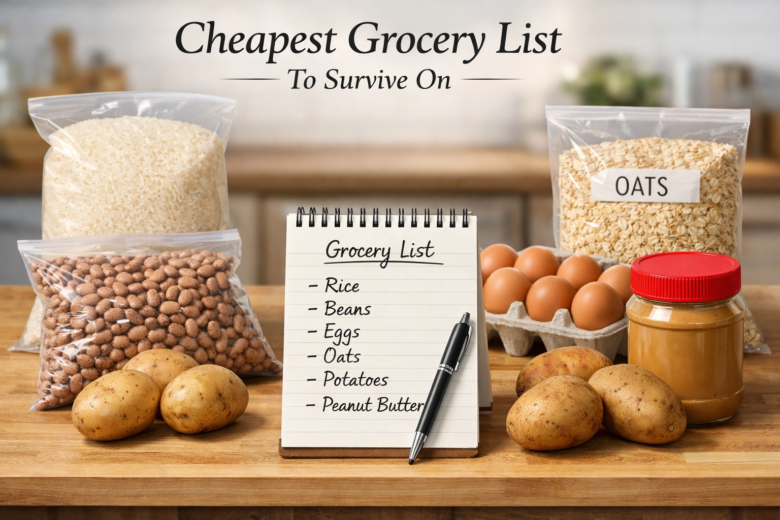
Cheapest Grocery List to Survive On
A nutritionally complete, practical grocery list for extreme budgeting — built around foods that deliver maximum nourishment per dollar spent.
The three pillars of budget nutrition
Eating healthy on a tight budget is entirely achievable. The trick is building your list around foods that punch above their weight — cheap per calorie, long shelf lives, and genuinely nutritious. These three pillars form the foundation of frugal, healthy eating.
The cheapest nutritionally complete grocery list
Monthly shopping list — estimated quantities for one person
This table provides approximate quantities for one person over one month on an extreme budget of $60–70. Adjust quantities based on your local prices and appetite. Buying dry/bulk versions of legumes and grains will bring totals toward the lower end.
| Item | Quantity (approx.) | Notes |
|---|---|---|
| 🌾 Grains & Legumes | ||
| Brown rice | 8 lbs | Essential for carbs and complete protein when paired with beans |
| Dry beans (pinto, black) | 8 lbs | Cheaper than canned — great source of protein and fibre |
| Rolled oats | 2–3 lbs | For breakfast, snacks, or as a thickener in savoury dishes |
| Whole wheat pasta | 2–3 lbs | Affordable and very versatile |
| 🥦 Vegetables | ||
| Potatoes (russet / sweet) | 5–10 lbs | Long shelf life, nutrient-dense |
| Onions | 2–3 lbs | Flavour base for nearly every dish |
| Garlic | 1–2 heads | Essential flavour enhancer |
| Green cabbage | 1–2 heads | Inexpensive — good raw and cooked |
| Carrots | 2–3 lbs | Versatile — snacking and cooking |
| Frozen mixed vegetables | 4–6 lbs | Cost-effective, nutritionally complete |
| Canned tomatoes | 4–6 cans | For sauces, soups, and stews |
| 💪 Proteins | ||
| Eggs | 2–3 dozen | Versatile, complete protein |
| Dry lentils | 1–2 lbs | High protein, high fibre, very cheap |
| Canned tuna / sardines | 4–6 cans | Protein and omega-3s |
| Peanut butter | 1 large jar | Calorie-dense protein source |
| 🧂 Fats, Oils & Seasonings | ||
| Vegetable oil | 1 bottle | For cooking — buy the largest available |
| Salt | 1 container | Lasts months — essential |
| Cumin, pepper, oregano | Small quantities | Buy cheaply in bulk or small packets |
Meal ideas using only this list
With a limited grocery list, creativity in preparation is key. Every meal below uses only items from the list above — nothing extra needed.
9 smart shopping habits that cut your bill
Beyond choosing cheap foods, disciplined shopping habits can reduce your grocery bill by as much as the food choices themselves.
-
1Meal plan before you shop — Plan your meals for the week before you leave. This creates a focused list and eliminates impulse purchases that quietly destroy a budget.
-
2Shop with a written list — Stick strictly to your list. Every unplanned item is a budget leak. No exceptions at the checkout.
-
3Buy staples in bulk — For non-perishable items like rice, beans, and oats, buying in larger quantities is almost always more cost-effective per unit.
-
4Stock up during sales — Keep an eye out for sales on non-perishables and buy extra when they’re at their lowest price. This pre-buys future meals at a discount.
-
5Cook from scratch — always — Preparing meals from basic ingredients is almost always cheaper and healthier than buying pre-made or processed food. No exceptions.
-
6Reduce meat consumption — Meat is often the most expensive item on any list. More plant-based meals lead to significant savings without sacrificing protein.
-
7Never shop hungry — Shopping on an empty stomach consistently leads to impulse purchases of less healthy and more expensive items. Eat first, always.
-
8Choose store brands over name brands — Generic products are typically cheaper and of comparable quality. For staples like beans, oats, and canned tomatoes, the brand is irrelevant.
-
9Waste nothing — Use vegetable offcuts for broth, repurpose leftover rice and beans into new meals, and freeze anything approaching the end of its life before it spoils.
The bottom line
Surviving — and eating well — on a minimal grocery budget is entirely possible with the right framework. The combination of rice, beans, eggs, lentils, and seasonal vegetables provides complete nutrition at genuinely minimal cost. Discipline at the shopping stage, creativity at the cooking stage, and a commitment to cooking from scratch are the three non-negotiables. With this list, $60–70 a month is not just survivable — it’s sustainable.