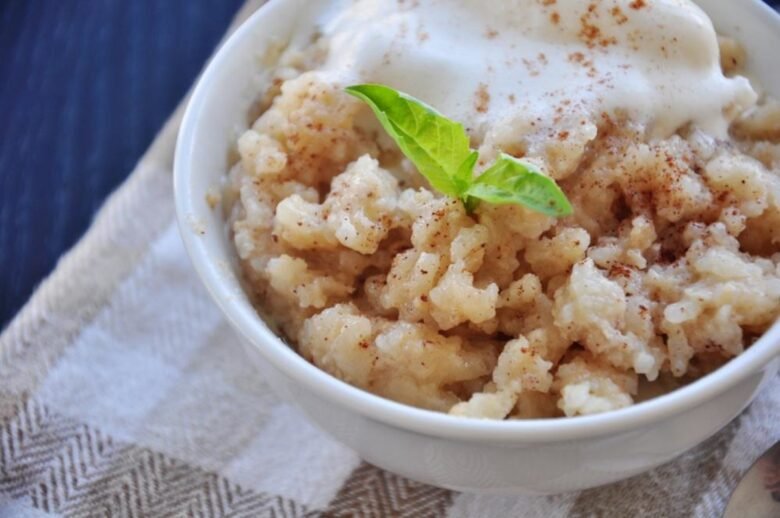
There are certain desserts that do not try to impress anyone. They do not arrive at the table with dramatic garnishes or architectural height. They do not require unusual ingredients or specialized equipment or a weekend afternoon of focused effort. They simply exist — warm, creamy, gently sweet, and deeply comforting in a way that more elaborate desserts rarely manage.
Old-fashioned rice pudding is one of those desserts. It has been made in home kitchens for centuries, across cultures and continents, in versions that vary slightly by country and family but all share the same essential character: soft rice suspended in a creamy, vanilla-scented milk custard, sweetened just enough, warm from the pot, possibly with a dusting of cinnamon on top. It is nursery food and comfort food and one of the simplest pleasures that a kitchen can produce.
The slow cooker is, without any exaggeration, the ideal vessel for rice pudding. Traditional stovetop rice pudding requires constant stirring and careful heat management to prevent the milk from scorching and the rice from sticking — it is not difficult, but it demands your attention for an extended period of time. In the slow cooker, the gentle, even heat does all the work automatically. The milk never scorches. The rice never sticks. You stir it a few times over the course of a few hours and end up with something that tastes like it required a great deal more care than it actually did.
This is the kind of recipe that belongs in every home cook’s regular rotation — weeknight dessert, weekend breakfast, late-night bowl eaten standing at the kitchen counter. All perfectly acceptable ways to enjoy it.
The History of Rice Pudding
Rice pudding is one of the oldest and most widely made desserts in the world. Its origins trace back thousands of years to Asia, where rice was first cultivated, and versions of it appear in the culinary traditions of almost every culture that has had access to rice and dairy — or, in cultures without dairy, to rice and coconut milk.
In ancient China and India, rice cooked in milk with sugar and spices was used as both food and medicine, prescribed for convalescents and the weak for its gentle, easily digestible nourishment. Arab traders carried rice into the Mediterranean and Middle East, where it became a staple sweet dish flavored with rosewater and cinnamon. European versions developed through the medieval period — English rice pudding baked in the oven, French riz au lait simmered on the stovetop, German Milchreis, Scandinavian risgrøt eaten at Christmas.
In America, rice pudding became a fixture of home cooking from the colonial period onward, made in every household as a practical, economical way to stretch milk and rice into a satisfying dessert or breakfast. The old-fashioned version — long-cooked, creamy, gently sweet, and spiced with nutmeg and cinnamon — is the one that most people mean when they say rice pudding, and it is the one that this recipe recreates as faithfully as a slow cooker can manage.
The Right Rice
Rice selection makes a genuine difference to the texture of the finished pudding, and it is worth understanding why before you start.
Short-grain white rice is the traditional choice for rice pudding and the best one. Short-grain rice — arborio, carnaroli, or simply labeled “short-grain white rice” — has a higher starch content than long-grain rice. As it cooks, it releases that starch into the surrounding liquid, naturally thickening the pudding and creating the creamy, slightly sticky texture that is characteristic of a great rice pudding. It is the same principle that makes arborio rice produce creamy risotto.
Medium-grain white rice is a good second choice — slightly less starchy than short-grain but still produces a creamy, cohesive pudding.
Long-grain white rice (basmati, jasmine) is the least ideal choice for rice pudding. Its lower starch content means the pudding will be thinner and the rice grains will stay more separate rather than melding into the creamy mass that defines a great rice pudding. If this is all you have, it will work — but use slightly less liquid and expect a thinner result.
Do not rinse the rice before using. Rinsing removes surface starch, which is precisely what you want retained to thicken the pudding naturally. Add the rice unwashed directly to the slow cooker.
The Dairy
Rice pudding is a dairy-forward recipe and the milk you use determines the richness and body of the finished pudding.
Whole milk is the baseline and minimum for a good rice pudding. Do not use low-fat or skim milk — they do not have enough fat to produce a creamy, rich pudding and will give you a thin, watery result that lacks body and flavor.
A combination of whole milk and heavy cream is the upgrade and it produces a noticeably richer, more luxurious pudding. The heavy cream contributes fat that keeps the pudding silky and prevents it from becoming gluey as it cools. Start with a mostly whole milk base and add a generous splash of heavy cream for richness without making the pudding too heavy.
Evaporated milk is the traditional secret ingredient in old-fashioned rice pudding recipes and for good reason. Evaporated milk has had roughly half its water removed, which concentrates the milk proteins and sugars and produces a deeper, slightly caramel-like milk flavor that fresh milk alone cannot replicate. A can of evaporated milk added to the slow cooker alongside the whole milk gives the pudding a depth and sweetness that makes it taste cooked for longer than it was.
Sweetened condensed milk is a different product entirely — it is thick, very sweet, and not interchangeable with evaporated milk. Do not substitute one for the other.
The Flavorings
Old-fashioned rice pudding does not need a long list of flavorings. The combination of vanilla, cinnamon, and nutmeg has been producing perfect rice pudding for centuries and it needs no improvement — only proper execution.
Vanilla is the most important flavoring in the pudding. Use a full teaspoon of pure vanilla extract, added at the end of cooking rather than the beginning — vanilla loses much of its aromatic complexity when cooked for extended periods. For an exceptional pudding, use a whole vanilla bean instead: split it lengthwise, scrape the seeds into the milk, and add the pod to the slow cooker during cooking, removing it before serving.
Cinnamon can go into the pudding during cooking for a background warmth, or be dusted over the top of each serving for a more pronounced, fresh cinnamon flavor, or both. Ground cinnamon stirred into the pudding integrates fully and subtly; a Ceylon cinnamon stick added to the slow cooker during cooking infuses a more delicate, floral cinnamon flavor into the milk. A generous dusting of freshly ground cinnamon over each bowl at serving is, in this writer’s opinion, non-negotiable.
Nutmeg is the supporting spice that most people associate with old-fashioned rice pudding. Just a small amount — ¼ teaspoon — adds a warm, slightly sweet depth that is difficult to identify but immediately noticed in its absence. Freshly grated nutmeg is dramatically more fragrant than pre-ground — if you have a whole nutmeg and a microplane, use them.
Lemon zest is an optional addition that brightens the pudding with a light citrus note. Added during cooking, it fades into the background and adds freshness without dominating. It is traditional in some European versions and worth trying if you have a lemon on hand.
Tips for Perfect Slow Cooker Rice Pudding
1. Stir regularly — especially in the first hour. Unlike most slow cooker recipes, rice pudding benefits from being stirred every 30–45 minutes during cooking. The milk and rice need movement to cook evenly and prevent the rice at the bottom of the insert from overcooking before the rest of the pudding is done. Once the rice is tender and the pudding has thickened, you can leave it on WARM with less attention.
2. Add the vanilla at the end. Vanilla loses its aromatic compounds during long cooking. Stir it in during the last 15–20 minutes of cooking — or right before serving — to preserve its fragrance and flavor fully.
3. The pudding will thicken as it cools. Fresh from the slow cooker, the pudding will seem thinner than you expect. As it cools — even just 10 minutes of resting — the starch from the rice continues to set and the pudding thickens significantly. If you are serving it warm, let it rest briefly. If serving cold, it will be considerably thicker and will likely need a splash of milk stirred in to loosen it back to the right consistency.
4. Do not cook on HIGH. HIGH heat can cause the milk to scorch on the sides of the insert and creates an uneven cooking environment that leads to mushy rice on the bottom and undercooked rice at the top. LOW heat only — slow, patient, and perfectly even.
5. Use the right size slow cooker. Rice pudding expands significantly during cooking as the rice absorbs the milk. Do not fill the slow cooker insert more than halfway at the start. A 4-quart or 6-quart slow cooker works well for this recipe.
6. Taste and adjust before serving. The sweetness of rice pudding is very much a matter of personal preference. Taste the pudding when it is nearly done and add more sugar if needed. Some people like their rice pudding quite sweet; others prefer a barely-sweetened version where the creamy milk flavor dominates.
7. Serve with a pool of cream. The old-fashioned way to serve warm rice pudding — a generous spoonful into a bowl, a splash of cold heavy cream poured around the edge that slowly bleeds into the warm pudding — is still the best way. The contrast of temperatures and the richness of the cream against the warm, gentle pudding is one of the great simple pleasures.
Serving: Warm vs Cold
Rice pudding is excellent at every temperature and the experience is genuinely different each way.
Warm, fresh from the slow cooker: looser, more flowing, the vanilla and cinnamon more fragrant, the rice grains still distinct and soft. Serve in bowls with cold cream poured around the edge and a generous dusting of cinnamon.
Room temperature: the pudding has set slightly, the flavors have mellowed and melded. A good middle ground if serving at a dinner party.
Cold, from the fridge: thick, dense, and creamy in a way that warm rice pudding is not. Many people prefer cold rice pudding — it has an almost solid, spoonable texture and the flavor is concentrated and deeply milky. Stir in a splash of cold milk or cream to loosen before serving if it has set too thick overnight.
Easy Variations
- Coconut rice pudding. Replace the whole milk with full-fat coconut milk and the heavy cream with coconut cream. Add a strip of lime zest during cooking and top with toasted shredded coconut. Dairy-free, tropical, and genuinely spectacular.
- Chocolate rice pudding. Stir 3 tablespoons of Dutch-process cocoa powder and an extra tablespoon of sugar into the milk before cooking. Add 2 oz of chopped dark chocolate in the last 30 minutes of cooking, stirring until melted. Serve with whipped cream.
- Rosewater and cardamom. Replace the vanilla with ½ teaspoon of rosewater and add ¼ teaspoon of ground cardamom. Top with crushed pistachios and a few dried rose petals. A Middle Eastern-inspired version that is beautiful and fragrant.
- Pumpkin spice. Stir ¼ cup of pumpkin puree and ½ teaspoon of pumpkin pie spice into the pudding in the last 30 minutes of cooking. Top with whipped cream and a sprinkle of cinnamon.
- Rum raisin. Soak ¼ cup of raisins in 2 tablespoons of dark rum for 30 minutes, then stir into the pudding in the last 30 minutes of cooking. The rum-soaked raisins plump into little jewels throughout the creamy pudding.
- Salted caramel drizzle. Make or use store-bought caramel sauce, add a generous pinch of flaky salt, and drizzle over the warm pudding instead of cinnamon. A modern variation that is unexpectedly wonderful.
Make-Ahead and Storage
Refrigerator: Rice pudding keeps beautifully in an airtight container for up to 4 days in the fridge. It thickens considerably as it chills — stir in a splash of whole milk or cream and let it come to room temperature for 15 minutes before serving, or reheat gently in a saucepan over low heat with a splash of milk, stirring constantly.
Freezer: Rice pudding can be frozen for up to 2 months. The texture changes slightly after thawing — the rice can become slightly grainy — but it is still perfectly good. Thaw overnight in the fridge and reheat with extra milk.
Make-ahead: This pudding is an ideal make-ahead dessert. Make it the day before, refrigerate, and bring it back to life with a gentle reheat and fresh milk before serving. It is arguably better on day two than day one.
What to Serve Alongside
Rice pudding is a complete dessert on its own. It needs nothing — but a few additions elevate it.
- A pool of cold heavy cream poured around the warm pudding — the classic and correct accompaniment
- Fresh or poached fruit — warm spiced pears, poached plums, or fresh raspberries cut through the creaminess beautifully
- A spoonful of jam — raspberry, strawberry, or apricot stirred through the cold pudding is a childhood classic in many households
- Toasted nuts — chopped pistachios, toasted almonds, or candied walnuts add crunch against the creamy pudding
- A drizzle of honey — particularly good with the coconut or rosewater variation
Shopping List
Simple, inexpensive, and mostly pantry staples.
Rice & Dairy
- 1 cup (200g) short-grain white rice (arborio works perfectly) — do not rinse
- 3 cups (720ml) whole milk
- 1 cup (240ml) heavy cream
- 1 can (12 oz / 354ml) evaporated milk
- 2 tbsp unsalted butter
Sweeteners & Flavoring
- ⅓ cup (65g) granulated white sugar (adjust to taste)
- 1 tsp pure vanilla extract (added at the end)
- Optional: 1 vanilla bean, split and scraped
Spices
- 1 tsp ground cinnamon (plus extra for serving)
- ¼ tsp freshly grated nutmeg (or ground nutmeg)
- Optional: 1 Ceylon cinnamon stick (for infusing during cooking)
- Optional: zest of 1 lemon
For Serving
- Extra cold heavy cream for pouring
- Ground cinnamon for dusting
- Optional: fresh raspberries, poached pears, or a spoonful of jam
- Optional: toasted chopped pistachios or almonds
Slow Cooker Rice Pudding (Old-Fashioned)
An old-fashioned, deeply creamy slow cooker rice pudding made the unhurried way — short-grain rice cooked slowly in whole milk, heavy cream, and evaporated milk until perfectly tender and suspended in a rich vanilla-cinnamon custard. Gentle, gently sweet, and comforting in a way that more complicated desserts rarely manage. Serve warm with cold cream poured around the edge and a dusting of freshly grated nutmeg, or cold from the fridge spooned straight from the bowl.
- Total Time: 3 hours 15 minutes
- Yield: 6–8 servings 1x
Ingredients
The Pudding
- 1 cup (200g) short-grain white rice (arborio or short-grain), unrinsed
- 3 cups (720ml) whole milk
- 1 cup (240ml) heavy cream
- 1 can (12 oz / 354ml) evaporated milk
- ⅓ cup (65g) granulated white sugar
- 2 tbsp unsalted butter, cut into pieces
- 1 tsp ground cinnamon
- ¼ tsp freshly grated nutmeg (or ground nutmeg)
- Pinch of salt
- Optional: 1 Ceylon cinnamon stick
- Optional: zest of 1 lemon
Added at the End
- 1 tsp pure vanilla extract
For Serving
- Cold heavy cream, for pouring
- Ground cinnamon, for dusting
- Optional: fresh raspberries, a spoonful of jam, toasted pistachios, or a drizzle of honey
Instructions
- Combine the base ingredients. Add the unrinsed short-grain rice, whole milk, heavy cream, evaporated milk, sugar, butter pieces, ground cinnamon, nutmeg, and salt to the slow cooker. Add the cinnamon stick and lemon zest if using. Stir well to combine and dissolve the sugar.
- Cook on LOW. Set the slow cooker to LOW. Cook for 2.5 to 3.5 hours, stirring every 30–45 minutes, until the rice is completely tender and has absorbed most of the liquid, and the pudding has thickened to a creamy, porridge-like consistency. The pudding should coat the back of a spoon and flow slowly when the insert is tilted.
- Check consistency and adjust. At the 2.5-hour mark, taste the rice — it should be soft all the way through with no chalky center. If it still has bite, continue cooking and check every 20 minutes. If the pudding seems too thick, stir in a splash of warm milk to loosen.
- Add the vanilla. Stir in the vanilla extract during the last 15–20 minutes of cooking, or right before serving, to preserve its aroma. Remove the cinnamon stick if used.
- Rest before serving. Turn off the slow cooker and let the pudding rest for 10 minutes with the lid slightly ajar. It will thicken further as it rests. Stir once more before serving.
- Serve warm. Spoon the warm pudding into bowls. Pour a small amount of cold heavy cream around the edge of each bowl. Dust generously with ground cinnamon and freshly grated nutmeg. Add any optional toppings. Serve immediately.
- Or serve cold. Allow the pudding to cool to room temperature, then transfer to an airtight container and refrigerate for at least 2 hours or overnight. Before serving cold, stir well and add a splash of cold milk or cream to loosen to your preferred consistency. Dust with cinnamon before serving.
Notes
- Do not rinse the rice. The surface starch on unwashed short-grain rice is what naturally thickens the pudding as it cooks. Rinsing removes it and produces a thinner, less creamy result.
- Stir regularly. Unlike most slow cooker recipes, rice pudding needs stirring every 30–45 minutes to ensure even cooking and prevent the bottom layer from overcooking. Set a timer so you don’t forget.
- LOW heat only. HIGH heat can cause the milk to scorch against the sides of the insert and creates uneven cooking. LOW, slow, and patient is the only way.
- The pudding thickens as it cools. Fresh from the slow cooker it will seem looser than expected — this is correct. It thickens significantly as it rests and even more as it chills in the fridge. Serve warm for a flowing, creamy pudding; serve cold for a thick, dense, spoonable pudding.
- Evaporated milk is the secret. The concentrated milk sugars and proteins in evaporated milk give old-fashioned rice pudding its characteristic depth and slight caramel undertone. Do not substitute with regular milk — the depth of flavor is noticeably different.
- Vanilla at the end. Vanilla loses its fragrance during long, slow cooking. Adding it in the last 15 minutes or right before serving keeps it bright and aromatic in the finished pudding.
- Sweetness is personal. The ⅓ cup of sugar produces a pudding that is gently sweet — enough to taste like dessert but restrained enough to let the milk and vanilla flavors dominate. Increase to ½ cup for a sweeter pudding, or reduce to ¼ cup for a very lightly sweetened version.
- Prep Time: 5 minutes
- Cook Time: 3 hours (on LOW)
- Category: Breakfast, Dessert
- Method: Slow Cooking
- Cuisine: American
- Diet: Gluten-Free, Vegetarian