
There is a particular kind of weekend morning magic that happens when the smell of cinnamon and warm bread fills the house before anyone is fully awake. It is the kind of smell that pulls people out of bed without an alarm, brings everyone to the kitchen in their pajamas, and sets the tone for a slow, happy day. Cinnamon rolls do that better than almost anything else.
The problem with traditional cinnamon rolls is the effort. The dough has to be made and kneaded. It has to rise, sometimes twice. It has to be rolled, filled, sliced, and baked at the right temperature at the right time. On a weekday morning it is simply not happening, and even on a weekend it requires more planning and focus than most people want to give a breakfast before their first cup of coffee.
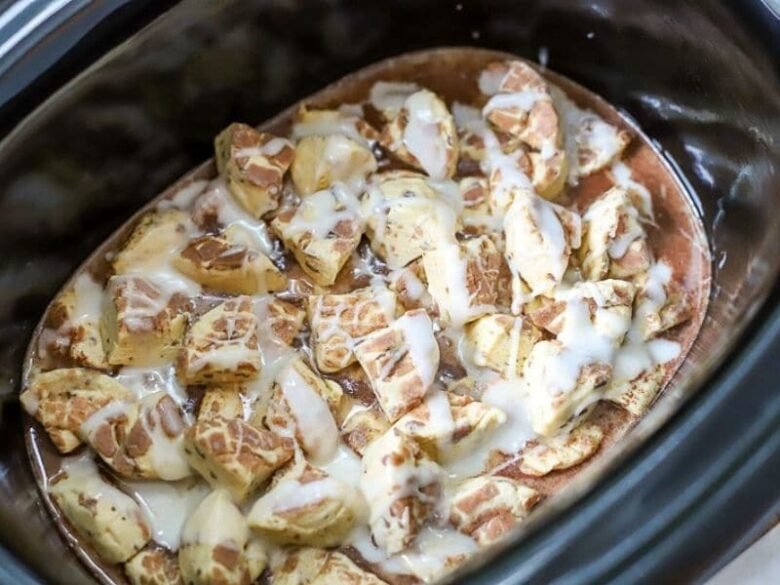
This slow cooker cinnamon roll casserole solves that problem completely. It uses store-bought canned cinnamon rolls as the base — the kind that come in a tube, pop open with a satisfying snap, and take about thirty seconds to prepare. They go into the slow cooker with a simple custard mixture poured over the top, cook low and slow overnight or in the morning while you do other things, and emerge as something that is genuinely greater than the sum of its parts: a pull-apart, bread pudding-style casserole that is soft and custardy on the inside, caramelized at the edges, and finished with the icing that came in the tube drizzled generously over the top.
It is the kind of breakfast that makes guests think you were up hours earlier than you were. It is also an outrageously good dessert.
Why This Recipe Works So Well
The magic of this casserole lies in what happens when canned cinnamon roll dough meets a custard mixture in the low, even heat of a slow cooker.
On their own, baked canned cinnamon rolls are fine — soft, sweet, and convenient. But baking them in a conventional oven produces a result that is fairly uniform: bread-like in texture, slightly dry around the edges, with the filling baked tightly inside each individual roll.
In the slow cooker with a custard poured over them, something much better happens. The custard — made from eggs, heavy cream, milk, brown sugar, vanilla, and cinnamon — seeps between and around the roll pieces during cooking, soaking into the dough and transforming it. The rolls absorb the custard and puff gently in the humid slow cooker heat, becoming impossibly soft and almost pillowy in the center. The bottom layer caramelizes slightly against the insert, creating a golden, slightly crisp base. The cinnamon from the rolls and the spiced custard meld into each other, intensifying into something that smells and tastes like the very best version of a cinnamon roll imaginable.
The result sits somewhere between cinnamon rolls, French toast casserole, and bread pudding — and it is better than any of them individually.
The Cinnamon Rolls
This recipe is designed around canned refrigerator cinnamon rolls — specifically the larger variety that come in tubes of five or eight rolls (Pillsbury Grands are the most widely available and work perfectly). The filling is already built in, the dough is ready to go, and the icing comes included.
A few notes on the canned roll options:
Pillsbury Grands Cinnamon Rolls are the first choice. They are large, generously filled, and produce a substantial, pull-apart casserole. One tube of five rolls is the minimum for a standard 6-quart slow cooker; two tubes gives you a more substantial casserole that feeds a larger crowd.
Regular-sized Pillsbury Cinnamon Rolls (the smaller tubes of eight) work well for a thinner, more bread pudding-like result. Use two tubes.
Homemade cinnamon roll dough can absolutely be used here if you have it. Cut it into rough 1.5-inch pieces rather than rolling and slicing the traditional way. The slow cooker and custard will do the rest.
Cinnamon roll alternatives: This method works beautifully with other canned sweet rolls — orange rolls, caramel rolls, or even canned biscuits with a cinnamon sugar toss before going into the slow cooker.
Cut each canned roll into quarters before placing them in the slow cooker. This increases the surface area exposed to the custard, ensures even custard absorption throughout, and makes the finished casserole easier to serve and eat.
The Custard
The custard is what elevates this from reheated canned rolls to something genuinely special. It is a simple mixture — eggs, heavy cream, whole milk, brown sugar, vanilla, cinnamon, and a pinch of nutmeg and salt — but it transforms during cooking into a creamy, set custard that fills every gap between the roll pieces and makes the whole casserole cohesive and rich.
The egg-to-cream ratio determines how set and custardy the finished casserole is. More eggs produce a firmer set that slices cleanly. Fewer eggs produce a looser, more saucy result that is closer to a bread pudding. This recipe uses a ratio that produces a casserole that is set enough to scoop and serve cleanly but still soft and creamy in the center — the ideal middle ground.
Brown sugar rather than white in the custard adds a molasses note that deepens the cinnamon flavor and caramelizes beautifully at the edges of the casserole during cooking.
Heavy cream is what makes the custard rich and silky. You can substitute whole milk for half of the heavy cream to lighten it slightly, but do not use low-fat milk — the custard will be watery and will not set properly.
Vanilla extract is essential. Use pure vanilla, not imitation, and use a full teaspoon — the vanilla carries warmth through the custard and ties the cinnamon and cream together.
A pinch of cardamom is an optional addition that is worth knowing about. Cardamom has a floral, slightly citrusy warmth that pairs extraordinarily well with cinnamon and vanilla. A small amount — just ⅛ of a teaspoon — adds a complexity to the custard that makes people wonder what the secret ingredient is without ever being able to identify it.
The Icing
The icing that comes in the canned rolls tube is exactly the right amount for this casserole and should be used without hesitation. It is sweet, slightly thick, and melts partially into the warm casserole when drizzled over the top — creating streaks of white icing against the golden-brown surface that look as good as they taste.
Drizzle the icing while the casserole is still warm from the slow cooker, not piping hot and not fully cooled. At the right temperature, the icing softens and runs slightly without disappearing completely — giving you that classic cinnamon roll icing look across the whole surface.
If you want more icing than the tube provides — and it is hard to have too much icing on a cinnamon roll casserole — a simple cream cheese glaze made from cream cheese, powdered sugar, vanilla, and a splash of milk can be drizzled over the top in addition to or instead of the tube icing. It is richer, slightly tangy, and takes the casserole firmly into dessert territory.
The Cream Cheese Glaze (Optional but Exceptional)
If you want to take this casserole to the next level, make the cream cheese glaze instead of using the tube icing. It takes five minutes and makes the casserole taste like it came from a bakery.
Combine 4 oz of softened cream cheese with 1 cup of powdered sugar, 2 tablespoons of milk, and ½ teaspoon of vanilla extract. Beat until smooth, then drizzle over the warm casserole. The cream cheese adds a slight tang that cuts through the sweetness of the casserole and creates that signature Cinnabon-style flavor that is almost impossible to resist.
Tips for the Best Cinnamon Roll Casserole
1. Grease the slow cooker insert generously. The sugar in the custard and the dough caramelizes against the insert during cooking and will stick if the surface is not well greased. Use butter or cooking spray applied generously to the bottom and all the way up the sides. Do not skip this step.
2. Cut the rolls into quarters. Quartered rolls absorb more custard, cook more evenly, and pull apart into beautiful individual pieces when serving. Whole rolls cook unevenly — the outside absorbs all the custard while the inside stays doughy.
3. Let the custard soak in before cooking. After pouring the custard over the roll pieces, press the pieces down gently with a spatula and let them sit for 10–15 minutes before turning the slow cooker on. This gives the custard time to begin soaking into the dough before heat is applied and produces a more evenly saturated final result.
4. Use the paper towel trick. For the fourth time across these dessert recipes — two sheets of paper towels under the lid absorbs condensation and prevents it from dripping onto the surface of the casserole during cooking. Without this, the top of the casserole can become wet and soggy instead of soft and set.
5. Check at the 2-hour mark on HIGH. Slow cookers vary in temperature and the cooking time for this casserole can range from 2 to 3 hours on HIGH or 3 to 4 hours on LOW. Start checking at 2 hours. The casserole is done when the custard is set (not wet or liquid when a knife is inserted in the center) and the edges are golden and slightly pulling away from the sides.
6. Do not cook past the set point. Overcooked custard becomes rubbery and dry rather than silky and creamy. Once the custard is set in the center, turn off the slow cooker immediately — the residual heat will hold it warm without overcooking.
7. Rest for 10 minutes before icing. Let the casserole sit for 10 minutes after cooking before drizzling the icing. This allows the custard to firm up slightly and prevents the icing from simply melting off and pooling at the edges.
The Overnight Option
One of the greatest things about this recipe is the overnight option — and it is exactly as convenient as it sounds.
The night before, cut the roll pieces and arrange them in the greased slow cooker insert. Make the custard and pour it over. Cover and refrigerate the entire insert overnight (most slow cooker inserts are fridge-safe — check your model). In the morning, pull the insert from the fridge, let it sit at room temperature for 20 minutes to take the chill off, then place it in the slow cooker base and cook as directed.
The overnight soak transforms the casserole even further — the roll pieces absorb the custard completely during the overnight rest, producing an exceptionally moist, custardy result that is even better than the same-day version. Weekend breakfast practically makes itself.
Easy Variations
- Apple cinnamon. Toss 1 cup of peeled, diced apple with 1 tablespoon of brown sugar and ½ teaspoon of cinnamon. Layer the apple pieces between the roll quarters before adding the custard. The apple softens during cooking and pairs beautifully with the cinnamon roll flavor.
- Pumpkin spice. Add ¼ cup of pumpkin puree and ½ teaspoon of pumpkin pie spice to the custard mixture for an autumn variation. Replace the tube icing with a cream cheese glaze.
- Peach and cream. Tuck ½ cup of sliced fresh or canned peaches between the roll pieces before adding the custard. Top with the cream cheese glaze.
- Chocolate chip. Scatter ½ cup of mini chocolate chips over the roll pieces before pouring the custard. They melt into the casserole during cooking for a chocolate-cinnamon combination.
- Maple bacon. Add 4 strips of cooked, crumbled crispy bacon to the roll pieces before the custard. Swap the tube icing for a maple glaze made from powdered sugar and pure maple syrup. The sweet-salty-smoky combination is extraordinary.
- Blueberry lemon. Toss ½ cup of blueberries with 1 teaspoon of lemon zest and scatter over the rolls before adding the custard. Replace the tube icing with a simple lemon glaze.
What to Serve Alongside
This casserole is a complete breakfast or brunch centerpiece on its own, but a few simple sides round out the spread.
- Fresh fruit salad — something cool and bright to balance the richness of the casserole
- Crispy bacon or breakfast sausage — the saltiness contrasts perfectly with the sweet rolls
- Scrambled eggs — for a more substantial brunch spread
- Good coffee or a café au lait — essentially mandatory
- Fresh orange juice — the acidity cuts through the richness beautifully
- A mimosa — for weekend brunch occasions where the situation calls for it
Make-Ahead and Storage
Overnight (best option): Prepare the casserole the night before through step 4, cover, and refrigerate. Cook fresh in the morning.
Refrigerator: Leftover casserole keeps covered in the fridge for up to 3 days. Reheat individual portions in the microwave for 45–60 seconds. Add a small drizzle of fresh icing or maple syrup before reheating to restore moisture.
Freezer: The cooked casserole can be frozen in individual portions for up to 2 months. Wrap tightly, freeze solid, then thaw overnight in the fridge and reheat in the microwave or covered in a 325°F oven for 15 minutes.
Shopping List
Everything you need — most of which you likely already have.
The Base
- 2 tubes (12.4 oz each) Pillsbury Grands Cinnamon Rolls (includes icing packets)
- OR 2 tubes regular-sized Pillsbury Cinnamon Rolls
Dairy & Eggs
- 3 large eggs
- ½ cup (120ml) heavy cream
- ½ cup (120ml) whole milk
- 2 tbsp unsalted butter (for greasing the insert)
- Optional for cream cheese glaze: 4 oz cream cheese, softened
Pantry
- ¼ cup (50g) packed brown sugar
- 1 tsp pure vanilla extract
- 1 tbsp pure maple syrup (optional, adds depth to the custard)
- Optional for cream cheese glaze: 1 cup powdered sugar, 2 tbsp milk
Spices
- 1½ tsp ground cinnamon
- ¼ tsp ground nutmeg
- ⅛ tsp ground cardamom (optional but wonderful)
- Pinch of salt
Equipment
- Paper towels (for the condensation trick)
- Cooking spray or extra butter (for greasing)
Optional Toppings
- Pure maple syrup for drizzling
- Chopped toasted pecans or walnuts
- Powdered sugar for dusting
- Fresh berries for serving alongside
Slow Cooker Cinnamon Roll Casserole
A warm, pull-apart cinnamon roll breakfast casserole made entirely in the slow cooker — pillowy pieces of canned cinnamon roll dough soaked in a rich vanilla-cinnamon custard, slow-cooked until soft and custardy on the inside with caramelized golden edges, and finished with a generous drizzle of sweet icing. Somewhere between cinnamon rolls, French toast casserole, and bread pudding — and better than all three. Prepare it the night before for an effortless, crowd-feeding morning.
- Total Time: 3 hours (or overnight + 3 hours)
- Yield: 8 – 10 servings 1x
Ingredients
The Base
- 2 tubes (12.4 oz each) Pillsbury Grands Cinnamon Rolls, each roll cut into quarters (icing packets reserved)
The Custard
- 3 large eggs
- ½ cup (120ml) heavy cream
- ½ cup (120ml) whole milk
- ¼ cup (50g) packed brown sugar
- 1 tbsp pure maple syrup (optional)
- 1 tsp pure vanilla extract
- 1½ tsp ground cinnamon
- ¼ tsp ground nutmeg
- ⅛ tsp ground cardamom (optional)
- Pinch of salt
For the Insert
- 2 tbsp unsalted butter, softened (for greasing)
The Icing
- Reserved icing packets from the cinnamon roll tubes
- Optional cream cheese glaze: 4 oz cream cheese (softened) + 1 cup powdered sugar + 2 tbsp milk + ½ tsp vanilla
Optional Toppings
- Chopped toasted pecans or walnuts
- A drizzle of pure maple syrup
- Fresh berries for serving alongside
Instructions
- Grease the slow cooker. Use the softened butter to generously grease the bottom and all the way up the sides of the slow cooker insert. Be thorough — the caramelizing sugar will stick to any ungreased spots.
- Cut the rolls. Open the cinnamon roll tubes and separate the rolls. Cut each roll into quarters using a sharp knife or kitchen scissors. Place the pieces in a large bowl. Reserve the icing packets.
- Make the custard. In a medium bowl or large jug, whisk together the eggs, heavy cream, whole milk, brown sugar, maple syrup (if using), vanilla extract, cinnamon, nutmeg, cardamom (if using), and salt until smooth and fully combined.
- Assemble. Arrange the quartered roll pieces evenly in the greased slow cooker insert. Pour the custard mixture evenly over the top, making sure it reaches all areas. Press the roll pieces down gently with a spatula so they begin absorbing the custard. Allow to sit for 10–15 minutes (or cover and refrigerate overnight at this point for the overnight option).
- Set up the slow cooker. Lay 2 full sheets of paper towels flat across the top of the slow cooker opening. Place the lid on top of the paper towels, securing them between the lid and the rim.
- Cook. Set the slow cooker to HIGH and cook for 2 to 3 hours, or set to LOW and cook for 3 to 4 hours, without lifting the lid. The casserole is done when the custard is fully set (a knife inserted in the center comes out clean rather than wet), the edges are golden and slightly caramelized, and the top has a set, matte appearance.
- Rest. Turn off the slow cooker and let the casserole rest with the lid slightly ajar for 10 minutes. This allows the custard to firm up slightly and makes serving much easier.
- Make the cream cheese glaze (if using). Beat the softened cream cheese until smooth. Add powdered sugar, milk, and vanilla and beat until a smooth, drizzleable glaze forms. Add more milk a teaspoon at a time if needed to reach a good drizzling consistency.
- Ice and serve. Drizzle the reserved icing packets (warmed for 10 seconds in the microwave for easy drizzling) and/or the cream cheese glaze generously over the warm casserole. Scatter with chopped toasted pecans if using. Serve directly from the slow cooker, scooping portions into bowls or onto plates. Offer maple syrup alongside for anyone who wants extra sweetness.
Notes
- The overnight method is the best method. Assembling the casserole the night before and letting the roll pieces soak in the custard overnight produces a noticeably more moist, evenly saturated result than the same-day version. It also makes morning completely effortless — pull the insert from the fridge, let it sit 20 minutes, and cook.
- Grease generously and thoroughly. The brown sugar in the custard caramelizes against the insert during cooking and will stick aggressively to any ungreased spots. Use butter rubbed into every corner and surface.
- Cut the rolls into quarters. Whole or halved rolls do not absorb the custard evenly and the interiors can remain doughy. Quartered pieces have maximum surface area for custard absorption and cook perfectly all the way through.
- Paper towels under the lid are essential. Condensation dripping from the lid creates wet patches on the surface of the casserole that are difficult to bake out. Two sheets of paper towels solve this completely.
- Do not overcook. Once the custard is set in the center, the casserole is done. Continuing to cook past this point dries out the custard and makes the roll pieces tough. Use the knife test rather than a fixed time.
- The cardamom is worth trying. Just ⅛ teaspoon adds a mysterious floral warmth that makes people ask what the secret ingredient is. It is completely unidentifiable at this quantity but its effect on the overall flavor is significant.
- Both icing and cream cheese glaze? Yes. There is no law against using both. Drizzle the tube icing first, then drizzle the cream cheese glaze over the top. For a special occasion, this is the move.
- Prep Time: 15 minutes
- Cook Time: 2 hours 30 minutes (on HIGH)
- Category: Breakfast, Dessert
- Method: Slow Cooking
- Cuisine: American
- Diet: Vegetarian