
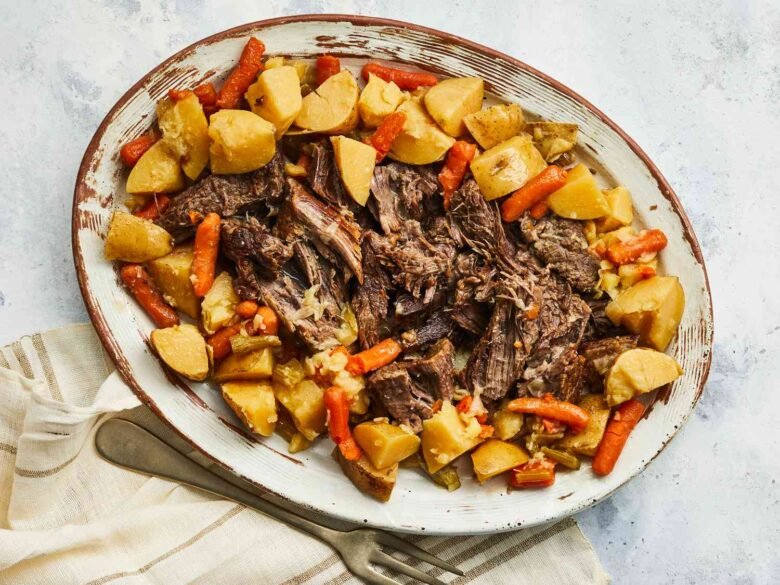
There are dinners that require skill, timing, and attention. Pot roast is not one of them — or at least, it doesn’t have to be. This version requires about ten minutes of hands-on work, a handful of pantry staples, and a slow cooker. What it produces eight hours later is one of the great comfort meals: a deeply bronzed chuck roast that falls apart at the touch of a fork, surrounded by carrots and potatoes that have spent the day absorbing the richest, most flavorful braising liquid you’ve ever made without actually trying to.
The secret is the sear. Five minutes in a hot skillet before the meat goes into the slow cooker creates a caramelized, deeply savory crust on the chuck roast that transforms the entire dish — the braising liquid, the vegetables, and the meat itself. Skip it and the roast will still be good. Do it and the roast will be extraordinary. It is the only real effort this recipe requires and it is absolutely worth it.
Everything else is assembly. Chuck roast in the slow cooker, vegetables around it, a simple broth and seasoning mixture poured over, lid on, eight hours on LOW. Come back to the best dinner of the week.
Why Chuck Roast Is the Only Choice
Pot roast is not a cut of meat — it is a cooking technique applied to a specific kind of cut, and that kind of cut is tough, collagen-rich, and would be completely inedible if cooked any other way.
Chuck roast comes from the shoulder of the cow — a muscle group that works hard throughout the animal’s life, developing thick bands of connective tissue between the muscle fibers. That connective tissue is almost entirely collagen, and collagen has a specific property that makes it perfect for slow cooking: when held at a low temperature (around 160°F to 180°F) for a long period of time, collagen dissolves into gelatin. Gelatin is what makes the braising liquid rich and glossy rather than thin and watery. It is what makes the meat feel silky and luxurious in the mouth rather than dry and fibrous. It is what makes pull-apart pot roast possible.
A lean cut — sirloin, tenderloin, round — would be a disaster in this recipe. Low and slow cooking dries out lean meat; the same hours that transform collagen-rich chuck into something magnificent would turn a sirloin into something resembling a dry eraser. Do not substitute. Chuck roast, always.
Look for a chuck roast between 3 and 4 pounds with good fat marbling throughout. The fat renders during the long cook and bastes the meat from the inside, keeping every slice moist and flavorful.
The Sear: Why It Matters and How to Do It
The Maillard reaction — the chemical process that occurs when proteins and sugars on the surface of meat are exposed to high heat — produces hundreds of flavor compounds that simply do not exist in unbrowned meat. A seared chuck roast has a completely different flavor profile than an unseared one, and that difference carries through the entire dish.
The practical consequence is this: the braising liquid of a seared roast is darker, richer, and more complex. The meat itself has a caramelized exterior that provides textural contrast to the soft interior. The entire dish tastes more deeply savory and less like something that was simply warmed in a pot of liquid.
How to sear properly: Pat the roast completely dry with paper towels — moisture is the enemy of browning. Season aggressively on all sides with salt and pepper. Heat a cast iron skillet or heavy-bottomed pan over HIGH heat until the pan is genuinely hot, then add a tablespoon of oil with a high smoke point (vegetable, canola, avocado). Place the roast in the pan and do not move it for 3 to 4 minutes. It will stick initially, then release naturally when a proper crust has formed. Sear all four sides. The whole process takes about 12 minutes and produces a roast that looks — and tastes — like a completely different dish than one that went straight into the slow cooker raw.
Deglaze the hot pan with a splash of beef broth after the roast comes out, scraping up all the browned bits. Pour that liquid directly into the slow cooker. Those fond scraps are concentrated flavor that would otherwise be left behind on the pan.
The Vegetables
Carrots. Cut into large chunks — 2 to 3 inches. Baby carrots can be used whole. Carrots hold their structure beautifully over the long cook time, softening without falling apart, and absorb the savory braising liquid in a way that makes them taste more deeply of carrot than any other cooking method produces.
Potatoes. Yukon Gold or red potatoes, halved or quartered into large pieces. Avoid russets — their high starch content causes them to become mealy and fall apart during the long cook. Yukon Golds hold their shape and develop a creamy, almost buttery texture that is exactly right for pot roast.
Onion. One large yellow onion, cut into thick wedges. The onion essentially dissolves into the braising liquid over 8 hours, contributing a deep, sweet, savory background flavor throughout the dish.
Garlic. Four to six cloves, left whole or halved. They will soften completely during the cook and can be mashed into the braising liquid when stirring the final sauce.
Placement. Vegetables go on the bottom and sides of the slow cooker insert, with the roast placed on top. This protects the vegetables from the direct heat of the insert base and positions them in the braising liquid where they will cook evenly throughout.
The Braising Liquid
The braising liquid is what elevates a simple pot roast into something genuinely outstanding. The components are simple and mostly pantry staples, but together they create a deep, complex braising environment that the meat and vegetables spend eight hours absorbing.
Beef broth. The foundation — one cup of good beef broth provides the body and savory base of the braising liquid. Low-sodium is preferable so you can control the final salt level.
Worcestershire sauce. Two tablespoons. One of the great flavor amplifiers in cooking — deeply savory, slightly sweet, and with a complexity that comes from its combination of tamarind, anchovies, vinegar, and molasses. It makes beef taste more like itself.
Tomato paste. One tablespoon, stirred into the broth before pouring. Tomato paste contributes a deep, slightly sweet umami note and helps the braising liquid thicken and develop color during the long cook.
Dijon mustard. One tablespoon. Adds a subtle sharpness that balances the richness of the braised beef and prevents the gravy from being one-dimensionally rich.
Dried herbs. Thyme and rosemary are the classic aromatics for beef — earthy, slightly piney, and deeply savory. A teaspoon of each, dried, is sufficient. If you have fresh sprigs, lay two or three directly on top of the roast.
Garlic powder and onion powder. Rubbed directly onto the meat before searing. They build into the crust during the sear and season the roast from the outside in.
The Gravy
The braising liquid left in the slow cooker after the roast is removed is not something to discard — it is one of the best gravies you will ever make, and it requires almost no work.
Ladle the liquid through a fine-mesh sieve into a small saucepan, pressing on the softened vegetables and garlic to extract every drop of flavor. Bring to a boil over medium-high heat. For a thicker gravy, whisk together one tablespoon of cornstarch with two tablespoons of cold water, then whisk the slurry into the boiling liquid and cook for 2 minutes until thickened. Taste and adjust salt and pepper.
The result is a dark, glossy, intensely savory gravy that the pot roast absolutely does not need — and that you will want to pour over everything on the plate anyway.
Tips for the Perfect Slow Cooker Pot Roast
1. Sear the meat. Do not skip this. The single most impactful thing you can do for this recipe. Ten minutes of searing produces a roast that tastes hours more developed. If there is one step to prioritize in this recipe, it is this one.
2. Cook on LOW for 8 hours, not HIGH for 4. The math seems equivalent — and for some slow cooker recipes it is — but for chuck roast, it is absolutely not. The collagen-to-gelatin conversion that makes pot roast tender happens at a specific temperature range (around 160°F to 180°F) and requires sustained time. HIGH heat cooks the meat faster but at a higher internal temperature that can cause the muscle fibers to tighten and dry out before the collagen has fully dissolved. LOW and slow is non-negotiable for the correct result.
3. Don’t add too much liquid. The slow cooker’s sealed environment means virtually no evaporation occurs during cooking — unlike an oven braise. Add just enough liquid to come about a third of the way up the roast. The meat will release additional moisture during cooking. Too much liquid produces a thin, watery braising liquid rather than a rich, concentrated one.
4. Don’t lift the lid. Every time the lid comes off, the slow cooker loses a significant amount of heat and steam and requires 20 to 30 minutes to recover. Trust the process. The roast does not need to be checked, stirred, or basted. Leave it alone.
5. Rest before serving. Transfer the roast to a cutting board and rest for 10 minutes before pulling it apart. This allows the juices to redistribute through the meat and produces cleaner, more flavorful portions.
Serving the Pot Roast
Pot roast is a full meal in the slow cooker, but it welcomes simple accompaniments.
Crusty bread. Essential. The gravy demands something to be absorbed into, and a thick slice of good crusty bread is the answer. This is non-negotiable.
Egg noodles. Serve the pulled pot roast over buttered egg noodles with the gravy ladled over everything. One of the great cold-weather dinner combinations.
Mashed potatoes. If you prefer mashed over the chunked potatoes already in the slow cooker, serve the roast and gravy over a generous scoop of buttery mashed potatoes. The gravy pooling into the mashed potatoes is its own reward.
A simple green salad. For balance against the richness of the braised meat.
The Next Day
Cold pot roast is one of the great refrigerator discoveries. The braising liquid sets overnight into a rich, wobbly gelatin — evidence of all the collagen that dissolved during the long cook. Reheat gently on the stovetop with a splash of broth and everything comes back to life.
The leftovers also make exceptional sandwiches — pulled pot roast on a toasted roll with a smear of horseradish cream and a spoonful of the reheated gravy. If you are lucky enough to have leftovers, do not overlook this.
Easy Variations
- Red wine braise. Replace half the beef broth with a full-bodied red wine — Cabernet Sauvignon, Merlot, or Côtes du Rhône. The wine adds depth, acidity, and a slightly more sophisticated flavor profile. Use a wine you would drink.
- Mississippi pot roast. Add one packet of ranch dressing mix and one packet of au jus mix to the broth. Place a stick of butter and 6 to 8 pepperoncini peppers on top of the roast. Do not add any additional liquid. This produces a legendary, tangy, buttery variation that has taken over the slow cooker world for good reason.
- Italian pot roast. Add a can of diced tomatoes, a teaspoon of Italian seasoning, and a handful of green olives to the braising liquid. Serve over polenta or pasta.
- French onion pot roast. Replace the beef broth with French onion soup straight from the can. Layer caramelized onions over the roast before cooking. Serve with toasted bread and Gruyère melted over the top of each bowl.
- Root vegetable variation. Add parsnips, turnips, or celery root alongside the carrots and potatoes for a more complex, earthy vegetable profile.
Make-Ahead and Storage
Make-ahead: Season and sear the roast the night before, then refrigerate. In the morning, assemble the slow cooker and start cooking before you leave for the day.
Refrigerator: Leftovers keep for up to 4 days. Store the pulled meat submerged in the braising liquid to keep it moist. The liquid will set into a gelatin overnight — this is correct and desirable.
Freezer: Pot roast freezes beautifully for up to 3 months. Freeze the meat in portions with braising liquid covering it. Thaw overnight in the refrigerator and reheat gently on the stovetop with a splash of broth.
Reheating: Reheat covered in a saucepan over medium-low heat with a splash of beef broth, stirring occasionally, until heated through. Microwave on 50% power in 2-minute intervals, covered, with a tablespoon of broth added.
Shopping List
The Roast
- 1 chuck roast, 3–4 lbs (1.4–1.8 kg), well-marbled
- Salt and black pepper
- 1 tsp garlic powder
- 1 tsp onion powder
- 1 tbsp vegetable or canola oil (for searing)
The Vegetables
- 4 medium carrots, cut into 2-inch chunks (or 1 cup baby carrots)
- 1½ lbs (680g) Yukon Gold or red potatoes, halved or quartered
- 1 large yellow onion, cut into thick wedges
- 4–6 garlic cloves, whole
The Braising Liquid
- 1 cup (240ml) low-sodium beef broth
- 2 tbsp Worcestershire sauce
- 1 tbsp tomato paste
- 1 tbsp Dijon mustard
- 1 tsp dried thyme
- 1 tsp dried rosemary
- Salt and pepper to taste
Optional — For the Gravy
- 1 tbsp cornstarch
- 2 tbsp cold water
Easiest Slow Cooker Pot Roast Ever
A well-marbled chuck roast seared until deeply bronzed, then slow-cooked for 8 hours on LOW with Yukon Gold potatoes, carrots, and a rich braising liquid of beef broth, Worcestershire, tomato paste, and Dijon — emerging completely fall-apart tender, surrounded by vegetables that have spent the day absorbing the most savory braising liquid imaginable. Finished with a quick pan gravy from the reduced drippings. The easiest pot roast you will ever make and the best one you have ever eaten.
- Total Time: 8 hours 37 minutes
- Yield: 6 – 8 servings 1x
Ingredients
The Roast
- 1 chuck roast, 3–4 lbs (1.4–1.8 kg)
- 1 tsp kosher salt
- 1 tsp black pepper
- 1 tsp garlic powder
- 1 tsp onion powder
- 1 tbsp vegetable oil
The Vegetables
- 4 medium carrots, cut into 2-inch chunks
- 1½ lbs (680g) Yukon Gold or red potatoes, halved or quartered
- 1 large yellow onion, cut into thick wedges
- 4–6 garlic cloves, whole
The Braising Liquid
- 1 cup (240ml) low-sodium beef broth
- 2 tbsp Worcestershire sauce
- 1 tbsp tomato paste
- 1 tbsp Dijon mustard
- 1 tsp dried thyme
- 1 tsp dried rosemary
- Salt and pepper to taste
For the Gravy (Optional)
- 1 tbsp cornstarch
- 2 tbsp cold water
Instructions
- Season the roast. Pat the chuck roast completely dry with paper towels. Mix the salt, pepper, garlic powder, and onion powder and rub the mixture on all sides of the roast.
- Sear. Heat the oil in a large cast iron skillet or heavy-bottomed pan over HIGH heat until shimmering. Sear the roast for 3 to 4 minutes per side, undisturbed, until a deep brown crust forms on all four sides. Do not rush this step. Transfer the seared roast to a plate.
- Deglaze. Pour a splash of beef broth into the hot skillet and scrape up all the browned bits from the bottom of the pan with a wooden spoon. Pour this liquid into the slow cooker.
- Layer the vegetables. Place the carrots, potatoes, onion wedges, and garlic cloves in the bottom and around the sides of the slow cooker insert.
- Make the braising liquid. In a small bowl or measuring cup, whisk together the remaining beef broth, Worcestershire sauce, tomato paste, Dijon mustard, thyme, and rosemary. Pour over the vegetables.
- Add the roast. Place the seared chuck roast on top of the vegetables. The liquid should come about one-third of the way up the roast — do not submerge it.
- Cook. Place the lid on the slow cooker. Cook on LOW for 8 hours. Do not lift the lid during cooking.
- Rest. Carefully transfer the roast to a cutting board. Rest for 10 minutes, then use two forks to pull it into large, tender chunks.
- Make the gravy. Ladle the braising liquid through a fine-mesh sieve into a small saucepan. Bring to a boil over medium-high heat. Whisk together the cornstarch and cold water, then whisk the slurry into the boiling liquid. Cook for 2 minutes, stirring constantly, until thickened. Taste and adjust seasoning.
- Serve. Arrange the pulled roast and vegetables on a platter or in bowls. Ladle the gravy over everything and serve immediately.
Notes
- Searing is the most important step. It is the difference between a good pot roast and an outstanding one. Ten minutes of effort at the start pays dividends across the entire dish.
- LOW only. HIGH heat produces a tougher, drier result. The collagen-to-gelatin conversion that makes chuck roast fall-apart tender happens specifically at the lower, slower temperature. Do not switch to HIGH to save time.
- Don’t add too much liquid. The slow cooker environment produces almost no evaporation. Too much liquid dilutes the final braising liquid and produces a thin, watery gravy. One cup of broth is sufficient — the roast releases additional moisture during cooking.
- Yukon Golds hold their shape. Russet potatoes become mealy and disintegrate during the long cook. Yukon Gold or red potatoes hold their structure and develop the correct creamy texture.
- The gravy is worth making. The braising liquid after 8 hours of absorbing chuck roast, fond, and vegetables is extraordinary. Thickened with cornstarch, it takes about 5 minutes to make and elevates the entire dinner.
- Check the roast, not the clock. A 3-pound roast on LOW is typically done in 8 hours, but slow cookers vary. The roast is done when it shreds easily with two forks and an instant-read thermometer reads at least 190°F — the temperature at which collagen is fully converted to gelatin.
- Prep Time: 15 minutes
- Cook Time: 8 hours (on LOW)
- Category: Comfort Food, Dinner, Main Dish
- Method: Slow Cooking
- Cuisine: American
- Diet: Dairy-Free, Gluten-Free
Frequently Asked Questions
Do I really need to sear the roast first? You do not need to — the roast will still be fall-apart tender without searing — but the difference in flavor is significant enough that the answer is effectively yes. The Maillard reaction produces flavor compounds during the sear that simply cannot be created at the low temperatures inside a slow cooker. The braising liquid of a seared roast is noticeably darker, richer, and more complex. The sear takes about 12 minutes and requires only one extra pan. It is the highest-return effort in this recipe.
My pot roast came out tough. What went wrong? Tough pot roast is almost always the result of not cooking long enough. This is counterintuitive — most people assume toughness means overcooked — but with collagen-rich cuts like chuck roast, the meat passes through a tough phase before the collagen finishes converting to gelatin. If the roast is tough at 6 hours, it needs more time, not less. Continue cooking and check again at 7 and 8 hours. A properly cooked chuck roast shreds with minimal pressure from a fork. If it resists, it is not done.
Can I cook this on HIGH to cut the time in half? You can cook on HIGH for 4 to 5 hours and the roast will be safe to eat, but the result will be noticeably different — less tender, less rich, and with a thinner braising liquid. The collagen conversion that produces the silky, fall-apart texture of a properly braised chuck roast happens most effectively at the lower temperature over the longer time. If you need a faster result, a pressure cooker or Instant Pot set to high pressure for 60 minutes produces a much better outcome than a slow cooker on HIGH.
What is the best cut of meat to use if I can’t find chuck roast? Chuck roast is the ideal choice, but other well-marbled, collagen-rich cuts work well. Bone-in short ribs produce a richer, more intensely flavored result and are outstanding in this recipe. Brisket (flat cut) is an excellent substitute with a slightly firmer texture. Bottom round roast works but is leaner and less forgiving — it benefits from the addition of extra Worcestershire sauce and a full cup of wine in the braising liquid to compensate for the lower fat content. Avoid any lean cuts from the loin or sirloin area — they will dry out completely.
How much liquid should be in the slow cooker? The braising liquid should come about one-third of the way up the roast — not halfway, not covering it. The slow cooker’s sealed environment produces very little evaporation, so the liquid level rises during cooking as the roast releases its own moisture. Starting with too much liquid results in a thin, diluted braising liquid at the end. One cup of broth, plus the Worcestershire, tomato paste, and the deglazed pan drippings, is the correct starting amount for a 3 to 4-pound roast.
Can I add the vegetables later in the cook to prevent them from getting too soft? Yes — if you prefer firmer vegetables, add the carrots and potatoes during the last 2 to 3 hours of cooking rather than at the start. Place the roast directly on the bottom of the insert (or on a rack if you have one), start the cook, then add the vegetables when 2 to 3 hours remain. The vegetables will be tender but with more structure than if they spent the full 8 hours in the slow cooker.
Can I make this recipe ahead for a dinner party? Pot roast is one of the best make-ahead dinner party dishes in existence. Cook it completely the day before, let it cool, and refrigerate overnight in the braising liquid. The next day, skim the solidified fat from the surface of the liquid (the cold makes this effortless), then reheat everything gently in a covered pot on the stovetop or in the oven at 325°F for 30 minutes. The flavor is actually better on day two — the meat has spent the night absorbing the braising liquid and the flavors have melded and deepened.
What do I do with the leftover braising liquid if I don’t make gravy? The braising liquid is too good to discard. If you don’t want to make gravy, simply ladle it over the plated meat and vegetables as a thin sauce. Any leftover liquid keeps in the refrigerator for up to a week and can be used as a stock substitute in soups, stews, or risotto — it is intensely flavored and will elevate whatever you add it to. It also freezes well for up to 3 months.