
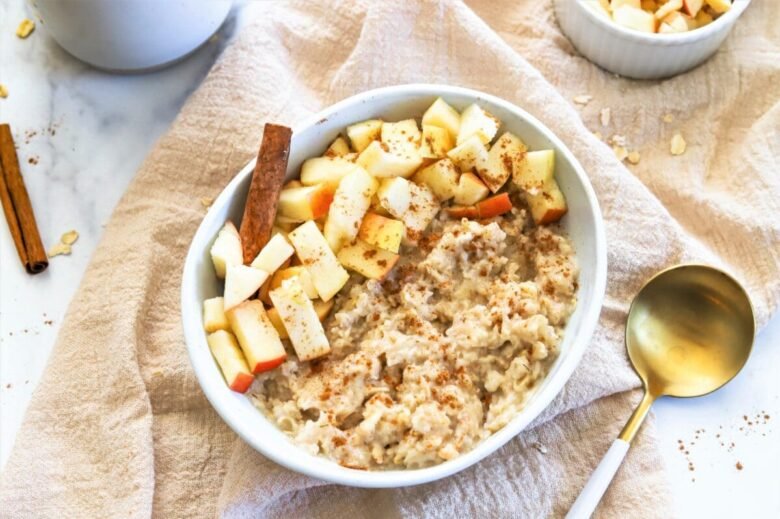
There is a version of breakfast that requires no morning effort whatsoever — no standing at the stove, no watching a pot, no timing anything, no decisions made before coffee. You set it up the night before, go to sleep, and wake up to a kitchen that smells of warm cinnamon and stewed apples and a pot of oatmeal that has been quietly doing exactly what oatmeal should do for the past eight hours: absorbing, softening, thickening, and developing the kind of deep, porridge-like creaminess that stovetop oatmeal, made in five minutes, never quite achieves.
Slow cooker apple cinnamon oatmeal is that breakfast. It is, in the most practical sense, the ideal slow cooker recipe — the overnight cook aligns perfectly with the slow cooker’s low-heat, long-duration strengths, the ingredients are pantry staples that cost almost nothing, and the result feeds a family all week from a single Sunday evening of minimal effort. Steel-cut oats, which would take 30 to 40 minutes of attentive stirring on the stovetop, emerge from the slow cooker after an overnight cook as the ideal version of themselves: chewy at the center, creamy at the edges, cooked through without turning to mush, infused with apple and cinnamon and the natural sweetness of brown sugar from the inside out.
The apples are not a garnish. They cook down completely into the oatmeal, becoming soft and jammy and indistinguishable from the oats themselves in texture while contributing a tartness and fruitiness that make the finished bowl taste genuinely complex. The cinnamon blooms slowly in the heat over eight hours rather than simply sitting on the surface. The brown sugar caramelizes at the bottom of the insert in a way that stovetop oatmeal never allows, producing a slightly deeper, more caramel note in every spoonful.
Breakfast that makes itself overnight. Set it up in ten minutes tonight. Wake up to it tomorrow.
Why Overnight Slow Cooker Oatmeal Works So Well
Oatmeal and the slow cooker are a more deliberate pairing than they first appear, and the overnight timing is not simply a convenience — it is the cooking method working exactly as it should.
Standard rolled oats cook in five minutes on the stovetop because they have been pre-steamed and flattened to accelerate hydration. That speed is the source of their limitation: the rapid cook produces oats that have absorbed surface moisture without the extended gelatinization that creates truly creamy porridge. Quick oats are faster still and even flatter in flavor and texture. The five-minute stovetop bowl is fine for a rushed morning — it is not the same thing as properly cooked oatmeal.
Steel-cut oats are a different ingredient. They are the whole oat groat cut into two or three pieces with no steaming, no rolling, no processing. Their dense, fibrous structure requires genuine cooking time — 30 to 40 minutes of simmering with regular stirring — to hydrate and soften properly. That same structure makes them the ideal candidate for the slow cooker’s overnight low-heat method. Eight hours at LOW is what it takes to break down the steel-cut oat’s structure from within, allowing the starch granules to swell and release their amylose slowly into the cooking liquid and produce the thick, creamy, pudding-like consistency that defines the best bowl of oatmeal you have ever eaten.
The apples accelerate and complement this process. As they cook down, they release pectin — a natural thickener — that adds body to the oatmeal without adding anything but fruit. They also release acidity that balances the natural sweetness of the oats and the added sugar, producing a bowl that is sweet without being cloying. By morning, the apples have essentially dissolved into the oatmeal, becoming part of its structure rather than sitting on top of it.
Choosing Your Oats
Oat selection is the single most consequential ingredient decision in this recipe, and the choice is simple: steel-cut oats only.
Steel-cut oats are the correct and only oat for overnight slow cooker oatmeal. Their dense, unprocessed structure holds up through the long cook and produces the chewy, creamy, substantial texture that makes this recipe worth making. After eight hours on LOW, steel-cut oats are perfectly cooked — soft but still with a slight chew at the very center of each piece, exactly as they should be.
Rolled oats — the standard supermarket oatmeal — are not suitable for overnight slow cooking. Their pre-processed, thin structure overcooks completely in 8 hours and produces a paste rather than porridge. If rolled oats are the only option, they can be cooked in the slow cooker on LOW for 2 to 3 hours maximum, not overnight. The result is acceptable but not the same.
Quick oats should not be used in the slow cooker at all. They overcook in under an hour on LOW and produce a texture that is uniformly mushy from the first hour onward.
Certified gluten-free steel-cut oats are the appropriate choice for anyone managing celiac disease or gluten sensitivity — standard oats are not inherently gluten-containing but are frequently cross-contaminated in processing. The recipe works identically with certified gluten-free steel-cut oats.
The ratio of oats to liquid is critical. For overnight slow cooker steel-cut oatmeal, 1 cup of oats to 4 cups of liquid produces a creamy but still distinct-textured result. More liquid produces thinner porridge; less produces a denser, stickier consistency. The recipe as written uses this ratio and produces the ideal texture — adjust in future batches to personal preference.
Choosing Your Apples
The apple choice affects the texture and tartness of the finished oatmeal meaningfully, and different varieties produce noticeably different results.
Granny Smith apples are the ideal choice — their high acidity and firm flesh hold up through the long cook without dissolving completely, while their tartness provides the balance that cuts through the sweetness of the oats and brown sugar. They break down to a soft, slightly chunky texture that is still identifiable in the finished bowl. For a bowl with visible apple pieces at the end, Granny Smith is the correct choice.
Honeycrisp apples produce a sweeter, less tart result with a similar firm texture. They break down slightly more than Granny Smith but still provide texture in the finished bowl. Excellent for those who prefer a sweeter oatmeal.
Fuji or Gala apples are sweeter still and softer, breaking down almost completely into the oatmeal over eight hours. They produce a very smooth, uniformly textured bowl with a gentle sweetness — the apple flavor is present but subtle, and the texture is nearly homogenous. A good choice if smooth oatmeal is preferred.
Braeburn or Pink Lady — firm, moderately tart, and complex in flavor — are excellent choices that fall between Granny Smith and Honeycrisp in both acidity and texture breakdown. Highly recommended.
Peel or not to peel. This is a genuine choice with two correct answers. Leaving the peel on adds texture and fiber — after eight hours the peel softens completely and is barely detectable in the finished bowl, but it contributes a slight chewiness and color that some prefer. Peeling produces a smoother, more uniform result. Both are correct.
The Flavor Base
The flavor of slow cooker apple cinnamon oatmeal is built from a handful of ingredients, each of which does specific work.
Ground cinnamon is the defining spice — the ingredient the recipe is named for. It blooms slowly in the moist heat of the slow cooker over eight hours, permeating the oats and the apple in a way that a pinch stirred into finished oatmeal never achieves. The cinnamon should be measured generously — a full teaspoon for a standard batch — and added at the start so the full overnight bloom can occur.
Brown sugar adds sweetness and a caramel note that white sugar cannot replicate. The molasses in brown sugar interacts with the heat and the natural starch of the oats to produce a slightly deeper, more complex sweetness. Start with two tablespoons — the oatmeal can be sweetened further at the table with additional brown sugar, maple syrup, or honey according to individual preference.
Vanilla extract — a teaspoon, added at the very end rather than at the start — adds a warm, aromatic note that is the difference between oatmeal that tastes of oats and cinnamon and oatmeal that tastes complete. Vanilla’s aromatic compounds are volatile and largely cook off during an eight-hour braise — add it after cooking, immediately before serving, to preserve the full effect.
Salt — just a pinch — is the ingredient that sharpens every other flavor in the bowl. Unsalted oatmeal, regardless of how well it is otherwise seasoned, tastes flat and slightly bland. A quarter teaspoon of salt at the start makes the apple taste more like apple, the cinnamon taste more like cinnamon, and the sweetness taste more balanced.
Nutmeg — optional but recommended — a small pinch adds a warm, slightly spiced depth that makes the cinnamon more complex without being identifiable as a separate flavor on its own.
The liquid. Whole milk, water, or a combination of both are the standard choices. Whole milk produces a richer, creamier oatmeal with a more pudding-like consistency. Water produces a lighter, cleaner result that lets the apple and cinnamon flavors come forward more distinctly. A 50/50 combination of milk and water is the most popular and well-balanced choice. Oat milk or almond milk work well for dairy-free versions — oat milk in particular produces a naturally creamy result given its affinity with the oats.
The Overnight Logistics
Overnight slow cooker oatmeal requires a small amount of timing awareness to get right.
The cook time window. On LOW, steel-cut oats are perfectly cooked in 7 to 8 hours. Beyond 9 hours the texture begins to over-soften and the oatmeal thickens to a stickier, gummier consistency as the starch continues to break down. Set the slow cooker before bed and plan to eat within 30 minutes of the 8-hour mark for the best result.
The keep-warm function. Most slow cookers have a KEEP WARM setting that engages automatically after the timed cook cycle. Oatmeal on KEEP WARM for up to 2 hours past the 8-hour mark is generally fine — the texture changes slightly but remains excellent. Beyond 2 hours on KEEP WARM, the oatmeal over-thickens and begins to scorch at the edges of the insert.
Greasing the insert. Butter or cooking spray applied to the slow cooker insert before adding any ingredients is strongly recommended — it prevents the oatmeal from sticking to the bottom and sides of the insert during the long cook, makes cleanup dramatically easier, and prevents the scorching that can occur with any starch-heavy dish cooked for extended periods. This step takes 30 seconds and should not be skipped.
Stirring before serving. The oatmeal will have a slightly set surface and a denser layer at the bottom when the lid comes off after the overnight cook. Stir thoroughly from the bottom of the insert before serving — the bowl comes together completely once stirred and the consistency becomes uniform throughout.
Tips for Perfect Slow Cooker Apple Cinnamon Oatmeal
1. Grease the insert. Always grease the slow cooker insert with butter or cooking spray before adding the oatmeal ingredients. Starch-heavy dishes cooked for 8 hours will stick and scorch without this step. It takes 30 seconds and makes the difference between easy cleanup and a difficult one.
2. Steel-cut oats only. Rolled oats and quick oats cannot be substituted for overnight slow cooking. Steel-cut oats are the only variety with the structural integrity to withstand 8 hours on LOW and emerge with the correct texture. Keep a bag specifically for this recipe.
3. Dice the apples evenly. Uniformly sized apple pieces — approximately ½ to ¾ inch dice — cook down evenly over the long cook. Very small pieces dissolve completely into the oatmeal; very large pieces may still have some firmness at the center. A medium dice produces the best balance of apple texture in the finished bowl.
4. Add vanilla at the end. Vanilla extract added at the start of an 8-hour slow cook loses most of its aromatic complexity. Stir it in immediately before serving — it takes 10 seconds and makes the oatmeal smell and taste noticeably better.
5. Stir before serving. The oatmeal settles and separates slightly during the overnight cook — there will be a denser, stickier layer at the bottom and a slightly thinner layer at the top. Stir thoroughly before serving to bring everything back to a uniform, creamy consistency.
6. Don’t open the lid overnight. The overnight slow cook does not benefit from checking. Every time the lid is lifted, heat escapes and the temperature drops, extending the cook time and disrupting the even, slow hydration of the oats. Set it and leave it until morning.
7. Taste and adjust before serving. The sweetness and spice balance can be adjusted at the table easily — extra brown sugar, maple syrup, honey, or an additional pinch of cinnamon costs nothing and allows each person to finish their bowl to their preference. Serve the oatmeal slightly under-sweetened and let individual toppings do the rest.
Serving the Apple Cinnamon Oatmeal
The bowl is the foundation. The toppings are the meal.
Slow cooker apple cinnamon oatmeal is excellent on its own, straight from the insert with a splash of cold milk poured over the top. It is even better with toppings that add texture, contrast, and additional flavor — because after eight hours of cooking the oatmeal is uniformly soft and creamy, and something crunchy, something cold, or something sharp makes each bite more interesting.
The classic bowl: a ladleful of oatmeal, a drizzle of maple syrup, a spoonful of almond butter or peanut butter, a scatter of chopped toasted pecans or walnuts, and a splash of cold milk or cream. This combination covers every textural base — creamy, nutty, crunchy, sweet, slightly bitter from the toasted nuts — and is the bowl worth making the recipe for.
Fresh toppings: thinly sliced fresh apple over the top adds the crisp, fresh apple note that the cooked-down apple in the oatmeal cannot provide. A contrast of raw and cooked apple in the same bowl is genuinely excellent.
Yogurt: a spoonful of Greek yogurt stirred through or dolloped on top adds creaminess, protein, and a tartness that cuts the sweetness of the brown sugar and cinnamon perfectly.
The Complete Topping Bar
Sweeteners:
- Maple syrup — the most natural pairing with apple and cinnamon
- Honey — floral and light
- Brown sugar — for an extra caramel note
- Agave — for a neutral, clean sweetness
Nuts and crunch:
- Toasted pecans — the definitive nut pairing with apple cinnamon
- Toasted walnuts — slightly bitter, excellent contrast
- Granola — for maximum crunch and sweetness
- Pumpkin seeds — nutty and nutritious
Fruit:
- Fresh thinly sliced apple — raw contrast to the cooked apple in the oatmeal
- Dried cranberries — tart and chewy
- Raisins — sweet and soft
- Sliced banana — sweet and creamy
Creamy additions:
- Cold milk or cream poured over the top — the essential addition
- Greek yogurt dolloped on top
- Almond butter or peanut butter — stirred through or spooned on top
- A small knob of butter — melted into the hot oatmeal for richness
Spice additions:
- An extra pinch of cinnamon
- A grating of fresh nutmeg
- A pinch of cardamom for a more aromatic, complex finish
The Week-Ahead Meal Prep Bowl
Slow cooker apple cinnamon oatmeal is one of the best weekly meal prep recipes for breakfast. A full batch made on Sunday evening — using the quantities in this recipe — produces five to six generous servings that keep refrigerated for the entire week. Each morning, spoon a portion into a bowl, add a splash of water or milk, and microwave for 90 seconds, stirring once at the halfway point. The oatmeal reheats to a creamy, fresh consistency that is indistinguishable from the morning it was made. Topped fresh each day from the refrigerator’s supply of nuts, fruit, and maple syrup, it is a genuinely nourishing and effortless weekday breakfast from a single 10-minute Sunday evening effort.
Easy Variations
- Apple pie oatmeal. Add ¼ teaspoon of allspice and ¼ teaspoon of ground cloves alongside the cinnamon. Stir a tablespoon of cream cheese into each bowl when serving — it melts into the oatmeal and creates a filling reminiscent of apple pie with cream.
- Pear and ginger oatmeal. Replace the apple with two ripe pears, diced, and replace the cinnamon with 1 teaspoon of ground ginger plus ½ teaspoon of cinnamon. The ginger-pear combination is aromatic and warming in a different register than the apple cinnamon original.
- Banana bread oatmeal. Replace the apple with two very ripe bananas, mashed, and add ½ teaspoon of ground nutmeg alongside the cinnamon. Stir in 2 tablespoons of peanut butter before serving. The banana breaks down completely into the oatmeal and the result tastes remarkably like banana bread in bowl form.
- Blueberry lemon oatmeal. Replace the apple with 1½ cups of fresh or frozen blueberries, reduce the cinnamon to ½ teaspoon, and add the zest of one lemon to the slow cooker. The blueberries dissolve into the oatmeal and color it a deep purple-blue. Stir in the lemon juice along with the vanilla at the end.
- Carrot cake oatmeal. Add 1 cup of grated carrot to the slow cooker alongside the apple. Increase the cinnamon to 1½ teaspoons and add ¼ teaspoon each of ginger, nutmeg, and allspice. Serve with a dollop of cream cheese, a drizzle of maple syrup, and a scatter of toasted pecans and raisins.
Make-Ahead and Storage
Make-ahead: This is fundamentally a make-ahead recipe — the overnight cook is the make-ahead. For weekly meal prep, cook a full batch Sunday evening and refrigerate in an airtight container for the week.
Refrigerator: Cooked oatmeal keeps in an airtight container for up to 5 days. The oatmeal thickens considerably when cold — this is normal. Add a splash of water or milk before reheating and stir well.
Reheating: Microwave individual portions for 60 to 90 seconds, stirring once at the halfway point, with a splash of milk or water added before heating. Stovetop reheating over low heat with a splash of liquid and constant stirring also works well and produces the most even result.
Freezer: Cooked steel-cut oatmeal freezes well in individual portions for up to 3 months. Freeze in muffin tins or silicone portion molds for easy single-serving freezing, then transfer the frozen portions to a freezer bag. Thaw overnight in the refrigerator and reheat with a splash of milk as above.
Shopping List
The Oatmeal
- 1 cup (180g) steel-cut oats
- 3 cups (720ml) water
- 1 cup (240ml) whole milk (or all water, or oat milk for dairy-free)
The Apples
- 2 medium apples (Granny Smith recommended), cored and diced — peeled or unpeeled
The Flavor Base
- 2 tbsp brown sugar, plus more for serving
- 1 tsp ground cinnamon
- ¼ tsp salt
- ⅛ tsp ground nutmeg (optional)
- 1 tsp vanilla extract (added after cooking)
The Insert
- Butter or cooking spray for greasing
For Serving (choose your toppings)
- Maple syrup
- Toasted pecans or walnuts
- Fresh apple slices
- Cold milk or cream
- Almond butter or peanut butter
Slow Cooker Apple Cinnamon Oatmeal
Steel-cut oats slow-cooked overnight on LOW for 7 to 8 hours with diced apple, brown sugar, cinnamon, and a pinch of salt in a buttered slow cooker insert — emerging in the morning as deeply creamy, perfectly textured porridge infused throughout with apple and warm spice. The apples cook down into soft, jammy pockets woven through the oatmeal, the cinnamon blooms across eight hours into every spoonful, and vanilla stirred in at serving makes the finished bowl smell exactly like it tastes. One Sunday evening of ten minutes produces breakfasts for the entire week.
- Total Time: 8 hours 10 minutes
- Yield: 4–6 servings 1x
Ingredients
The Oatmeal
- 1 cup (180g) steel-cut oats
- 3 cups (720ml) water
- 1 cup (240ml) whole milk (or additional water, or oat milk)
The Apples
- 2 medium apples, cored and diced into ½-inch pieces (Granny Smith recommended; peeled or unpeeled)
The Flavor Base
- 2 tbsp brown sugar, loosely packed, plus more for serving
- 1 tsp ground cinnamon
- ¼ tsp salt
- ⅛ tsp ground nutmeg (optional)
- 1 tsp vanilla extract — added after cooking, not before
For the Insert
- 1 tbsp unsalted butter or cooking spray
Instructions
- Grease the insert. Butter the inside of the slow cooker insert thoroughly — the bottom and at least halfway up the sides — with the tablespoon of butter or a generous coat of cooking spray. Do not skip this step.
- Combine the ingredients. Add the steel-cut oats, water, milk, diced apple, brown sugar, cinnamon, salt, and nutmeg (if using) to the buttered slow cooker insert. Stir well to combine everything evenly. Do not add the vanilla extract yet.
- Cook overnight. Place the lid on the slow cooker. Set to LOW and cook for 7 to 8 hours. Do not lift the lid during cooking. Plan the start time so the oatmeal finishes within 30 minutes of when breakfast will be served, or rely on the KEEP WARM function for up to 2 hours past the cook time.
- Stir and add vanilla. In the morning, remove the lid and stir the oatmeal thoroughly from the bottom of the insert — the texture will be uneven before stirring and uniform and creamy after. Stir in the vanilla extract. Taste and adjust sweetness with additional brown sugar, maple syrup, or honey.
- Serve immediately. Ladle into bowls. Add cold milk or cream, a drizzle of maple syrup, toasted pecans or walnuts, and any additional toppings. Serve immediately while hot.
Notes
- Grease the insert generously. Oatmeal cooked for 8 hours in an ungreased slow cooker sticks to the bottom and sides in a way that is difficult to clean and can scorch at the edges. Butter is the best choice — it adds flavor and provides superior non-stick performance for a starch-heavy long cook. Grease every time without exception.
- Steel-cut oats are non-negotiable for overnight cooking. Rolled oats and quick oats cannot withstand 8 hours on LOW. Steel-cut oats are the ingredient this recipe is built around — their dense, unprocessed structure produces the creamy, chewy, distinct-textured oatmeal that makes the overnight method worthwhile. Keep a dedicated bag for this recipe.
- Add vanilla after cooking. Vanilla’s aromatic compounds are volatile and are largely destroyed by prolonged heat. Added at the start of an 8-hour cook, vanilla contributes nothing to the finished bowl. Stirred in immediately before serving, it makes the oatmeal smell and taste noticeably better. This is the most important technique note in the recipe.
- The insert greasing is prep. Everything else is assembly — adding ingredients to the insert and turning the dial. The 10-minute setup time is genuinely 10 minutes, almost entirely spent dicing the apples.
- Adjust liquid for preferred consistency. The recipe as written produces a creamy, porridge-style oatmeal with distinct oat texture. For thinner, more pourable oatmeal, add ½ cup additional milk or water. For thicker, denser oatmeal, reduce the liquid by ¼ cup. Adjust based on the first batch and record the variation that suits your preference.
- Slow cookers vary. Some slow cookers run hotter than others at the LOW setting. If a previous overnight recipe produced scorched or over-cooked results in your slow cooker, reduce the cook time to 6 to 7 hours or add an additional ¼ cup of liquid as a buffer. If the oatmeal is consistently too thin at 8 hours, your slow cooker runs cooler than average — extend to 8.5 hours or reduce liquid slightly.
- Serve with cold milk. Hot, creamy oatmeal with a splash of cold milk or cream poured over it at the table is one of the essential breakfast experiences. The cold milk cools the oatmeal slightly, adds creaminess, and produces a temperature contrast that makes each spoonful more interesting. Do not skip this small detail.
- Prep Time: 10 minutes
- Cook Time: 7–8 hours (overnight on LOW)
- Category: Breakfast
- Method: Slow Cooking
- Cuisine: American
Frequently Asked Questions
Can I use rolled oats instead of steel-cut oats? Not for overnight cooking — rolled oats cannot withstand 7 to 8 hours on LOW without turning to paste. Rolled oats are pre-steamed and flattened, which means they hydrate very quickly; by hour two of a slow cook they are already fully cooked, and by hour eight they have broken down entirely into a gluey, uniform mush with no distinct texture remaining. If rolled oats are what you have, you can use them in the slow cooker on LOW for a maximum of 2 to 2.5 hours — not overnight. For the overnight method, steel-cut oats are the only suitable variety. Their dense, minimally processed structure takes the full 7 to 8 hours to cook through properly, which is precisely why the timing works.
My oatmeal is stuck to the bottom of the insert. What happened? The insert was not greased, or was not greased sufficiently. Starchy foods cooked at low temperature for extended periods will always stick to an ungreased slow cooker insert — the starch gelatinizes and bonds to the ceramic surface during the long cook. To remove stuck oatmeal: fill the insert with warm water immediately after serving, add a drop of dish soap, and let it soak for 30 to 60 minutes before washing. The oatmeal will release easily after soaking. For future batches, grease the insert thoroughly with butter or cooking spray, covering the bottom and sides up to at least the expected oatmeal level.
Can I make this dairy-free? Yes, completely. Replace the whole milk with any plant-based milk — oat milk is the most natural pairing and produces a creamy, full-bodied result that is nearly indistinguishable from the whole milk version. Almond milk produces a lighter, slightly nutty result. Coconut milk (the full-fat canned variety, diluted with water) produces the richest, most indulgent dairy-free version with a subtle coconut note that pairs well with the apple and cinnamon. Simply replace the milk with an equal volume of your preferred plant-based alternative and proceed identically.
Can I cook this during the day instead of overnight? Yes. The recipe works on LOW for 7 to 8 hours at any time — overnight is simply the most convenient timing for most households because it aligns the finish time with breakfast. If cooking during the day, start it before leaving for work and serve it when you return in the evening as a dinner grain bowl or late breakfast. The oatmeal can also be held on KEEP WARM for up to 2 hours past the cook time without significant quality loss — beyond that the texture over-thickens and the edges may begin to scorch.
How long does leftover oatmeal keep, and how do I reheat it properly? Cooked steel-cut oatmeal keeps refrigerated in an airtight container for up to 5 days. It thickens significantly when cold — this is completely normal and is not a sign that anything has gone wrong. To reheat: add 2 to 3 tablespoons of water or milk per serving before microwaving, stir, and microwave at full power for 60 to 90 seconds, stirring once at the halfway mark. The oatmeal loosens back to a creamy, fresh consistency with the added liquid. Stovetop reheating in a small saucepan over low heat with a splash of milk, stirring constantly, produces the most even result. Add fresh toppings after reheating — not before.
What if my oatmeal is too thick in the morning? Add liquid — warm water or milk — a quarter cup at a time, stirring between additions, until the consistency is right. Oatmeal thickness varies based on the slow cooker model (some run hotter than others), the exact cook time, and the water content of the specific apples used. Thinning with warm liquid is always the correct fix. For future batches, note whether your slow cooker consistently produces thicker or thinner results than the recipe as written and adjust the liquid quantity accordingly — ¼ cup more or less makes a noticeable difference.
Can I add other fruits besides apple? Yes — apple is the classic choice and the one the cinnamon flavor profile is built around, but the recipe adapts well to other fruit. Pears behave similarly to apples and can be substituted directly. Peaches (fresh or frozen, no need to thaw) produce a summery, fragrant result. Blueberries (fresh or frozen) dissolve almost completely and color the oatmeal a deep blue-purple with a jammy sweetness. Dried fruits — raisins, dried cranberries, dried apricots chopped small — work well and intensify the sweetness without adding moisture. When using frozen fruit, add it directly from frozen — no thawing needed.
Why do you add vanilla extract after cooking rather than at the beginning? Vanilla extract is approximately 35 percent alcohol carrying volatile aromatic compounds — the compounds that produce vanilla’s characteristic warm, floral, complex scent and flavor. Those aromatic compounds are heat-sensitive and largely evaporate during prolonged cooking. A teaspoon of vanilla added to a cold recipe and baked briefly loses some but retains most of its impact. A teaspoon of vanilla added to an 8-hour slow cook at the start has almost entirely cooked off by the time the lid comes off in the morning — the alcohol and aromatics evaporate steadily throughout the long cook, leaving behind only the base flavor with very little of the aromatic complexity that makes vanilla worth using. Added immediately before serving, every aromatic compound is fully preserved and the impact on the finished bowl is significant. This is a small technique that makes a noticeable difference.