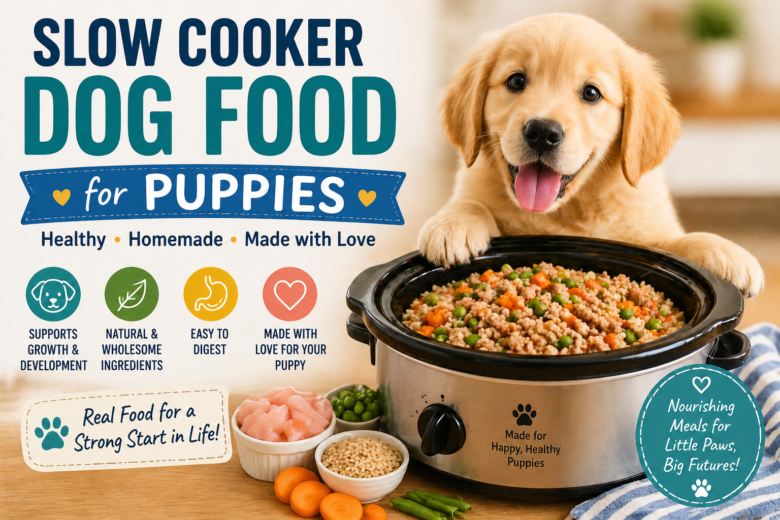
The first year of a dog’s life is a critical window of development that sets the foundation for their long-term health, longevity, and vitality. During this period, puppies undergo rapid physiological changes, from skeletal mineralization and muscle accretion to the complex development of the central nervous system and immune function. Consequently, their nutritional requirements are significantly more demanding and precise than those of adult dogs.
In recent years, many pet owners have turned toward homemade diets, specifically utilizing the slow cooker (or Crockpot) method, to gain transparency over ingredients and avoid the heavy processing associated with commercial kibble. However, preparing “vet-reviewed” puppy food at home is not as simple as tossing meat and vegetables into a pot. It requires a deep understanding of canine nutrition, precise caloric math, and a commitment to balancing micronutrients that are often overlooked. This guide provides an exhaustive look at how to safely and effectively prepare slow cooker meals for your growing puppy.
The Biological Blueprint of a Growing Puppy
To understand why a specialized puppy recipe is necessary, one must first look at the Association of American Feed Control Officials (AAFCO) standards for “Growth and Reproduction.” Puppies are biological “engines” in high gear; they require more amino acids, minerals, and calories per pound of body weight than at any other life stage.
1. Protein and Amino Acids
Protein is the building block of every tissue in a puppy’s body. While an adult dog might thrive on a diet with 18% protein (on a dry matter basis), puppies require a minimum of 22.5%. This protein must be high-quality and highly digestible, providing a complete profile of essential amino acids like arginine, histidine, and leucine, which support rapid muscle growth and tissue repair.
2. Caloric Density
A puppy’s energy needs can be two to three times higher than an adult dog of the same weight. Because their stomachs are small, their food must be calorically dense. Feeding a “bulk” diet filled with too much fiber can lead to “gut fill” before the puppy has consumed enough calories to sustain growth.
3. Essential Fatty Acids
Omega-3 fatty acids, particularly Docosahexaenoic Acid (DHA), are vital for brain and retinal development. Puppies fed diets enriched with DHA have been shown in clinical studies to exhibit better trainability and cognitive function. Slow cooker recipes should always include a source of healthy fats, such as fish oil or flaxseed.
Why the Slow Cooker is Ideal for Puppy Food
The slow cooker is more than just a convenience tool; it offers specific advantages for preparing canine diets:
- Pathogen Reduction: Puppies have immature immune systems. Slow cooking at consistent temperatures (above 160°F) ensures that harmful bacteria like Salmonella or E. coli, which can be present in raw meat, are thoroughly neutralized.
- Enhanced Digestibility: The long, moist-heat cooking process breaks down tough plant fibers and connective tissues in meat. This makes the nutrients more bioavailable for the puppy’s shorter digestive tract.
- Palatability: Slow cooking locks in moisture and natural juices, creating a savory “stew” texture that is highly appealing to even the pickiest puppies.
- Batch Cooking Efficiency: You can prepare a week’s worth of food in one go, ensuring your puppy always has a fresh, balanced meal without daily kitchen labor.
The Golden Rule: The Calcium-to-Phosphorus Ratio
The most significant risk of homemade puppy food is a mineral imbalance, specifically the Calcium-to-Phosphorus (Ca:P) ratio. Phosphorus is naturally abundant in meat, while calcium is not. If a puppy consumes too much phosphorus and not enough calcium, their body will “leach” calcium from their bones to maintain blood levels, leading to Nutritional Secondary Hyperparathyroidism or “Rubber Bone Disease.”
Conversely, excessive calcium—especially in large-breed puppies—can lead to orthopedic issues like hip dysplasia or osteochondrosis.
| Mineral | Ideal Ratio Range | Importance for Puppies |
| Calcium | 1.1:1 to 1.5:1 | Bone mineralization, nerve transmission, and muscle contraction. |
| Phosphorus | 1.0 (Base) | Energy metabolism (ATP) and cell membrane structure. |
To achieve this balance in a slow cooker recipe, you must add a calcium source, such as medical-grade calcium carbonate, finely ground eggshell powder, or a professional nutrient blend.
Essential Ingredient Groups for Slow Cooker Puppy Food
A vet-reviewed recipe is built on four pillars: high-quality protein, digestible carbohydrates, healthy fats, and nutrient-dense produce.
1. High-Quality Proteins
- Turkey and Chicken: Lean, highly digestible, and rich in essential amino acids. Use ground versions or breast meat for lower fat content.
- Beef: Provides zinc and iron, which are crucial for immune health. Ensure it is at least 90% lean to prevent pancreatitis.
- White Fish: Excellent source of protein and lower in calories; great for puppies with sensitive stomachs.
- Organ Meats: Liver and hearts are “nature’s multivitamins,” rich in Vitamin A and B12. However, they should make up no more than 5-10% of the total diet to avoid vitamin toxicity.
2. Digestible Carbohydrates
- Sweet Potatoes: High in Beta-Carotene and fiber.
- Brown Rice or Quinoa: Provide sustained energy and are generally well-tolerated.
- Oats: Excellent for skin health and digestion.
3. Healthy Fats
- Fish Oil (Salmon or Pollack): The primary source of DHA.
- Coconut Oil: Can support skin and coat health, but use sparingly.
- Flaxseed Meal: Provides Alpha-Linolenic Acid (ALA).
4. Puppy-Safe Produce
- Carrots: Rich in Vitamin A.
- Spinach: High in iron and Vitamin K.
- Blueberries: Packed with antioxidants to support the developing immune system.
- Pumpkin: Helps regulate digestion and stool consistency.
The “Supplementation Gap”: Why Meat and Veg Are Not Enough
One of the most common misconceptions is that a mix of “chicken, rice, and carrots” is a complete meal. In reality, such a mix is deficient in over a dozen essential nutrients, including Vitamin D, Vitamin E, Choline, Calcium, and Copper.
To make a recipe truly “Vet-Reviewed,” you must bridge this gap. Most veterinary nutritionists recommend using a product like Balance IT or a specific DIY Puppy Nutrient Blend. These powders are formulated to be added after the food has cooled, ensuring that heat-sensitive vitamins remain intact.
A Vet-Reviewed Slow Cooker Puppy Recipe Framework
This “Base Recipe” is designed to be balanced when used with a professional nutrient supplement.
Ingredients:
- 3 lbs Lean Ground Turkey (93% lean)
- 1 cup Uncooked Brown Rice (rinsed)
- 1 lb Sweet Potato (peeled and cubed)
- 1 cup Carrots (shredded)
- 1 cup Green Beans (chopped)
- 1/2 cup Blueberries (fresh or frozen)
- 2 cups Water or Low-Sodium Bone Broth (ensure no onions/garlic)
- Daily Dose of Puppy-Specific Vitamin/Mineral Supplement (added at feeding)
- 1 tsp Wild Alaskan Salmon Oil (added at feeding)
Instructions:
- Combine: Place the turkey, rice, sweet potatoes, carrots, and green beans into the slow cooker.
- Liquid: Pour in the water or bone broth. Stir gently to break up the meat.
- Cook: Set the slow cooker to Low for 5-6 hours or High for 3 hours. The rice should be soft, and the turkey fully opaque.
- Finish: Stir in the blueberries during the last 30 minutes of cooking to prevent them from bursting and staining the entire batch.
- Cool: Allow the food to cool completely. Do not add supplements to hot food.
- Portion: Divide into daily portions and store in the refrigerator (up to 4 days) or freezer (up to 3 months).
Feeding Guidelines and Caloric Requirements
Puppies require frequent feedings to maintain blood sugar levels. A general rule is:
- 2–4 months: 4 meals per day.
- 4–6 months: 3 meals per day.
- 6–12 months: 2 meals per day.
Caloric Estimate Table
Note: These are estimates. Always monitor your puppy’s body condition score (BCS).
| Puppy Weight (lbs) | Estimated Daily Calories | Approx. Cups of Homemade Food |
| 5 lbs | 450 – 550 kcal | 1.5 – 2 cups |
| 10 lbs | 800 – 950 kcal | 2.5 – 3 cups |
| 20 lbs | 1,400 – 1,600 kcal | 4.5 – 5 cups |
| 40 lbs | 2,200 – 2,500 kcal | 7 – 8 cups |
Safety First: Toxic Foods to Avoid
When preparing homemade meals, it is vital to ensure that no “human” seasonings or “hidden” ingredients slip into the pot. The following are strictly toxic to dogs:
- Onions and Garlic: Cause oxidative damage to red blood cells, leading to anemia.
- Grapes and Raisins: Can cause acute kidney failure.
- Xylitol (Birch Sugar): Often found in peanut butter or broths; causes a life-threatening drop in blood sugar.
- Macadamia Nuts: Cause weakness, vomiting, and tremors.
- Cooked Bones: Never add bones to the slow cooker; they become brittle and can perforate the intestines.
- Excessive Salt: Can lead to sodium ion poisoning.
Transitioning Your Puppy to Slow Cooker Food
Abrupt dietary changes can cause significant gastrointestinal distress in puppies, including diarrhea and vomiting. A gradual transition over 7 to 10 days is recommended:
- Days 1-3: 25% Slow Cooker Food / 75% Current Food.
- Days 4-6: 50% Slow Cooker Food / 50% Current Food.
- Days 7-9: 75% Slow Cooker Food / 25% Current Food.
- Day 10: 100% Slow Cooker Food.
What to Monitor:
- Stool Quality: Should be firm and easy to pick up.
- Energy Levels: Should remain high and playful.
- Coat Condition: Should be shiny and soft, not dry or flaky.
- Growth Rate: Ensure they are gaining weight steadily but not becoming obese.
Large Breed vs. Small Breed Considerations
Not all puppies grow at the same rate. A Great Dane puppy has vastly different requirements than a Pomeranian puppy.
Large Breed Puppies (Expected Adult Weight >50 lbs)
The primary goal for large breeds is controlled growth. If they grow too fast, their bones cannot support their weight, leading to skeletal deformities. Their diet should be slightly lower in fat and strictly controlled for calcium (maximum 1.5% on a dry matter basis).
Small Breed Puppies (Expected Adult Weight <20 lbs)
Small breeds have incredibly high metabolic rates. They are prone to hypoglycemia (low blood sugar), so frequent, calorie-dense feedings are essential. Their kibble size (or in this case, the size of the chopped vegetables) must be small enough to prevent choking.
Storage and Handling Best Practices
Since homemade food lacks the preservatives found in commercial kibble, proper storage is non-negotiable:
- Refrigeration: Store in airtight glass or BPA-free plastic containers for no more than 3-4 days.
- Freezing: Use freezer-safe bags or containers. Thaw in the refrigerator overnight before feeding.
- Reheating: If your puppy prefers warm food, use a microwave for 15-20 seconds. Always stir and check for “hot spots” to prevent burning your puppy’s mouth.
- Hygiene: Wash all slow cooker components and feeding bowls with hot, soapy water after every use to prevent bacterial buildup.
The Path to a Healthy Life
Feeding your puppy a slow cooker diet is a labor of love that offers unparalleled control over their nutrition. By focusing on high-quality proteins, ensuring a balanced calcium-to-phosphorus ratio, and bridging the micronutrient gap with professional supplements, you can provide a diet that rivals the best commercial options.
However, the most important “ingredient” in any homemade diet is professional oversight. Before starting this journey, consult with your veterinarian or a board-certified veterinary nutritionist. They can help you tailor these frameworks to your puppy’s specific breed, activity level, and health history, ensuring that every bowl of food you serve is a step toward a long, happy, and healthy life.