The decision to transition your dog to a homemade diet is one of the most impactful choices you can make for their long-term health and vitality. As pet parents become increasingly aware of the highly processed nature of commercial kibble, many are turning to their own kitchens to provide fresh, wholesome meals. Among the various methods of preparing homemade dog food, the slow cooker stands out as an exceptional tool. It offers unparalleled convenience while preserving the nutritional integrity of the ingredients.
However, switching a dog from a lifetime of commercial food to a fresh, home-cooked diet requires careful planning. A sudden change can lead to gastrointestinal distress, while an improperly balanced recipe can cause long-term nutritional deficiencies. This comprehensive guide will walk you through the benefits of slow-cooked dog food, the essential components of a balanced canine diet, and a step-by-step transition plan to ensure your furry companion thrives on their new culinary journey.
The Unique Benefits of Slow-Cooked Dog Food
When preparing meals for your dog, the cooking method matters just as much as the ingredients themselves. Slow cooking, which involves simmering food at low temperatures over an extended period, offers several distinct advantages over raw diets, boiling, or high-heat roasting.
First and foremost, slow cooking maximizes nutrient retention. High-heat cooking methods can degrade sensitive vitamins and amino acids, diminishing the overall nutritional value of the meal. By utilizing gentle, prolonged heat, a slow cooker preserves these vital nutrients while breaking down complex proteins and fibrous vegetables, making them highly bioavailable and easy for your dog to digest. This is particularly beneficial for senior dogs or those with sensitive stomachs who may struggle to process raw or heavily processed foods.
Furthermore, slow cooking naturally retains the moisture from the ingredients. Commercial kibble is notoriously dry, often containing less than ten percent moisture, which can contribute to chronic mild dehydration and strain the kidneys over time. A slow-cooked meal, rich in natural juices and broths, significantly increases your dog’s daily water intake, supporting optimal urinary tract health and kidney function.
From a safety perspective, slow cooking eliminates the risks associated with raw diets. While raw feeding has its proponents, it carries a well-documented risk of bacterial contamination, such as Salmonella and E. coli, which can affect both the dog and the human household. Slow cooking gently pasteurizes the ingredients, providing the health benefits of fresh food without the pathogen risks. Finally, the slow simmering process melds flavors beautifully, creating an aromatic and highly palatable meal that even the most finicky eaters will find irresistible.
Understanding Canine Nutritional Requirements
Before you plug in your slow cooker, it is crucial to understand that dogs have specific nutritional requirements that differ vastly from humans. A common mistake among well-meaning pet parents is simply feeding their dogs human leftovers, which rarely constitutes a balanced canine diet. To ensure your dog receives the necessary fuel for a healthy life, every slow cooker recipe must be carefully constructed around three primary macronutrients: proteins, vegetables, and carbohydrates, supplemented with essential fats and minerals.
The Foundation: High-Quality Proteins
Protein is the cornerstone of any canine diet, providing the essential amino acids required for muscle maintenance, immune function, and tissue repair. In a standard homemade recipe, protein should make up approximately forty to fifty percent of the meal by volume.
Excellent protein sources for the slow cooker include lean ground turkey, chicken breast or thighs, lean ground beef, and occasional organ meats like liver or hearts. Organ meats are incredibly nutrient-dense but should be used sparingly—typically making up no more than five to ten percent of the total protein—as excessive amounts can lead to vitamin A toxicity or digestive upset. When selecting meats, opt for leaner cuts to prevent the final meal from becoming overly greasy, which can trigger pancreatitis in susceptible dogs.
The Micronutrients: Dog-Safe Vegetables
Vegetables provide crucial vitamins, minerals, and dietary fiber that support digestion and overall health. They should comprise roughly thirty to forty percent of your slow cooker recipe.
The slow cooker is particularly adept at softening fibrous vegetables, making their nutrients more accessible to your dog’s digestive system. Safe and highly nutritious options include carrots, green beans, spinach, peas, sweet potatoes, and pumpkin. Broccoli and cauliflower can also be included but should be used in moderation, as large quantities may cause excessive gas. It is important to chop all vegetables into small, bite-sized pieces before adding them to the slow cooker to ensure even cooking and easy consumption.
The Energy Source: Carbohydrates and Grains
While dogs do not have a strict biological requirement for carbohydrates, complex carbs provide a valuable and easily digestible energy source, especially for active dogs. Carbohydrates should make up the remaining ten to twenty percent of the meal.
Brown rice, quinoa, and rolled oats are excellent choices that hold up well in a slow cooker. These grains also provide additional fiber, which aids in maintaining firm, healthy stools. If you prefer a grain-free approach, starchy vegetables like sweet potatoes or butternut squash can fulfill this carbohydrate requirement while offering a robust profile of vitamins and antioxidants.
The Missing Links: Fats and Supplements
Even the most thoughtfully crafted slow cooker meal will likely fall short in certain essential nutrients, particularly calcium, zinc, vitamin E, and specific omega fatty acids. To bridge this gap, it is highly recommended to incorporate a high-quality canine multivitamin or a specialized homemade food balancing supplement.
Additionally, healthy fats are vital for brain health and maintaining a lustrous coat. Adding a measured amount of fish oil, flaxseed oil, or a small spoonful of coconut oil to the meal just before serving (rather than during the cooking process) ensures these delicate fats remain intact and beneficial.
Ingredients to Strictly Avoid
When formulating your slow cooker recipes, you must be acutely aware of common human foods that are highly toxic to dogs. Even small amounts of these ingredients can cause severe, sometimes fatal, health issues.
Never include onions, garlic, leeks, or chives in your dog’s food. These alliums contain compounds that cause oxidative damage to canine red blood cells, leading to a dangerous condition called hemolytic anemia. Grapes and raisins are equally perilous, as they can induce sudden and irreversible kidney failure.
Other strictly forbidden items include macadamia nuts, chocolate, coffee, and anything containing xylitol, an artificial sweetener that causes a rapid, life-threatening drop in blood sugar. Furthermore, never cook bone-in meats in your slow cooker if you intend to feed the bones to your dog. Cooked bones become brittle and can easily splinter, posing a severe risk of choking or puncturing the digestive tract. Always use boneless meats or carefully remove all bones before serving.
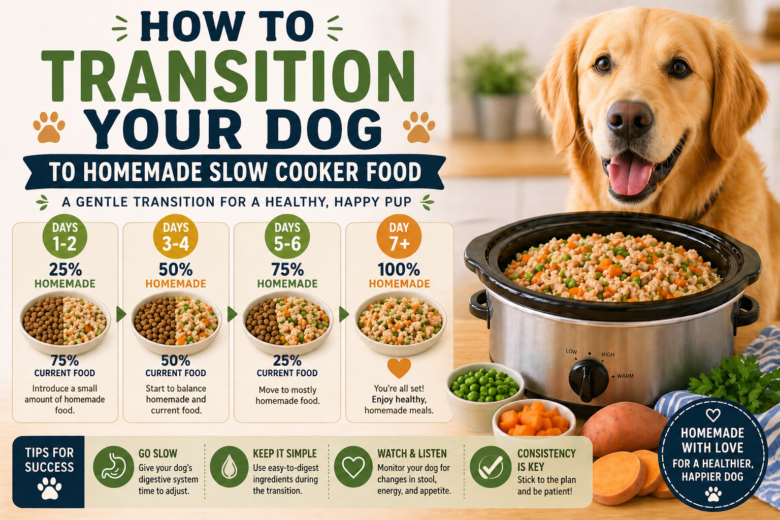
The 10-Day Transition Schedule
Transitioning your dog from commercial kibble to a rich, homemade slow cooker diet must be done gradually. A dog’s digestive system adapts to the specific food they eat daily; a sudden introduction of fresh, high-moisture food can overwhelm their gut flora, resulting in diarrhea, vomiting, or severe stomach upset.
A conservative, ten-day transition period is the gold standard for introducing a new diet. This allows the gastrointestinal tract ample time to adjust its enzyme production and microbiome to efficiently process the new ingredients.
Phase 1: Introduction (Days 1 to 3)
Begin by mixing twenty-five percent of the new slow-cooked food with seventy-five percent of your dog’s current kibble. During these first three days, monitor your dog closely. Pay attention to their enthusiasm for the food, their energy levels, and most importantly, their stool quality. Mild softening of the stool is normal, but if you notice severe diarrhea, pause the transition and maintain this ratio until their digestion stabilizes.
Phase 2: The Halfway Mark (Days 4 to 6)
If your dog has tolerated the initial introduction well, increase the ratio to fifty percent homemade food and fifty percent kibble. At this stage, you may notice your dog becoming more excited for mealtime, as the aromatic slow-cooked food is highly appealing. Continue to monitor their bathroom habits. You might also observe an increase in urination due to the higher moisture content of the fresh food, which is a positive sign of improved hydration.
Phase 3: The Majority Shift (Days 7 to 9)
Move to a mixture of seventy-five percent homemade food and twenty-five percent kibble. By this phase, your dog’s digestive system should be well-adapted to the fresh ingredients. You may begin to see early benefits of the new diet, such as a shinier coat, brighter eyes, and more consistent energy levels throughout the day.
Phase 4: Full Transition (Day 10 and Beyond)
On the tenth day, you can confidently serve a bowl consisting of one hundred percent homemade slow cooker food. Congratulations! You have successfully transitioned your dog to a healthier, fresher diet.
Practical Tips for Slow Cooker Success
To make this new routine sustainable for your lifestyle, organization is key. Batch cooking is the most efficient way to manage a homemade diet. A large slow cooker can produce enough food to last a medium-sized dog for several days.
When preparing a batch, layer the ingredients strategically. Place dense root vegetables and grains at the bottom where they will absorb the most moisture and heat, followed by the proteins, and top with lighter vegetables like spinach or green beans during the final hour of cooking. Add enough low-sodium bone broth or filtered water to just cover the ingredients, ensuring a stew-like consistency that dogs love.
Once the meal is cooked and cooled, portion it out into airtight containers. The food will stay fresh in the refrigerator for up to four days. For longer storage, freeze individual portions in freezer-safe bags or containers for up to three months. Simply thaw a portion in the refrigerator overnight before serving.
Always serve the food at room temperature or slightly warmed, as cold food straight from the fridge can be unappealing and harder to digest. If you need to warm it quickly, a splash of hot water mixed into the bowl works perfectly and adds even more beneficial hydration.
Conclusion
Transitioning your dog to homemade slow cooker food is a profound commitment to their health and happiness. While it requires more effort than simply scooping kibble from a bag, the rewards are immeasurable. By understanding the principles of canine nutrition, avoiding toxic ingredients, and adhering to a patient, ten-day transition schedule, you can safely introduce your dog to the vibrant benefits of fresh food.
As you embark on this journey, remember that every dog is unique. Consult with your veterinarian or a certified veterinary nutritionist to tailor your slow cooker recipes to your dog’s specific age, weight, and health requirements. With the right knowledge and a trusty slow cooker, you are well on your way to providing your furry best friend with the nourishing, delicious meals they truly deserve.