
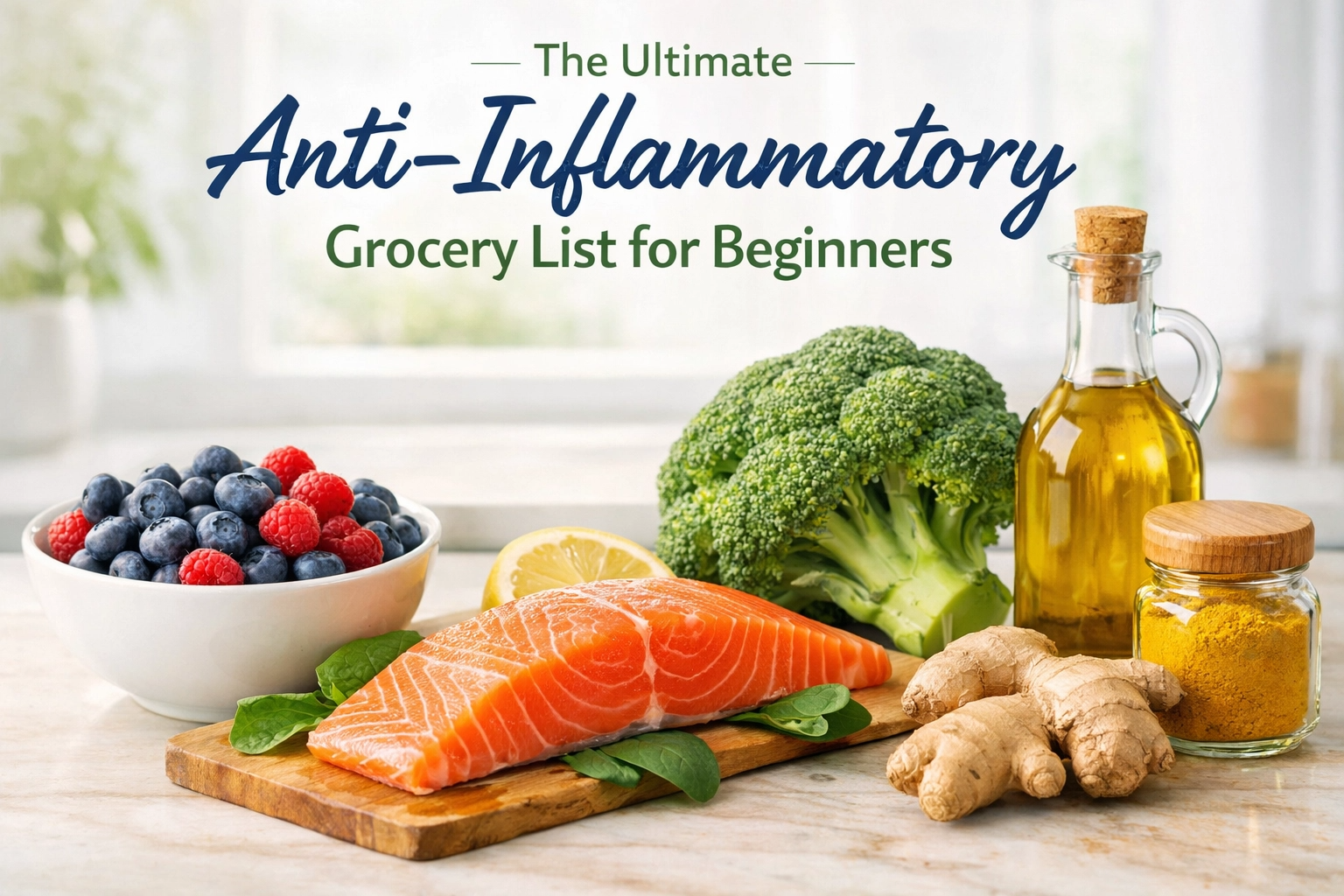
This guide provides a science-backed, beginner-friendly grocery list built around nutrient-dense whole foods. By filling your cart with these choices and reducing pro-inflammatory triggers, you can support your body’s natural healing processes and improve your overall quality of life.
How Anti-Inflammatory Eating Works
The primary goal of an anti-inflammatory diet is to provide compounds that neutralise oxidative stress and inhibit the production of pro-inflammatory cytokines. Four key components drive the results:
Vitamins C, E, and phytonutrients like polyphenols protect cells from damage caused by free radicals — a key driver of chronic inflammation.
These essential fats directly compete with pro-inflammatory omega-6 fats at the cellular level, reducing systemic inflammation throughout the body.
Supports a healthy gut microbiome, which plays a central role in immune regulation. A diverse microbiome consistently correlates with lower inflammatory markers.
Plant-based compounds like curcumin (turmeric) and anthocyanins (berries) have potent, well-documented anti-inflammatory properties at the molecular level.
The Beginner’s Anti-Inflammatory Grocery List
Organised by grocery store section to make shopping as simple as possible. Focus on “eating the rainbow” to ensure a diverse intake of protective phytonutrients across every meal.
| Category | Top Beginner Choices | Key Compound |
|---|---|---|
| 🥬 Leafy Greens | Spinach, Kale, Swiss Chard, Arugula | Vitamin K · Lutein |
| 🥦 Cruciferous | Broccoli, Cauliflower, Brussels Sprouts | Sulforaphane |
| 🫐 Berries | Blueberries, Strawberries, Raspberries | Anthocyanins |
| 🧅 Alliums | Garlic, Onions, Leeks, Shallots | Quercetin · Allicin |
| 🌈 Colourful Veg | Carrots, Bell Peppers, Sweet Potatoes | Beta-carotene · Vitamin C |
| 🍑 Stone Fruits | Cherries, Peaches, Plums | Polyphenols |
| Type | Best Options | Why It Works |
|---|---|---|
| 🐠 Fatty Fish | Salmon, Mackerel, Sardines, Anchovies | High in EPA and DHA (Omega-3s) |
| 🫘 Legumes | Lentils, Chickpeas, Black Beans | High fibre and plant protein |
| 🌱 Soy | Tofu, Tempeh, Edamame | Contains isoflavones |
| 🍗 Poultry | Organic Chicken or Turkey | Lean protein (limit red meat) |
| 🥚 Eggs | Omega-3 enriched or Pasture-raised | Choline and healthy fats |
Foods to Limit or Avoid
To see real results, reducing pro-inflammatory foods is just as important as adding anti-inflammatory ones. These five categories are the biggest offenders.
| Category | Examples to Avoid | Why It’s Harmful |
|---|---|---|
| 🍞 Refined Carbs | White bread, pastries, flour tortillas | Spikes blood sugar and insulin, driving inflammation |
| 🍬 Added Sugars | Soda, energy drinks, candy, sweetened yogurt | Increases pro-inflammatory cytokine production |
| 🌭 Processed Meats | Bacon, sausage, deli meats, hot dogs | High in nitrates and sodium — chronic inflammation markers |
| 🧈 Trans Fats | Margarine, shortening, partially hydrogenated oils | Directly linked to systemic inflammation |
| 🍷 Excessive Alcohol | Heavy consumption of spirits | Damages gut lining and liver, impairing immune regulation |
Practical Shopping Tips for Beginners
Starting an anti-inflammatory diet doesn’t require a complete pantry overhaul on day one. These five habits make the transition easier and more affordable.
-
1Shop the Perimeter — Most anti-inflammatory foods (produce, fresh fish, eggs) are on the outer edges of the store. The inner aisles tend to hold the highly processed items.
-
2Frozen is Your Friend — Frozen berries, spinach, and broccoli are often just as nutritious as fresh, more affordable, and last far longer — reducing waste and cost.
-
3Read the Labels — Look for hidden sugars (ingredients ending in “-ose”) and inflammatory oils (soybean, corn, or cottonseed oil) in packaged goods.
-
4Buy in Bulk — Staples like quinoa, brown rice, lentils, and raw nuts are significantly cheaper when bought from bulk bins. These form the foundation of the diet.
-
5Start Small — Don’t try to overhaul everything at once. Each week, swap one pro-inflammatory item (e.g. white bread) for an anti-inflammatory one (e.g. sprouted grain bread or quinoa).
Sample 1-Day Anti-Inflammatory Menu
Here’s what a full day of anti-inflammatory eating looks like in practice — flavourful, satisfying, and built entirely from the grocery list above.
Transitioning to an anti-inflammatory diet is not about perfection — it’s about making consistent, better choices over time. By filling your grocery cart with the vibrant, whole foods listed above, you are providing your body with the essential tools it needs to combat chronic inflammation and thrive.
Start with one swap this week. Your body will notice the difference long before your grocery cart looks completely different.