
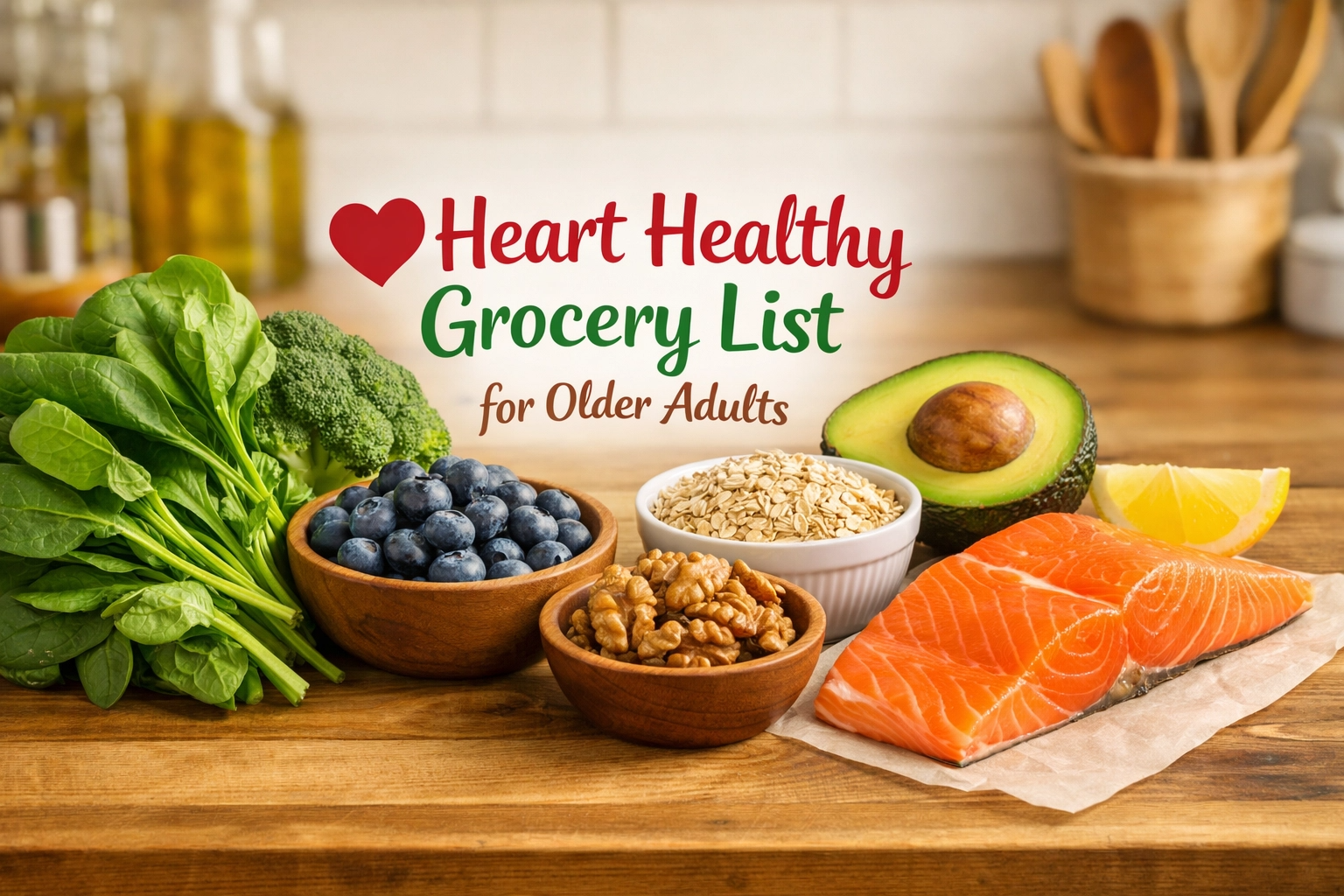
With age, the heart and blood vessels undergo natural changes that can increase the risk of heart disease. Factors such as high blood pressure, high cholesterol, and diabetes become more prevalent — but a diet rich in specific nutrients can help mitigate these risks and support cardiovascular function.
Essential Nutrients for a Healthy Heart in Seniors
Older adults have unique nutritional needs. Focusing on these six nutrients can significantly impact heart health and overall vitality.
Soluble fibre (oats, beans, fruit) reduces LDL cholesterol. Insoluble fibre (whole grains, vegetables) supports digestive regularity.
Balances sodium levels in the body — crucial for maintaining healthy blood pressure. Many older adults don’t consume enough.
Lowers triglycerides, reduces blood pressure, and decreases arrhythmia risk. Particularly vital for brain and heart health.
Essential for nerve function and red blood cell production. Older adults are more susceptible to B12 deficiency due to decreased absorption.
Beyond bone health, both play a role in heart function — including blood clotting and muscle contraction.
Adequate protein maintains muscle mass, which declines with age. Lean protein sources support overall health and fit a heart-healthy diet.
Heart-Healthy Grocery List for Older Adults
Every item below was chosen for nutritional density, ease of preparation, and direct cardiovascular benefit. Use this as your template and adapt to personal taste and dietary needs.
- Blueberries
- Strawberries
- Raspberries
- Apples (with skin, for fibre)
- Bananas (potassium)
- Oranges & grapefruit (Vitamin C, soluble fibre)
- Avocado (monounsaturated fats, potassium)
- Frozen berries (no added sugar)
- Canned fruit in its own juice
- Spinach
- Kale
- Collard greens
- Broccoli, cauliflower, Brussels sprouts
- Sweet potatoes (beta-carotene, fibre)
- Carrots
- Bell peppers — red, yellow, orange (Vitamin C)
- Tomatoes (lycopene, potassium)
- Frozen vegetables (low-sodium or no-salt-added)
- Rolled oats
- Steel-cut oats
- Brown rice (vs. white rice)
- Quinoa (complete protein + fibre)
- Barley (excellent fibre source)
- 100% whole wheat bread
- Whole wheat pasta
- Salmon
- Mackerel
- Sardines
- Tuna
- Skinless chicken or turkey breast
- Eggs (versatile, complete protein)
- Lentils
- Black beans, chickpeas
- Tofu / tempeh
- Extra virgin olive oil (dressings & low-heat cooking)
- Almonds
- Walnuts
- Pecans
- Chia seeds (omega-3s, fibre)
- Flaxseeds (omega-3s, fibre)
- Pumpkin seeds
- Low-fat milk
- Low-fat or fat-free yogurt
- Low-fat cheese (in moderation)
- Almond milk (fortified)
- Soy milk (fortified)
- Oat milk (fortified)
Heart-Healthy Shopping & Eating Strategies
Making heart-healthy choices at the grocery store and in the kitchen can be simple with the right habits. These strategies are particularly suited to older adults shopping and cooking solo.
Adopting a heart-healthy diet is one of the most powerful steps older adults can take to enhance their quality of life and reduce the risk of cardiovascular disease. By focusing on whole, unprocessed foods, understanding key nutrients, and implementing practical shopping and cooking strategies, seniors can nourish their hearts and enjoy a vibrant, healthy future.
Remember to consult with a healthcare professional or a registered dietitian for personalised dietary advice tailored to your specific health conditions and medications.