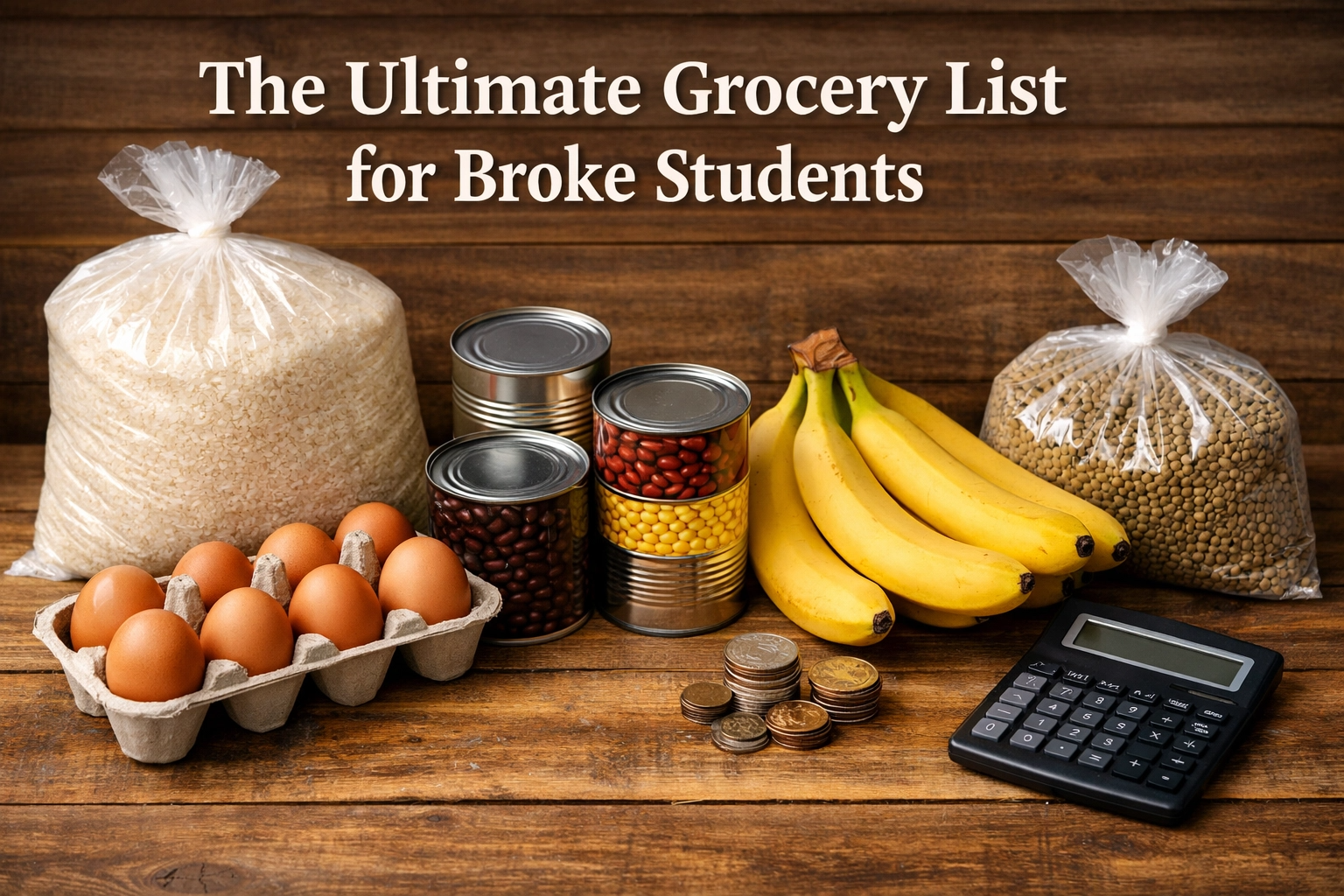
Being a student often means juggling studies, part-time work, and a budget that has no room for error. Eating well on next to nothing isn’t just possible — it’s a skill. With smart planning and a well-chosen pantry, you can eat nutritious, genuinely satisfying meals every day without touching your textbook fund.
This guide covers foundational shopping strategies, essential pantry staples, and three complete sample grocery lists — Basic, Vegetarian, and High-Protein — each with a week’s worth of meal ideas built from the same ingredients.
Before diving into specific food items, these foundational strategies will save you money every single week — regardless of what you buy. Master these habits first and every grocery trip becomes more efficient.
These are the foundational items that form the base of most budget meals. Inexpensive, versatile, and long-lasting — stock these once and you’ll always have something genuinely worth eating in the kitchen.
- Rice — brown or white, incredibly versatile and cheap
- Pasta — quick to cook, pairs with almost anything on hand
- Oats — cheap and filling; porridge, overnight oats, baking
- Bread & tortillas — sandwiches, wraps, quesadillas, pizza bases
- Potatoes — baked, mashed, roasted, or added to stews
- Eggs — most versatile protein; breakfast, lunch, or dinner
- Canned beans & lentils — black beans, chickpeas, kidney beans
- Canned tuna or chicken — shelf-stable, reliable backup protein
- Peanut butter — protein, healthy fats, and endlessly useful
- Tofu — budget plant-based protein; absorbs flavours well
- Frozen vegetables — broccoli, spinach, mixed veg, corn
- Canned tomatoes — diced, crushed, or pureed; essential for sauces
- Onions & garlic — flavour foundation of almost every savoury dish
- Seasonal fresh produce — apples, bananas, carrots, cabbage year-round
- Milk — dairy or plant-based; oat and almond last longer unopened
- Yogurt — plain; snack, breakfast, or cooking substitute
- Cheese — buy a hard block, not pre-shredded; lasts longer
- Cooking oil — vegetable, canola, or olive; one bottle lasts weeks
- Salt, pepper & basic spices — garlic powder, cumin, paprika
- Hot sauce & soy sauce — transform plain rice, eggs, or veg instantly
Three lists tailored to different dietary preferences and budget levels — each with a week’s worth of meal ideas built from the same ingredients. Print the one that fits your week.
| Category | Item | Notes |
|---|---|---|
| 🌾 Grains | ||
| Rice | Large bag | Brown or white |
| Pasta | Large box | Any shape |
| Oats | Container | Rolled or quick-cooking |
| Bread | Loaf | Whole wheat or white |
| 💪 Proteins | ||
| Eggs | Dozen | Versatile for any meal |
| Canned black beans | 2–3 cans | — |
| Canned chickpeas | 1–2 cans | — |
| Canned tuna | 2–3 cans | In water or oil |
| Peanut butter | Large jar | — |
| 🥦 Produce | ||
| Frozen mixed veggies | Large bag | — |
| Onions | 2–3 | — |
| Garlic | 1 head | — |
| Bananas | 3–4 | — |
| Apples | 2–3 | — |
| 🧂 Pantry | ||
| Milk | Small carton | Dairy or plant-based |
| Pasta sauce | 1 jar | — |
| Cooking oil | Small bottle | — |
| Salt & pepper | — | Basic seasonings |
| Category | Item | Notes |
|---|---|---|
| 🌾 Grains | ||
| Rice | Large bag | Brown or white |
| Pasta | Large box | Whole wheat or regular |
| Oats | Container | — |
| Tortillas | Pack | For wraps or quesadillas |
| 💪 Proteins | ||
| Canned black beans | 2–3 cans | — |
| Canned lentils | 2–3 cans | — |
| Tofu (firm) | 1–2 blocks | — |
| Peanut butter | Large jar | — |
| 🥦 Produce | ||
| Frozen mixed veggies | Large bag | — |
| Canned diced tomatoes | 1–2 cans | — |
| Onions, garlic | 2–3 / 1 head | — |
| Spinach | 1 bag/box | Fresh or frozen |
| Carrots | 1 bag | — |
| 🧂 Pantry | ||
| Plant-based milk | Small carton | — |
| Pasta sauce | 1 jar | — |
| Spices | — | Cumin, chili powder, paprika |
| Cooking oil | Small bottle | — |
| Category | Item | Notes |
|---|---|---|
| 🌾 Grains | ||
| Brown rice | Large bag | — |
| Whole wheat pasta | Large box | — |
| Oats | Container | — |
| Whole wheat bread | Loaf | — |
| 💪 Proteins | ||
| Eggs | 2 dozen | — |
| Canned tuna | 3–4 cans | — |
| Canned chicken | 2–3 cans | — |
| Dried lentils | 1 bag | Cook in bulk — great value |
| Greek yogurt (plain) | Large tub | — |
| Chicken thighs or drumsticks | 1–2 lbs | Cheaper cuts — more flavour too |
| 🥦 Produce | ||
| Frozen broccoli | Large bag | — |
| Frozen spinach | Large bag | — |
| Onions, garlic | 2–3 / 1 head | — |
| Apples | 2–3 | — |
| 🧂 Pantry | ||
| Milk | Carton | — |
| Hot sauce | — | For flavour without calories |
| Spices | — | Garlic powder, onion powder, paprika |
| Cooking oil | — | — |
Beyond the basics, these habits can stretch your dollar even further over a full semester — small changes that compound into real savings over months.
💡 Pro Tip: Keep a running note on your phone of what’s currently in your fridge and pantry. Before every shop, check it — you’ll be surprised how often you already have the ingredients for a full meal and simply don’t realise it. This single habit can cut your grocery bill by 10–20% immediately.
Eating well as a broke student is not just possible — it’s an empowering skill that will serve you long after graduation. By adopting smart shopping habits, focusing on versatile pantry staples, and getting creative in the kitchen, you can enjoy nutritious, genuinely satisfying meals without stressing your budget.
Every dollar saved on groceries is a dollar you can put towards your education, your experiences, or your future. Start with the basic list, find what you enjoy, and build from there. The kitchen rewards effort — and the skills you build here last a lifetime.