No kitchen, no skills, no time. For many students, the transition to independent living is complicated by a complete lack of culinary experience. But eating well doesn’t require turning on a stove. This guide is built entirely around assembly-based eating — combining pre-prepared, ready-to-eat ingredients into balanced, satisfying meals with zero cooking required.
By focusing on nutrient-dense staples and smart assembly, students can escape the cycle of expensive takeout and nutritionally empty instant noodles — without ever needing to learn to cook.
Every assembly meal should aim to cover all three macronutrient pillars. Hit these three things in every bowl, wrap, or plate — and you’re eating better than most people who do cook.
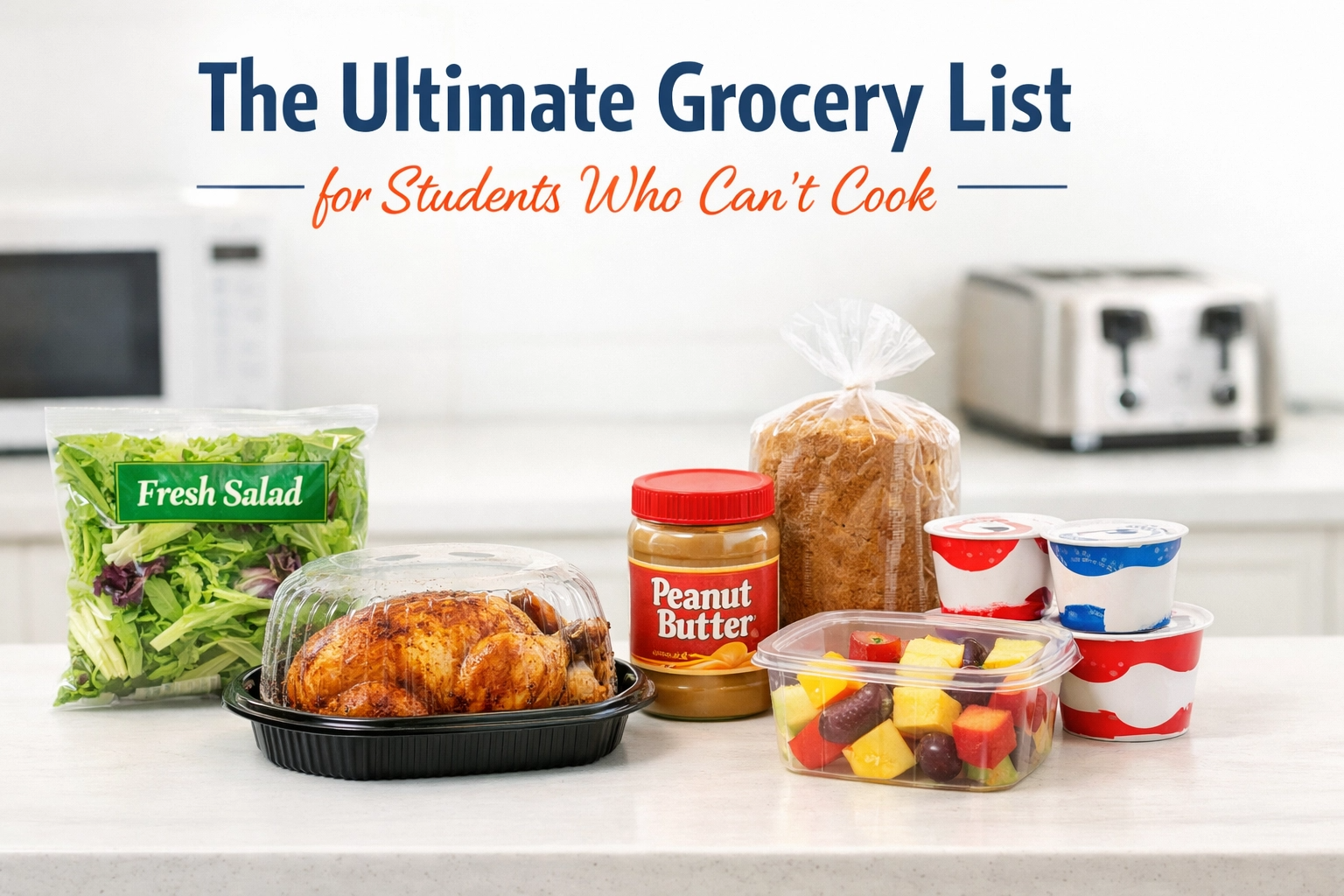
Every item below requires zero to minimal preparation — selected for shelf stability, versatility, and nutritional value. No stove. No oven. No knives beyond a butter knife. Just open, assemble, and eat.
Every meal below is built from the grocery list above. No cooking required — just assemble, season, and eat. Each one hits all three macro pillars.
Breakfast — the foundation of focusAssembly Rule: Always aim to hit all three macros in every bowl — a protein source, a carb base, and a fat element. Use the flavour enhancers to make it taste intentional rather than improvised. A drizzle of soy sauce or a spoonful of pesto is the difference between functional and genuinely good.
Managing a grocery budget is as important as knowing what to buy. These four habits will stretch your weekly shop significantly further — and keep you eating well for less throughout the semester.
💡 Pro Tip: Build one “base bowl” per week from your rotisserie chicken and rice pouches, then vary the toppings — different sauces, different vegetables, different cheeses — so you’re eating the same efficient meal with a completely different experience each time. It’s the highest-return habit in student eating.
Cooking is a valuable life skill — but it is not a prerequisite for healthy eating. By mastering this grocery list and focusing on quality pre-prepared ingredients assembled with intention, students can maintain their health, their energy, and their budget simultaneously.
The transition to university is demanding enough. Your diet should be a source of strength, not a source of stress. Start with the rotisserie chicken, the rice pouches, and a jar of hummus — everything else builds from there.