
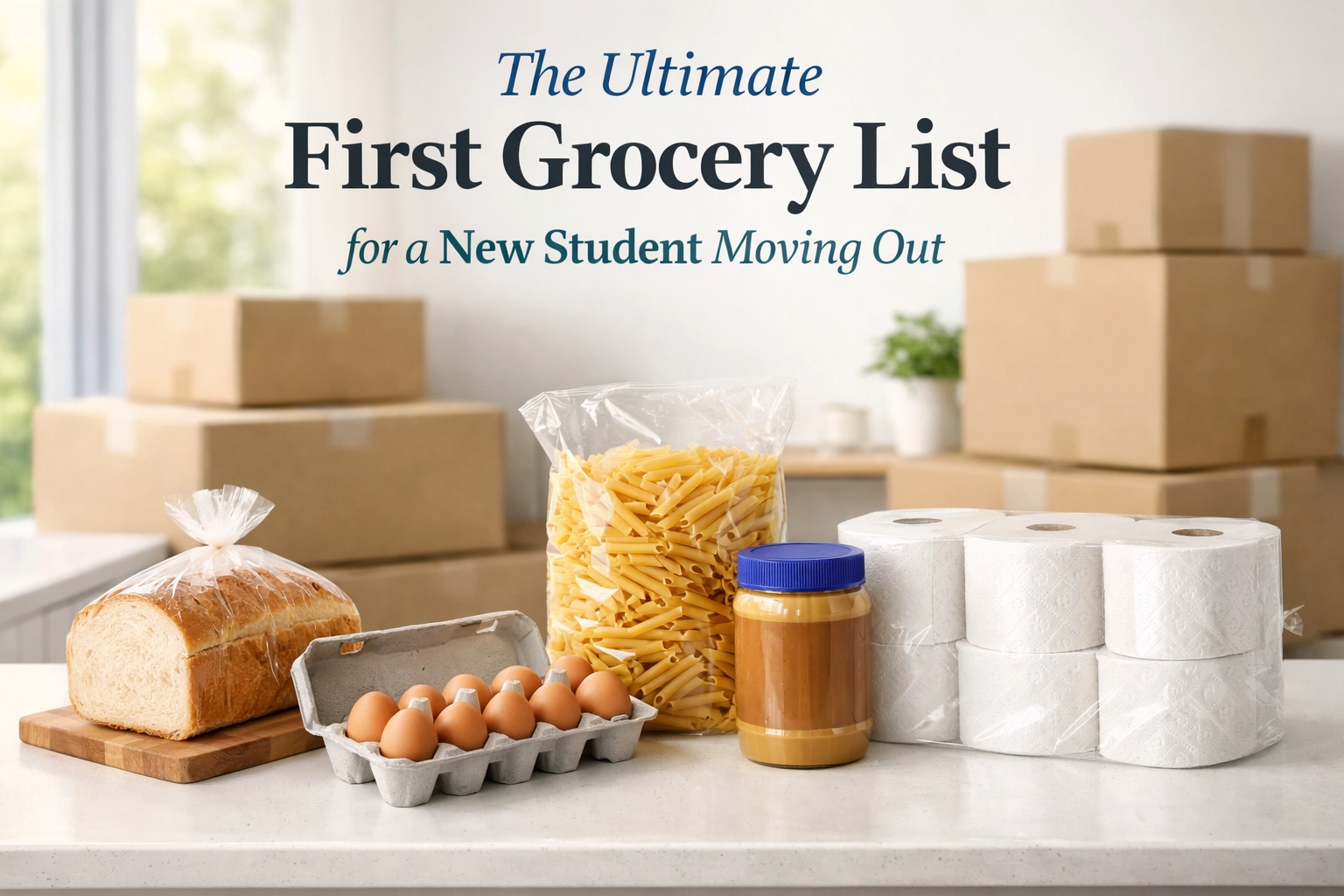
First Grocery List for a New Student Moving Out
Moving into your first independent living space is a monumental milestone. But once the boxes are stacked and the keys are in hand, a common realisation sets in: the fridge is empty and the pantry is bare. Transitioning from a shared or family home to your own apartment requires a strategic approach to avoid overspending — or ending up with a kitchen full of snacks but no actual meals.
This guide takes a phased approach to your first grocery trip, ensuring you have the essentials for immediate survival while building a foundation for long-term culinary success.
The “First 48 Hours” Essentials
🚀 Survival mode — convenience over everything
The first two days of moving are often chaotic. You likely won’t have the energy for complex cooking, and you may still be locating your pots and pans. Focus entirely on high-convenience items and non-negotiable household supplies.
Building the Pantry Foundation
🫙 Long shelf life · Budget-friendly · The backbone of home cooking
A well-stocked pantry is the secret to affordable and stress-free home cooking. These items have long shelf lives and serve as the building blocks for hundreds of different recipes.
🌾 Grains & Legumes — The most cost-effective way to bulk up any mealSpices can be expensive if bought all at once. Start with just these five and add one or two new ones each month as your cooking expands.
Fresh and Perishable Goods
🥚 Buy small — you can always restock mid-week
Perishables should be bought in smaller quantities to prevent waste — especially during the first week when your schedule may be unpredictable. Buy less than you think you need, then adjust week by week.
💪 ProteinsHousehold & Cleaning Supplies
🧹 Your first trip isn’t just about food
Your first grocery trip is about maintaining your new environment as much as stocking your kitchen. Don’t leave the shop without covering these three areas.
| Area | What to Buy |
|---|---|
| 🍽️ Kitchen | Dish soap, sponges, and all-purpose cleaner spray |
| 👕 Laundry | Laundry detergent and a small bottle of stain remover |
| 🚿 Bathroom | Toilet bowl cleaner and a basic disinfectant spray |
Tips for the First-Time Shopper
To make your first shopping experience as efficient and budget-friendly as possible, build these six habits from day one.
-
1Shop the Perimeter First — Most grocery stores place fresh produce, meat, and dairy around the edges. The inner aisles contain processed foods and snacks that can quickly inflate your bill.
-
2Don’t Buy Everything at Once — It’s tempting to buy every spice and condiment on day one. Instead, buy ingredients for three specific meals you plan to cook this week and nothing more.
-
3Invest in Store Brands — For staples like salt, sugar, flour, and canned beans, the store brand is often identical to name brands but 30–50% cheaper. Reserve brand loyalty for things that genuinely matter to you.
-
4Check Unit Pricing — Look at the small text on the shelf tag showing price per ounce or per 100g. This reveals whether the “bulk” size is actually a better deal — it isn’t always.
-
5Meal Prep Early — On your first Sunday in the new place, cook a large batch of rice or roasted vegetables. This prevents the “I’m too tired to cook” urge that leads to expensive takeout during the week.
-
6Budget for the “First Trip Spike” — Your first grocery trip will likely cost 2–3× your weekly average because you’re buying non-perishables and cleaning supplies all at once. This is a one-time investment, not your new normal.