
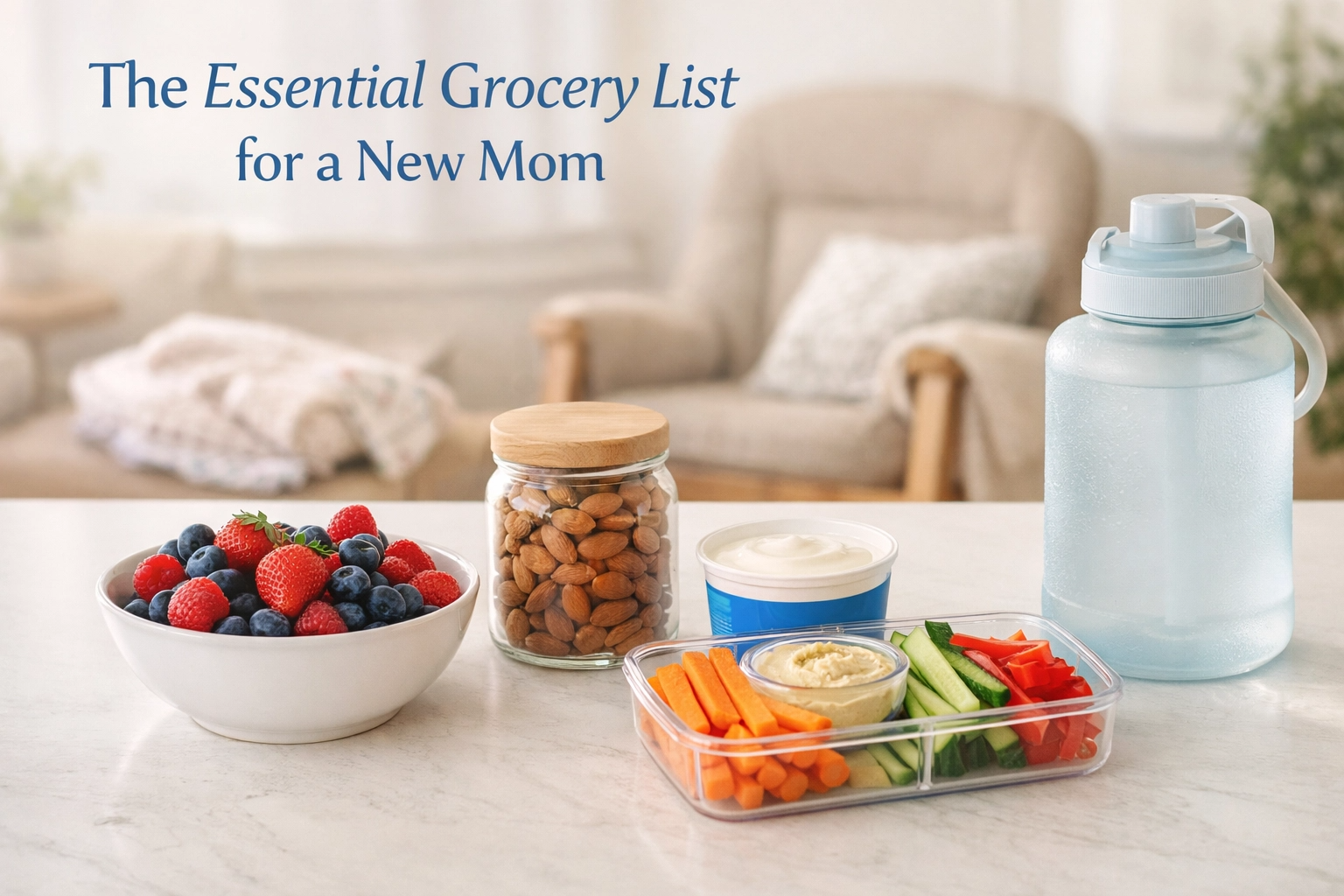
Grocery List for a New Mom
The transition into motherhood — often called the “Fourth Trimester” — is a period of profound physical and emotional change. While much focus is placed on the newborn’s needs, the mother’s nutritional requirements are equally critical for recovery, hormonal balance, and lactation. A well-stocked kitchen is not just a convenience; it is a foundational tool for postpartum wellness.
This guide provides a research-backed grocery list designed to support a new mom’s body through healing and the demands of early parenthood — with a focus on foods that are quick, easy to prepare, and often manageable with just one hand.
The Five Pillars of Postpartum Nutrition
Before diving into the grocery list, it helps to understand why certain foods are prioritised. Postpartum recovery requires specific nutrients to repair tissue, replenish blood loss, and stabilise mood.
| Nutrient | Primary Postpartum Function | Key Sources |
|---|---|---|
| 💪 Protein | Essential for tissue repair (especially after C-sections or tears) and hormone production | Eggs, Greek yogurt, lean meats, lentils, tofu |
| 🩸 Iron | Replenishes blood loss during delivery and combats postpartum fatigue | Spinach, red meat, fortified cereals, beans |
| 🥑 Healthy Fats | Supports brain health, hormone regulation, and provides long-lasting energy | Avocados, walnuts, olive oil, fatty fish (salmon) |
| 🌾 Fibre | Crucial for digestive health and preventing postpartum constipation | Oats, berries, chia seeds, whole grains |
| 💧 Hydration | Vital for recovery and milk production — prevents headaches and fatigue | Water, coconut water, herbal teas, bone broth |
The Master Grocery List
Organised by store section. The priority throughout is low-prep and no-prep items that can be assembled quickly — even with a baby in your arms.
🥦 Section 1 — The Produce AisleThe “One-Handed” Snack Station
New moms often find themselves with only one hand free. Keeping a dedicated snack basket near your most frequent feeding spot — nursery, sofa, or bed — is one of the most practical postpartum setups you can create.
Energy Bites
Made with oats, nut butter, and honey. Batch-prep on a good day and store for the week.
Beef Jerky or Turkey Sticks
High-protein, shelf-stable, and individually packaged — the ideal nursing station staple.
Trail Mix
A perfect balance of salt, fat, and fibre. Make your own with nuts, seeds, and dark chocolate chips.
Granola Bars
Choose brands with low sugar and high fibre — look for options with whole food ingredients.
Cheese Sticks
Individually wrapped for convenience — grab one from the nursing basket without needing to visit the fridge.
Galactagogues: Foods That May Support Milk Supply
If you are breastfeeding, certain foods are traditionally associated with supporting milk production. While individual responses vary, these are well-regarded by lactation specialists and widely used by nursing mothers.
🌾 Oats
The most widely recognised lactation-supporting food. Use in overnight oats, smoothies, or homemade energy bites for a daily dose.
🌱 Flaxseeds
High in phytoestrogens that may influence milk production. Add ground flaxseed to oats, smoothies, or yogurt daily.
🍺 Brewer’s Yeast
Often added to “lactation cookies” for its B-vitamin content. Can also be stirred into smoothies or oatmeal.
🌿 Fennel
Can be eaten raw in salads, roasted as a side vegetable, or brewed as a soothing herbal tea between nursing sessions.
Postpartum Meal Prep Hacks
Efficiency is the goal during the first few weeks. These three strategies minimise time in the kitchen without sacrificing nutrition.
-
The “Double Batch” Rule — If you or a partner are cooking, always make double. Freeze half immediately for a day when things are chaotic. Soups, stews, and casseroles all freeze beautifully.
-
Assembly over Cooking — Focus on meals that require assembly rather than heat. A Mediterranean Bowl with pre-cooked quinoa, rotisserie chicken, hummus, and cucumber slices takes under 5 minutes and hits every nutritional pillar.
-
Hydration Reminders — Keep a 32oz water bottle in every room where you spend time. If breastfeeding, aim to drink a full glass of water every time the baby feeds — this simple habit makes adequate hydration almost automatic.