Choosing the right slow cooker size is a pivotal decision for any home cook, directly impacting the efficiency of your cooking, the quality of your meals, and even your kitchen’s organization. While often overlooked, the capacity of your slow cooker dictates everything from portion control to energy consumption. A common pitfall for many is either purchasing a unit that is too small, leading to cramped ingredients and insufficient servings, or one that is excessively large, resulting in underfilled pots, uneven cooking, and wasted energy. This comprehensive guide aims to demystify the selection process by focusing on the three most popular slow cooker sizes: the compact 3-quart, the versatile 6-quart, and the expansive 8-quart. By delving into the nuances of each size, we will equip you with the knowledge to make an informed decision, ensuring your next slow cooker perfectly aligns with your culinary needs and lifestyle.
Quick Size Comparison Table
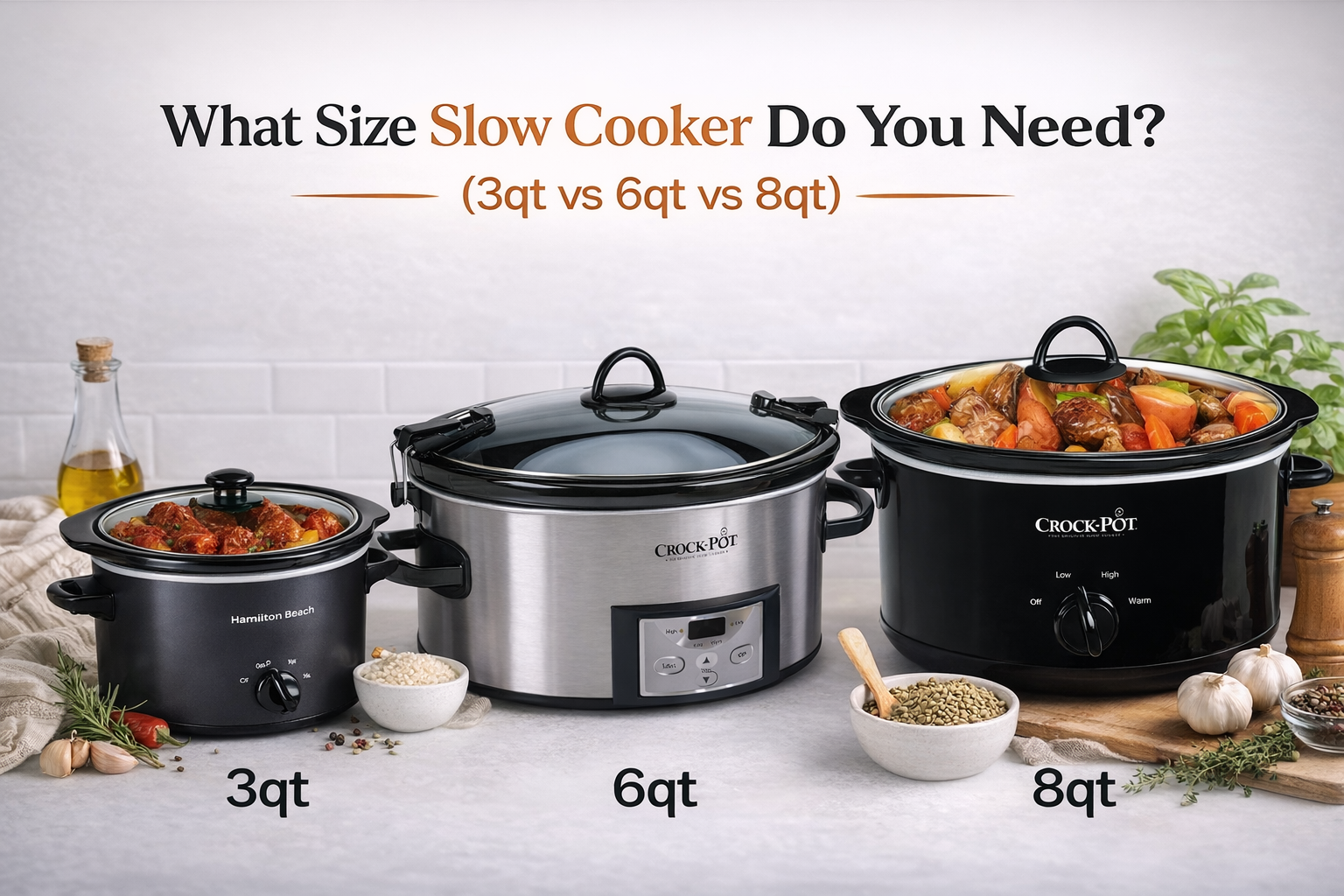
To provide a clear overview, the following table summarizes the key characteristics of the 3-quart, 6-quart, and 8-quart slow cookers, highlighting their ideal uses and typical meal capacities.
| Size | Servings | Best For | Typical Meals |
| 3 Quart | 1–3 people | Singles or couples | Soups, dips, small chili batches, side dishes |
| 6 Quart | 4–6 people | Families | Stews, roasts, whole chickens |
| 8 Quart | 6–10 people | Large families, meal prep | Big batches, meal prep, entertaining |
3 Quart Slow Cooker: Best For Small Households
The 3-quart slow cooker, often affectionately referred to as the
“mini,” is an excellent choice for individuals or small households where cooking for one or two is the norm. Its compact footprint makes it ideal for kitchens with limited counter or storage space, and its energy efficiency is a bonus for those conscious of utility consumption. This size caters specifically to the needs of singles, couples, or those who engage in occasional slow cooking rather than daily meal preparation for a crowd.
Who Should Buy It?
- Singles: Perfect for preparing individual meals with minimal leftovers.
- Couples: Accommodates meals for two, ensuring fresh food without excessive waste.
- Small Kitchens: Its compact design is a boon for apartments, dorms, or any kitchen where space is at a premium.
- Occasional Slow Cooking: Ideal for those who enjoy the convenience of slow cooking but don’t require large quantities regularly.
Typical Recipes
The 3-quart slow cooker excels at preparing smaller portions of a variety of dishes:
- Soups and Dips: Think creamy spinach and artichoke dip for a small gathering, or a hearty bowl of tomato soup for a cozy evening.
- Small Chili Batches: Enough for a couple of servings, perfect for a weeknight dinner.
- Side Dishes: Ideal for cooking baked potatoes, mashed potatoes, or even a small batch of mac and cheese.
- Desserts: Small cakes, custards, or fruit crumbles can be perfectly prepared in this size.
Pros
- Compact and Portable: Easy to move, store, and doesn’t monopolize counter space.
- Energy Efficient: Uses less power compared to larger models, making it more economical for smaller meals.
- Easy to Clean: Smaller size means less surface area to scrub.
- Affordable: Generally the most budget-friendly option.
Cons
- Too Small for Large Meals: Cannot accommodate whole chickens, large roasts, or significant quantities of food for entertaining.
- Limited for Batch Cooking: Not suitable for meal prepping for the week or feeding a larger family.
- Less Versatile: Its primary limitation is its capacity, restricting the types and amounts of dishes you can prepare.
6 Quart Slow Cooker: The Most Popular Choice
The 6-quart slow cooker stands out as the undisputed champion in terms of popularity and versatility, earning its reputation as the
“goldilocks” size—just right for most households. This size strikes an optimal balance between capacity and counter space, making it an indispensable appliance for families and individuals who regularly rely on slow cooking for nutritious and convenient meals.
Who Should Buy It?
- Families of 3–5: Comfortably feeds a medium-sized family with potential for leftovers.
- Weekly Slow Cooker Users: Ideal for those who integrate slow cooking into their regular meal rotation.
- People Who Cook Full Meals: Large enough to handle main courses, stews, and roasts.
- Entertainers: Can prepare substantial dishes for small gatherings or potlucks.
What Fits Inside?
The 6-quart capacity is surprisingly generous, accommodating a wide array of ingredients:
- 4–5 lb Chicken: A whole chicken fits perfectly, yielding tender, fall-off-the-bone results.
- Medium Pot Roast: Easily handles a substantial cut of beef or pork, enough for several meals.
- Full Stew or Chili Batch: Prepares a generous quantity of hearty stews, chilis, or soups, perfect for family dinners or freezing portions.
- Pulled Pork or Brisket: Excellent for slow-cooking large cuts of meat for sandwiches or tacos.
Pros
- Most Versatile Size: Adapts to a wide range of recipes and serving needs, from everyday meals to small entertaining events.
- Perfect Balance of Capacity and Space: Offers ample cooking volume without being overly cumbersome on the countertop.
- Great for Leftovers: Allows for cooking larger batches, providing convenient meals for subsequent days or for freezing.
- Widely Available: This is the most common size, offering the broadest selection of brands, features, and price points.
Cons
- May Be Too Big for Single Servings: While versatile, cooking very small portions might lead to uneven cooking or drying out if not properly managed.
- Takes More Storage Space: Larger than the 3-quart, requiring a dedicated spot in the pantry or cabinet.
- Heavier: Can be more challenging to move and clean compared to its smaller counterpart.
8 Quart Slow Cooker: Best for Large Families & Meal Prep
For those with substantial cooking needs, the 8-quart slow cooker is the ultimate workhorse. This generous capacity is designed to cater to large families, serious meal preppers, and anyone who frequently hosts gatherings or potlucks. It’s built for volume, ensuring you can feed a crowd or stock your freezer with delicious, home-cooked meals.
Who Should Buy It?
- Families of 6+: Easily accommodates meals for larger households, ensuring everyone gets a satisfying portion.
- Meal Preppers: Ideal for cooking large quantities of food at once, saving time and effort during busy weeks.
- Holiday Cooks: Perfect for preparing holiday feasts, such as a large turkey breast or a substantial side dish.
- Potluck Hosts: Ensures you can bring a generous, crowd-pleasing dish to any event.
Typical Recipes
The 8-quart slow cooker shines when preparing large-scale dishes:
- Large Roasts: Can handle substantial cuts of meat, such as a 7-8 lb pork shoulder or beef roast.
- Whole Chickens: Comfortably fits larger whole chickens, making it easy to prepare for a family dinner.
- Big Soup Batches: Perfect for making enormous pots of soup, chili, or stew that can last for days or be frozen for future meals.
- Bulk Meal Prep: Cook multiple components of meals simultaneously, like large batches of shredded chicken, beans, or grains.
Pros
- Huge Capacity: Offers the largest cooking volume, making it suitable for the biggest culinary tasks.
- Great for Entertaining: Effortlessly feeds a large number of guests, reducing stress during parties and gatherings.
- Batch Cooking Friendly: Maximizes efficiency for meal prepping, allowing you to cook once and eat multiple times.
- Less Frequent Cooking: For smaller families, it means cooking less often, as one batch can provide several meals.
Cons
- Takes Up More Counter Space: Its considerable size demands significant counter and storage real estate.
- Uses More Energy: Requires more power and a longer cooking time for smaller quantities, making it less efficient for small meals.
- Too Large for Small Meals: Cooking small portions in an 8-quart can lead to overcooking, drying out, or uneven results due to the large empty space.
- Heavier and More Cumbersome: Can be difficult to move, lift, and clean due to its weight and size.
6. How to Choose the Right Slow Cooker Size
Selecting the perfect slow cooker involves a thoughtful consideration of your individual needs and cooking habits. Beyond just the numbers, think about how you envision using this appliance in your daily life. Here are the critical factors to weigh:
Consider These Factors
- Household Size: This is arguably the most crucial factor. The number of people you typically cook for will directly influence the ideal capacity.
- 1–2 people: A 3-quart slow cooker is generally sufficient, preventing excessive leftovers and food waste.
- 3–5 people: The 6-quart model offers the most flexibility, accommodating family meals with enough for a lunch the next day.
- 6+ people: An 8-quart slow cooker is essential for ensuring everyone gets a hearty meal, especially if you enjoy entertaining.
- Cooking Habits: Your approach to cooking will also guide your decision.
- Occasional Use: If you only slow cook infrequently or for small side dishes, a 3-quart might be all you need.
- Weekly Meals: For those who rely on their slow cooker several times a week for main dishes, the 6-quart is the most practical and versatile choice.
- Meal Prep / Large Meals: If you’re dedicated to batch cooking, freezing meals, or frequently host large gatherings, the 8-quart will be your best ally.
- Kitchen Storage Space: Slow cookers, especially the larger models, can be bulky. Measure your available counter and cabinet space to ensure your chosen size fits comfortably without creating clutter.
- Recipe Sizes You Normally Cook: Review your favorite slow cooker recipes. Do they typically call for a whole chicken, a large roast, or just a few cups of ingredients? This will give you a realistic idea of the capacity you truly need.
Portion Guide by Slow Cooker Size
Understanding the approximate servings each slow cooker size provides can help in visualizing its utility for your household. Remember, these are general guidelines, and actual servings can vary based on appetite and recipe density.
- 3-quart: Typically yields 2–3 servings.
- 6-quart: Provides approximately 5–6 servings.
- 8-quart: Generously offers 8–10 servings.
Important Tip: For optimal cooking results and to prevent food from drying out or cooking unevenly, a slow cooker should always be filled between ½ to ¾ full. Underfilling can lead to faster cooking times and potential burning, while overfilling can result in spills and undercooked food.
Can You Cook Small Meals in a Large Slow Cooker?
While it is technically possible to cook a small meal in a large slow cooker, it’s generally not recommended without adjustments. The larger air space and surface area can cause food to cook faster and dry out more quickly than intended. If you find yourself in this situation, here are a few considerations:
- It May Cook Faster: Due to the increased empty space, the heat distribution can be more intense, potentially reducing the required cooking time. Monitor your food closely.
- Use Inserts or Adjust Recipes: To mitigate the effects of excess space, you can use oven-safe bowls or ramekins placed inside the larger slow cooker to hold smaller portions. This creates asmaller, more controlled cooking environment. Alternatively, you can scale down your recipes to better fit the larger pot, ensuring the slow cooker is still filled to the recommended ½ to ¾ capacity.
- Better to Scale Recipes if Possible: The most effective way to use a large slow cooker for a smaller meal is to simply increase the recipe quantity. This allows you to take full advantage of the appliance’s capacity, yielding more leftovers for future meals or meal prep.
Most Common Slow Cooker Buying Mistakes
Navigating the world of slow cookers can be tricky, and many first-time buyers or even seasoned cooks make common errors that lead to dissatisfaction. Avoiding these pitfalls can save you time, money, and culinary frustration.
- Buying Too Small for Family Size: This is perhaps the most frequent mistake. A slow cooker that is too small for your household’s needs will constantly leave you wanting more, forcing you to cook multiple batches or supplement with other cooking methods. Always consider your average meal size and potential for leftovers.
- Ignoring Storage Space: The physical footprint of a slow cooker, especially the larger 6-quart and 8-quart models, can be substantial. Many buyers overlook measuring their available counter and cabinet space, leading to a bulky appliance that clutters the kitchen or is difficult to store.
- Not Checking Recipe Capacity: Some recipes are designed for specific slow cooker sizes. Failing to check if your favorite recipes will fit comfortably in your chosen slow cooker can lead to overflow, underfilling, or uneven cooking. Always aim for the ½ to ¾ full rule.
- Choosing Size Based Only on Price: While budget is a factor, opting for a smaller, cheaper model when a larger one would better suit your needs is a false economy. The inconvenience and limitations of an ill-fitting slow cooker will likely outweigh any initial savings.
Quick Recommendation Guide
To simplify your decision, here’s a concise guide based on typical usage scenarios:
- Choose a 3-quart if:
- You cook primarily for 1–2 people.
- You have limited kitchen space.
- You mostly prepare dips, small side dishes, or individual portions.
- Choose a 6-quart if:
- You want the most versatile size for a family of 3–5.
- You cook full meals regularly and appreciate leftovers.
- You need a balance between capacity and counter space.
- Choose an 8-quart if:
- You cook for a large family (6+ people).
- You are an avid meal prepper or frequently host gatherings.
- You need to cook very large cuts of meat or bulk batches of food.
Final Verdict
In the realm of slow cookers, the choice of size is paramount to a satisfying cooking experience. Each of the three popular sizes—3-quart, 6-quart, and 8-quart—serves a distinct purpose, catering to different household sizes and culinary habits. The 3-quart is the ideal companion for singles and couples, offering efficiency and compactness for smaller meals and side dishes. The 8-quart stands as the undisputed champion for large families, meal preppers, and entertainers, providing ample capacity for bulk cooking and grand feasts. However, for the vast majority of households, the 6-quart slow cooker emerges as the best all-around choice. Its unparalleled versatility allows it to comfortably handle family meals, provide generous leftovers, and even cater to small gatherings, striking the perfect balance between capacity, convenience, and kitchen footprint. By considering your specific needs against the strengths of each size, you can confidently select a slow cooker that will become an invaluable asset in your kitchen for years to come.
Frequently Asked Questions (FAQs)
Q1: Can I put a smaller dish inside a larger slow cooker?
Yes, you can use the “pot-in-pot” method by placing a smaller, oven-safe dish inside a larger slow cooker. This helps to reduce the effective cooking volume and can prevent smaller meals from overcooking or drying out in a too-large pot. Ensure there’s some water in the bottom of the larger slow cooker around the smaller dish to facilitate heat transfer.
Q2: How full should a slow cooker be?
For optimal results, a slow cooker should be filled between ½ and ¾ full. Underfilling can lead to food cooking too quickly and drying out, while overfilling can cause spills and uneven cooking, potentially leaving food undercooked.
Q3: Does slow cooker size affect cooking time?
Yes, it can. A slow cooker that is too large for the amount of food being cooked will have more empty space, which can cause the food to cook faster and potentially dry out. Conversely, an overfilled slow cooker may take longer to reach the desired temperature and cook thoroughly. Always aim for the recommended fill level.
Q4: What is the average lifespan of a slow cooker?
The average lifespan of a slow cooker can vary depending on the brand, quality, and frequency of use, but most slow cookers are designed to last between 5 to 10 years. Proper care and maintenance can extend its life.
Q5: Can I use a slow cooker without liquid?
No, a slow cooker always requires some form of liquid to generate steam and prevent food from burning. Even for dishes like roasts, it’s essential to have at least a small amount of broth, water, or other liquid at the bottom of the pot to create the moist cooking environment characteristic of slow cooking.