
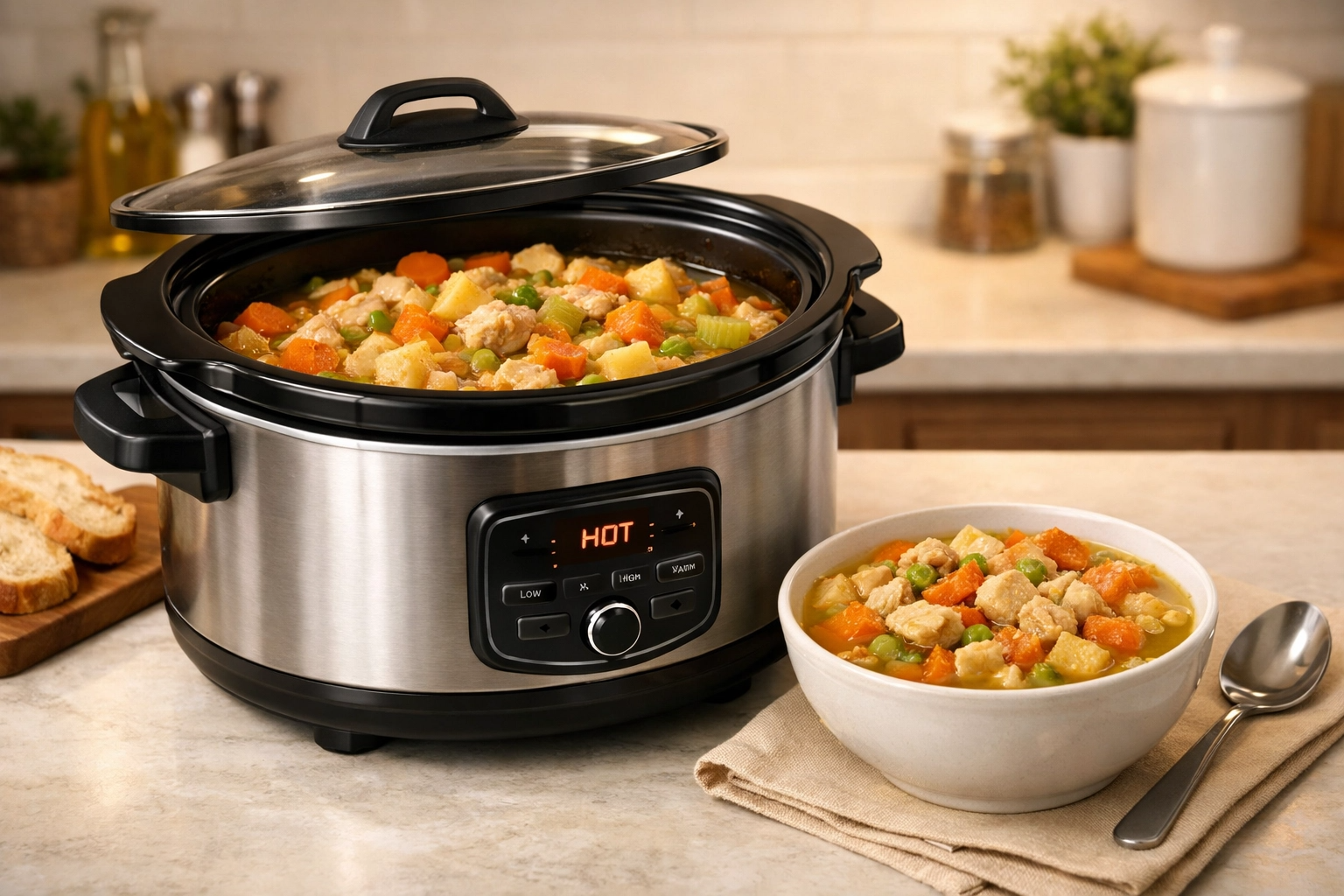
As individuals age, maintaining a nutritious and enjoyable diet can become increasingly challenging. Changes in dental health, swallowing capabilities, and digestion often necessitate a shift towards softer food textures. Yet the desire for flavourful, home-cooked meals remains strong.
This guide explores the vital role of soft foods in senior nutrition and highlights how the slow cooker can be an invaluable tool in preparing delicious, easy-to-eat meals that support overall health and well-being.
Why Soft Foods Matter for Seniors
Dysphagia (difficulty swallowing) affects a significant portion of older adults, leading to discomfort, choking hazards, and even malnutrition. Dental issues — missing teeth, dentures, or gum disease — can make chewing tough or fibrous foods painful. A soft food diet addresses these challenges directly.
Easier to Chew & Digest
Soft foods reduce the physical effort required during meals, improving nutrient absorption as the digestive system processes finely textured foods more efficiently.
Supports Oral Health
Minimising stress on teeth and gums prevents further damage and allows for easier cleaning — transforming mealtime from a chore into a pleasant experience.
Hands-Off Cooking
Assemble ingredients in the morning and a hot, ready-to-eat meal awaits by evening — particularly valuable for seniors with limited mobility or energy.
Retains Nutrients & Flavour
The low and slow cooking process preserves delicate nutrients and allows flavours to deepen over hours, producing rich, comforting dishes that don’t dry out.
Key Considerations for Senior-Friendly Recipes
Nutritional Needs
🥩 Protein
Essential for preventing sarcopenia (age-related muscle loss). Soft sources include ground meats, poultry, fish, eggs, tofu, well-cooked legumes, and dairy products.
🌾 Fibre
Prevents constipation and supports gut health. Focus on soluble fibres from peeled fruits, well-cooked vegetables, and certain grains. Aim for under 2g per serving if digestive issues are present.
💊 Vitamins & Minerals
Vitamins C, D, B12, zinc, and calcium are especially vital. Fortified dairy, colourful cooked vegetables, and lean proteins all contribute. A multivitamin may be recommended by a healthcare provider.
Texture Modifications
- Puree, Mash, or Chop Finely Blend foods into smooth purees, mash to a uniform consistency, or finely chop into pieces smaller than ¼ inch. The key is to eliminate any large, hard, or stringy bits.
- Avoid Tough Meats and Fibrous Vegetables Avoid meat with gristle or casings (like sausages) and fibrous vegetables such as raw broccoli, celery, or corn kernels. Slow cooking naturally tenderises meats, making them easy to shred.
Flavour Tips
- Use Herbs and Mild Spices Fresh and dried herbs (parsley, basil, thyme, dill) and mild spices (paprika, garlic powder, onion powder, turmeric) add depth and aroma without irritation.
- Limit Sodium and Added Sugar Opt for low-sodium broths and natural sweeteners like fruit purees or a touch of honey. The slow cooker’s ability to develop deep flavours naturally reduces the need for excessive seasoning.
Slow Cooker Basics for Soft Foods
For individuals or couples, a 3–4 quart slow cooker is often sufficient. For batch cooking, a 6–7 quart model is more appropriate. Fill the slow cooker between half and two-thirds full for optimal cooking.
Cooking Time Conversion Guide
| Original Recipe Time (Oven/Stovetop) | Slow Cooker LOW Setting | Slow Cooker HIGH Setting |
|---|---|---|
| 15–30 minutes | 4–6 hours | 1.5–2 hours |
| 35–45 minutes | 6–10 hours | 3–4 hours |
| 50 minutes – 3 hours | 8–16 hours | 4–6 hours |
The LOW setting cooks at approximately 170°F–200°F, while HIGH reaches 200°F–280°F — both maintain temperatures above the food safety danger zone for thorough cooking and tenderisation.
Food Safety Tips
- Always Thaw Frozen Ingredients First Adding frozen meat or poultry can keep food in the danger zone (40°F–140°F) for too long, promoting bacterial growth. Thaw completely in the refrigerator beforehand.
- Start on High Turn the slow cooker to HIGH for the first hour to quickly bring food to a safe temperature, then reduce to LOW if the recipe calls for it.
- Keep the Lid On Each time the lid is opened, the internal temperature drops by 10–15°F, extending cooking time and potentially compromising food safety.
- Store Promptly Refrigerate leftovers within two hours. Use shallow containers to cool quickly and reheat thoroughly to 165°F before serving.
Soft Food Slow Cooker Recipes for Seniors
🌅 Breakfast Ideas
- Creamy Oatmeal with Fruit: Rolled oats, milk (dairy or non-dairy), water, and a pinch of salt. Cook on LOW for 2–4 hours or overnight. Stir in mashed banana, stewed apples, or pureed berries after cooking. A sprinkle of cinnamon enhances the flavour.
- Soft Scrambled Eggs with Vegetables: Whisked eggs with a splash of milk and finely minced, pre-cooked soft vegetables (spinach or bell peppers). Cook in a heat-safe dish inside the slow cooker on LOW for 1–2 hours, stirring occasionally, until just set and creamy.
- Slow-Cooked Custard: Whisk eggs, milk, a touch of sweetener, and vanilla. Pour into ramekins, cover with foil, and place in the slow cooker with water reaching halfway up the sides. Cook on LOW for 2–3 hours until set. A smooth, protein-rich option.
🍲 Soups & Stews
- Chicken and Vegetable Stew: Boneless, skinless chicken with low-sodium broth, finely diced carrots, potatoes, and zucchini, and mild herbs. Cook on LOW for 6–8 hours. Remove chicken, shred, and return to the stew. Mash some vegetables for a thicker consistency.
- Lentil or Bean Soup: Red lentils with vegetable broth, finely diced carrots, celery, and onions, plus mild cumin and coriander. Cook on LOW for 6–8 hours. Puree all or part with an immersion blender for an extra-smooth texture.
- Soft Potato and Leek Soup: Softened leeks, peeled and diced potatoes, and vegetable broth. Cook on LOW for 4–6 hours until fork-tender. Puree until smooth and creamy. Finish with a swirl of cream or milk.
🍽️ Main Dishes
- Slow-Cooked Pulled Chicken or Turkey: Boneless chicken breasts or turkey tenderloins with low-sodium broth or a mild sauce. Cook on LOW for 4–6 hours until very tender. Shred with two forks directly in the pot. Serve on soft bread, mashed potatoes, or with soft vegetables.
- Tender Beef or Lamb Stew: Chuck roast or lamb shoulder with low-sodium beef broth, finely diced root vegetables (carrots, potatoes, parsnips), and herbs. Cook on LOW for 8–10 hours until the meat shreds easily. Ensure all vegetables are cooked until very soft.
- Soft Fish Fillets in Broth: Delicate cod or tilapia fillets in a single layer, covered with low-sodium vegetable or chicken broth, lemon slices, and fresh dill. Cook on LOW for 1–2 hours only, until the fish flakes easily. This keeps the fish moist and tender.
🥗 Sides & Vegetables
- Mashed Sweet Potatoes or Carrots: Peeled and diced, cooked with a small amount of water or broth on HIGH for 2–3 hours or LOW for 4–5 hours. Mash with butter, milk, or broth for creaminess. Season with cinnamon or nutmeg.
- Soft-Cooked Squash or Zucchini: Diced butternut squash cooked on LOW for 3–4 hours. Mash or serve as soft chunks. Zucchini cooks faster — about 1–2 hours on LOW.
- Creamy Polenta or Rice: Polenta combined with broth or milk, cooked on LOW for 2–3 hours with occasional stirring until thick and creamy. White rice can similarly be cooked until very soft and mixed with a little cream cheese or butter for a richer texture.
🍮 Snacks & Desserts
- Stewed Fruits: Apples, pears, peaches, or berries with a small amount of water or juice and a pinch of cinnamon. Cook on LOW for 2–3 hours until very soft. Serve warm or chilled — excellent as a dessert or oatmeal topping.
- Rice Pudding or Custard: Cooked rice combined with milk, sugar, and vanilla. Cook on LOW for 2–3 hours until creamy. Custard (as in the breakfast section) also works beautifully as a smooth, comforting dessert.
- Bread Pudding: Using a water bath method in the slow cooker, bread pudding adapts well to result in a moist, tender dessert. Look for recipes specifically designed for slow cookers.
Meal Prep and Storage
📦 Batch Cook & Freeze
Prepare larger quantities and divide into individual portions. Freeze for up to 3 months. Label containers with the dish name and date to keep a consistent supply of ready-to-eat soft meals.
♨️ Reheat Gently
Reheat frozen portions in the microwave or on the stovetop with a splash of broth or water to maintain moisture. Avoid over-reheating, which can toughen food.
🍽️ Right-Size Portions
Consider smaller, more frequent meals rather than large ones. Appropriate portion sizes prevent waste and ensure adequate nutrient intake throughout the day.
Troubleshooting Common Issues
Meat Still Tough?
It likely needs more time. Slow cookers work by breaking down connective tissues, which requires prolonged heat. Ensure there is enough liquid in the pot.
Also consider the cut — tougher cuts with more connective tissue (like chuck roast) benefit most from long, slow cooking, while leaner cuts can dry out if overcooked.
Soup Too Watery?
Create a slurry by mixing a tablespoon of cornstarch or flour with an equal amount of cold water, then stir into the hot soup during the last 30 minutes. Alternatively, remove a portion of the soup, puree it, and return it to the pot to thicken naturally.
Soup Too Thick?
Simply add more low-sodium broth or water until the desired consistency is reached. Add gradually and stir well before assessing further.
Food Lacking Flavour?
Build flavour from the beginning — sauté aromatics (onions, garlic) before adding to the slow cooker. Use good quality, low-sodium broths. A squeeze of lemon juice or a dash of vinegar at the end can brighten flavours without adding sodium.
Conclusion
For seniors, a diet of soft, nutritious, and flavourful foods is not just a preference but often a necessity for health and well-being. The slow cooker stands out as an exceptional tool for achieving this, offering convenience, nutrient retention, and superior tenderisation.
Experiment with flavours and textures, adapting recipes to suit individual preferences and dietary needs. The versatility of the slow cooker allows for endless creativity, making it easier to provide varied and appealing meals every day. Always consult a healthcare provider or registered dietitian for personalised dietary advice, especially concerning specific health conditions or restrictions.