
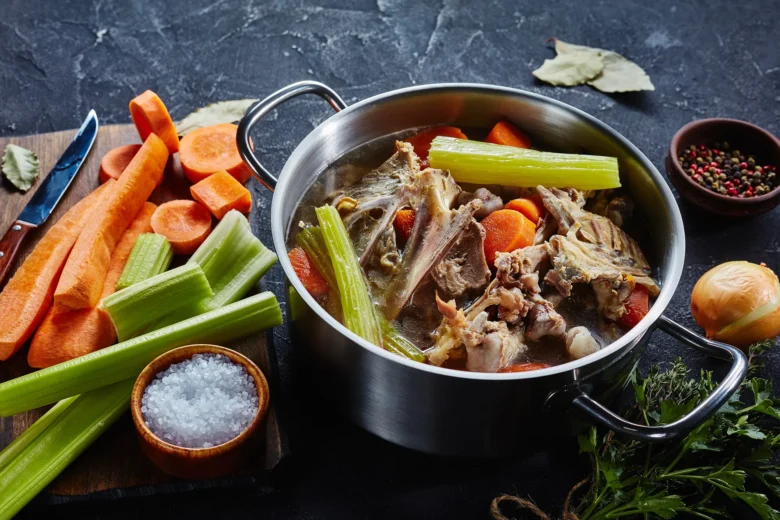
There is a reason bone broth has been made and consumed across virtually every culture on earth for thousands of years. Long before it had a trendy name or a spot on wellness blogs, grandmothers were simmering bones on the back of the stove for days, instinctively knowing that the resulting liquid was deeply nourishing — good for the sick, good for the recovering, good for anyone who needed building up.
Modern nutrition science has caught up with that ancient wisdom. We now understand why slow-cooked bone broth is so powerful: the long extraction process draws collagen, gelatin, glycine, proline, glucosamine, chondroitin, and a dense spectrum of minerals out of the bones and into the liquid. The result is not just a flavoring agent or a soup base — it is a concentrated nutritional tool that supports gut health, joint function, skin elasticity, immune resilience, and restful sleep.
And it is completely, perfectly keto. Zero carbs, rich in protein and gut-healing compounds, deeply satisfying to sip on its own or use as the foundation of almost any savory recipe.
This slow cooker version makes the whole process almost entirely hands-off. You roast the bones, you load the slow cooker, you wait. What comes out after 18–24 hours is a rich, deeply golden broth that gels firmly in the fridge — the unmistakable sign that you’ve extracted everything the bones had to offer.
What Makes Bone Broth Different from Regular Stock
The terms get used interchangeably, but they are not the same thing.
Regular stock or broth is typically cooked for 2–4 hours. It extracts flavor and some nutrients from the bones but does not cook long enough to fully break down the collagen in the connective tissue. The result is a light, flavorful liquid that is excellent for cooking but not particularly rich in gelatin or healing compounds.
Bone broth is cooked for a minimum of 12 hours and ideally 18–24 hours or longer. At that extended cooking time, the collagen in the bones, cartilage, and connective tissue breaks down almost completely into gelatin — a form of protein that is readily absorbed by the body and has specific therapeutic effects on the gut lining, joints, skin, and immune system.
The clearest test of a well-made bone broth is what happens when you refrigerate it. Properly made bone broth should turn into a jelly or solid gel when cold. If it stays liquid, the collagen extraction was incomplete — either the cooking time was too short, the wrong bones were used, or the ratio of water to bones was too high. A broth that gels is a broth that works.
The Gut-Healing Benefits of Bone Broth
The nutritional profile of a well-made bone broth is unlike almost any other food.
Gelatin and collagen are the primary therapeutic compounds. Gelatin coats and soothes the intestinal lining, helping to repair the damage associated with leaky gut syndrome, IBS, and other inflammatory gut conditions. It supports the growth of beneficial gut bacteria and reduces gut permeability over time with consistent consumption.
Glycine is an amino acid found in high concentrations in bone broth that has been shown to reduce inflammation, support liver detoxification, improve sleep quality, and stabilize blood sugar. It is also a precursor to glutathione — the body’s master antioxidant.
Proline and hydroxyproline support collagen synthesis in the body, contributing to joint health, skin elasticity, and connective tissue repair.
Glucosamine and chondroitin are extracted from the cartilage in the bones and are the same compounds found in expensive joint supplements. In bone broth, they come packaged with the full spectrum of co-factors that support their absorption.
Minerals — calcium, magnesium, phosphorus, potassium, and trace elements — leach from the bone matrix into the broth, particularly when a small amount of apple cider vinegar is added to the cooking liquid. The acid helps draw minerals out of the bones more effectively.
For keto specifically, bone broth provides an excellent source of sodium and electrolytes — something many people on a ketogenic diet become depleted in, especially during the adaptation phase.
Choosing the Right Bones
The bones you choose are the single most important variable in bone broth quality. Not all bones are equal — some are rich in collagen and gelatin, others contribute primarily minerals and flavor.
Collagen-rich bones (the most important category):
- Chicken feet — the single highest collagen source available. A handful of chicken feet transforms a mediocre broth into one that gels firmly. They are inexpensive and available at most Asian grocery stores and butcher shops.
- Chicken backs and carcasses — excellent collagen yield with good flavor.
- Beef knuckles and joints — packed with cartilage and connective tissue, these are the primary collagen source in beef broth.
- Oxtail — rich in both collagen and fat, producing a deeply flavored, gelatinous broth.
- Pig trotters — extremely high collagen content, excellent for boosting gelatin yield.
Marrow bones (for flavor and fat):
- Beef marrow bones (femur bones cut into rounds) — the marrow inside melts into the broth during cooking, adding richness, fat-soluble vitamins, and a deep beefy flavor.
- Knuckle bones — good balance of marrow and cartilage.
A blend is always better than a single type. Aim for a mix of marrow bones for flavor and depth, and joint/cartilage-rich bones for gelatin content. A good starting ratio for beef broth is roughly half marrow bones and half collagen-rich bones like knuckles or oxtail.
Always source the best quality bones you can find. Grass-fed beef bones and pasture-raised chicken carcasses produce a nutritionally superior broth. The animals’ diet and lifestyle affects the nutrient density of their bones in the same way it affects their meat. Ask your butcher — bones are often inexpensive or even free, especially chicken carcasses.
Why Roasting the Bones Matters
Roasting the bones before adding them to the slow cooker is not strictly necessary for nutrition — but it transforms the flavor of the finished broth in a way that is immediately noticeable.
Raw bones produce a lighter, cleaner broth. Roasted bones produce a broth that is darker, richer, more complex, and deeply savory — the result of the Maillard reaction creating hundreds of new flavor compounds on the surface of the bones as they caramelize in the hot oven.
Roast the bones at 400–425°F (200–220°C) for 30–40 minutes, turning once halfway through, until they are deep golden brown with some charring at the edges. Don’t be timid here — you want real color, not just a pale tan. The more color on the bones, the more flavor in the broth.
The rendered fat and dark drippings left on the roasting pan are full of flavor. Deglaze the pan with a cup of water and add that liquid to the slow cooker along with the bones — nothing should be wasted.
The Role of Apple Cider Vinegar
A tablespoon or two of apple cider vinegar added to the cold water at the start of cooking is one of the most important small details in bone broth making and also one of the most commonly skipped.
The acetic acid in apple cider vinegar helps break down the bone matrix and draw minerals — calcium, magnesium, phosphorus, potassium — out of the bones and into the broth. You will not taste it in the finished broth (it cooks off completely) but its effect on mineral content is significant.
Always add the vinegar to cold water and let it sit with the bones for 30 minutes before turning the heat on. This pre-soak gives the acid time to begin working on the bones before cooking starts.
Use raw, unfiltered apple cider vinegar with the mother for the most active acetic acid content.
Tips for the Best Slow Cooker Bone Broth
1. Use the most bones your slow cooker can hold. The ratio of bones to water matters enormously. Pack the bones as tightly as you can into the insert, then add just enough water to cover by about an inch. Too much water and the broth will be thin and pale. Too few bones and the collagen extraction will be inadequate.
2. Add chicken feet for guaranteed gel. If you want a broth that gels firmly in the fridge — which is the goal — add 3–4 chicken feet to any batch of bone broth, even beef broth. They are the highest collagen-per-dollar food available and they make a dramatic difference.
3. Keep the heat on LOW the entire time. High heat causes the broth to boil aggressively, which emulsifies the fat into the liquid and produces a cloudy, greasy broth. LOW heat keeps the liquid at a gentle simmer — clear, clean, and beautifully golden.
4. Don’t salt during cooking. Add salt only after straining, once you know the final volume. The broth reduces during cooking and concentrates in flavor — salt added at the start can result in an over-seasoned broth that is too salty to drink on its own.
5. Skim the foam in the first hour. In the first hour of cooking, grey foam and impurities rise to the surface of the broth. Skim these off with a spoon — they don’t affect nutrition but they can make the finished broth slightly bitter and cloudy. Blanching the bones in boiling water for 5 minutes before roasting reduces this significantly.
6. Strain carefully. Pour the finished broth through a fine mesh strainer lined with cheesecloth if you want the clearest possible result. Pressing the solids extracts more liquid but can cloud the broth — decide based on your preference for clarity vs yield.
7. Refrigerate before skimming fat. Once strained and cooled, refrigerate the broth overnight before removing the fat cap that solidifies on the surface. Leave the fat if you are drinking the broth for keto purposes — it is nutritious and satiating. Remove it if you are using the broth as a cooking liquid where the fat content is less desirable.
How to Use Your Bone Broth
A well-made bone broth is endlessly versatile.
Drink it straight. Pour a mug of warm bone broth seasoned with a pinch of salt, black pepper, and a knob of butter or coconut oil. This is the simplest and arguably most effective way to get the gut-healing benefits — sipped slowly, ideally on an empty stomach, first thing in the morning or before bed.
Use it as a cooking base. Bone broth elevates everything it touches — soups, stews, braises, slow cooker recipes, cauliflower mash, sautéed vegetables, pan sauces. Replace water or commercial broth with your homemade version in any recipe and the depth of flavor is immediately noticeable.
Make a keto electrolyte drink. Warm bone broth with a pinch of sea salt, a squeeze of lemon, and a small amount of magnesium powder is one of the most effective natural electrolyte drinks available — particularly useful during keto adaptation when electrolyte depletion is common.
Reduce it into a concentrate. Simmer strained broth down to roughly a quarter of its volume and pour into ice cube trays. Freeze and use individual cubes to add concentrated flavor to sauces and dishes.
Easy Variations
- Chicken bone broth. Use chicken carcasses, backs, necks, and feet. Reduce cook time to 12–18 hours. Add a whole head of garlic and a bunch of fresh thyme for a more aromatic broth.
- Fish bone broth. Use fish heads and frames (carcasses). Cook for only 4–6 hours — fish bones are delicate and over-extraction makes the broth bitter. Excellent for gut healing and very rich in iodine and minerals.
- Spiced healing broth. Add a 2-inch piece of fresh ginger, a cinnamon stick, 1 tsp turmeric, and 1 tsp black pepper to the slow cooker for an anti-inflammatory, warming variation excellent for sipping on its own.
- Asian-style pho broth base. Add star anise, cinnamon, cloves, cardamom, and charred ginger and onion for a deeply spiced broth that works as a pho base.
- Upgraded with herbs. Add a Parmesan rind to the broth during cooking — it melts partially into the liquid and adds a subtle, savory umami depth that is extraordinary.
Storage
Bone broth stores exceptionally well and is worth making in large batches.
Refrigerator: Store in glass jars or airtight containers for up to 7 days. The broth will gel when cold — this is correct and desirable. It liquefies again when gently warmed.
Freezer: Bone broth freezes for up to 12 months with no loss of nutritional quality. Freeze in practical portions — 1-cup and 2-cup quantities in freezer-safe containers or zip-lock bags, or in ice cube trays for small amounts. Leave headspace in containers as the broth expands when frozen.
Pressure canning: For shelf-stable storage, bone broth can be pressure canned using standard guidelines. This requires a pressure canner (not a water bath canner) and proper processing times for low-acid foods.
Shopping List
Everything you need for a deeply gelatinous, richly flavored bone broth.
Bones (choose a mix)
- 2–3 lbs (900g–1.4kg) beef marrow bones (femur rounds)
- 1–2 lbs (450g–900g) beef knuckle bones or oxtail
- 3–4 chicken feet (for maximum gelatin — strongly recommended)
- Optional: 1 lb (450g) chicken backs or carcasses for added gelatin
Produce
- 2 medium carrots, roughly chopped
- 3 stalks celery, roughly chopped
- 1 large onion, halved (no need to peel)
- 1 whole head of garlic, halved crosswise (no need to peel)
- Fresh parsley — a small bunch, stems and all
- Fresh thyme — 4–5 sprigs
Pantry
- 2 tbsp apple cider vinegar, raw and unfiltered (with the mother)
- 1 tbsp olive oil or avocado oil (for roasting)
- Filtered water — enough to cover bones by 1 inch (approximately 10–12 cups)
Spices & Seasonings
- 1 tsp whole black peppercorns
- 2 bay leaves
- Salt (added after straining only)
Optional Add-Ins for Enhanced Nutrition
- 1-inch piece fresh ginger (anti-inflammatory)
- 1 tsp ground turmeric (anti-inflammatory)
- 1 Parmesan rind (adds umami depth)
- 2-inch piece dried kombu seaweed (boosts mineral content significantly)
Slow Cooker Keto Bone Broth (Gut-Healing)
A deeply gelatinous, richly golden slow cooker bone broth made from roasted marrow bones, collagen-rich knuckles, and chicken feet — cooked low and slow for 18–24 hours to draw out every last milligram of collagen, gelatin, glycine, and minerals the bones have to offer. Zero carbs, keto-friendly, and one of the most nutritionally dense things you can make in your kitchen. Drink it warm as a daily gut-healing tonic or use it as the foundation of any savory recipe.
- Total Time: 20 hours 45 minutes
- Yield: Approximately 8–10 cups 1x
Ingredients
The Bones
- 2–3 lbs (900g–1.4kg) beef marrow bones, cut into rounds
- 1–2 lbs (450g–900g) beef knuckle bones or oxtail
- 3–4 chicken feet (strongly recommended for gelatin)
- 1 lb (450g) chicken backs or carcasses (optional, for extra gelatin)
The Aromatics
- 2 medium carrots, roughly chopped
- 3 stalks celery, roughly chopped
- 1 large onion, halved (skin on is fine)
- 1 whole head of garlic, halved crosswise (skin on is fine)
- Small bunch fresh parsley, stems included
- 4–5 sprigs fresh thyme
- 2 bay leaves
- 1 tsp whole black peppercorns
The Essentials
- 2 tbsp raw unfiltered apple cider vinegar
- Approximately 10–12 cups filtered water (enough to cover bones by 1 inch)
- 1 tbsp olive oil or avocado oil (for roasting bones)
Optional Healing Add-Ins
- 1-inch piece fresh ginger, sliced
- 1 tsp ground turmeric
- 1 Parmesan rind
- 2-inch piece dried kombu seaweed
To Finish
- Salt, to taste (added after straining)
- Black pepper, to taste
Instructions
- Blanch the bones (optional but recommended for cleaner broth). Place all bones in a large pot and cover with cold water. Bring to a boil and cook for 5 minutes. Drain and rinse the bones thoroughly under cold water, scrubbing away any grey foam or impurities. This step produces a significantly cleaner, clearer finished broth.
- Roast the bones. Preheat the oven to 425°F (220°C). Toss the blanched bones with olive oil and spread in a single layer across one or two large rimmed baking sheets. Roast for 30–40 minutes, turning once halfway through, until deep golden brown with some caramelization at the edges. Do not rush this step — the color you develop now becomes the depth of flavor in your finished broth.
- Deglaze the roasting pan. Remove the bones from the oven and transfer to the slow cooker. Place the hot baking sheet over a burner on medium heat. Add 1 cup of water and scrape up all the dark, caramelized drippings with a wooden spoon. Pour this liquid into the slow cooker — it is intensely flavorful and should not be wasted.
- Pre-soak with apple cider vinegar. Add the aromatics to the slow cooker — carrots, celery, onion, garlic, parsley, thyme, bay leaves, peppercorns, and any optional add-ins. Pour in the apple cider vinegar, then add enough cold filtered water to cover everything by approximately 1 inch. Do not turn the slow cooker on yet. Let the bones soak in the cold acidulated water for 30 minutes — this allows the vinegar to begin drawing minerals from the bone matrix before heat is applied.
- Cook low and slow. After the 30-minute soak, set the slow cooker to LOW. Cook for a minimum of 18 hours, ideally 20–24 hours. The broth should never boil — it should maintain a very gentle, barely visible simmer throughout. Do not cook on HIGH.
- Skim the foam. In the first 1–2 hours of cooking, check the broth and skim any grey foam or impurities that rise to the surface using a spoon or ladle. This is most important in the early stages.
- Strain the broth. Once cooking is complete, carefully ladle or pour the broth through a fine mesh strainer into a large bowl or pot. For an extra-clear broth, line the strainer with a layer of cheesecloth. Discard all solids — the bones, vegetables, and herbs have given everything they have and are now spent.
- Cool and defat. Allow the broth to cool to room temperature, then transfer to the refrigerator and chill overnight or for at least 4 hours. A solid fat cap will form on the surface. For keto drinking broth, leave the fat and stir it back in when reheating. For a cleaner cooking broth, skim and discard the fat.
- Season and store. Once defatted (or not), season the broth to taste with salt and pepper. Transfer to glass jars or airtight containers. The broth will be a solid gel when cold — this is exactly what you want and is the sign of a well-made, collagen-rich broth.
- To serve. Warm gently in a small saucepan over low heat or in the microwave. Pour into a mug or bowl, adjust seasoning, and sip slowly. For an enriched keto tonic, stir in a teaspoon of grass-fed butter or MCT oil before drinking.
Notes
- The gel test. After refrigerating, your finished broth should be a firm or semi-firm jelly. If it stays liquid, the collagen extraction was incomplete. Add more collagen-rich bones (especially chicken feet) next time, reduce the water quantity, or extend the cooking time.
- Chicken feet are the single best upgrade. Even if you are making beef broth, add 3–4 chicken feet to the slow cooker. They contain more collagen per gram than any other commonly available ingredient and cost almost nothing. They are the difference between a broth that gels and one that doesn’t.
- Don’t salt during cooking. The broth reduces and concentrates over 18–24 hours. Salt added at the beginning can result in an over-seasoned finished product. Always season after straining, to taste.
- The blanching step is optional but worth doing. It removes impurities, blood, and the compounds that produce grey foam during cooking. The resulting broth is cleaner in both flavor and appearance. If you are short on time, skip it — the broth will still be excellent, just slightly cloudier.
- Use filtered water if possible. The minerals and compounds in tap water (chlorine, fluoride) can affect the flavor of a broth cooked for 24 hours. Filtered water produces a cleaner-tasting result.
- Kombu seaweed is a hidden gem. A small piece of dried kombu added to the broth during cooking contributes a significant amount of iodine, magnesium, and natural glutamates that deepen the savory flavor. It is completely undetectable in the finished broth.
- Broth vs stock vs bone broth. Your finished product should gel. If it does, it is true bone broth with significant collagen content. If it doesn’t, it is a nutritious stock — still excellent for cooking, just not as therapeutically potent.
- Prep Time: 45 minutes (including roasting bones)
- Cook Time: 20 hours (on LOW)
- Category: Gut Health, Soup, Stew
- Method: Slow Cooking
- Diet: Dairy-Free, Gluten-Free, Keto, Low-Carb, Paleo