Slow Cooker Dog Food for Pancreatitis: An Expert Guide to Nutritional Management
Managing a dog with pancreatitis—whether acute or chronic—requires a precise, science-based approach to nutrition. The goal is to “rest” the pancreas by minimizing the stimulation of digestive enzymes, which is primarily achieved through a strictly controlled, low-fat diet . While commercial prescription diets are available, many owners turn to home-cooked, slow-cooker meals for better ingredient transparency and palatability.
This guide provides expert-backed advice on formulating safe, effective slow-cooker meals for dogs with pancreatic issues.
Understanding the Nutritional Mandate
The canine pancreas is highly sensitive to dietary fat. In dogs with pancreatitis, high-fat intake can trigger the premature activation of enzymes, leading to painful inflammation and further organ damage .
1. The Low-Fat Threshold
Veterinary nutritionists typically recommend that diets for pancreatitis patients contain:
- Acute Phase: Less than 10% fat on a dry matter (DM) basis .
- Chronic Management: 10% to 15% fat (DM), depending on the dog’s individual tolerance .
- Calories: A minimum of 14 grams of fat per 1000 calories is often cited as the baseline for essential fatty acid requirements, though this must be balanced against the risk of flare-ups .
2. High Digestibility
Ingredients must be highly digestible to reduce the metabolic workload. Complex fats and high-fiber ingredients can delay gastric emptying, which may inadvertently stimulate pancreatic secretions .
Expert-Approved Ingredients for the Slow Cooker
When selecting ingredients for a slow-cooker meal, focus on lean proteins and simple, low-glycemic carbohydrates.
| Ingredient Category | Safe Options | Notes |
| Lean Proteins | Skinless chicken breast, extra-lean ground turkey (99% fat-free), cod, tilapia, or egg whites . | Avoid: Beef (unless ultra-lean), pork, duck, or dark meat poultry. |
| Simple Carbohydrates | Boiled white rice, barley, or skinless sweet potatoes . | Avoid: Whole grains with high hull content or heavy seasonings. |
| Safe Vegetables | Carrots, green beans, or zucchini . | Avoid: Onions, garlic, or cruciferous vegetables that cause gas. |
| Low-Fat Mixers | Fat-free cottage cheese or plain non-fat Greek yogurt . | Excellent for adding protein without fat. |
The Slow Cooker Advantage (and Risks)
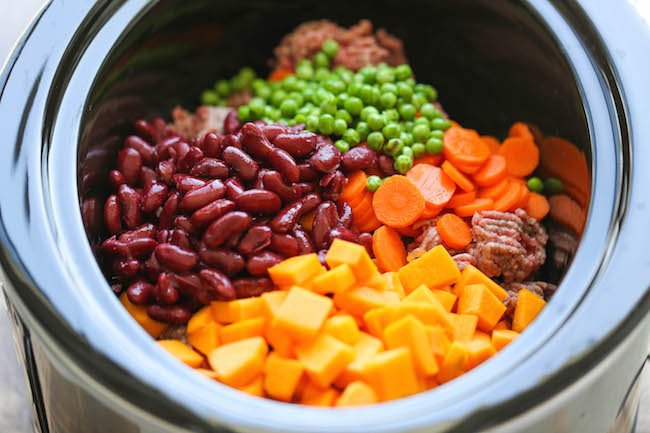
Using a slow cooker is ideal for preparing bland diets because it retains moisture and breaks down proteins into a highly digestible state. However, owners must follow specific safety protocols:
- Skimming the Fat: Even “lean” meats release some fat during the long cooking process. After cooking, allow the food to cool and manually skim off any congealed fat from the surface .
- No Added Oils: Never add butter, lard, or even “healthy” oils like olive or coconut oil to the slow cooker for a pancreatitis patient. Essential fatty acids (like Omega-3s) should only be added at the time of feeding, following a vet’s specific dosage .
- Temperature Control: Ensure the slow cooker reaches a safe internal temperature to kill pathogens, but avoid “burning” the food, which can create inflammatory compounds.
Sample Recipe Framework: The “Bland Batch”
This is a foundational framework. Consult your veterinarian before introducing any new diet.
- Protein (50%): 2 lbs of skinless, fat-trimmed chicken breast.
- Carbohydrate (40%): 2 cups of white rice (add extra water to ensure it’s very soft).
- Vegetable (10%): 1 cup of finely diced carrots and green beans.
- Liquid: Low-sodium chicken broth (ensure it contains no onions or garlic) or plain water.
Method: Cook on low for 6-8 hours. Once finished, shred the chicken, mix thoroughly, and let cool completely. Skim any visible fat before portioning.
Critical Expert Advice: The “Gap” in Home Cooking
The biggest risk with home-cooked slow-cooker meals is nutritional deficiency. A diet of just chicken and rice is “bland” but not “balanced” .
“While a chicken and rice diet is excellent for short-term management of a flare-up, it lacks essential vitamins (like Vitamin E), minerals (Calcium), and trace elements required for long-term health. If you plan to feed a home-cooked diet for more than two weeks, you must use a veterinary-approved supplement like Balance.it or work with a board-certified veterinary nutritionist to create a complete recipe.” — General Veterinary Consensus
Monitoring for Flare-ups
Even on a perfect diet, monitor your dog for :
- Hunched back (abdominal pain)
- Loss of appetite
- Vomiting or “greasy” stools
- Lethargy
If these symptoms occur, revert to a fast (if directed by a vet) and seek immediate medical attention.
Disclaimer: This article is for informational purposes only and does not replace professional veterinary advice. Always consult with a veterinarian before changing the diet of a dog with a medical condition.