
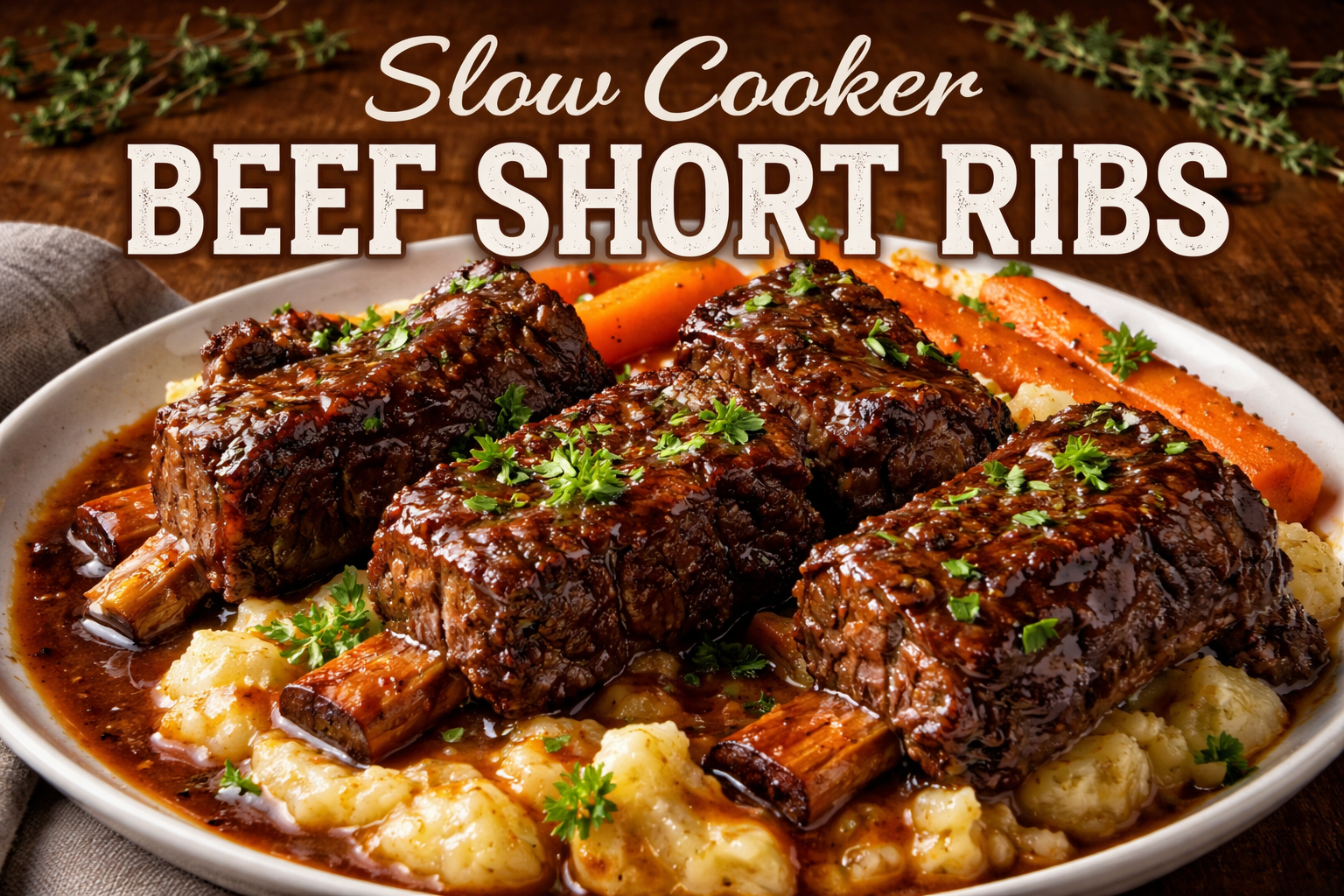
Beef Short Ribs
Tender, Juicy & Full of Flavor
Introduction
There are few culinary experiences as satisfying as beef short ribs so tender they effortlessly fall from the bone. This dish — often associated with high-end restaurants — is surprisingly simple to create at home, thanks to the magic of the slow cooker.
The low and slow cooking process allows connective tissues to break down, resulting in melt-in-your-mouth meat, while the enclosed environment infuses every aromatic and savory note of the braising liquid deep into the beef.
Ingredients
Each component plays a crucial role in developing the deep, complex flavors that define this dish.
| Amount | Ingredient | Notes |
|---|---|---|
| 3–4 lbs | Bone-in beef short ribs | Trimmed of excess fat |
| 1 large | Yellow onion, diced | |
| 4 cloves | Garlic, minced | |
| 2 medium | Carrots, chopped | 1-inch pieces |
| 2 stalks | Celery, chopped | 1-inch pieces |
| 1 cup | Dry red wine (Cabernet or Merlot) | Or extra beef broth |
| 1½ cups | Beef broth (low sodium) | |
| 2 tbsp | Tomato paste | Deepens umami |
| 1 tbsp | Worcestershire sauce | |
| 1 tsp | Soy sauce | Optional |
| 1 tbsp | Brown sugar | Optional — balances acidity |
| 2 sprigs | Fresh thyme | Or 1 tsp dried |
| 1 sprig | Fresh rosemary | Or ½ tsp dried |
| 2 | Bay leaves | Remove before serving |
| To taste | Salt and black pepper | Season generously |
Equipment Needed
Slow Cooker
A 6-quart or larger model is ideal. Ensure the lid fits snugly to prevent moisture loss during the long cooking time.
Skillet for Searing (Recommended)
A heavy-bottomed cast iron or stainless steel skillet is strongly recommended for searing. This develops a caramelized crust through the Maillard reaction — adding depth of flavor that slow cooking alone cannot achieve.
Other Utensils
- Tongs — for safely handling the ribs
- Sharp chef’s knife and cutting board
- Measuring cups and spoons
- Whisk — for cornstarch slurry
- Fine-mesh sieve — for straining the sauce
- Fat separator (optional but very useful)
Preparation
1. Trim Excess Fat
Using a sharp knife, carefully trim away any large, thick layers of hard fat from the exterior of the ribs. Some fat is desirable for flavor, but excess fat will make the sauce greasy. This step is especially important if you plan to make gravy from the cooking liquid.
2. Season Generously
Liberally season all sides of the ribs with salt and freshly ground black pepper. You can also add paprika, garlic powder, or onion powder at this stage to further build the flavor profile.
3. Sear the Ribs (Highly Recommended)
Searing creates a rich, caramelized crust through the Maillard reaction, developing flavor compounds that slow cooking alone cannot replicate.
- Heat a heavy-bottomed skillet over medium-high heat.
- Add 1–2 tbsp of high-smoke-point oil (canola, grapeseed, or olive oil).
- Once shimmering, add ribs without overcrowding — work in batches.
- Sear each side for 3–5 minutes until a deep golden-brown crust forms.
- Transfer seared ribs to the slow cooker.
4. Prepare Aromatics
Dice the onions, mince the garlic, and chop the carrots and celery into roughly 1-inch pieces. Uniform sizing ensures even cooking and consistent flavor distribution.
Cooking Instructions
Step 1 — Layer the Slow Cooker
- Place chopped onions, carrots, and celery at the bottom — this creates a flavour bed.
- Arrange seared ribs on top of the vegetables.
Step 2 — Add Liquids & Seasonings
- Dollop or whisk tomato paste into a little broth first, then add to the pot.
- Pour in the beef broth and red wine. Liquid should reach 2/3 to 3/4 up the ribs.
- Add Worcestershire sauce, soy sauce, brown sugar, and herbs.
- Stir gently to combine.
Step 3 — Set & Forget
| Setting | Time | Notes |
|---|---|---|
| 🔵 LOW | 7–8 hours | Recommended — most tender, richest flavor |
| 🔴 HIGH | 4–5 hours | Use if pressed for time; texture may vary slightly |
Checking Doneness
Test with a fork after the recommended time. The meat should shred or fall from the bone with minimal effort. If there is any resistance, continue for 30–60 minutes and test again.
Making the Sauce
Step 1 — Strain the Cooking Liquid
Remove the ribs and pour all remaining liquid through a fine-mesh sieve into a large bowl, discarding the spent vegetables. Use a fat separator if available, or let the liquid rest for a few minutes and skim the fat from the surface.
Step 2 — Reduce on the Stovetop
Transfer the defatted liquid to a saucepan. Simmer over medium-high heat, stirring occasionally, until reduced by one-third to one-half. This concentrates the flavors and creates a robust, glossy sauce. Taste and adjust seasoning.
Step 3 — Thicken (Optional)
- Cornstarch slurry: Whisk 1–2 tbsp cornstarch with equal cold water. Stir into simmering sauce; cook 1–2 minutes until glossy and thickened.
- Flour roux: Melt 1–2 tbsp butter, whisk in equal flour, cook 1–2 mins, then gradually whisk in the hot strained liquid.
Serving Suggestions
Best Bases
- Creamy mashed potatoes — the classic choice
- Polenta — rustic and velvety
- Steamed white or brown rice
- Wide egg noodles, buttered
Vegetables to Pair
- Roasted carrots — echoes the sweetness in the braise
- Steamed or sautéed green beans
- Roasted broccoli or Brussels sprouts
- Blanched asparagus spears
Garnish Ideas
- Fresh chopped parsley, chives, or thyme
- Generous drizzle of the prepared sauce
- Optional — a fine grating of lemon zest for brightness
Tips & Tricks
Preventing a Fatty Broth
- Trim visible fat from the raw ribs before cooking.
- Chill & skim: refrigerate the cooled liquid — fat solidifies and lifts off easily.
- Use a fat separator pitcher for a quick, effective result.
Storage
- Refrigerator: airtight container, 3–4 days.
- Freezer: up to 3 months in heavy-duty freezer bags. Thaw overnight in the fridge.
Reheating
- Oven (best): 300°F (150°C), covered tightly with foil, 20–30 minutes.
- Stovetop: low heat with a splash of broth; stir occasionally.
- Microwave: low power, covered, in 1–2 minute intervals.
Flavor Variations
🥂 Asian-Style
Soy sauce, fresh ginger, star anise, brown sugar, sesame oil. Serve with jasmine rice and bok choy.
🥖 BBQ Short Ribs
Replace red wine with BBQ sauce + apple cider vinegar + smoked paprika. Glaze before serving.
🍷 Classic Wine-Braised
Full bottle of dry red wine, generous fresh rosemary & thyme, touch of Dijon mustard for tang.
Frequently Asked Questions
Can you cook frozen short ribs in a slow cooker?
No — it is not recommended. Frozen meat can spend too long in the danger zone (40°F–140°F / 4°C–60°C), where harmful bacteria can multiply. Always thaw completely in the refrigerator before slow cooking.
How long do cooked short ribs last?
Stored in an airtight container in the refrigerator, cooked short ribs will last 3–4 days. They freeze well for up to 3 months.
Can this be made in an Instant Pot?
Yes. Cook under high pressure for approximately 45–60 minutes, followed by a natural pressure release. The searing and sauce-making steps remain the same.
Slow cooker beef short ribs are the epitome of comfort food — a luxurious dining experience with minimal hands-on effort. Follow these steps, experiment with the variations, and enjoy fall-off-the-bone perfection every time.