
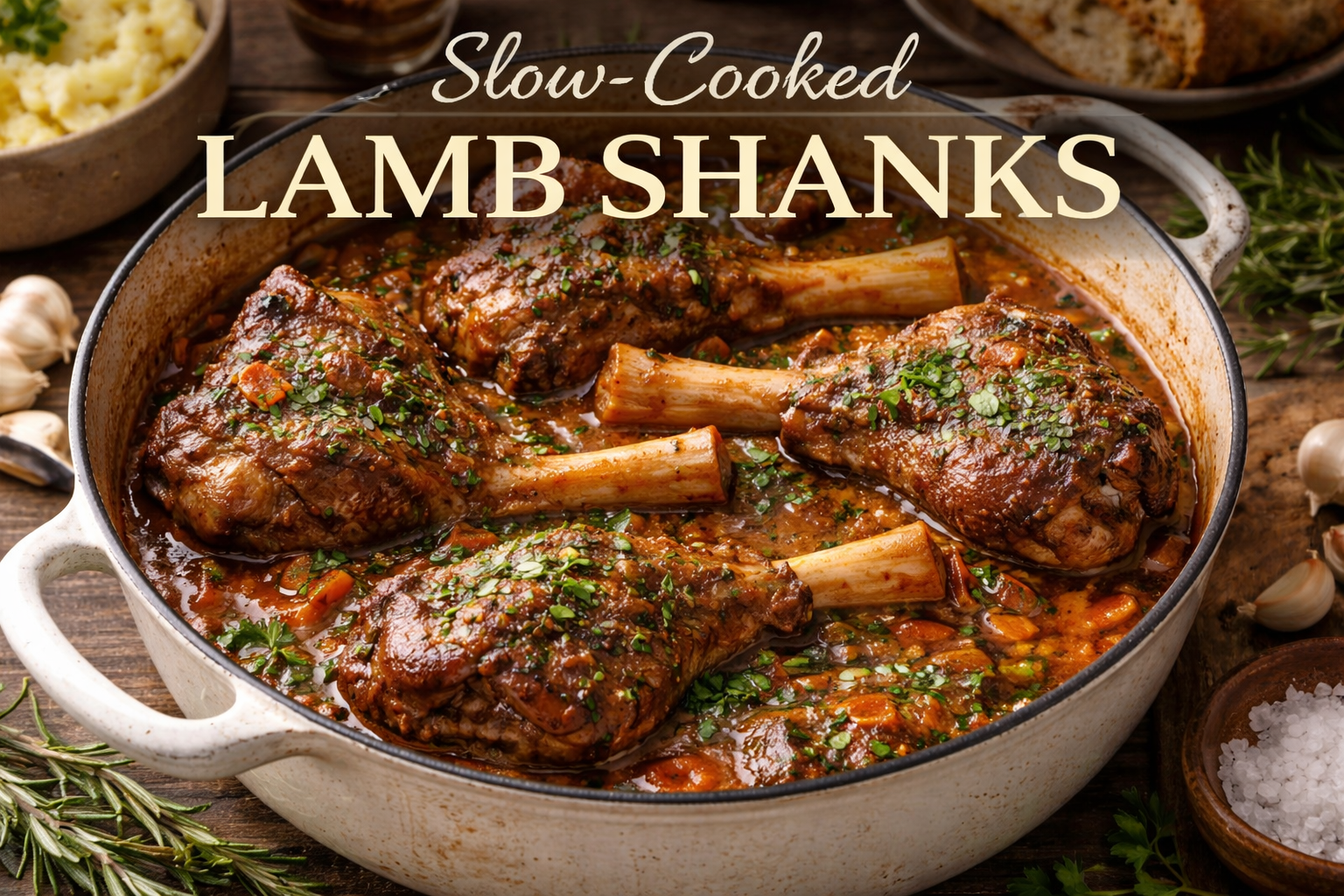
Slow Cooker Recipes · Lamb · Red Wine Braise
Slow‑Cooked Lamb Shanks
The Ultimate Red Wine Braise
Section 01
History & Cultural Significance
The lamb shank — the lower portion of the leg from the knee down — carries a storied history across many cultures. In Jewish tradition, the shank bone (Zeroah) holds a place of honor on the Passover Seder plate, symbolizing the outstretched arm of God and the sacrificial lamb. This cultural weight elevates the shank from sustenance to symbol.
In post-war Europe, shanks were often sold cheaply alongside stewing scraps. As the “low and slow” movement took hold in the late 20th century, chefs discovered the extraordinary depth of flavor that only a long-braised shank can achieve. Today it graces fine restaurant menus and Sunday family tables alike.
Section 02
The Science of Slow Cooking
The shank is a hardworking muscle packed with connective tissue — primarily collagen. Grill it like a steak and it would be tough, rubbery, nearly inedible. Subject it to low, moist heat for several hours, however, and a transformation occurs.
At the critical temperature range, tough collagen fibers break down and melt into gelatin — the secret behind the luxurious, lip-smacking quality of a perfect braise. Gelatin provides extraordinary mouthfeel and coats the meat, keeping it moist even as the muscle fibers are gently cooked through.
The inclusion of red wine, balsamic vinegar, and tomato paste serves more than flavor. Their acidity accelerates the breakdown of protein structures, while salt applied early — the “dry brine” effect — helps the meat retain moisture throughout the long cook.
Section 03
Ingredients
Section 04
Step-by-Step Instructions
- 1Dredge the shanks. Mix flour with salt and pepper in a shallow bowl. Lightly coat each shank, shaking off excess. This flour will later thicken the sauce naturally.
- 2Heat the oil. Warm olive oil in a large heavy-bottomed skillet over medium-high heat until shimmering.
- 3Sear in batches. Add shanks without overcrowding. Sear 3–4 minutes per side until a deep golden-brown crust forms. Do not rush — let the crust fully develop.
- 4Transfer the seared shanks to the slow cooker ceramic insert.
- 1Sauté aromatics. In the same unwashed skillet, add onion, carrots, and celery. Cook 5–7 minutes until onions are translucent and lightly browned. Add garlic, cook 60 seconds.
- 2Cook the tomato paste. Stir in tomato paste and cook 2 minutes, stirring constantly, until it darkens slightly. This removes the raw metallic taste and concentrates umami.
- 3Deglaze with wine. Pour in the red wine and scrape up all the fond — the browned bits on the pan bottom. These are pure concentrated flavor. Simmer 2–3 minutes to reduce slightly.
- 1Pour the skillet contents over the shanks in the slow cooker.
- 2Add beef stock, redcurrant jelly, balsamic vinegar, rosemary, thyme, and bay leaves. Ensure shanks are mostly submerged — add a splash more stock if needed.
- 3Select your setting and cook until the meat pulls away from the bone with a fork.
- 1Rest the shanks. Remove carefully and place on a warm platter. Cover loosely with foil while you prepare the sauce.
- 2Strain the cooking liquid through a fine-mesh sieve, discarding the spent solids. Skim excess fat from the surface.
- 3Reduce the sauce. Bring to a boil on the stovetop and reduce by one-third until syrupy and gravy-like. Taste and adjust seasoning.
- 4Plate and serve. Place each shank on a bed of mashed potatoes or polenta and spoon the sauce generously over the top.
Section 05
Expert Wine Pairing
Pairing wine with lamb shanks is an exercise in balancing the richness of the meat against the acidity of the sauce. Choose wines with enough backbone to stand up to hours of braising heat — and enough elegance for the table.
Section 06
Complete Shopping List
Tap each checkbox to mark it off as you shop.
Section 07
Frequently Asked Questions
Section 08