The golden years of life should be a period of comfort, enjoyment, and sustained well-being. A cornerstone of this well-being is proper nutrition — yet for many seniors, preparing healthy meals can be a daunting task. Physical limitations, changes in taste and appetite, dental issues, and the sheer effort of cooking and cleaning up can deter older adults from preparing wholesome, home-cooked meals.
This is where the crockpot emerges as an invaluable kitchen appliance. Minimal preparation, soft easy-to-chew results, excellent nutrient retention, and the ability to prepare heart-healthy, low-sodium, high-protein meals with little effort — slow cooking directly addresses the most common barriers to good nutrition in later life.
The Science of Senior Nutrition
As the body ages, metabolism slows, muscle mass declines, bone density decreases, and nutrient absorption may be less efficient. A diet that was adequate in younger years may no longer meet the specific demands of an ageing body.
- Protein — Foundation of Muscle and Strength Older adults need 1.0–1.2g of protein per kilogram of body weight per day (up from the standard 0.8g/kg). Adequate protein counteracts sarcopenia, supports muscle repair, and maintains physical function. Slow cooking tenderises chicken, turkey, and beef, making protein-rich foods much easier to chew and digest consistently.
- Fibre — Digestive Health and Beyond Fibre prevents constipation, supports heart health by lowering cholesterol, regulates blood sugar, and promotes satiety. Slow-cooked dishes incorporating generous vegetables and legumes make it easy for seniors to meet daily fibre requirements — and the cooking process softens fibres, making them gentler on sensitive digestive systems.
- Calcium & Vitamin D — Guardians of Bone Health Women aged 51+ and men aged 71+ need 1,200mg of calcium per day. Vitamin D (600–800 IU/day) is essential for calcium absorption. Dairy products, fortified plant-based milks, dark leafy greens, and fatty fish are good sources. Slow-cooked salmon and dairy-based soups can provide a natural boost.
- Vitamin B12 — Essential for Neurological Function Stomach acid production decreases with age, making B12 absorption less efficient and deficiency more common. The recommended daily intake for adults 51+ is 2.4mcg. Slow-cooked meat and poultry dishes are an excellent source. Those with absorption difficulties may need fortified foods or supplements as advised by their healthcare provider.
- Sodium — Managing Heart Health High sodium intake increases the risk of hypertension, heart disease, and stroke. Seniors should aim for less than 2,300mg per day, or 1,500mg if managing hypertension. Crockpot cooking from scratch gives complete control over sodium. Long cooking times allow flavours to deepen naturally, reducing reliance on salt.
- Healthy Fats — Fuelling Brain and Body Monounsaturated and polyunsaturated fats support cardiovascular health and reduce inflammation. Omega-3 fatty acids from fatty fish are especially important for cognitive health. Incorporate salmon, a drizzle of olive oil, or a small amount of nuts and seeds into slow-cooked meals.
- Hydration — An Often Overlooked Necessity The sensation of thirst diminishes with age, and certain medications increase fluid loss. Dehydration causes fatigue, confusion, and worsens existing health conditions. Soups and stews have a high liquid content, making crockpot meals an excellent subtle way to boost daily fluid intake.
Why Slow Cookers? The Unparalleled Advantages for Senior Living
Minimal Preparation
Just a few minutes of chopping and combining, then the crockpot does the work. Prepare a meal in the morning and have it ready by dinner — with no constant supervision or standing over a hot stove.
Soft, Easy-to-Chew Results
Tough cuts of meat become fork-tender and fall-apart soft. Vegetables soften considerably, making meals safe and enjoyable for those with dental or swallowing difficulties.
Excellent Nutrient Retention
Low, consistent heat in a sealed environment minimises the loss of heat-sensitive vitamins. Water-soluble nutrients remain in the meal rather than being discarded with cooking water.
Convenient One-Pot Cooking
Everything goes into one vessel, dramatically reducing the number of pots and utensils to clean — a major benefit for seniors who find washing up physically demanding or painful.
Natural Flavour Without Salt
Extended cooking time allows herbs, spices, and aromatics to infuse deeply, creating rich, satisfying flavours without excessive sodium — critical for blood pressure management.
Safe, Affordable & Efficient
Slow cookers operate safely at low temperatures, use less electricity than a conventional oven, and transform cheaper cuts of meat into tender, protein-rich meals — ideal for seniors on fixed incomes.
Kitchen Safety and Equipment for Seniors
Ergonomic Tools
- Easy-grip knives, peelers, and can openers with large, non-slip handles
- Electric jar openers for those with reduced grip strength
- Non-slip cutting boards to prevent dangerous sliding
- Food choppers or processors to reduce manual chopping effort
Safe Crockpot Use
- Always place on a flat, stable, heat-resistant surface away from counter edges and flammable materials
- Keep cords close to outlets to avoid tripping hazards
- Use oven mitts when handling the lid — always tilt it away from your face to avoid steam burns
- Use crockpot liners for virtually effortless cleanup
Temperature Settings
- Low: Cooks for 6–8 hours — best for most recipes and deeper flavour
- High: Cooks for 3–4 hours — for when time is limited
- Warm: For keeping cooked food at a safe temperature before serving only — never use for cooking
General Fire Safety
- Ensure smoke detectors are installed near the kitchen and tested regularly
- Keep a small, accessible fire extinguisher in the kitchen
- Keep countertops clear of clutter around cooking appliances
- Unlike stovetop cooking, slow cookers are designed to be safely left unattended
Healthy Crockpot Recipes for Every Time of Day
🌅 Breakfast Recipes
Slow Cooker Apple Cinnamon Oatmeal
High in fibre · Heart-healthy · Sustained energy · Easy to chew and digest · Cholesterol management
Ingredients
- 1 cup steel-cut oats
- 3 cups water or low-fat milk (dairy or non-dairy)
- 2 medium apples, peeled, cored, and diced
- 1 tsp ground cinnamon
- 1 tbsp honey or maple syrup (optional)
- 1 tsp vanilla extract
- Pinch of salt (optional)
Instructions
- Lightly grease the crockpot with cooking spray or butter to prevent sticking.
- Add all ingredients and stir well to combine.
- Cover and cook on Low for 6–7 hours, until oats are tender and have absorbed most of the liquid.
- Stir before serving. Add a splash of milk or water if too thick.
- Serve warm. Optional toppings: finely chopped nuts, fresh berries, or a dollop of yogurt for added protein.
Crockpot Veggie Egg Casserole
Protein-rich · Low-carb · Soft custardy texture · Packed with vitamins from vegetables
Ingredients
- 6 large eggs
- ½ cup low-fat milk
- 1 cup fresh spinach, roughly chopped
- ½ cup diced bell pepper (any colour)
- ½ cup sliced mushrooms
- ¼ cup shredded low-fat cheese (cheddar or mozzarella)
- Salt, black pepper, and garlic/onion powder to taste (use sparingly)
Instructions
- Lightly grease the crockpot with cooking spray.
- Whisk together eggs, milk, salt, pepper, and garlic/onion powder until well combined.
- Spread spinach, bell pepper, and mushrooms evenly over the bottom of the crockpot.
- Pour the egg mixture over the vegetables. Sprinkle cheese evenly on top.
- Cover and cook on Low for 2–3 hours, until the centre is set and edges are lightly golden.
- Let cool slightly before slicing. Excellent on its own or alongside whole-grain toast.
Slow Cooker Quinoa Porridge
Gluten-free · Complete protein · High fibre · Muscle maintenance · Easy to digest
Ingredients
- 1 cup quinoa, rinsed thoroughly
- 3 cups water or unsweetened almond milk
- ½ cup mixed berries (fresh or frozen)
- ¼ cup finely chopped nuts (almonds, walnuts, or pecans)
- 1 tbsp chia seeds
- 1 tsp vanilla extract
- ½ tsp ground ginger or nutmeg (optional)
- Sweetener to taste (stevia, maple syrup, or honey — optional)
Instructions
- Lightly grease the crockpot insert.
- Combine all ingredients and stir well.
- Cover and cook on Low for 3–4 hours, until quinoa is tender and the porridge is creamy.
- Stir before serving. Add sweetener if desired. Serve warm with extra berries or a dash of milk.
☀️ Lunch Recipes
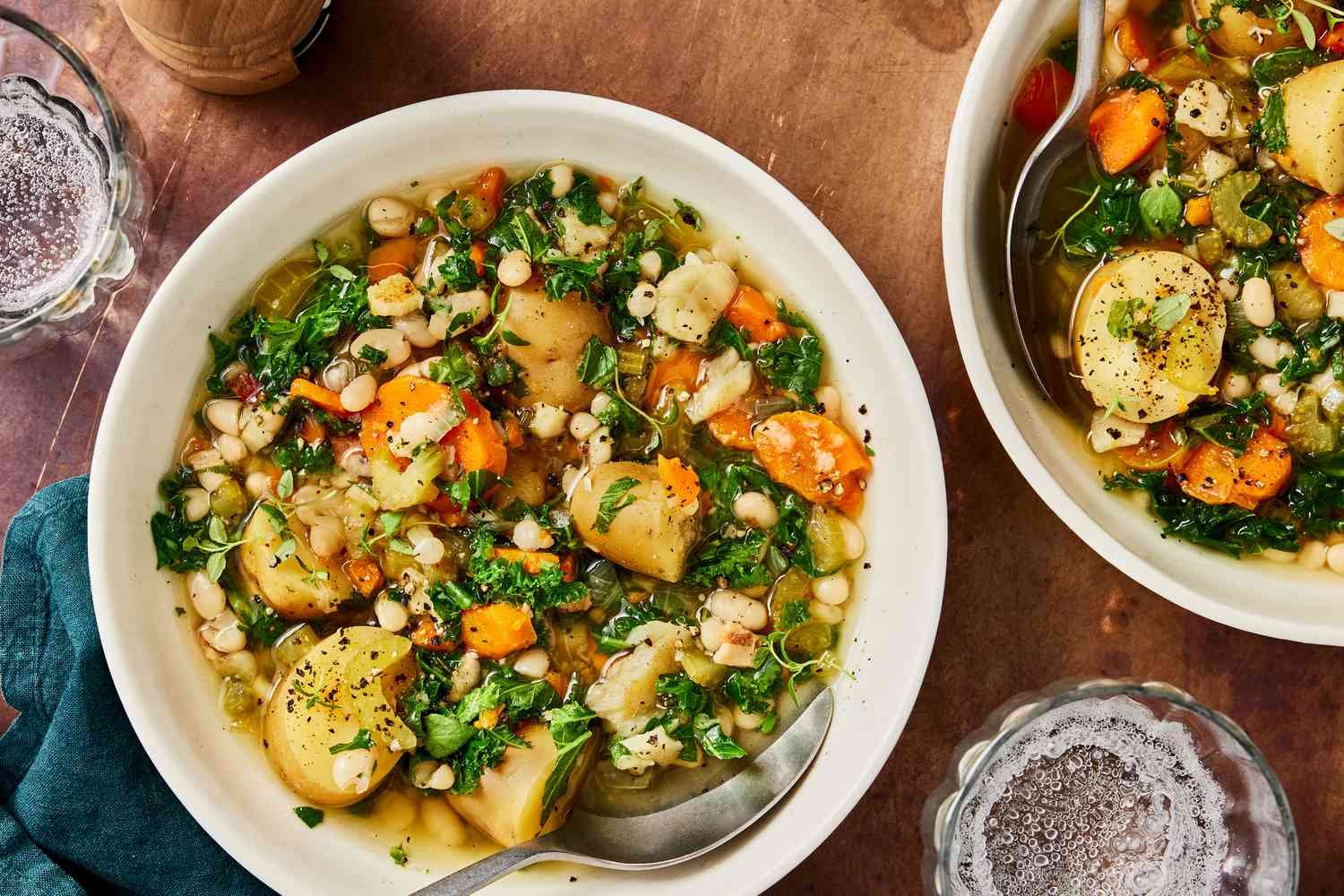
Slow Cooker Chicken and Vegetable Soup
Immune-boosting · Lean protein · Easy to digest · Hydrating
Ingredients
- 2 boneless, skinless chicken breasts
- 4 cups low-sodium chicken broth
- 1 medium carrot, peeled and chopped
- 1 celery stalk, chopped
- 1 medium potato, peeled and diced
- 1 small onion, chopped
- 1 tsp dried thyme, ½ tsp black pepper
- Fresh parsley for garnish (optional)
Instructions
- Place chicken breasts at the bottom of the crockpot. Add all vegetables around the chicken.
- Pour in the broth and sprinkle with thyme and pepper.
- Cover and cook on Low for 6 hours, until chicken is cooked through and vegetables are tender.
- Remove chicken, shred with two forks, and return to the soup.
- Stir well and serve warm, garnished with fresh parsley.
Crockpot Lentil Soup
High fibre · Plant-based protein · Iron-rich · Heart and digestive health
Ingredients
- 1 cup brown or green lentils, rinsed
- 1 medium carrot, peeled and chopped
- 1 celery stalk, chopped
- 1 small onion, chopped
- 1 clove garlic, minced
- 3 cups low-sodium vegetable broth
- 1 can (14.5 oz) low-sodium diced tomatoes, undrained
- 1 tsp ground cumin, ½ tsp dried coriander, ¼ tsp black pepper
- Fresh cilantro or parsley for garnish (optional)
Instructions
- Combine all ingredients in the crockpot and stir well.
- Cover and cook on Low for 6–7 hours, until lentils are tender. The soup will thicken as it cooks.
- If too thick, add a little more broth or water. Serve warm, garnished with fresh cilantro or parsley.
Mediterranean Chickpea Stew
Fibre-rich · Plant-based protein · Heart-healthy · Bursting with Mediterranean flavour
Ingredients
- 1 can (15 oz) chickpeas, rinsed and drained
- 1 can (14.5 oz) low-sodium diced tomatoes, undrained
- 1 medium zucchini, diced
- 1 medium eggplant, peeled and diced (optional)
- 1 red bell pepper, diced
- 1 small onion, chopped · 2 cloves garlic, minced
- 3 cups low-sodium vegetable broth
- 1 tsp dried oregano, ½ tsp dried basil
- ¼ tsp red pepper flakes (optional)
- 2 tbsp fresh parsley for garnish · 1 tbsp olive oil for serving (optional)
Instructions
- Combine all ingredients except the parsley and olive oil in the crockpot. Stir gently.
- Cover and cook on Low for 4–5 hours, until vegetables are tender and flavours have melded.
- Serve warm, drizzled with olive oil and garnished with fresh parsley. Excellent with a side of whole-grain couscous or brown rice.
🌙 Dinner Recipes
Slow Cooker Salmon and Vegetables
Rich in omega-3s · Lean protein · Brain and heart health · Moist and flaky
Ingredients
- 2 salmon fillets (~6 oz each)
- 1 medium zucchini, sliced into rounds
- 1 medium carrot, thinly sliced
- 1 small lemon, thinly sliced
- 1 tbsp olive oil · 1 tsp dried or fresh dill
- Salt and black pepper to taste (use sparingly)
- ¼ cup low-sodium vegetable broth or water
Instructions
- Create a bed of sliced zucchini and carrots at the bottom of the crockpot.
- Place salmon fillets on top. Arrange lemon slices over the salmon.
- Drizzle with olive oil, sprinkle with dill, salt, and pepper. Pour in the broth.
- Cover and cook on Low for 2–3 hours, until salmon flakes easily with a fork. Do not overcook.
- Serve immediately with the cooked vegetables and lemon slices.
Crockpot Turkey Chili
High lean protein · Fibre-rich · Healthier than beef chili · Very filling
Ingredients
- 1 lb lean ground turkey
- 1 can (15 oz) kidney beans, rinsed · 1 can (15 oz) black beans, rinsed
- 1 can (28 oz) low-sodium diced tomatoes, undrained
- 1 medium bell pepper, diced · 1 medium onion, chopped · 2 cloves garlic, minced
- 1 tbsp chili powder · 1 tsp ground cumin · ½ tsp smoked paprika (optional)
- ¼ tsp cayenne pepper (optional) · Salt and pepper to taste
- ½ cup low-sodium broth (if needed for consistency)
Instructions
- Brown the ground turkey in a large skillet over medium heat. Drain excess fat.
- Transfer to the crockpot. Add all remaining ingredients and stir well. Add broth if too thick.
- Cover and cook on Low for 5–6 hours or High for 2–3 hours, until flavours are well blended.
- Serve warm. Optional toppings: plain Greek yogurt, shredded low-fat cheese, or fresh cilantro.
Slow Cooker Pot Roast with Root Vegetables
Significant protein · Vitamin B12 · Fork-tender · Root vegetables for fibre and nutrients
Ingredients
- 2–3 lb boneless beef chuck roast, trimmed of excess fat
- 1 tbsp olive oil · 1 large onion, roughly chopped
- 3 medium carrots, peeled and cut into large chunks
- 3 medium potatoes, peeled and cut into large chunks
- 2 stalks celery, cut into large chunks
- 2 cups low-sodium beef broth · 1 tbsp Worcestershire sauce
- 1 tsp dried rosemary · 1 tsp dried thyme · Salt and pepper to taste
- Optional: 2 tbsp cornstarch + 2 tbsp cold water (for thickening gravy)
Instructions
- Pat the roast dry and season with salt and pepper. Sear on all sides in a hot skillet with olive oil for extra flavour.
- Place vegetables at the bottom of the crockpot. Set the seared roast on top.
- Whisk together broth, Worcestershire sauce, rosemary, and thyme. Pour over the roast.
- Cover and cook on Low for 8–10 hours or High for 4–5 hours, until beef is fork-tender.
- Optional: transfer cooking liquid to a saucepan, whisk in cornstarch slurry, and simmer until thickened for a gravy.
Lemon Herb Cod with Asparagus
Light and easy to chew · Lean protein · Fibre and vitamins from asparagus · Mild flavour
Ingredients
- 2 cod fillets (~6 oz each), fresh or thawed
- 1 bunch asparagus, tough ends trimmed
- 1 small lemon, thinly sliced · 2 cloves garlic, minced
- 2 tbsp fresh parsley, chopped · 1 tbsp olive oil
- Salt and pepper to taste (use sparingly)
- ¼ cup low-sodium vegetable broth or water
Instructions
- Line the bottom of the crockpot with asparagus spears.
- Place cod fillets on top. Arrange lemon slices over the cod. Sprinkle with garlic and parsley.
- Drizzle with olive oil, season lightly, and pour in the broth.
- Cover and cook on Low for 1.5–2.5 hours, until cod is opaque and flakes easily. Cooking time varies by thickness.
- Serve immediately, being careful not to break the delicate fish.
🍮 Desserts
Slow Cooker Baked Apples
Naturally sweet · Good source of fibre · Comforting and easy to digest
Ingredients
- 4 medium baking apples (Gala, Honeycrisp, or Fuji), cored
- 2 tbsp rolled oats
- 1 tbsp honey or maple syrup (optional)
- 1 tsp ground cinnamon · ½ tsp ground nutmeg
- ½ cup water or apple juice
Instructions
- Core the apples, leaving about ½ inch at the bottom. Peel if preferred for a softer texture.
- Mix oats, honey, cinnamon, and nutmeg. Fill the cored centres with the oat mixture.
- Place filled apples upright in the crockpot. Pour water or apple juice around the base.
- Cover and cook on Low for 2–3 hours, until apples are tender.
- Serve warm with plain Greek yogurt or a sprinkle of extra cinnamon.
Slow Cooker Poached Pears in Berry Juice
Elegant and naturally sweet · Incredibly soft · Ideal for chewing difficulties · Antioxidant-rich
Ingredients
- 4 firm but ripe pears (Bosc or Anjou), peeled, cored, and halved
- 1 cup mixed berry juice (100% juice, no added sugar)
- ½ cup water · 1 cinnamon stick
- 2–3 whole cloves (optional) · 1 tbsp lemon juice
- Sweetener to taste (stevia or a small amount of honey — optional)
Instructions
- Combine berry juice, water, cinnamon stick, cloves, lemon juice, and sweetener in the crockpot.
- Gently place the pear halves into the liquid, ensuring they are mostly submerged.
- Cover and cook on Low for 2–3 hours, until pears are very tender.
- Carefully remove pears and arrange in serving dishes. Spoon poaching liquid over the top.
- Serve warm or chilled, with a small dollop of whipped cream or vanilla Greek yogurt.
Meal Planning and Storage for Seniors
Batch Cooking
- A single crockpot meal often provides multiple servings — cook once, eat several times
- Cool completely before dividing into single-serving, freezer-safe containers
- Label each container with the dish name and date prepared
Strategic Meal Pairing
- Whole grains: Brown rice, quinoa, or whole-wheat pasta alongside stews and chilis
- Soft fruits: Berries, sliced banana, or melon for vitamins and natural sweetness
- Greek yogurt: Adds protein and probiotics as a side or topping
Safe Storage
- Cool food rapidly before refrigerating — divide into smaller containers to speed cooling
- Refrigerate for up to 3–4 days in airtight containers
- Freeze for up to 3 months; thaw overnight in the fridge or use microwave defrost
- Always reheat to 165°F (74°C) before serving
Avoiding Reheating Pitfalls
- Never reheat the same batch multiple times — only heat the portion you intend to eat
- Don’t reheat in the slow cooker — it takes too long to reach a safe temperature
- Use a microwave or small saucepan for safe, quick reheating
Adapting Your Favourite Recipes for the Crockpot
Many traditional recipes can be successfully converted for slow cooking. A few basic principles make the process straightforward.
- Reduce Liquid by One-Third Slow cookers retain moisture very efficiently. Reduce liquid by one-third to one-half compared to stovetop or oven recipes, unless making a soup or stew. Natural juices from ingredients will add to the liquid content.
- Brown Meats First for Richer Flavour While not strictly necessary, searing meat in a skillet before adding to the crockpot significantly enhances flavour and creates a richer depth of taste — especially for pot roast or chili.
- Add Dairy and Delicate Ingredients Late Dairy products (milk, cream, cheese) and quick-cooking vegetables (spinach, fresh herbs, peas) should be added in the last 30–60 minutes to prevent curdling, overcooking, or loss of flavour.
- Cook Pasta and Rice Separately Cook pasta or rice separately and add to the crockpot during the last 30–60 minutes, or stir in just before serving, to prevent mushiness.
- Cooking Time Conversion Rule As a general guide: 1 hour on stovetop/oven = approximately 3–4 hours on Low, or 1.5–2 hours on High in a slow cooker. Always check for doneness in meats and root vegetables.