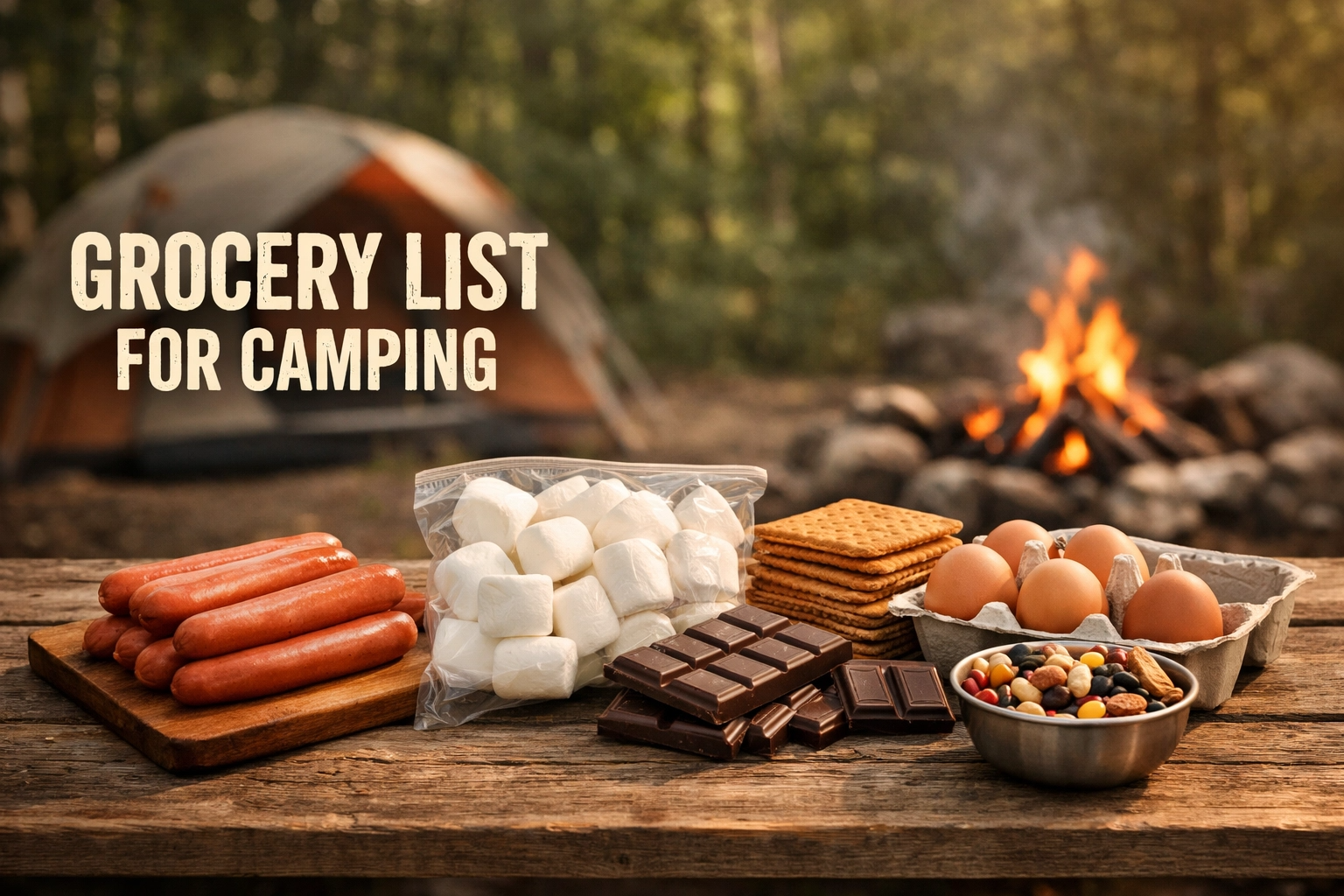
Grocery List for a Camping Trip
A precise, versatile, and waste-free grocery strategy — scaled for any group size and built around modular meal planning and outdoor food safety.
Planning your camp kitchen
Outdoor culinary success is rarely accidental — it is the result of meticulous planning and a clear understanding of what works in a wilderness setting. The difference between a great camping trip and a miserable one often comes down to food. Too little and morale collapses. Too much and you’re hauling unnecessary weight.
This guide covers essential food categories, precise group-size scaling, modular meal strategies, non-food supplies, and food safety best practices.
Essential camping grocery categories
- Large eggs (or liquid egg substitute)
- Thick-cut bacon
- Breakfast sausage links
- Ground beef (80/20 for grill flavour)
- Pre-marinated chicken breasts
- Canned tuna or chicken pouches
- Beef jerky
- Summer sausage
- Canned beans (black, pinto, or baked)
- Extra-firm tofu
- Tempeh
- Dehydrated soy crumbles
- Flour tortillas — space-saving, versatile
- Bagels — denser, resistant to squishing
- Sturdy sourdough or multigrain bread
- Instant oats
- Couscous — cooks in 5 minutes
- Pre-cooked rice pouches
- Pasta (rotini or penne)
- Russet potatoes (bake in coals)
- Baby potatoes (faster to cook)
- Onions
- Garlic
- Bell peppers
- Carrots
- Corn on the cob (keep in husks)
- Spinach or kale (sturdier than lettuce)
- Avocados (buy slightly under-ripe)
- Cherry tomatoes
- Apples
- Oranges
- Dried fruit mixes
- Bananas & berries — Day 1 only
- Travel-sized ketchup
- Mustard
- Mayonnaise
- Hot sauce
- Soy sauce
- Salt
- Black pepper
- Garlic powder
- Onion powder
- Smoked paprika
- Crushed red pepper
- Olive or avocado oil
- Butter sticks
- Non-stick cooking spray
- Honey
- Maple syrup
- Individual sugar packets
Grocery scaling — 3-day trip
Quantities for a standard three-day, two-night trip. Based on two substantial meals and one light meal per day, plus snacks throughout. Scale up 15–20% for high-activity trips or cold-weather conditions.
| Grocery category | Solo (1) | Couple (2) | Small group (4) | Large group (8–10) |
|---|---|---|---|---|
| Eggs (large) | 4–6 units | 1 dozen | 2 dozen | 4–5 dozen |
| Meat / main protein | 1.5 lbs | 3 lbs | 6–7 lbs | 12–15 lbs |
| Bread / tortillas | 1 pack (6–8) | 1–2 packs | 3 packs | 6–8 packs |
| Hardy vegetables | 1 lb | 2 lbs | 4 lbs | 8–10 lbs |
| Potatoes | 2 units | 4 units | 8 units | 15–20 units |
| Coffee (ground) | 4–6 oz | 8–10 oz | 1 lb | 2–3 lbs |
| Milk / creamer | 1 pint | 1 quart | ½ gallon | 1.5–2 gallons |
| Potable water | 3 gallons | 6 gallons | 12 gallons | 25–30 gallons |
| Trail mix / snacks | 1 lb | 2 lbs | 4 lbs | 8–10 lbs |
| Cheese (sliced / shredded) | 4 oz | 8 oz | 1 lb | 2–3 lbs |
The modular approach to variety
To prevent “menu fatigue” without overpacking, use a modular approach where the same base ingredients are repurposed across different cuisines. These three modules cover the majority of great camp meals using largely the same shopping list.
- Base: tortillas, cheese, onions, peppers
- AM: breakfast burritos
- PM: steak or chicken fajitas
- Also: tacos, quesadillas, bean wraps
- Base: onions, peppers, pasta, sausage
- PM: hearty one-pot pasta dinner
- Also: garlic bread with sourdough
- Also: pasta salad for cold lunch
- Base: ground beef, onions, cheese
- PM: burgers or foil-packet dinners
- Also: grilled corn on the cob
- Also: campfire nachos with beans
Approach by group size
- “Just add water” dehydrated meals
- One-pot recipes for minimal cleanup
- Pouches over cans to save weight
- Multi-purpose ingredients (eggs for breakfast, lunch omelette, dinner fried rice)
- Avoid large cuts with bones — all waste, no storage
- Large-pot meals: chili, soup, pasta
- Build-your-own stations: taco bar, foil packets, baked potato bar
- Assign “meal leads” to distribute workload
- Pre-portion everything into labelled bags before leaving
- Two-cooler system: one for drinks, one for meals
Essential non-food supplies
A complete camping grocery run includes the supplies needed to store, cook, and clean. Don’t leave without these.
- Propane canisters
- Charcoal briquettes
- Firestarter / matches
- Long-handled tongs
- Heavy-duty aluminium foil
- Resealable bags (various sizes)
- High-quality cooler (with drain plug)
- Bear-resistant food container
- Biodegradable dish soap
- Scouring pad
- Paper towels
- Heavy-duty trash bags
Food safety & storage best practices
Maintaining the cold chain is critical for health and safety on any multi-day trip. These four practices are non-negotiable.
The bottom line
A successful camping trip is fuelled by good food and even better planning. By understanding the scaling needs of your group, using modular meal strategies to maximise variety without overpacking, and following food safety best practices, you can elevate your outdoor dining from mere survival to a genuine culinary highlight. Focus on versatile, hardy ingredients — tortillas, eggs, onions, and a solid spice kit will take you further than almost anything else in your pack.