
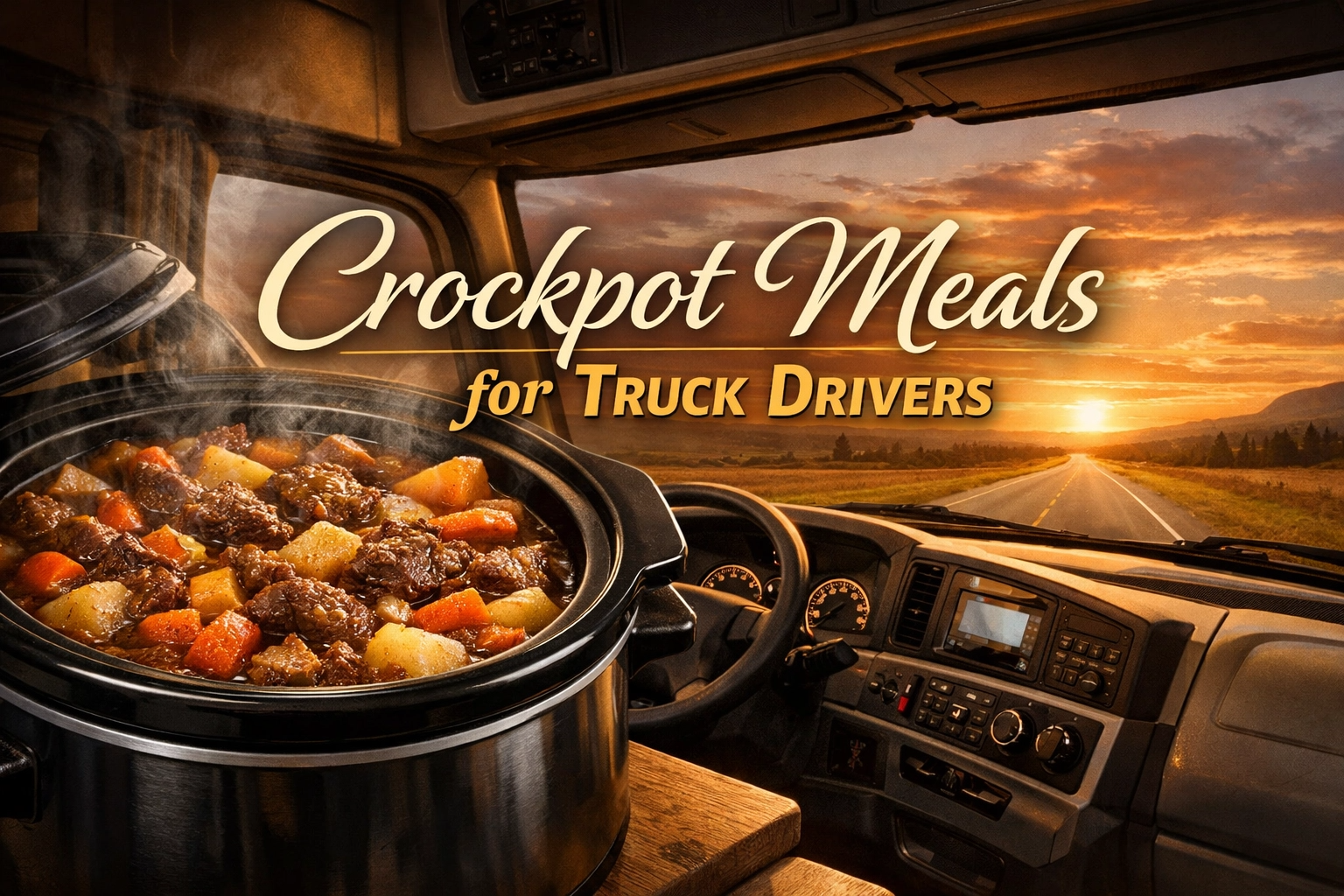
Life on the road is demanding. Between long hauls, tight deadlines, and unpredictable schedules, eating well often falls by the wayside. For many truck drivers, the default meal plan is a revolving door of greasy truck stop burgers, microwaved burritos, and vending machine snacks. It is convenient, sure — but it is expensive, unhealthy, and ultimately unsustainable for the long-distance lifestyle.
That is where the crockpot changes everything. A slow cooker is one of the most practical tools a trucker can keep in their cab. You load in your ingredients before a long stretch, set the temperature, and hours later you have a hot, home-cooked meal waiting for you at the next rest stop. No greasy spoon required.
Truck-friendly slow cookers — especially 12-volt models designed to plug directly into your rig’s power outlet — have made cab cooking more accessible than ever. Models like the RoadPro 12V Slow Cooker and the Crock-Pot Lunch Crock are built for life on the highway. They are compact, energy-efficient, and tough enough to handle the vibrations of a long haul.
The benefits speak for themselves:
- Saves serious money compared to eating out every day
- Healthier meals with controlled ingredients
- Minimal effort — just prep and let it cook
- Meals are ready while you are driving
If you have never tried crockpot cooking in your truck, this guide will show you exactly how to get started — from essential tips to the best recipes for life on the road.
Why Truckers Love Crockpot Cooking
Saves Money
Consider the math. A single truck stop meal — a burger, side, and drink — can easily run $12 to $18. Do that twice a day across a five-day run and you are spending $120 to $180 on food alone. Now compare that to a batch of slow cooker chili made with ground beef, beans, and canned tomatoes. That same pot feeds you for two days and costs around $8 to $10 total. Over a month, crockpot cooking can save a driver $300 or more.
The savings add up fast, especially when you are buying in bulk and prepping ingredients at home before a run.
Easy to Cook While Driving
The beauty of slow cooking is that it requires almost zero attention once it is running. You prep your ingredients the night before or at the start of your shift, load everything into the pot, plug in the crockpot, set it to low, and drive. By the time you pull into a rest area four to six hours later, dinner is done. There is no hovering over a stove, no stirring, no timing. Just set it and forget it.
Minimal Cleanup
One pot cooking means one pot to clean. Use slow cooker liner bags — disposable inserts that fit inside the pot — and cleanup becomes almost effortless. Just lift out the liner, toss it, and wipe down the pot. When you are living out of a cab with limited water access, that matters a lot.
Healthier Food Options
When you cook your own meals, you control what goes into them. You can cut back on sodium, use leaner cuts of meat, load up on vegetables, and skip the preservatives and additives that come standard in fast food and processed truck stop meals. Over weeks and months on the road, that kind of dietary control makes a real difference to your energy levels, weight, and overall health.
Essential Crockpot Cooking Tips for Truckers
Follow these tips to get the most out of your slow cooker on the road:
- Use slow cooker liner bags. These disposable inserts eliminate scrubbing and make cleanup a one-step job. They are inexpensive and a total game-changer for cab cooking.
- Prep at home before your trip. Chop vegetables, portion out meat, and measure seasonings before you hit the road. Store everything in zip-lock bags or small containers so loading the crockpot takes less than two minutes.
- Use frozen vegetables. Frozen veggies are cheap, last longer than fresh, and go straight into the pot with no chopping needed. They also help regulate the temperature inside the crockpot.
- Store ingredients in small containers. Use stackable food containers or a small cooler to keep your prepped ingredients organised in the cab. Label everything so grab-and-go is simple.
- Choose recipes that do not need stirring. Stick to set-it-and-forget-it recipes. Avoid dishes that require you to add ingredients mid-cook or stir frequently. Safety first — you are driving a truck.
Best Crockpot Meals for Truck Drivers
Here are five tried-and-true recipes that work perfectly in a truck cab slow cooker. Each one is filling, affordable, and requires minimal prep.
Crockpot Chili
Chili is the ultimate trucker meal. It is hearty, packed with protein, and gets better the longer it cooks. A batch lasts two days and reheats easily.
Ingredients
- 1 lb ground beef
- 1 can kidney beans, drained
- 1 can diced tomatoes
- 1 cup tomato sauce
- 1 small onion, diced
- 1 packet chili seasoning
Instructions
- Brown the ground beef beforehand if possible — but you can skip this step and add it raw.
- Add all ingredients to the crockpot and stir to combine.
- Cook on low for 4 to 6 hours.
Why it’s great: Filling, cheap, high in protein, and endlessly customisable. Add hot sauce, shredded cheese, or serve over rice to mix it up.
Slow Cooker Chicken and Rice
This one is a comfort classic — creamy, warm, and almost effortless to make. It cooks up perfectly in about four to five hours.
Ingredients
- 2 chicken breasts
- 1 cup long-grain rice
- 1 can cream of chicken soup
- 1.5 cups chicken broth
- 1 cup frozen mixed vegetables
Instructions
- Add all ingredients directly to the crockpot.
- Stir to combine.
- Cook on low for 4 to 5 hours until chicken is cooked through and rice is tender.
Crockpot Beef Stew
Nothing beats a thick, rich beef stew after a long haul. This classic is loaded with vegetables and keeps you full for hours.
Ingredients
- 1 lb stew beef, cut into chunks
- 2 potatoes, diced
- 2 carrots, sliced
- 1 onion, chopped
- 1.5 cups beef broth
- Salt, pepper, garlic powder to taste
Instructions
- Add all ingredients to the crockpot.
- Cook on low for 6 to 8 hours.
Truck Stop Pulled Pork
Pulled pork is a road warrior staple. Make it in the crockpot, serve it on buns or flour tortillas, and you have got multiple meals from one cook.
Ingredients
- 2 to 3 lbs pork shoulder
- 1 cup BBQ sauce
- 1 onion, sliced
- 2 tablespoons brown sugar
Instructions
- Place onion slices on the bottom of the crockpot.
- Rub pork shoulder with brown sugar and place on top of onions.
- Pour BBQ sauce over everything.
- Cook on low for 6 to 8 hours.
- Shred with two forks and serve on buns or warm tortillas.
Easy Sausage and Potatoes
Simple, satisfying, and ready with almost zero prep time. This one is a go-to when you want something hearty without any fuss.
Ingredients
- 1 package smoked sausage, sliced
- 3 potatoes, diced
- 1 bell pepper, sliced
- 1 onion, sliced
- 1 teaspoon garlic powder, salt, and pepper
Instructions: Slice all ingredients, toss with seasoning, add to crockpot. Cook on low for 4 to 5 hours.
Cheap Weekly Grocery List for Truckers
You do not need to spend a fortune to eat well on the road. Here is a simple, budget-friendly weekly shopping list:
- Ground beef (2 lbs)
- Chicken breasts or thighs (2 to 3 lbs)
- Pork shoulder or smoked sausage
- Potatoes (5 lb bag)
- Rice (2 lb bag)
- Canned beans (kidney, black, or pinto)
- Canned diced tomatoes
- Frozen mixed vegetables (2 bags)
- Chicken and beef broth (cartons)
- Seasoning packets (chili mix, ranch, onion soup)
- Cream of chicken soup (2 cans)
- BBQ sauce
Estimated weekly cost: $40 to $60 — compared to $150 to $200+ eating at truck stops every day.
Best Crockpots for Truck Drivers
Not all slow cookers are built for the road. Here is what to look for when choosing one for your cab:
12V Truck Slow Cooker. Plugs directly into your truck’s 12-volt outlet (cigarette lighter socket). No inverter needed. Models like the RoadPro 12V Slow Cooker are a popular choice.
Small 2 to 3 Quart Capacity. The right size for one to two people. Large enough for a proper meal, compact enough to fit in a cab.
Locking Lid. Essential for the road. A locking lid keeps everything secure while driving and prevents spills.
Low Wattage. Lower wattage means less drain on your truck’s electrical system. Most 12V models are designed with this in mind.
Easy to Clean. Look for a removable ceramic or non-stick insert. Pair with liner bags for effortless cleanup.
Food Safety Tips for Truck Cooking
Cooking in a moving vehicle comes with a few important safety considerations. Follow these guidelines to keep your food — and yourself — safe:
- Always store raw meat in a truck refrigerator or high-quality cooler with ice. Never leave raw protein sitting at room temperature.
- Do not leave cooked food sitting in the crockpot overnight or for more than four hours after it finishes cooking. Bacteria multiply quickly in the 40°F to 140°F danger zone.
- Reheat leftovers thoroughly to at least 165°F before eating.
- Keep the crockpot on a flat, stable surface in the cab. Use a non-slip mat to prevent sliding during turns or stops.
- Invest in a small digital food thermometer. It is inexpensive and takes the guesswork out of knowing when meat is properly cooked.
Final Thoughts
Crockpot cooking is genuinely one of the smartest moves a truck driver can make. It saves money, supports better health, and fits seamlessly into a life that does not allow for much time in the kitchen. You do not need to be a chef. You do not need a full kitchen. You just need a crockpot, a power outlet, and a handful of simple ingredients.
Start with one of the five recipes in this guide — the chili is a great first try because it is almost impossible to mess up. Once you have got the hang of it, you will start experimenting with your own variations, prepping smarter, and looking forward to meals on the road in a way you never expected.
The open road does not have to mean bad food. With a crockpot in your cab, every long haul can end with a warm, satisfying, home-cooked meal. Happy cooking, and safe driving.