At a Glance
French · Chicken · Slow CookerThe Story Behind the Dish
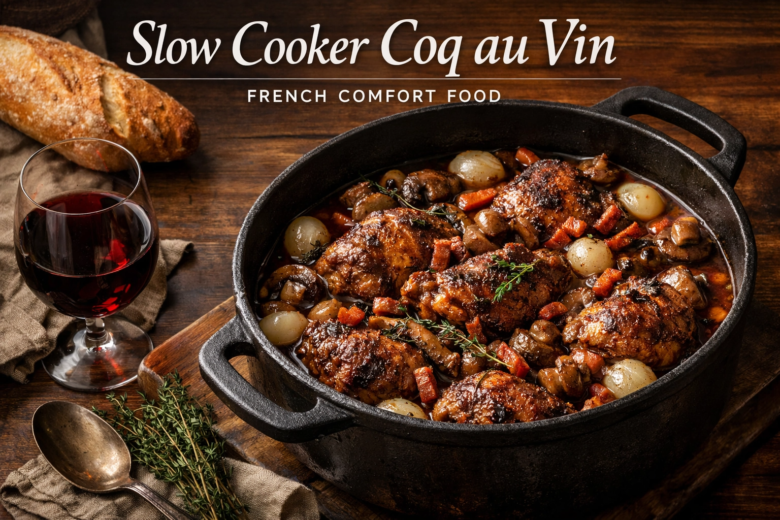
Coq au Vin, a quintessential French culinary masterpiece, translates literally to “rooster with wine.” This rustic yet elegant dish hails from the Burgundy region of France, traditionally featuring chicken braised slowly in red wine with lardons, mushrooms, and pearl onions. Its origins are rooted in peasant cooking, where resourceful cooks transformed less tender cuts of poultry into a deeply flavorful stew through prolonged simmering. Over centuries, Coq au Vin evolved from a humble farm dish into a celebrated staple of French gastronomy, famously popularised in the United States by Julia Child through Mastering the Art of French Cooking.
While the traditional preparation demands careful stovetop or oven braising, the slow cooker offers a remarkably convenient and equally delicious alternative. The low-and-slow method that is inherent to Coq au Vin is exactly what the slow cooker excels at — gently melding the robust flavors of red wine, smoky bacon, earthy mushrooms, and aromatic herbs into a harmonious, deeply satisfying stew.
This recipe brings the rich, comforting flavors of classic French cuisine to your table without the fuss. Assemble in the morning, return to a perfectly cooked, aromatic meal in the evening. It’s proof that classic French elegance can be effortlessly achieved in the modern kitchen.
Why You’ll Love This Recipe
- Hands-Off French Cooking Set it up in the morning and return to a gourmet-quality stew in the evening. No hovering, no stirring — just an incredibly tender result.
- Deep, Complex Flavor Red wine, smoky bacon, earthy mushrooms, and aromatic herbs meld over hours into a sauce that tastes like it took all day — because it did.
- Budget-Friendly Cut Bone-in chicken thighs and drumsticks are among the most affordable cuts available, yet they deliver the richest, most succulent results in a slow cooker.
- Tastes Even Better the Next Day Like all great braises, Coq au Vin improves overnight as the flavors continue to meld. Make it a day ahead for maximum depth.
- Impressive Enough to Entertain An ideal dinner party dish — sophisticated, deeply flavored, and entirely prepared before your guests arrive.
Ingredients
Main Ingredients
- Chicken Thighs & Drumsticks — 2.5–3 lbs, bone-in, skin-on
- Red Wine — 1½ cups, dry (Burgundy, Pinot Noir, or Merlot)
- Chicken Broth — 1 cup, low-sodium
- Bacon or Lardons — 4–6 oz, diced
- Mushrooms — 8 oz cremini or button, sliced
- Pearl Onions — 1 cup, fresh or frozen (or 1 medium yellow onion, diced)
- Carrots — 2 medium, cut into 1-inch rounds
- Garlic — 4 cloves, minced
Herbs & Seasonings
- Fresh Thyme — 4–5 sprigs (or 1 tsp dried)
- Bay Leaves — 2
- Salt & Black Pepper — to taste
- Fresh Parsley — for garnish, chopped
Optional Add-Ins
- Tomato Paste — 1–2 tbsp (adds umami depth)
- Unsalted Butter — 1 tbsp (for extra richness)
- Red wine vinegar or lemon juice — splash (to brighten at the end)
For Thickening the Sauce
- Cornstarch — 1–2 tbsp + cold water (gluten-free slurry)
- Beurre manié — equal parts softened butter & flour, kneaded (traditional)
Choosing Your Wine
The wine is not just a cooking liquid — it is a fundamental flavor component that defines the dish. Choose wisely and the sauce will reward you.
Best Choices
Burgundy (the classic), Pinot Noir, Merlot, Beaujolais, or Côtes du Rhône. Dry, medium-bodied reds with good acidity work best.
White Wine Version
For a lighter Coq au Vin Blanc, use a dry Riesling, Sauvignon Blanc, or Pinot Grigio. Same method — brighter, more delicate result.
What to Avoid
Never use sweet wines — the sweetness concentrates during cooking and creates a cloying, unbalanced sauce. Avoid “cooking wines” which contain salt and preservatives.
Before You Begin — Prep Tips
-
Pat the Chicken Dry: Thoroughly pat all chicken pieces with paper towels. Excess surface moisture prevents proper browning and hinders the seasoning from adhering to the skin. Season generously with salt and freshly ground black pepper all over.
-
Optional — Brown the Bacon & Chicken: Cook the diced bacon in a skillet over medium heat until crispy; remove and set aside. In the rendered bacon fat, sear the chicken in batches (skin-side down first) for 3–5 minutes per side until deeply golden. This Maillard reaction creates complex, caramelised flavors that cannot be achieved by slow cooking alone. It adds only 10–15 minutes but makes a noticeable difference.
-
Deglaze the Pan: After browning, pour ½ cup of the red wine into the hot skillet and scrape up all the browned bits from the bottom with a wooden spoon. These concentrated flavors — the fond — will be added to the slow cooker and significantly deepen the final sauce. Skip this step only if you skipped the browning.
-
Prep All Vegetables First: Peel and slice the carrots, mince the garlic, wipe and slice the mushrooms, and prepare your onions. Having everything ready before assembly (mise en place) makes layering quick and seamless.
How to Make It
-
1
Build the Vegetable Base
Place the chopped carrots, diced onions (or pearl onions), and minced garlic at the bottom of the slow cooker. This aromatic bed infuses the chicken as it cooks and prevents it from sticking.
-
2
Layer the Chicken
Arrange the browned (or seasoned raw) chicken pieces over the vegetables, skin-side up where possible. Distribute evenly, ideally in a single layer for consistent cooking.
-
3
Add Bacon & Mushrooms
Scatter the crispy bacon and sliced mushrooms over the chicken. If you deglazed the pan after browning, pour that flavorful liquid in now as well.
-
4
Pour in the Wine & Broth
Whisk together the red wine, chicken broth, and tomato paste (if using) in a jug. Pour over the contents of the slow cooker. The liquid should partially — not fully — cover the chicken. Less liquid is needed in a slow cooker than on the stovetop due to minimal evaporation.
-
5
Add the Herbs
Tuck the fresh thyme sprigs and bay leaves in among the chicken and vegetables. Add a final light seasoning of salt and pepper, keeping in mind that the bacon and broth already contribute saltiness.
-
6
Slow Cook
Cover and cook on Low for 6–8 hours for maximum tenderness and flavor development — the recommended method. Or cook on High for 3–4 hours for a faster result. The chicken is done when it is fork-tender and easily pulls away from the bone.
-
7
Finish the Sauce & Serve
Remove and discard the bay leaves and thyme sprigs. Taste and adjust seasoning — a splash of red wine vinegar or lemon juice can brighten the richness beautifully. If you’d like a thicker sauce, use one of the methods below. Garnish generously with fresh chopped parsley before serving.
🥄 Sauce Thickening Options
- Cornstarch Slurry: Whisk 1–2 tbsp cornstarch with equal cold water. Stir into the hot liquid, cook on High for 30–60 minutes until thickened. Gluten-free.
- Beurre Manié: Knead 1 tbsp softened butter with 1 tbsp flour into a paste. Stir into the hot liquid until dissolved and silky. The classic French method.
What to Serve With It
The most beloved pairing — creamy, buttery mash is the perfect canvas for the wine-infused sauce.
An absolute must. A fresh baguette is ideal for mopping up every last drop of the flavorful sauce.
Wide egg noodles tossed with butter and a pinch of salt — a comforting, sauce-absorbing base that lets the Coq au Vin shine.
Plain white or brown rice — a lighter option and excellent for soaking up the abundant gravy.
A crisp salad with light vinaigrette cuts through the richness, adding a refreshing balance to the plate.
Lightly steamed vegetables add fresh color and a slight crunch — an elegant, lighter counterpoint.
Tips for Best Results
- Browning adds deeper flavor — don’t skip it: The Maillard reaction during searing creates complex, caramelised notes and a beautiful color that permeates the entire stew. It takes 10–15 extra minutes but the difference is genuinely noticeable. Always deglaze the pan afterwards to capture the fond.
- Don’t skip the herbs: Fresh thyme and bay leaves are integral to the aromatic profile of Coq au Vin. They infuse the stew with the earthy, fragrant notes that are characteristic of French braising. Remove before serving.
- Use bone-in chicken for richness: The bones release collagen and marrow during the long cook, contributing to a richer, more gelatinous sauce. Boneless chicken will produce a less flavorful, potentially drier result.
- Let it rest overnight: Coq au Vin often tastes significantly better the next day. Make it ahead, refrigerate overnight, and gently reheat — the sauce becomes more luxurious and the flavors more harmonious.
- Always taste and adjust at the end: Flavors concentrate during slow cooking, and saltiness varies by brand of broth and bacon. Add a splash of vinegar or lemon juice at the very end to brighten and balance.
Variations & Substitutions
🍗 Boneless Chicken (Faster Cook)
Boneless, skinless thighs work best if you prefer convenience. They retain moisture better than breasts. Reduce cook time — on Low, check after 4–5 hours; on High, after 2–3. Expect a slightly less rich sauce.
🥂 White Wine Version (Coq au Vin Blanc)
Substitute the red wine with a dry Riesling, Sauvignon Blanc, or Pinot Grigio. The cooking method stays the same but yields a brighter, lighter, and more delicate sauce.
🚫 Alcohol-Free Version
Replace the red wine with equal amounts of beef or chicken broth and add 1–2 tbsp of red wine vinegar or balsamic vinegar to replicate the acidity and depth. Milder overall, but still deeply satisfying.
🥔 One-Pot with Potatoes
Add Yukon Gold or red potatoes (cut into 1-inch chunks) at the beginning with the other vegetables. They absorb the rich wine sauce beautifully and eliminate the need for a separate side dish entirely.
🍄 Wild Mushroom Upgrade
Replace cremini mushrooms with shiitake, oyster, or chanterelles for a more gourmet, umami-forward result. If using dried wild mushrooms, rehydrate first and add the strained soaking liquid to the stew.
🥬 Vegetable-Loaded Version
Add parsnips, celery root, or sweet potato chunks at the start. Stir in fresh spinach or kale during the final 30 minutes for extra nutrition and a burst of color.
Storage & Reheating
Refrigerating
Cool completely before storing in airtight containers. The stew often tastes better on day two — plan ahead if you can.
3–4 daysFreezing
Transfer cooled stew to freezer-safe containers or bags, leaving headspace for expansion. Label with the date. Thaw overnight in the refrigerator before reheating.
Up to 3 monthsReheating
Stovetop: Medium-low heat, stirring occasionally — preferred for best texture. Microwave: Stir every minute until heated through to 165°F (74°C). Add a splash of broth if the sauce has thickened too much.
Either methodFrequently Asked Questions
Can I skip the wine entirely?
Yes, though the flavor profile will change significantly. Replace the red wine with equal amounts of beef or chicken broth, and add 1–2 tablespoons of red wine vinegar or balsamic vinegar to compensate for the lost acidity and complexity. The result will be milder but still comforting and delicious.
Do I really need to brown the chicken first?
No — you don’t need to. Your stew will still be tender and flavorful without it. However, browning creates rich, caramelised notes through the Maillard reaction that cannot be replicated by slow cooking alone. If you have the extra 10–15 minutes, it genuinely makes a noticeable difference to the depth of flavor.
Can I cook this overnight?
Yes — use the Low setting, which is designed for extended cooking and gentle heat. Set it for 6–8 hours on Low. Ensure your slow cooker is on a stable, heat-resistant surface away from flammable materials when cooking unattended overnight.
Why is my sauce thinner than expected?
Slow cookers retain moisture very efficiently, so the sauce will naturally be thinner than a traditional stovetop version. This is normal. Use either the cornstarch slurry or beurre manié method described in the final step to thicken it to your preferred consistency.