
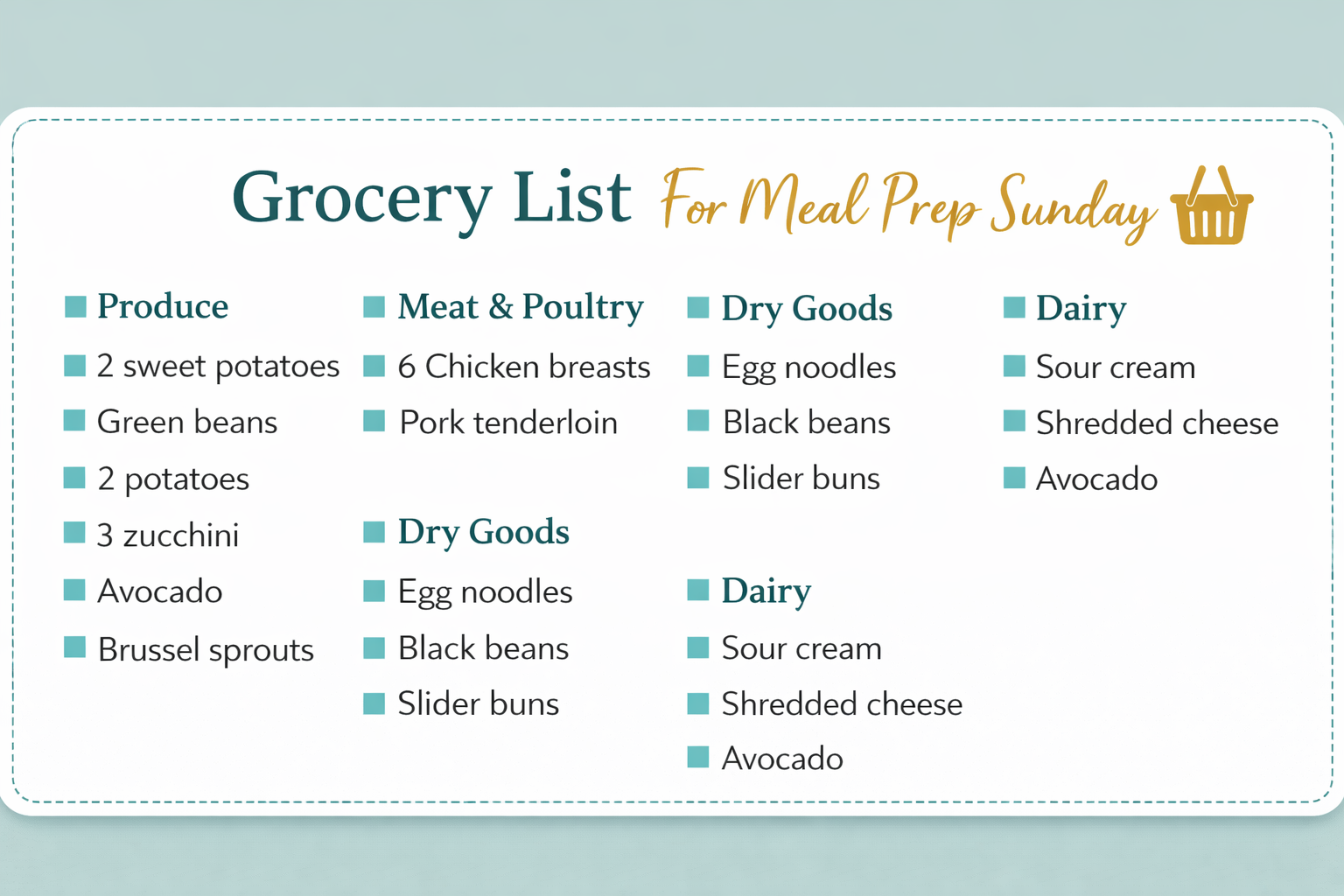
This guide walks you through every step: building your meal plan, crafting a smart grocery list, scaling for your household size, shopping efficiently, executing your prep, and storing everything correctly to last the week.
The Foundation — Planning Your Meals
Before you write a single item on your grocery list, you need a meal plan. This is the blueprint for your entire week’s eating — and getting it right makes everything downstream faster and easier.
-
Assess your schedule — Look at your week ahead before planning. Are there evenings you’ll be eating out or have no time to cook? Adjust your meal plan accordingly so you don’t prep food that won’t get eaten.
-
Check your pantry and freezer first — Before buying anything, take stock of what you already have. This prevents duplicate purchases and ensures you use existing ingredients before they expire.
-
Choose versatile recipes — Select recipes that align with your dietary goals and cooking skill level. Prioritise ingredients that appear in multiple dishes — a bag of spinach that works in three different meals is always worth buying.
-
Aim for variety and balance — Build your week around a balance of proteins, carbohydrates, and healthy fats. Don’t be afraid to try one new recipe each week to prevent the “same thing every Sunday” rut.
-
Plan for component reuse — Roasted vegetables, cooked grains, and batch-cooked proteins can form the base of multiple different meals. Cooking a large tray of something once and using it four ways is the heart of efficient meal prep.
Crafting Your Smart Grocery List
Once your meal plan is solid, translate it into a grocery list. A well-organised list makes your shopping trip faster, more focused, and far less likely to result in impulse purchases.
🗂️ Categorise by Store Section
Organising your list by supermarket category saves significant time and reduces the chance of backtracking — or forgetting something in a section you’ve already passed.
Fruits, vegetables, fresh herbs
Grains, canned goods, oils, spices, sauces, nuts, seeds
Milk, yogurt, cheese, plant-based alternatives
Meat, poultry, fish, eggs, tofu, legumes
Frozen fruits, vegetables, pre-portioned meats
Bread, tortillas, wraps, and any miscellaneous items
Scaling Your List by Household Size
Meal prepping is not one-size-fits-all. The size of your household directly impacts quantities — buying too much leads to waste, too little means mid-week grocery runs. Use this as your guide.
| Household Size | How to Approach Meal Prep & Your Grocery List |
|---|---|
| 👤 Individual | Focus on single-serving recipes or those that divide easily. Buy smaller quantities of fresh produce to avoid waste. Use the freezer aggressively for leftover portions. |
| 👫 Couple | Cook recipes that yield 2–4 servings — dinner one night, lunch the next. Coordinate on meal preferences upfront to minimise food rejection and wasted prep effort. |
| 👨👩👧 Family (3–4) | Plan for 4–6 servings per recipe. Involve the family in meal planning so everyone has a say — food people helped choose is food people actually eat. Double popular dishes for an extra meal later in the week. |
| 👨👩👧👦 Large Family (5+) | Focus on bulk cooking and batch prepping. Double or triple recipes across the board. Lean on cost-effective staples like pasta, rice, and beans as volume foods that feed a crowd without breaking the budget. |
Bulk Buying & Smart Shopping
Incorporating smart buying strategies into your grocery prep maximises both savings and efficiency — without creating the clutter and waste that poorly planned bulk buying causes.
-
1Buy non-perishables in bulk — Rice, oats, dried beans, certain nuts, and spices all make sense to buy in larger quantities. Ensure you have adequate storage space before committing to bulk volumes.
-
2Check sales and buy in-season produce — Plan your meals around what’s on sale or in season that week. This saves money, encourages variety in your diet, and often means you’re eating produce at its peak flavour.
-
3Design for leftovers intentionally — Deliberately cook a larger batch of a protein or grain knowing it will serve as the base for multiple different meals. A batch of cooked quinoa isn’t a leftover — it’s Tuesday’s bowl, Wednesday’s salad, and Thursday’s soup.
-
4Stick strictly to your list — Impulse purchases are the most efficient way to inflate your grocery bill. If it’s not on the list, it doesn’t go in the trolley — this single habit has an outsized impact on weekly spending.
Execution — Shopping and Prepping
With a meticulous grocery list in hand, your shopping trip becomes fast and focused. Once home, these six prep steps will set your week up properly in a single session.
Do this immediately after unpacking groceries. Store chopped vegetables in airtight containers so they’re ready to grab all week without any additional prep.
Cook a large batch of quinoa, rice, or farro. These form the base of many meals and keep well in the fridge for 3–4 days — or freeze for longer storage.
Bake or grill your chosen proteins — chicken, beef, or tofu. Cook more than you think you need; these will disappear across multiple meals during the week.
Make any sauces or dressings you’ll need for the week. Store them separately from the meals they’ll accompany — this maintains freshness and prevents soggy salads.
Divide meals into individual containers immediately. This makes grabbing and going effortless during the week and takes the decision-making out of busy weekday mornings.
Write the contents and date on every container before it goes in the fridge or freezer. This single habit prevents mystery containers and eliminates food waste from forgotten meals.
Storage & Longevity
Knowing how long prepped food keeps — and where to store it — is what turns a good Sunday session into a full week of safe, fresh meals. Use this as your reference guide.
| Food Type | Fridge Duration | Freezer Duration |
|---|---|---|
| 🌾 Cooked grains | 3–4 days | 2–3 months |
| 🍗 Cooked meats & poultry | 3–4 days | 2–6 months |
| 🥦 Cooked vegetables | 3–4 days | 2–3 months |
| 🥕 Fresh chopped veggies | 3–5 days | Not recommended |
| 🫙 Sauces & dressings | 5–7 days | Not recommended |
Meal Prep Sunday, approached with a well-thought-out grocery list and efficient strategies, genuinely transforms your week. It empowers healthier food choices, saves valuable time, and removes the daily mental load of deciding what to eat.
By following these six steps — planning, listing, scaling, shopping smart, executing cleanly, and storing correctly — you’ll master the art of grocery list meal prep and enjoy a more organised, delicious, and stress-free week. Happy prepping!