
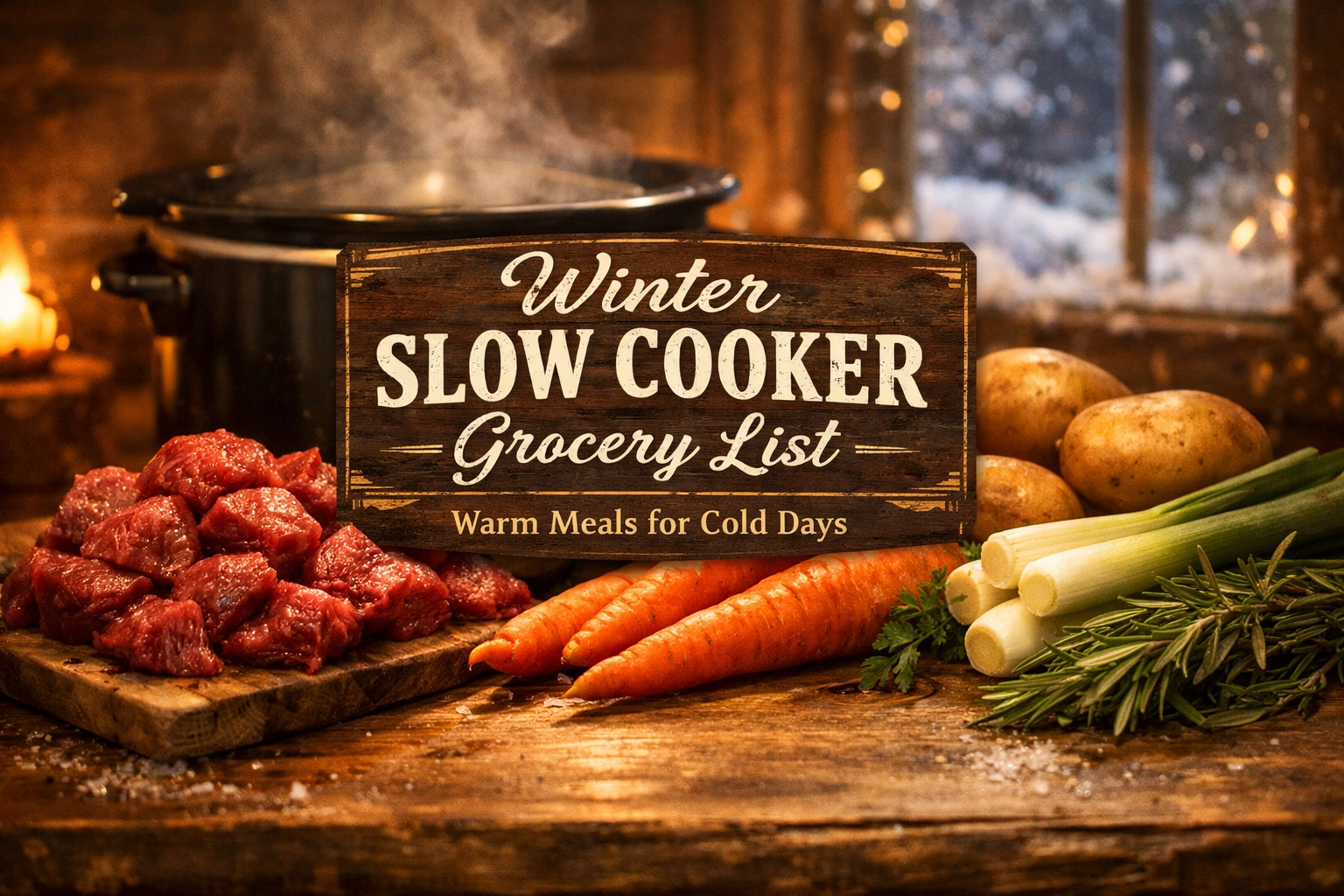
This guide stocks your pantry and fridge with everything you need for hearty, nutritious slow cooker recipes that will keep you warm all season long — from proteins and winter vegetables to pantry staples and flavour boosters.
Why Slow Cookers Shine in Winter
Slow cooking and winter are a natural match. Here’s why this method is especially well-suited to the colder months:
Budget-friendly cuts like chuck roast and pork shoulder become fall-apart tender after hours of low, slow heat.
Long cooking times allow herbs, spices, and aromatics to fully meld into every ingredient — the flavour gets better the longer it cooks.
Winter’s seasonal root vegetables and cheaper protein cuts are exactly what slow cooking excels at — maximum flavour from minimal cost.
Prep in the morning, go about your day, and come home to a fully cooked meal. Less time in the kitchen, more time enjoying the warmth indoors.
Slow cooker recipes typically make large batches — ideal for freezing portions and having ready meals throughout the week.
Essential Grocery List Categories
Build your winter slow cooker pantry around these three core categories. Every item is selected for its versatility across multiple recipes and its ability to hold up to long, slow cooking.
| Protein Type | Best Options | Slow Cooker Meal Ideas |
|---|---|---|
| 🐄 Beef | Chuck roast, stew meat, short ribs, ground beef | Beef stew, pot roast, beef stroganoff, chili |
| 🍗 Chicken | Thighs, drumsticks, whole chicken, boneless breasts | Chicken and dumplings, shredded chicken for tacos and sandwiches, whole roasted chicken |
| 🐷 Pork | Pork shoulder (butt), pork loin, ham hocks | Pulled pork, carnitas, split pea soup with ham hocks |
| 🫘 Legumes | Dried or canned black beans, kidney beans, lentils, chickpeas | Chili, lentil soup, bean stews, vegetarian curries |
| Vegetable Type | Best Options | Nutritional Benefits |
|---|---|---|
| 🥕 Root Vegetables | Carrots, potatoes, sweet potatoes, parsnips, turnips, rutabagas, onions, garlic | Rich in fibre, vitamins A and C, potassium, and antioxidants. Support digestive health and immunity. |
| 🥦 Cruciferous | Cabbage, Brussels sprouts (add later in cooking) | Vitamins C and K, fibre, and anti-inflammatory compounds. |
| 🎃 Squash | Butternut squash, acorn squash, pumpkin | Vitamins A and C, fibre, and carotenoids. |
| 🥫 Canned & Frozen | Diced tomatoes, corn, green beans, peas, spinach | Convenient sources of vitamins and fibre — especially useful when fresh is unavailable or out of season. |
| Category | Examples | How They’re Used |
|---|---|---|
| 🍲 Broths & Stocks | Beef, chicken, vegetable broth | The liquid base for soups, stews, and braises — use generously |
| 🥫 Canned Goods | Diced tomatoes, tomato paste, crushed tomatoes, coconut milk, beans, corn | Adds liquid, depth, and texture. Beans and corn add protein and fibre to any dish. |
| 🌾 Grains & Pasta | Brown rice, white rice, short pasta, barley, quinoa | Cook directly in the slow cooker or stir in during the last 30 minutes |
| 🌿 Herbs & Spices | Bay leaves, thyme, rosemary, oregano, chilli powder, cumin, paprika, garlic powder, salt, pepper | Essential for flavouring and aroma — these are what make the house smell incredible |
| 🫒 Fats & Oils | Olive oil, vegetable oil | For sautéing aromatics before adding to the slow cooker (optional but recommended) |
| 🧪 Thickeners | Cornstarch, plain flour | Mix with cold water before stirring in to thicken sauces and gravies at the end of cooking |
Cosy Meal Ideas for Your Winter Slow Cooker
With the grocery list above fully stocked, here are six go-to winter recipes that come together effortlessly in the slow cooker.
Low 8 hrs · High 4–5 hrs
Low 6–8 hrs · Noodles last 30 min
Low 8–10 hrs · High 5–6 hrs
Low 6–8 hrs · High 3–4 hrs
Low 6–8 hrs · High 3–4 hrs
Low 8–10 hrs · High 5–6 hrs
Tips for Successful Winter Slow Cooking
These habits make the difference between a good slow cooker meal and a great one.
-
Layer in the Right Order — Place tougher vegetables (carrots, potatoes) at the bottom, then meat, then softer vegetables and liquids. This ensures everything cooks evenly throughout the day.
-
Brown the Meat First (Optional but Recommended) — Briefly searing meat in a hot pan before adding it to the slow cooker adds colour and significantly enhances flavour. It takes 5 extra minutes and is worth every second.
-
Don’t Overfill — Fill your slow cooker between half and two-thirds full for best results. Too full and it won’t cook evenly; too empty and it may dry out.
-
Resist Lifting the Lid — Every time you lift the lid, heat escapes and cooking time extends by 20–30 minutes. Trust the process and leave it alone.
-
Adjust Seasoning Before Serving — Long cooking can mellow or concentrate flavours. Always taste and adjust seasoning — salt, pepper, a splash of vinegar, or fresh herbs — just before serving.
-
Food Safety First — Ensure food reaches a safe internal temperature before serving. Use a meat thermometer if you’re unsure, especially for whole cuts of poultry and large roasts.
Nutritional Benefits of Slow Cooking
Beyond convenience and flavour, slow cooking offers genuine nutritional advantages over high-heat methods.
Cooking at lower temperatures helps preserve more heat-sensitive vitamins and minerals compared to high-heat methods like boiling or frying.
Long cooking times fully break down connective tissue in meats and fibre in vegetables, making the final dish significantly easier on the digestive system.
Slow cooking uses moisture and time rather than oil and high heat. Most recipes require far less added fat than pan-frying or roasting, contributing to naturally leaner meals.
Armed with this comprehensive winter slow cooker grocery list, you’re ready to tackle the colder months with a repertoire of delicious, easy-to-prepare meals. Stock the pantry once, keep the freezer stocked with proteins, and let the slow cooker do the rest.
Enjoy the warmth and comfort that slow cooking brings to your home — and the satisfaction of knowing dinner is already handled before the day even begins.