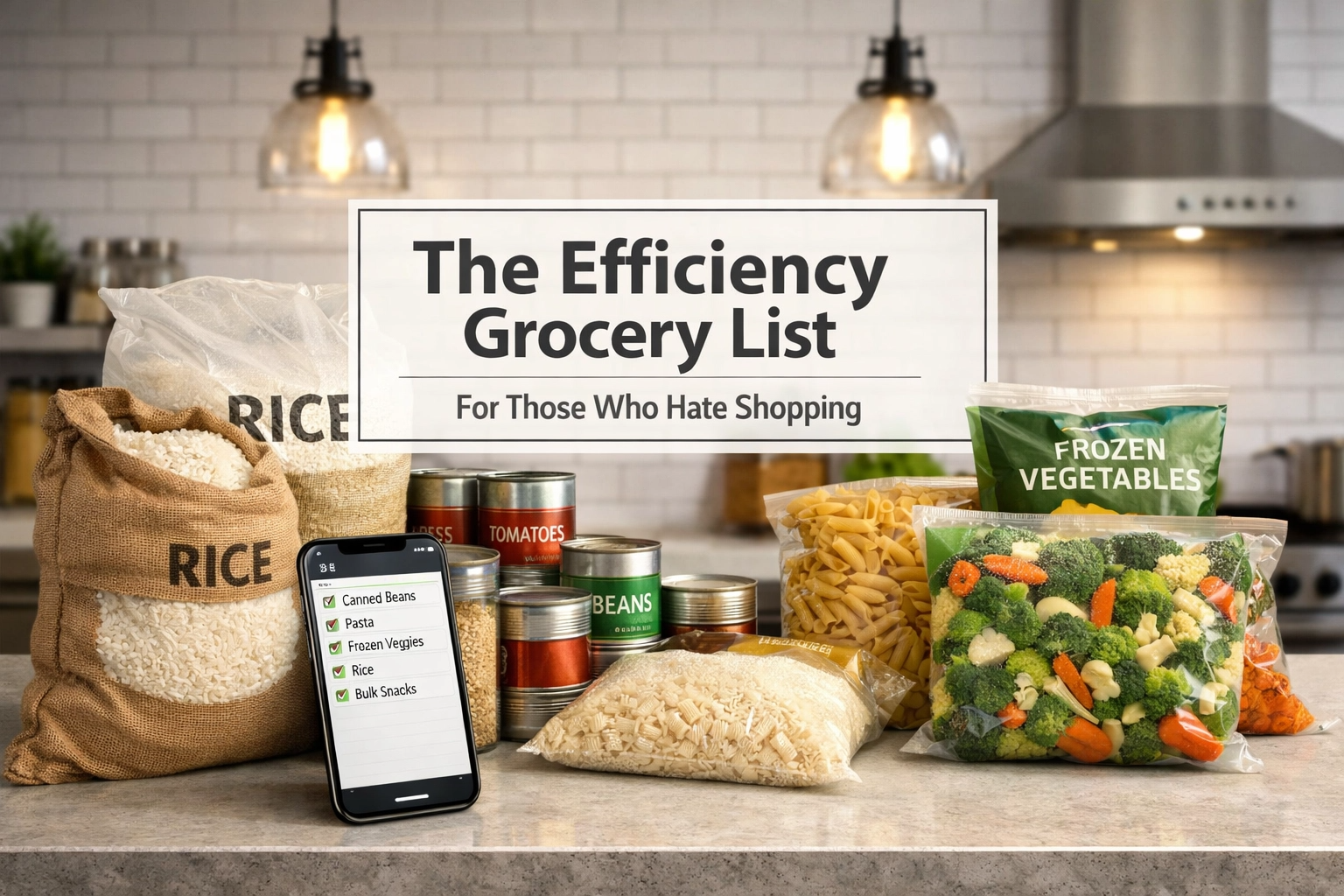
This guide outlines a comprehensive, systems-based framework for minimising time spent in-store while maintaining a nutritious and versatile kitchen inventory. The shift is simple: from reactive shopping to a proactive, predictable strategy that respects your time.
The “Capsule” Grocery List
Borrowing from the concept of a capsule wardrobe, a capsule grocery list focuses on a curated selection of versatile, high-utility items that combine into numerous meals. By limiting base ingredient variety, you reduce decision fatigue and simplify the entire shopping process.
The goal is a pantry-first mindset — the majority of meal components are shelf-stable or long-lasting, requiring only minimal fresh additions on each trip.
| Category | Essential Items | Rationale |
|---|---|---|
| 🌾 Primary Grains | Brown rice, Quinoa, Whole-wheat pasta, Oats | High shelf-life; serves as a neutral base for diverse cuisines |
| 🥚 Stable Proteins | Eggs, Canned chickpeas & black beans, Canned tuna/salmon, Lentils | Long-lasting; minimal preparation; high nutritional density |
| 🥕 Long-Life Produce | Potatoes, Onions, Garlic, Carrots, Cabbage, Apples | Remain fresh for weeks if stored correctly — reduces trip frequency |
| ❄️ Frozen Essentials | Spinach, Mixed berries, Broccoli florets, Peas | Retains nutritional value; eliminates spoilage risk and food waste |
| 🫙 Flavour Boosters | Olive oil, Soy sauce, Dijon mustard, Dried herbs, Lemons | Transforms basic ingredients into varied flavour profiles without extra shopping |
Strategic Frequency Reduction: The Fortnightly Shop
The most effective way to spend less time shopping is to shop less often. Transitioning from weekly to fortnightly requires a strategic rotation of ingredients based on perishability — not buying more food, but buying food that lasts longer.
- Leafy greens (spinach, kale, salad leaves)
- Berries and soft fruits
- Fresh fish and seafood
- Soft breads and baked goods
- Fresh herbs and tender vegetables
- Root vegetables (potatoes, carrots, onions)
- Frozen vegetables from the capsule list
- Canned proteins (beans, tuna, salmon)
- Eggs and hard cheeses
- Whole grains and pantry-stable staples
Hacking the Store Layout: The Perimeter-First Protocol
Grocery stores are designed using “racetrack” layouts intended to maximise the time you spend in-store. The efficient shopper must employ a targeted navigation strategy to counteract this by design.
-
The Perimeter Sweep — Most essential, unprocessed foods (produce, dairy, meat) are located on the store’s perimeter. Complete the perimeter first and you secure approximately 80% of your needs before entering the aisles.
-
Aisle-Specific Lists — Organise your digital or physical list according to the specific layout of your primary store. This eliminates backtracking, which is the leading cause of time waste during shopping trips.
-
Off-Peak Execution — Shopping during “dead zones” — typically Tuesday or Wednesday evenings, or very early on weekend mornings — can reduce total shopping time by up to 30% due to decreased foot traffic and shorter checkout queues.
Leveraging Technology: Pickup vs. Delivery
For those whose aversion to the physical store environment is insurmountable, the modern digital landscape offers two primary solutions. Here’s how they compare:
| Feature | 🚗 Grocery Pickup | 🚚 Home Delivery |
|---|---|---|
| 💰 Cost | Usually free or low-cost ($0–$5) Budget-Friendly | Higher fees plus gratuity ($10–$20+) Higher Cost |
| ⏱️ Time Saved | High — eliminates in-store time entirely | Maximum — eliminates travel and in-store time |
| 🎯 Control | You can still inspect items at the car before driving away | Minimal control over item selection and substitutions |
| 👤 Best For | Budget-conscious efficiency seekers who want flexibility | Individuals with severe time constraints or mobility issues |
Grocery shopping need not be an emotional or temporal drain. By adopting a capsule grocery list, extending the shopping cycle to a fortnightly rhythm, and using store navigation strategies or digital services, the reluctant shopper can transform a chaotic chore into a streamlined, predictable system.
The ultimate goal is simple: spend less time in the aisles, and more time enjoying the meals that come from a well-managed kitchen.