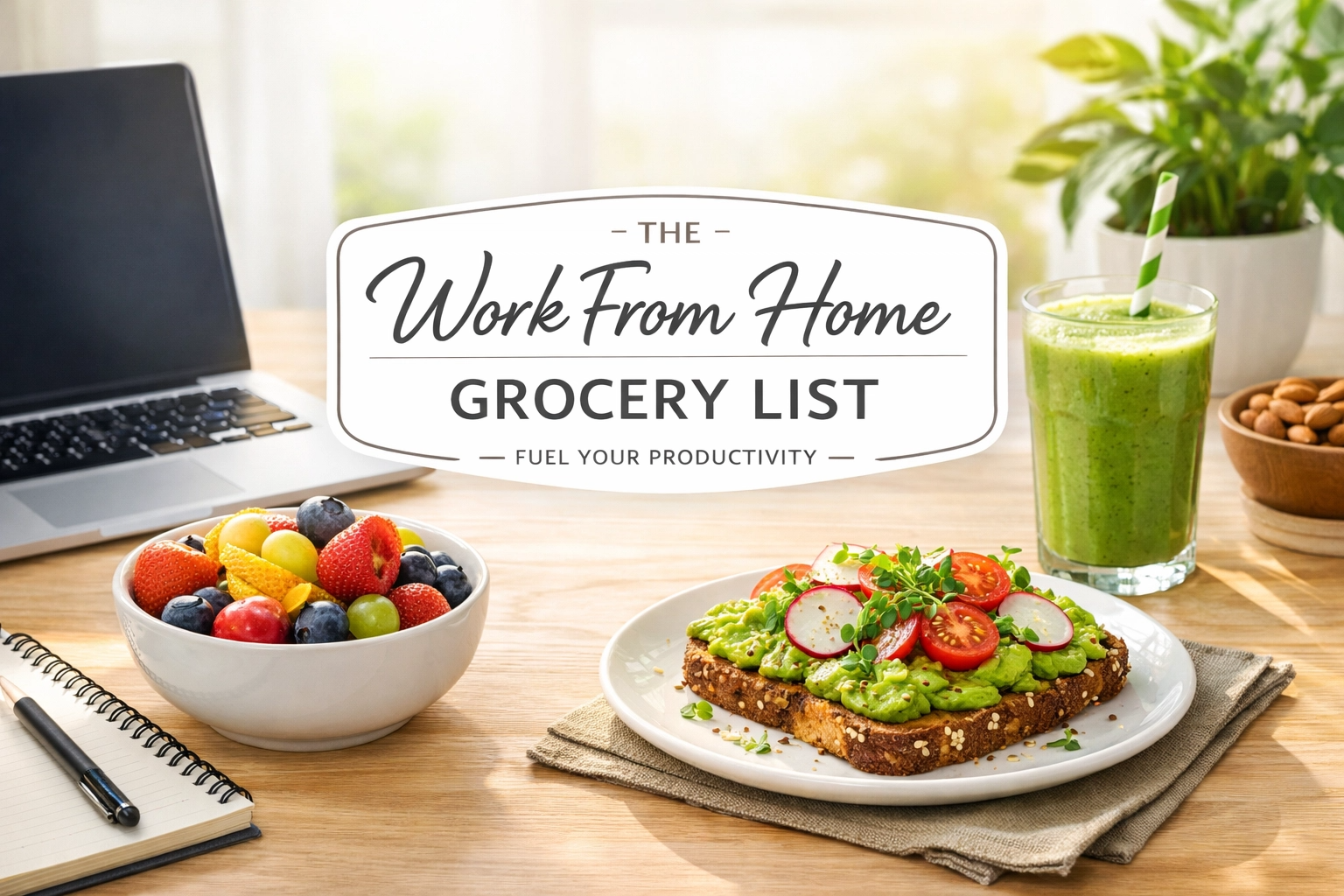
Your kitchen is either your greatest WFH asset or your biggest distraction. The difference comes down entirely to what’s in it and how it’s organised.
Why What You Eat Matters for Remote Work
Your brain consumes about 20% of your body’s total calories. The cognitive demands of deep focus, virtual meetings, and problem-solving require a steady supply of high-quality fuel — not spikes and crashes.
High-GI foods cause a blood sugar spike then a crash — leading to brain fog. Low-GI complex carbs (oats, quinoa, sweet potato) provide a steady release that keeps you sharp all afternoon.
60% of your brain is fat — much of it Omega-3 fatty acids. Essential for brain cell structure and reducing inflammation. Found in salmon, walnuts, chia seeds, and flaxseeds.
Even mild dehydration (1–2% body water loss) impairs concentration and short-term memory. Keep a 32oz bottle at your desk and aim to refill it once during working hours.
The Master WFH Grocery List
Categorised for store efficiency — a balanced mix of fresh produce, lean proteins, and long-lasting pantry staples, every item chosen to support cognitive performance and satiety across a full work week.
- Chicken breast
- Ground turkey
- Lean beef
- Fresh or frozen salmon
- Shrimp
- Canned tuna — great for quick lunches
- Canned sardines — highest omega-3 per dollar
- Firm tofu
- Tempeh
- Canned chickpeas
- Black beans
- Dry lentils
- Large eggs — the ultimate WFH “fast food”
- Plain Greek yogurt
- Cottage cheese
- Quinoa
- Brown rice
- Farro
- Whole-wheat pasta
- Raw almonds
- Walnuts
- Pumpkin seeds (pepitas)
- Chia seeds
- Extra virgin olive oil
- Avocado oil
- Balsamic vinegar
- Apple cider vinegar
- Diced tomatoes
- Coconut milk
- Vegetable or chicken broth
- Hummus
- Pesto
- Dijon mustard
Meal Prep Strategies for the Busy Remote Worker
Back-to-back meetings often leave only 15–20 minutes for a lunch break. Meal prep is the difference between a productive afternoon and a foggy one.
-
1The “Component” Prep Method — Prep ingredients, not full meals. Sunday: roast a tray of mixed veg, cook a pot of quinoa, grill 3–4 chicken breasts or tofu blocks. Monday = Mediterranean bowl. Tuesday = same ingredients in a wrap with hummus. Wednesday = over greens for a salad. One cook, three different meals.
-
2The “Double-Batch” Dinner Rule — Whenever you cook dinner, double the recipe. Making chili, stir-fry, or pasta? Always make enough for at least two lunches. Cook once, eat twice — the most efficient WFH lunch strategy available.
-
3The “Assembly” Lunch — Keep zero-cook ingredients on hand for days when prep runs out. Whole-grain crackers + a few slices of turkey or cheese + almonds + grapes + pre-cut cucumber. Balanced, satisfying, assembled in 3 minutes.
15-Minute WFH Lunches & One-Pan Dinners
Designed for speed without sacrificing nutrition — every recipe uses items from the master grocery list above.
Quick Lunches
Why it works: High protein, healthy fats, zero cooking required.
Why it works: Uses prepped components for a warm, satisfying meal in under 2 minutes.
Why it works: A café-style lunch that feels like a treat — minimal effort, maximum satisfaction.
Why it works: High protein, high fibre, excellent for leftovers.
One-Pan Dinners
Why it works: One pan to clean, high in omega-3s, under 20 minutes.
Why it works: Pure pantry staples, one pot, done in 15 mins.
Avoiding the “Sugar Crash” — The Smart Snack List
The key to WFH snacking is the Fibre + Protein + Healthy Fat trio. This combination ensures a slow release of energy and keeps you full until your next meal.
| Snack | Why It’s a Winner | Prep Time |
|---|---|---|
| Apple slices + almond butter | Fibre from the apple, protein and fat from nut butter | 2 mins |
| Greek yogurt + berries + chia seeds | High protein and antioxidants — very satisfying | 1 min |
| Hard-boiled eggs + everything bagel seasoning | Pure protein; prep a batch of 6 at the start of the week | 0 mins (if prepped) |
| Hummus + bell pepper strips | Crunchy, hydrating, full of fibre | 3 mins |
| Cottage cheese + pineapple | High protein with a touch of natural sweetness | 1 min |
| Roasted chickpeas | A crunchy, savoury alternative to crisps with more fibre | 0 mins (store-bought) |
The WFH Kitchen Setup — Organising for Efficiency
A well-organised kitchen is just as important as a well-organised desk. These three changes make the healthy choice the default rather than the effort.
-
1The “Grab-and-Go” Snack Station — Dedicate one shelf in your pantry and one drawer in your fridge exclusively to pre-portioned healthy snacks. When you’re between meetings and hungry, you reach for what’s easiest — make easy mean healthy.
-
2The “Clear Container” Rule — Store all prepped components in clear glass containers at eye level in the fridge. Visible food gets eaten. Hidden food gets wasted. Simple as that.
-
3The “Hydration Station” — Keep your water bottle, tea bags, and coffee supplies in one central location on the counter. A 32oz bottle at your desk, filled at the start and refilled once during the day, covers your working hours.
Mastering your work-from-home grocery list isn’t just about eating well — it’s about setting yourself up for professional success. By fuelling your brain with the right nutrients, managing energy through smart snacking, and simplifying meal prep, you eliminate the daily “what’s for lunch?” decision and redirect that energy to your work.
Start small. Choose two or three items from the master grocery list this week, try one new meal prep strategy, and notice how your energy levels shift. Your kitchen is your most powerful tool for a productive WFH life — use it wisely.