
Nutrition · Gut Health · Grocery Guide
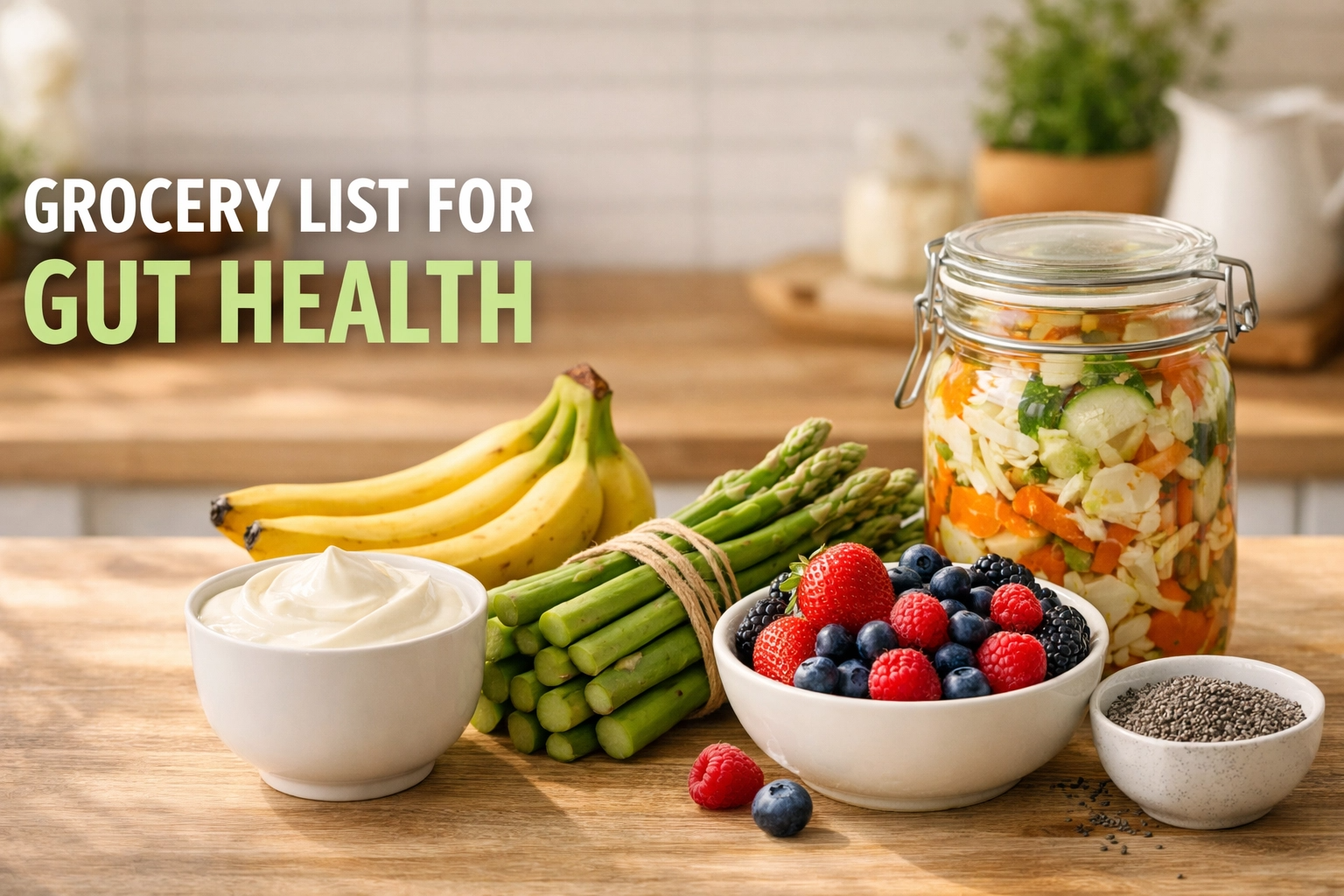
Grocery List for Gut Health
A complete, science-backed shopping guide built around the four pillars of a diverse, resilient microbiome.
“Every meal is an opportunity to either foster a diverse, resilient microbiome or promote inflammatory, opportunistic species. This guide gives you a complete framework for feeding your gut — built around four evidence-based pillars.”
The Science
Why Your Microbiome Matters
High microbial diversity is the primary marker of a healthy gut — linked to immunity, metabolism, and mental health
70–80%
of the body’s immune cells are located in the gut — your microbiome literally trains your immune system
90%+
of the body’s serotonin is produced by gut microbes — directly impacting mood, sleep, and appetite
30
different plant foods per week is the strongest predictor of microbial diversity — the “30 Plants Challenge”
Beneficial bacteria ferment dietary fibres into Short-Chain Fatty Acids (SCFAs) — the primary energy source for the cells lining the colon. These maintain the integrity of the gut barrier, preventing toxins from leaking into the bloodstream. When the microbiome falls out of balance (dysbiosis), the immune system becomes hyper-reactive, contributing to autoimmune conditions and chronic inflammation.
The Foundation
The Four Pillars of Gut-Healthy Eating
Understanding each pillar helps you make smarter choices in every aisle
Pillar 1 — Probiotics
Live microorganisms that suppress harmful pathogens, reinforce the gut barrier, and modulate immune response. Found in fermented foods. Look for “live and active cultures” on labels.
Pillar 2 — Prebiotics
Indigestible fibres that fuel beneficial bacteria. They pass through the small intestine unchanged, then get fermented in the large intestine — stimulating Bifidobacteria and Lactobacilli growth.
Pillar 3 — Fibre
The primary substrate for the gut microbiome. Most adults consume less than half the recommended 25–38g per day. This “fibre gap” is a major driver of declining microbial diversity.
Pillar 4 — Polyphenols
Bioactive plant compounds that act as antioxidants. 90–95% travel to the large intestine where gut bacteria metabolise them — and in return, polyphenols act as selective prebiotics.
The Shopping List
Complete Gut Health Grocery List
Every item chosen for its direct, evidence-backed contribution to one or more pillars — tap to tick off as you shop
Probiotic Foods
Pillar 1
Cultured Dairy
- Plain yogurt (live & active cultures)
- Greek yogurt — plain, full-fat
- Kefir — drinkable fermented milk
- Aged cheeses (cheddar, gouda, parmesan)
Fermented Foods
- Sauerkraut — refrigerated, unpasteurised
- Kimchi — Korean fermented cabbage
- Naturally fermented pickles (not vinegar)
- Miso paste
- Tempeh
- Kombucha (low-sugar varieties)
Prebiotic Foods
Pillar 2
Alliums & Roots
- Garlic (raw provides most benefit)
- Onions — yellow, red, white
- Leeks
- Jerusalem artichoke (highest inulin)
- Chicory root
Fruits, Grains & Veg
- Under-ripe bananas (resistant starch)
- Asparagus
- Oats (beta-glucan)
- Barley (highest beta-glucan of all grains)
- Apples (pectin)
High-Fibre Foods
Pillar 3 — aim for 25–38g per day
Legumes
- Lentils
- Black beans
- Chickpeas
- Split peas
- Kidney beans
- Edamame
Whole Grains
- Rolled oats
- Barley
- Brown rice
- Quinoa
- Whole wheat bread
- Rye bread
Vegetables
- Broccoli
- Brussels sprouts
- Artichokes
- Sweet potatoes
- Carrots
- Kale & spinach
Fruits
- Apples (with skin)
- Pears (with skin)
- Raspberries
- Avocado
- Figs
- Prunes
Seeds
- Chia seeds
- Flaxseeds (ground)
- Psyllium husk
- Hemp seeds
- Sunflower seeds
Polyphenol-Rich Foods
Pillar 4 — eat the rainbow
Purple & Blue
- Blueberries
- Blackberries
- Red grapes
- Red cabbage
- Beetroot
- Aubergine
Red
- Strawberries
- Raspberries
- Tomatoes
- Pomegranate
- Cherries
Green
- Green tea
- Matcha
- Kale
- Spinach
- Broccoli
- Apples
Dark & Brown
- Dark chocolate (70%+)
- Extra virgin olive oil
- Coffee
- Walnuts
- Almonds
- Pecans
Herbs & Spices
- Turmeric
- Ginger
- Cinnamon
- Cumin
- Oregano
- Rosemary
Important: For probiotics, always buy refrigerated, unpasteurised versions of sauerkraut, kimchi, and pickles. Pasteurised shelf versions have the live cultures destroyed during processing.
The 30 Plants Challenge
How to Hit 30 Different Plants a Week
Research by the American Gut Project found that those who ate 30+ different plant foods per week had significantly more diverse microbiomes than those who ate 10 or fewer
-
1Buy a seed or nut mixA blend of pumpkin, sunflower, and chia seeds instantly counts as three different plants. Sprinkle on yogurt, oats, or salads.
-
2Choose mixed greens over single bagsA “spring mix” includes arugula, radicchio, and kale — three plants for the same price as a single spinach bag.
-
3Rotate your grains weeklyInstead of defaulting to the same grain every night, rotate between quinoa, brown rice, farro, and barley across the week.
-
4Spice it upUsing turmeric, cumin, cilantro, and oregano in your cooking quickly adds to your plant count while delivering polyphenol benefits.
-
5Shop seasonallySeasonal produce is cheaper, tastier, and naturally encourages variety. A farmers’ market visit introduces new plant species each season.
Pro tip: Adding 1 tbsp each of chia seeds, flaxseeds, and pumpkin seeds to your morning yogurt adds three plants, 6–8g of fibre, and a significant dose of omega-3s — in under 30 seconds. One of the highest-impact, lowest-effort habits you can build.
What to Limit
Foods That Harm Gut Health
These promote inflammatory bacterial species and compromise the gut lining — limit or eliminate where possible
Added Sugars
Soda & sweetened drinks
Sweets & candy
Flavoured yogurts (high sugar)
Breakfast syrups & jams
Ultra-Processed Foods
Chips & crisps
Fast food
Packaged pastries
Most breakfast cereals
Processed deli meats
Artificial Sweeteners
Sucralose
Aspartame
Saccharin
Excessive Red Meat
Bacon & cured meats
Daily red meat consumption
Processed deli & smoked meats
Excess Alcohol
Frequent beer & spirits
Binge drinking episodes
Daily alcohol consumption
Low-Fibre Staples
White bread & white rice
Refined pasta
Pastries & white flour baking
On artificial sweeteners: Despite being calorie-free, sucralose, aspartame, and saccharin have been shown in multiple studies to alter gut microbiome composition and contribute to glucose intolerance. “Sugar-free” does not mean gut-friendly.
Improving your gut health is a lifelong journey — not a quick fix or a temporary diet. By focusing on the four pillars — probiotics, prebiotics, fibre, and polyphenols — and embracing the diversity of the plant kingdom, you can build a resilient microbiome that supports your immune system, enhances your mood, and protects your long-term health. Every bunch of kale, every jar of kimchi, and every bag of lentils is an investment in your well-being. Start small, be consistent, and let your gut microbes do the rest.