Nutrition · Weight Loss · Beginner Guide
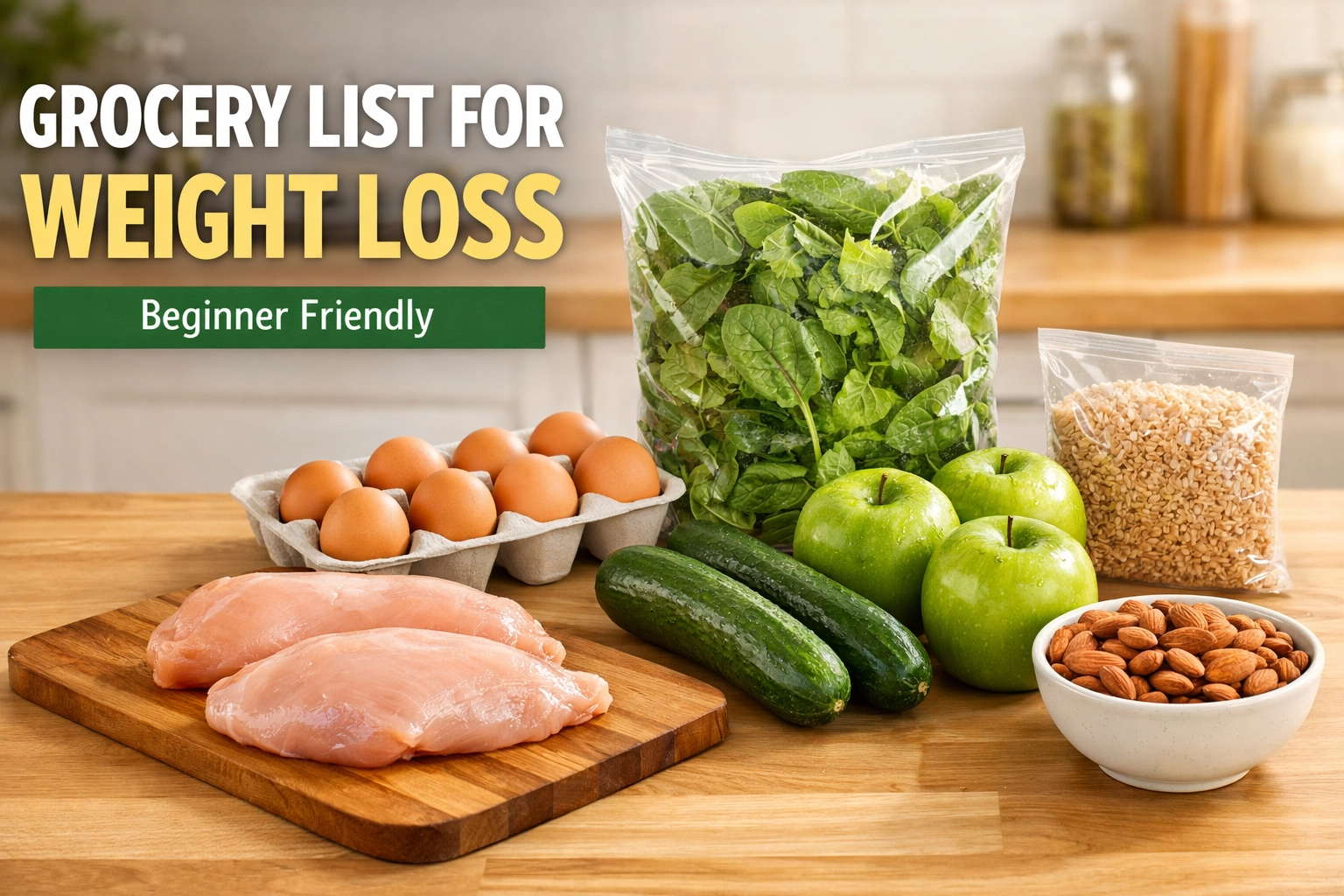
Grocery List for Weight Loss Beginners
Sustainable weight loss starts not in the gym — but with your shopping cart. This complete guide shows you exactly what to buy, what to skip, and how to shop smarter.
“Your grocery cart is not just a basket for food — it’s a tool that can either build a foundation for a healthier you, or quietly sabotage your best intentions. The grocery store is where your diet is truly won or lost — not the dinner table.”
The Science
Why Certain Foods Support Fat Loss
Understanding these three principles explains why the foods on this list work — and why others don’t
Calorie Balance
Weight loss requires a consistent calorie deficit. Calorie density matters — vegetables let you eat large volumes for few calories; processed snacks pack many calories into small servings.
Hunger Control
Willpower alone fails. Sustainable weight loss hinges on satiety — eating foods that keep you full so hunger never derails your progress or your resolve.
The Right Foods
Prioritise high-protein, high-fibre, low calorie-density, and minimally processed foods. These four qualities together make fat loss feel manageable, not miserable.
5 Golden Rules
Principles of a Weight Loss Grocery List
Master these five rules and every shopping trip becomes a step toward your goal
-
1Prioritise whole foodsUnprocessed or minimally processed foods require more digestion, are less calorie-dense, and are packed with essential nutrients. Vegetables, fruits, whole grains, and lean meats are your foundation.
-
2Build every meal around proteinProtein significantly increases satiety, preserves muscle mass during fat loss, and boosts your metabolic rate. Aim for 1.2–1.6g of protein per kg of body weight daily.
-
3Fill half your plate with vegetablesExtremely low in calories, high in fibre, and high in volume. Vegetables make meals more filling and satisfying without adding excess calories.
-
4Choose smart carbohydratesCarbs are not the enemy. Choose slow-digesting complex carbs: oats, brown rice, quinoa, and sweet potatoes for sustained energy and fibre.
-
5Limit ultra-processed foodsEngineered to trigger overeating, these contain excessive added sugar, unhealthy fats, and sodium. Limiting them is the single most impactful dietary change most people can make.
The Shopping List
Complete Weight Loss Grocery List
Every item chosen for calorie efficiency, satiety, and nutritional density — tap to tick off as you shop
Animal ProteinsHigh satiety
Lean Meats & Fish
- Chicken breast (skinless)
- Turkey breast (ground or sliced)
- Lean ground beef (90%+ lean)
- Eggs & egg whites
- Salmon, tuna, cod, tilapia
- Shrimp
Dairy Proteins
- Greek yogurt — plain, non-fat
- Cottage cheese — low-fat
- Skim milk or unsweetened almond milk
- Low-fat cheese (in moderation)
Plant-Based ProteinsProtein + fibre
Legumes & Soy
- Lentils
- Chickpeas
- Black beans & other legumes
- Tofu
- Tempeh
- Edamame
VegetablesLow cal · High fibre · High volume
Leafy Greens
- Spinach
- Kale
- Arugula
- Romaine lettuce
- Mixed greens
Cruciferous
- Broccoli
- Cauliflower
- Brussels sprouts
- Cabbage
High Volume
- Zucchini
- Cucumbers
- Mushrooms
- Bell peppers
- Celery
Root Vegetables
- Carrots
- Beets
- Radishes
FruitsDon’t fear fruit
Best choices (low calorie)
- Strawberries
- Blueberries
- Raspberries
- Watermelon
- Cantaloupe
High fibre
- Apples
- Pears
- Oranges
- Grapefruit
Moderate sugar (mindful portions)
- Bananas
- Mango
- Grapes
Grains & Healthy FatsSustained energy
Whole grains & smart carbs
- Rolled oats / steel-cut oats
- Brown rice
- Quinoa
- Barley
- Whole wheat pasta & bread
- Sweet potatoes
Healthy fats
- Extra virgin olive oil
- Avocados
- Almonds & walnuts
- Chia seeds & flaxseeds
- Natural peanut or almond butter
Healthy SnacksPrevents overeating at main meals
Protein Snacks
- Greek yogurt
- Hard-boiled eggs
- Cottage cheese
- Protein shakes
Fibre Snacks
- Fruit + small handful of nuts
- Hummus + vegetable sticks
- Roasted chickpeas
Convenience Snacks
- Rice cakes with avocado
- Air-popped popcorn
Pantry Essentials
- Canned tuna (in water)
- Mixed frozen berries
- Canned black beans
Quick Start
Simple Beginner Meal Ideas
All built from the grocery list above — no complicated recipes required
Breakfast
Oatmeal with berries and a sprinkle of almonds
Scrambled eggs with spinach and whole-wheat toast
Greek yogurt with mixed berries and chia seeds
Lunch
Large salad with grilled chicken, cucumbers, bell peppers, light vinaigrette
Tuna sandwich on whole-wheat bread with lettuce and tomato
Lentil soup with a side of whole-grain bread
Dinner
Baked salmon with roasted broccoli and sweet potato
Chicken and vegetable stir-fry with brown rice
Turkey and black bean chili with a side salad
Snacks
Apple slices with 1 tbsp almond butter
Greek yogurt with a few berries
Hummus with cucumber and bell pepper sticks
What to Skip
Foods to Avoid or Limit
These categories actively hinder weight loss progress — leave them on the shelf
Sugary Drinks
Soda
Sweetened coffee & tea
Energy drinks
Most fruit juices
Ultra-Processed Snacks
Chips & crisps
Candy
Cookies & pastries
Most breakfast cereals
Refined Carbs
White bread
White pasta
Sugary cereals
Fast Food
Burgers & fried foods
Takeaway meals
High-sodium ready meals
Shopping Strategies
How to Shop Smarter
Beyond what to buy — how you shop makes a significant difference to both your diet and your wallet
1
Never shop hungry
An empty stomach makes you far more susceptible to impulse buys and unhealthy choices. Eat first, always.
2
Use a shopping list
Stick strictly to your list to avoid distractions and ensure you only buy what you need for planned meals.
3
Shop the outer aisles first
The perimeter holds fresh produce, lean meats, and dairy. The inner aisles house most processed, packaged goods.
4
Read nutrition labels
Pay attention to serving sizes, calories, sugar content, and fibre. A “healthy” label means nothing without the actual numbers.
5
Buy frozen produce
Just as nutritious as fresh, often cheaper, and longer-lasting. Frozen berries and vegetables are outstanding value.
6
Plan meals before shopping
Ensures you buy ingredients for specific healthy meals rather than making last-minute, unhealthy decisions midweek.
7
Buy bulk grains & legumes
Oats, brown rice, lentils, and beans are cost-effective in larger quantities — the cheapest healthy calories you can buy.
8
Choose store brands
Generic brands offer the same quality as name brands at significantly lower prices for most pantry staples.
Common Mistakes
Pitfalls That Sabotage Beginners
These silent mistakes derail weight loss progress even when everything else seems on track
-
Label Traps
Don’t trust “diet,” “low-fat,” or “light” labels. These products are often highly processed with added sugars or artificial ingredients to compensate for the lack of fat. Always read the actual nutrition label.
-
Snack Overload
Overbuying even healthy snacks leads to mindless grazing and excess calorie consumption throughout the day. Buy only what you need for planned snack occasions.
-
Skipping Protein
Failing to prioritise protein at each meal leads to increased hunger, muscle loss, and slower metabolism during fat loss. The single most common mistake beginners make.
-
Too Much Fruit
Fruit is healthy, but it still contains calories and sugar. Stick to 1–3 servings per day, focusing on berries and high-fibre options like apples and pears.
-
Frozen Meal Reliance
Convenient, but many frozen meals are high in sodium and preservatives. Use sparingly as a backup — not as a regular staple of a weight loss diet.
Pro tip: Your kitchen environment shapes your behaviour more than your willpower does. If unhealthy food is in the house, it will eventually get eaten. If it’s not in the house, it won’t. The grocery store is where your diet is truly won or lost — not the dinner table.
The journey to sustainable weight loss begins with a single decision: taking control of what enters your home. By planning your shopping trips, focusing on whole nutrient-dense foods, and being mindful of common pitfalls, you can transform your kitchen into an environment that actively supports your goals. Every healthy choice at the grocery store is a step toward a healthier, more vibrant life. Start today.