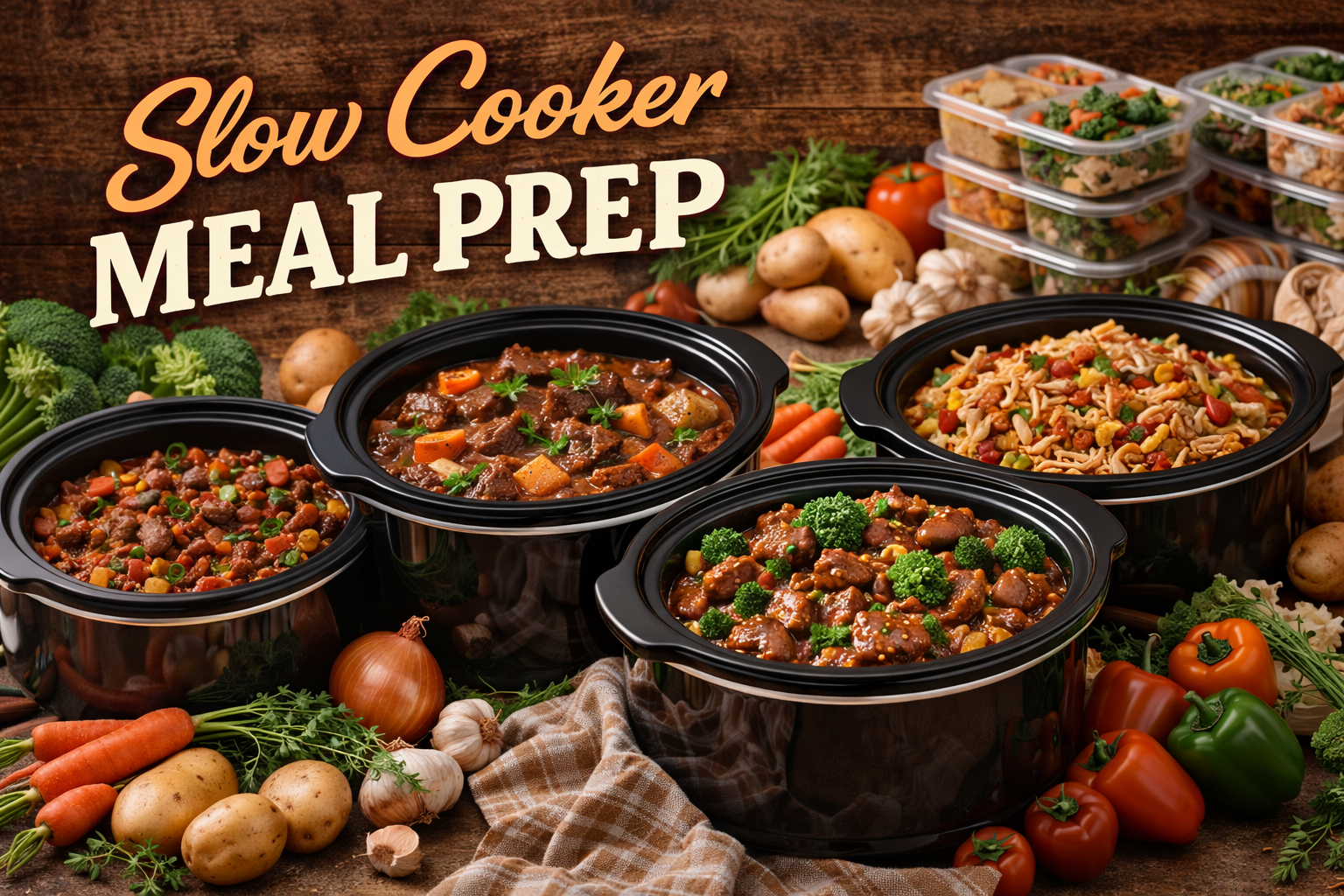
In today’s fast-paced world, finding time for healthy, home-cooked meals can feel like an impossible task. Meal prepping offers a strategic approach to food preparation that saves time, money, and promotes healthier eating habits — and the slow cooker is your secret weapon.
The slow cooker’s ‘set it and forget it’ nature makes it particularly appealing for busy individuals and families looking to streamline their culinary routines without sacrificing flavor or nutrition. By dedicating a few hours on a less hectic day, you can prepare multiple meals that keep you fuelled all week.
This comprehensive guide covers everything you need: the key benefits, essential tools, ingredient selection, step-by-step method, popular recipes, and crucial storage tips. By the end, you’ll be equipped to transform your meal prep routine entirely.
Benefits of meal prepping with a slow cooker
Essential tools for slow cooker meal prep
A good slow cooker is naturally central, but supporting equipment makes the process much smoother. A 6–8 quart model suits most family batch cooking; a smaller 3–4 quart is ideal for single portions or side dishes. Beyond the cooker itself, consider:
Storage containers
Glass or BPA-free plastic containers in a range of sizes let you portion meals efficiently. Look for airtight lids, microwave-safe construction, and stackable shapes to maximise fridge space.
A reliable kitchen scale
Weighing ingredients ensures consistent portioning across batches, which is especially helpful when tracking nutrition. A simple digital scale is inexpensive and invaluable.
Slow cooker liners
Disposable liners drastically cut cleanup time — simply lift out the liner when cooking is done. They’re particularly useful when cooking sticky glazes or tomato-based sauces.
Choosing the right ingredients
Not every ingredient performs equally in a slow cooker. Understanding what works well — and what doesn’t — is key to successful meal prep.
Best proteins for slow cooking
Tougher, collagen-rich cuts thrive in low-and-slow environments. Beef chuck, lamb shoulder, pork belly, and bone-in chicken thighs all become tender and deeply flavoured. Leaner cuts like chicken breast can dry out over extended cook times — add them later in the process or use a shorter cook cycle.
Vegetables and legumes
Root vegetables — carrots, parsnips, sweet potatoes — hold their texture well over long cooks. Softer vegetables like courgette or spinach should be added in the final 30 minutes. Dried beans and lentils are ideal slow cooker additions, absorbing flavour as they cook without becoming mushy.
Storage and reheating tips
Proper storage is as important as cooking itself. Allow cooked food to cool to room temperature (no more than 2 hours) before refrigerating or freezing. Most slow-cooked meals keep well in the fridge for 3–4 days, and in the freezer for up to 3 months.
When reheating, add a small splash of water or broth to prevent drying out. Reheat until piping hot throughout — at least 75°C / 165°F — especially for poultry and pork.