
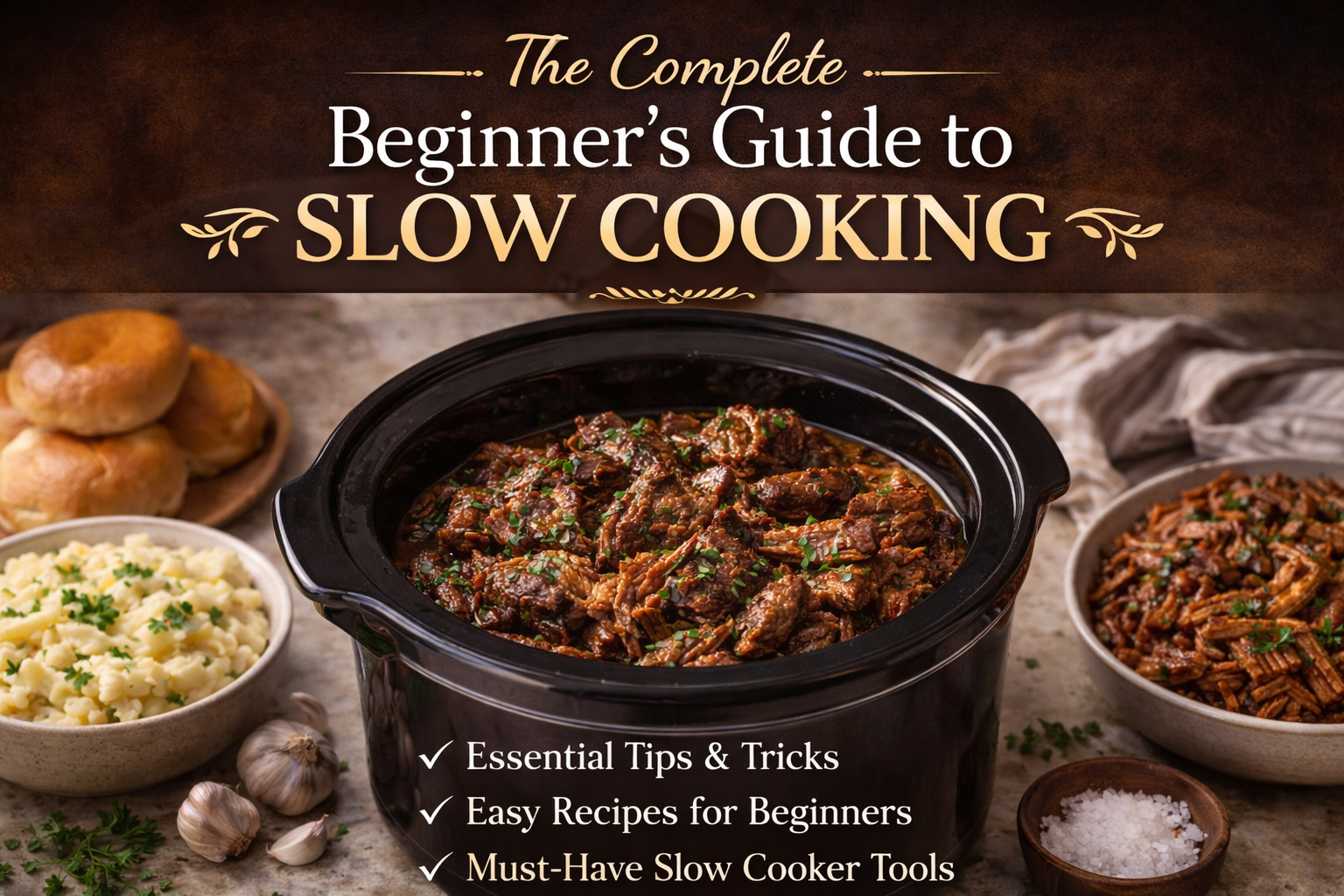
The Complete Beginner’s Guide to Slow Cooking

The Complete Beginner’s Guide to Slow Cooking
Guides & Tips

The Complete Beginner’s Guide to Slow Cooking

March 12, 2026 · 18 views · 10 min read

Introduction

Slow cooking is a culinary technique cherished for generations. It promises flavorful, tender, heartwarming meals with minimal effort — and for those new to the kitchen, the slow cooker is a gateway to building real culinary confidence. This guide walks through everything you need to know, from understanding your appliance to mastering your first recipes.

What is slow cooking?

Slow cooking uses low, consistent heat over a long period to cook food. This gentle process breaks down connective tissues in meat, tenderizes vegetables, and allows flavors to meld in a way that quicker methods simply can’t replicate. The result is a dish that is rich, aromatic, and deeply tender.

Why it’s beginner-friendly

There’s no need to worry about precise timing or constant stirring. Set it and forget it — go about your day while your meal cooks to perfection. The slow cooker is forgiving, scalable, and designed for real life.

Key benefits

Convenience
Prep in the morning, eat in the evening. A time-saving solution for hectic schedules.
💰
Budget-friendly
Tenderizes tough, inexpensive cuts of meat — turning cheap into spectacular.
🌿
Deep flavor
Long, slow cooking lets flavors deepen and meld in ways faster methods can’t achieve.
👀
Minimal supervision
Once set, it runs itself. No stirring, no watching — just results.

Understanding your slow cooker

Parts of a slow cooker

1
Base (heating element)
The outer casing housing the electrical element. Generates and maintains steady, low heat around the insert.
2
Removable insert (crock)
Ceramic or stoneware bowl that holds the food. Removable for easy cleaning; can often go straight to the table.
3
Lid
Glass lid that traps heat and moisture. Keeps food from drying out and builds the flavored cooking liquid.

Temperature settings

Setting Temperature Typical cook time Best for
Low ~200°F / 93°C 6–10 hours Tough cuts, stews, overnight meals
High ~300°F / 149°C 3–5 hours Quicker meals, soups, tender cuts
Warm ~165°F / 74°C Indefinite hold Keeping food at serving temperature
Rule of thumb 1 hour on High ≈ 2 to 2.5 hours on Low. But always follow your specific recipe — cooking times vary by ingredient and slow cooker model.

Manual vs. programmable models

Manual models are simple dials (Off / Low / High / Warm) — reliable, affordable, and easy to use. Programmable models have digital timers that automatically switch to Warm when the cooking time is complete, ideal for days when you’re away from home for unpredictable hours.

Which size should you buy?

2–3 qt
1–2 people
Ideal for individuals, couples, or preparing side dishes.
4–6 qt
Families of 3–5
The most versatile size. Suits most standard recipes perfectly.
7+ qt
Batch cooking / entertaining
Perfect for large families, meal prep, or cooking for a crowd.

Essential tools & pantry staples

Must-have tools

Measuring cups & spoons
For accurately portioning liquids, spices, and dry ingredients.
Tongs
For handling and transferring meat, especially when searing before slow cooking.
Ladle
Indispensable for serving soups, stews, and chilis cleanly.
Meat thermometer
Ensures meat reaches a safe internal temperature — essential for food safety.
Cutting board & sharp knife
For prepping all your vegetables and trimming meat before they go in.

Pantry staples to always have on hand

Chicken / beef / veg broth Canned tomatoes Canned beans & lentils Rice & grains Garlic powder Onion powder Paprika & smoked paprika Cumin Oregano & thyme Bay leaves Onion, garlic, carrots, celery

Choosing the right ingredients

Best cuts of meat for slow cooking

Slow cooking excels at transforming tough, collagen-rich cuts — those from heavily worked muscles — into deeply tender and flavorful dishes. These cuts are also typically the most affordable.

Chuck roast (beef) Pork shoulder / Boston butt Chicken thighs Lamb shoulder Beef short ribs Brisket

When to add different ingredients

Add at the start Add in the last 30–60 min Add at the very end
Root vegetables (potatoes, carrots, parsnips, turnips) Softer veg (peas, corn, spinach, bell peppers) Fresh herbs (parsley, cilantro, basil)
Dried herbs and spices Seafood (fish, shellfish) Dairy (cream, sour cream, cheese)
Meat, onions, garlic, aromatics Quick-cooking grains (pasta, white rice) Delicate extracts (vanilla, peppermint)

Basic slow cooking techniques

Layering ingredients correctly

1
Hearty vegetables first
Place root vegetables like potatoes, carrots, and onions at the bottom. They take longest to cook and benefit most from being closest to the heat source.
2
Meat on top
Place your chosen cut of meat on top of the vegetables. Its juices drip down to flavor the veg below, and it cooks more evenly away from direct bottom heat.
3
Liquids and sauces last
Pour your broth or sauce over everything. Aim to cover about half to two-thirds of the ingredients — avoid overfilling. The food releases its own moisture as it cooks.
4
Seasonings throughout
Add dried herbs and spices at the beginning. Reserve fresh herbs and dairy for the final stage of cooking to preserve their brightness and prevent curdling.
Browning tip While not strictly necessary, searing meat in a hot pan for 2–3 minutes per side before adding it to the slow cooker significantly deepens flavor through the Maillard reaction. It’s worth the extra step for stews and pot roasts.
Don’t lift the lid Every time you remove the lid, the slow cooker loses heat and steam — adding 20–30 minutes to your cooking time. Trust the process and keep it closed.

Common beginner mistakes to avoid

Adding too much liquid
The slow cooker retains moisture — food releases liquid as it cooks. Use far less liquid than you would in a stovetop recipe.
Overfilling the crock
Fill no more than two-thirds full. Overfilling prevents even cooking and can cause liquids to bubble up and overflow.
Using the wrong cut of meat
Lean cuts like chicken breast or pork loin dry out. Always choose fattier, collagen-rich cuts for the best results.
Adding dairy too early
Milk, cream, and cheese curdle under prolonged heat. Stir them in only in the final 30 minutes or after turning off the cooker.
Lifting the lid too often
Each peek extends cook time by 20–30 minutes. Unless the recipe specifically instructs you to stir, leave it alone.
Not tasting before serving
Long cooking can mellow salt and spice. Always taste and adjust seasoning — especially salt — just before serving.

Your first slow cooker recipes

Start simple and build confidence. These are the ideal beginner dishes — forgiving, hard to over-cook, and consistently impressive:

Beef stew Pulled pork Chicken soup Chili Pot roast Lentil soup Butter chicken BBQ ribs
Final thought The slow cooker rewards patience above all else. Give it time, resist the urge to peek, and trust the process — the result will consistently exceed what any quicker method could achieve.