
At a Glance
Pork · Southern · Slow CookerIntroduction
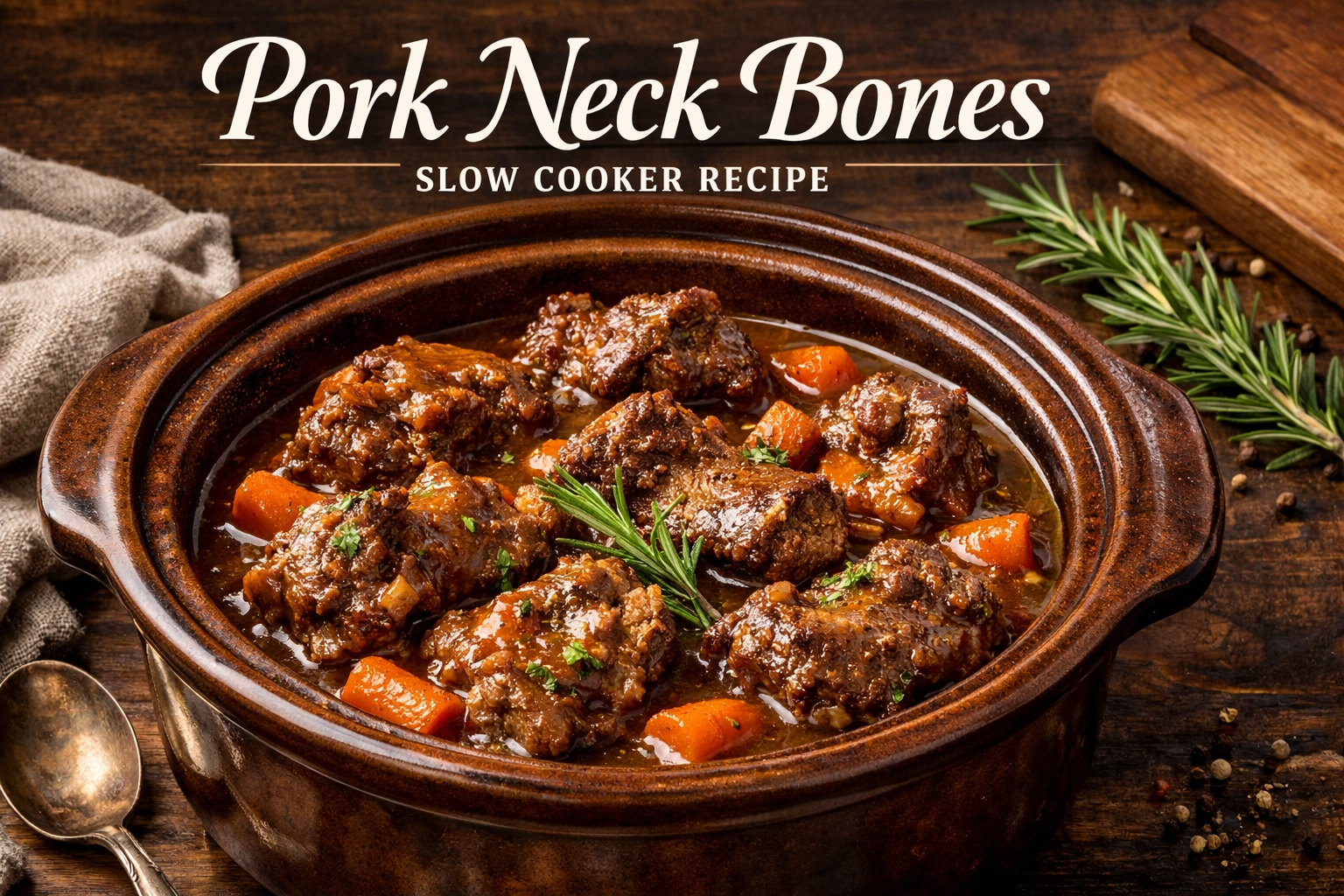
Pork neck bones, often overlooked, are a culinary gem renowned for their rich flavor and incredible tenderness when cooked properly. This humble cut, typically more affordable than prime cuts, is packed with collagen and connective tissue which — through the magic of slow cooking — transforms into a succulent, fall-off-the-bone experience. Far from being tough or undesirable, neck bones offer a depth of flavor that is unparalleled, making them a favorite in many traditional cuisines worldwide.
Slow cooking is not just a method; it’s an art form when it comes to cuts like pork neck bones. The prolonged, gentle heat breaks down the tough fibers and collagen, rendering the meat unbelievably tender and infusing the entire dish with a profound, savory essence. This set-it-and-forget-it approach yields gourmet results with minimal effort — perfect for busy weeknights or leisurely weekend meals.
This recipe is designed for those who cherish hearty, soul-warming meals and appreciate the value of transforming simple ingredients into something extraordinary. Whether you’re a seasoned home cook or someone seeking budget-friendly yet intensely flavorful options, these slow cooker pork neck bones are sure to become a staple in your repertoire.
Why You’ll Love This Recipe
- Fall-Off-The-Bone Tender Meat The slow cooking process ensures the pork neck bones reach an unparalleled level of tenderness. The meat literally slides off the bone with the slightest touch, making every bite a melt-in-your-mouth delight.
- Budget-Friendly Ingredients Pork neck bones are significantly more affordable than many other cuts, allowing you to create a luxurious, flavor-packed meal without breaking the bank. Proof that delicious food doesn’t have to be expensive.
- Minimal Prep, Hands-Off Cooking After a brief initial preparation, your slow cooker does all the heavy lifting — freeing up your time to focus on other tasks or simply relax while dinner simmers to perfection.
- Rich, Savory Gravy As the neck bones cook down, they release collagen and natural juices that combine with the broth and seasonings to create an incredibly rich gravy — perfect for spooning over mashed potatoes, rice, or cornbread.
- Perfect for Meal Prep & Leftovers This dish tastes even better the next day as the flavors meld and deepen. The generous yield makes it ideal for feeding a crowd or ensuring satisfying leftovers throughout the week.
Ingredients
Main Ingredients
- Pork Neck Bones — 3–4 lbs, meaty with connective tissue
- Onion — 1 large, sliced
- Garlic — 4–6 cloves, minced
- Chicken or Beef Broth — 4–6 cups, low-sodium
Seasonings
- Salt & Black Pepper — to taste
- Smoked Paprika — 1–2 tbsp (key ingredient)
- Thyme or Italian Seasoning — 1–2 tsp dried
- Bay Leaves — 2–3
- Cajun Seasoning — 1–2 tsp (optional, for heat)
Optional Vegetables
- Potatoes — 1–2 lbs, peeled and chunked (Russet or Yukon Gold)
- Carrots — 2–3 medium, cut into 1-inch pieces
Optional Finishing
- Apple cider vinegar or red wine vinegar — 1–2 tbsp (brightens flavor)
- Cornstarch — 2 tbsp (for gravy thickening)
Prep Tips
-
Rinse and Pat Dry: Rinse the pork neck bones under cold water to remove any bone fragments or impurities, then pat thoroughly dry with paper towels. Excess moisture prevents the seasoning from adhering properly and hinders a good sear if browning.
-
Optional: Brown for Extra Flavor: Searing the neck bones in a hot pan creates a rich, caramelized crust through the Maillard reaction, adding incredible depth and complexity to the final dish and gravy. While not strictly necessary for tenderness, it is highly recommended when time allows.
-
Chop Vegetables Evenly: Cut potatoes and carrots into uniform, large chunks. This promotes even cooking and prevents some pieces from becoming mushy while others remain undercooked. Larger pieces also hold up better during the long slow cook without disintegrating.
How to Make It
-
1
Season the Meat
Place the rinsed and pat-dried pork neck bones in a large bowl. Generously season with salt, black pepper, smoked paprika, and thyme (or Italian seasoning). Add Cajun seasoning if using. Use your hands to ensure every piece is well-coated. Don’t be shy — pork neck bones can handle bold flavors.
-
2
Optional Browning
Heat a large skillet over medium-high heat with a tablespoon of oil. Sear the seasoned neck bones in batches — don’t overcrowd — for 3–5 minutes per side until beautifully browned. Remove and set aside. This creates a fond at the bottom of the pan that contributes immense flavor to your gravy.
-
3
Layer in the Slow Cooker
Place the sliced onions and minced garlic at the bottom of your slow cooker. If using potatoes and carrots, add them next, spreading evenly. Arrange the seasoned (and optionally browned) pork neck bones on top. Tuck the bay leaves in among the pork and vegetables.
-
4
Add Liquid
Pour the chicken or beef broth over everything, ensuring the liquid partially covers the pork and vegetables. You want enough to create a rich gravy without the dish becoming watery — typically 4–6 cups will suffice depending on your slow cooker size.
-
5
Slow Cook
Cover and cook on Low for 6–8 hours for maximum tenderness and deeply developed flavor — ideal if you start it in the morning. Or cook on High for 3–4 hours if time is shorter. The pork is ready when it is incredibly tender and pulls away from the bone easily with a fork.
-
6
Finish & Serve
Remove and discard the bay leaves. The meat should be falling off the bone — shred some into the gravy if desired. Skim any excess surface fat with a spoon. Taste the gravy and adjust salt and pepper as needed. If you prefer a thicker gravy, choose one of the methods below.
🥄 Gravy Thickening Options
- Cornstarch Slurry: Whisk 2 tbsp cornstarch with 2 tbsp cold water until smooth. Stir into the hot gravy, cover, and cook on High for 15–30 minutes until thickened.
- Mash Potatoes: Remove a few cooked potato chunks, mash them thoroughly, and stir back into the gravy. The starch naturally thickens the sauce while adding body and flavour.
- Flour Roux: Cook equal parts butter and flour in a small pan until golden, then whisk into the hot gravy on the stovetop until thickened.
What to Serve With It
The timeless pairing. Creamy mashed potatoes are the perfect canvas for the rich savory gravy — every bite is heavenly.
White, brown, or a flavorful pilaf — an excellent neutral base that lets the robust pork and gravy flavors shine through.
A Southern classic. The slightly sweet, crumbly texture contrasts wonderfully with the tender pork and is perfect for gravy dipping.
Braised collard greens bring traditional Southern flair. Their slight bitterness cuts through the richness for a well-rounded plate.
Simple and effective — a good loaf is perfect for mopping up every last drop of that incredible gravy.
Steamed or roasted, these add vibrant colour and a fresh, crisp texture as a lighter counterpoint to the hearty main.
Tips for Best Results
- Don’t skip seasoning — this cut needs bold flavor: Pork neck bones benefit immensely from a robust spice rub. Use a generous amount of salt, pepper, smoked paprika, and herbs. These seasonings penetrate the meat over hours of cooking, building the deep, complex flavor profile essential for this dish.
- Low and slow = best texture: While High works, cooking on Low for 6–8 hours allows collagen and connective tissues to break down gradually and completely. This results in meat that is truly tender, moist, and falls off the bone — a texture that cannot be rushed.
- Add a splash of vinegar for depth: A tablespoon of apple cider or red wine vinegar added to the broth brightens the flavors, cuts through the richness, and adds a subtle tang that provides an extra layer of complexity without making the dish taste sour.
- Skim excess fat before serving: Pork neck bones release a fair amount of fat during cooking. Before serving, carefully skim off visible excess fat from the surface of the gravy for a cleaner, equally flavorful sauce.
- Always taste and adjust at the end: Flavors concentrate and change during slow cooking. A final pinch of salt, fresh black pepper, or a splash of vinegar can make all the difference before serving.
Variations
🍛 Southern Style
Serve over creamy grits or fluffy white rice with a thick, rich gravy. Add a can of diced tomatoes or a splash of hot sauce to the slow cooker. Pair with braised collard greens or black-eyed peas for the full experience.
🌶️ Spicy Version
Increase Cajun seasoning to 1–2 tablespoons. Add a pinch of red chili flakes and a diced jalapeño or serrano pepper with the onions. A dash of hot sauce at the end amplifies the heat further.
🥕 Vegetable-Loaded
Add chopped celery, bell peppers, parsnips, or sweet potatoes. Place harder root vegetables at the start; add softer vegetables like bell peppers 1–2 hours before the end to prevent them becoming too soft.
🥦 Low-Carb Version
Skip the potatoes and add radishes, cauliflower florets, or turnip chunks instead. Serve the pork and gravy over cauliflower rice or mashed cauliflower for a delicious keto-friendly adaptation.
🍖 Smoky BBQ Twist
Add ¼–½ cup of your favourite barbecue sauce and 1 tsp of liquid smoke during the last hour of cooking. Fantastic served with coleslaw and cornbread for a bold, smoky result.
🫘 Bean & Pork Stew
Add a can of drained white beans or black-eyed peas along with the broth for a heartier, protein-rich stew. The beans absorb the rich gravy beautifully over the long cook time.
Storage & Reheating
Refrigerating
Cool completely before transferring to an airtight container. Divide into individual portions for easier reheating throughout the week.
Up to 4 daysFreezing
Transfer cooled pork and gravy into freezer-safe bags, removing as much air as possible to prevent freezer burn. Thaw overnight in the refrigerator before reheating.
Up to 3 monthsReheating
Stovetop (preferred): Medium-low heat with a splash of broth if needed, stirring until heated to 165°F (74°C). Microwave: Medium power, 2–3 minutes, stirring halfway through.
Either methodFrequently Asked Questions
Are pork neck bones tough?
Yes — they are inherently a tough cut, rich in connective tissue and collagen. However, this toughness is precisely what makes them ideal for slow cooking. The long, gentle heat breaks down those tough fibers and collagen, transforming the meat into an incredibly tender, fall-off-the-bone result. They start tough and finish extraordinary.
Do I need to brown them first?
No — the slow cooker will tenderize the meat regardless. However, browning is highly recommended for flavor. Searing creates a rich, caramelized crust through the Maillard reaction that adds significant depth and complexity to the dish and the gravy. If time allows, don’t skip it.
Can I cook from frozen?
It is best to thaw neck bones first for even cooking and optimal results. Cooking large pieces of meat from frozen in a slow cooker can lead to uneven cooking where the outside cooks faster than the inside. If you must cook from frozen, extend the cooking time significantly and verify doneness with a meat thermometer.
How do I thicken the gravy?
There are several reliable methods:
- Cornstarch Slurry: Whisk 1–2 tbsp cornstarch with equal cold water, stir into the hot gravy, and cook on High for 15–30 minutes until thickened.
- Mash Potatoes: Remove a few cooked potato chunks, mash thoroughly, and stir back into the gravy for a rustic, flavorful thickening.
- Flour Roux: Cook equal parts butter and flour on the stovetop until golden, then whisk into the hot gravy until the desired consistency is reached.