
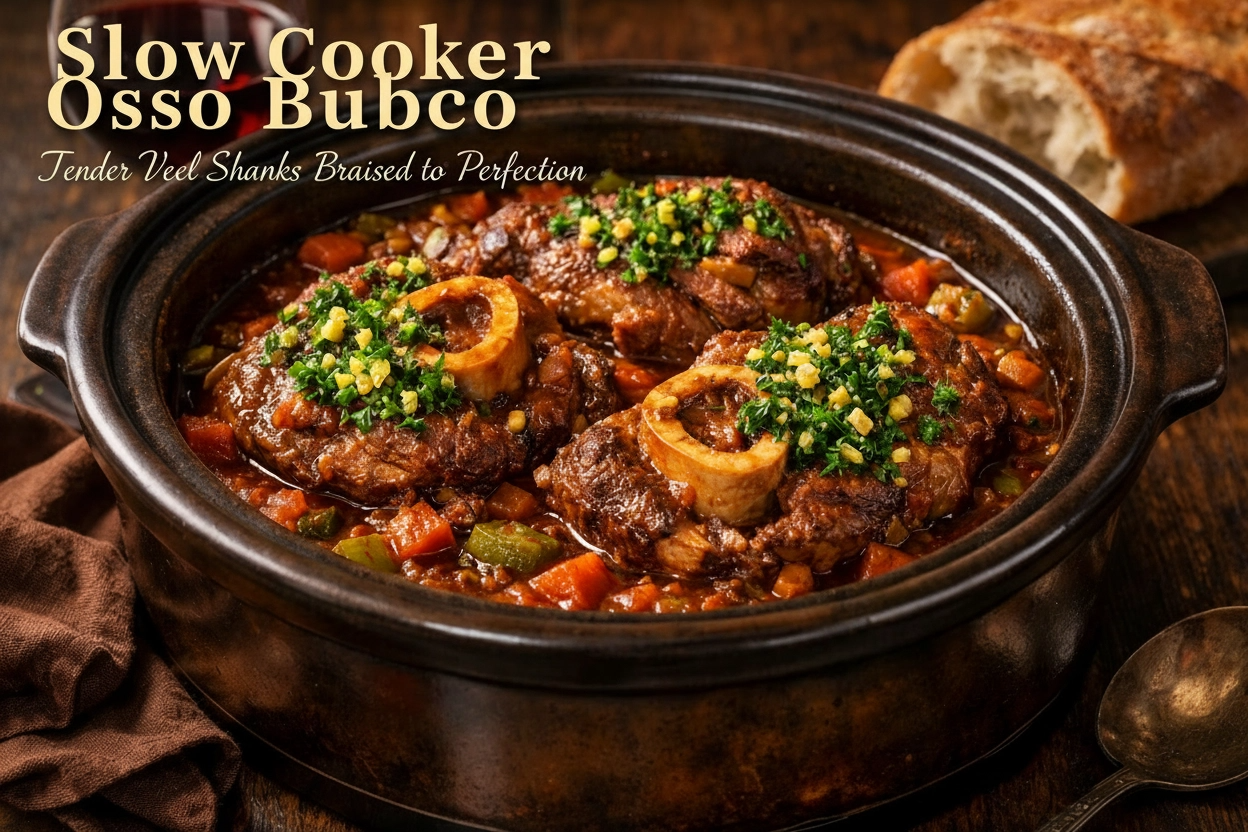
Slow Cooker Osso Bucco
A journey from Milanese tradition to modern comfort
Introduction
Osso Bucco, an iconic dish hailing from the Lombardy region of Italy, translates literally to “bone with a hole” — a poetic nod to the marrow-filled cross-cut veal shanks that are its hallmark. Celebrated for its rich flavors and extraordinary tenderness, this culinary masterpiece has evolved from a regional specialty into a globally cherished comfort food.
While traditionally prepared through slow braising on a stovetop, the slow cooker has revolutionized its preparation — making this once labor-intensive dish accessible to home cooks seeking gourmet results with minimal fuss.
History & Origins
The story of Osso Bucco is deeply intertwined with the culinary heritage of Milan. The earliest versions — known as Ossobuco in Bianco (white Osso Bucco) — were characterised by simplicity and purity of flavor. These traditional preparations eschewed tomatoes, relying instead on white wine, broth, a delicate soffritto of celery, carrots, and onions, and subtle spices such as cinnamon and bay leaf. The dish was finished with gremolata — a vibrant condiment of lemon zest, garlic, and parsley — adding a bright counterpoint to the rich, savory meat.
As culinary traditions evolved and tomatoes became widely available in European cuisine, a “modern” version emerged featuring red wine and crushed tomatoes — a deeper, more robust dish now most commonly recognised outside of Italy. Both versions stand as testaments to the dish’s enduring appeal and adaptability.
Essential Ingredients
| Amount | Ingredient | Notes |
|---|---|---|
| The Meat | ||
| 4–6 pieces | Veal shanks, cross-cut (1.5–2 inches thick) | Beef shanks are an excellent substitute — richer, beefier flavor |
| ½ cup | Plain flour | For dredging — helps browning and thickens sauce |
| To taste | Salt and black pepper | Season the flour generously |
| 2 tbsp | Olive oil or butter | For searing |
| The Soffritto (Aromatic Base) | ||
| 1 large | Yellow onion, finely diced | |
| 2 medium | Carrots, finely diced | |
| 2 stalks | Celery, finely diced | |
| 4 cloves | Garlic, minced | |
| The Braising Liquid | ||
| 1 cup | Dry white wine (Pinot Grigio) or dry red wine | White for in Bianco; red for modern tomato version |
| 1½ cups | Beef or chicken stock (low sodium) | Homemade delivers best results |
| 1 can (14 oz) | Crushed or diced tomatoes | Modern version only — omit for in Bianco |
| 2 tbsp | Tomato paste | Modern version — adds umami depth when browned |
| Herbs & Aromatics | ||
| 2 sprigs | Fresh rosemary | Remove before serving |
| 3 sprigs | Fresh thyme | Remove before serving |
| 2 | Bay leaves | Remove before serving |
| 1 small piece | Cinnamon stick | In Bianco version only — subtle warmth |
| Gremolata (Essential Finish) | ||
| 1 small bunch | Fresh flat-leaf parsley, finely minced | |
| 1 | Lemon, zested | Finely grated — no white pith |
| 1 clove | Garlic, finely minced | Mix all three just before serving |
Meat Selection Guide
- Veal shanks (traditional) — prized for their delicate flavor, gelatinous connective tissue, and coveted bone marrow. Look for pieces 1.5–2 inches thick for a good meat-to-bone ratio.
- Beef shanks (excellent substitute) — more readily available and more affordable. Deliver a robust, beefy flavor and may need 1–2 extra hours in the slow cooker.
- Pork shanks — slightly sweeter, wonderfully tender with long slow cooking. Less traditional but equally delicious.
- Lamb shanks — earthy and deeply flavorful. Work especially well with the red wine and rosemary variation.
Step-by-Step Instructions
- Dredge and sear the shanks. Pat the shanks completely dry — this is critical for a good sear. Season flour generously with salt and pepper. Coat each shank lightly in the flour, shaking off excess. Heat oil in a heavy skillet over high heat until shimmering. Sear each shank for 3–4 minutes per side until deeply golden brown. Work in batches — never crowd the pan. Transfer to the slow cooker.
- Sauté the soffritto. In the same pan with residual fat, cook the diced onion, carrots, and celery over medium heat for 5–6 minutes until softened and lightly caramelised. Add the garlic and tomato paste (if using) for the final 60 seconds, stirring constantly.
- Deglaze — do not skip this. Pour the wine into the hot pan and scrape up all the browned bits from the bottom (the fond). This concentrated flavor must not be left behind. Let it bubble for 1–2 minutes, then pour everything into the slow cooker.
- Build the braise. Add the stock, tomatoes (if using modern version), herbs, and any spices to the slow cooker. Nestle the shanks in, ensuring the liquid reaches approximately two-thirds up the sides. Do not submerge completely — slow cookers retain moisture, so less liquid is needed than stovetop braising.
- Cook low and slow. Cover and cook on the setting below. Do not lift the lid — every peek loses 20–30 minutes. The shanks are ready when the meat is fork-tender and pulling away from the bone.
- Finish and serve. Remove and discard the herb sprigs and bay leaves. Taste the sauce and adjust seasoning. If the sauce is too thin, reduce it on the stovetop or use a cornstarch slurry (see FAQ). Mix the gremolata and sprinkle generously over each serving just before bringing to the table.
| Setting | Time | Notes |
|---|---|---|
| 🔵 LOW | 8–10 hours | Recommended — connective tissue fully breaks down, flavors completely meld |
| 🔴 HIGH | 4–6 hours | Works well; flavors slightly less integrated — check at 4 hours |
The Gremolata — Why It Matters
No Osso Bucco is complete without gremolata. This simple three-ingredient condiment — finely minced fresh parsley, lemon zest, and raw garlic — transforms the dish in the final moment. After hours of rich, slow braising, the brightness of the lemon and the pungency of the raw garlic cut through the fat and richness, lifting the entire plate. Mix it fresh immediately before serving and add it at the table, not during cooking.
Osso Bucco Variations
The beauty of Osso Bucco lies in its versatility. While the core concept remains the same — braised meat shanks — the accompanying ingredients can be tweaked to create a spectrum of flavors, from the delicate traditional Milanese to bold, adventurous interpretations.
🏳️ 1. Classic Milanese — Ossobuco in Bianco
The purest form of Osso Bucco — a testament to Lombardy’s culinary heritage. No tomatoes. The emphasis is entirely on the delicate balance of aromatics, white wine, and the natural richness of the veal.
Slow cooker adaptation: After browning and sautéing the soffritto, deglaze with Pinot Grigio or Sauvignon Blanc. Add chicken stock, fresh rosemary, thyme, and a small cinnamon stick. Cook on low 8–10 hours. Finish with gremolata.
🍅 2. Modern Tomato-Based Osso Bucco
The most popular version outside of Italy — rich, deep red sauce, robust flavors. The tomatoes bring a pleasant acidity and sweetness that complement the savory meat beautifully.
Slow cooker adaptation: Brown meat and soffritto. Deglaze with Chianti or Merlot, then add crushed tomatoes, tomato paste, beef stock, and herbs. Ensure shanks are mostly submerged. Cook low 8–10 hours. Pairs beautifully with creamy polenta or mashed potatoes.
🍷 3. Red Wine & Rosemary Osso Bucco
For those who appreciate a truly robust, aromatic dish — generous red wine and liberal fresh rosemary dominate. A particularly comforting option for colder months.
Slow cooker adaptation: Deglaze with a generous pour of full-bodied red wine. Add beef stock, plenty of fresh rosemary sprigs, and optionally a few juniper berries for deeper flavor. Cook on low for an extended period. Serve with crusty bread to soak up the rich sauce.
🍃 4. White Wine & Mushroom Osso Bucco
An elegant variation combining the delicate acidity of white wine with the earthy umami of mushrooms — sophisticated and flavorful, a delightful alternative to tomato-heavy versions.
Slow cooker adaptation: Sauté sliced mushrooms until golden before adding to the cooker. Use leeks or shallots in the soffritto. Deglaze with white wine, add chicken stock and fresh thyme. Cook on low until tender. A swirl of crème fraîche before serving adds luxurious richness.
🌶 5. Spicy Arrabbiata-Style Osso Bucco
For those who enjoy heat — an arrabbiata-style rendition adds a fiery kick to the traditional flavors. Bold, vibrant, and incredibly satisfying.
Slow cooker adaptation: After browning, add plenty of minced garlic and red pepper flakes to the pan and sauté briefly until fragrant. Deglaze with red wine, add crushed tomatoes and beef stock. Cook on low until tender. Serve with fresh parsley and pasta or crusty bread to mop up the spicy sauce.
Serving Suggestions
🍳 Risotto alla Milanese
The quintessential Milanese pairing — saffron-infused creamy rice whose vibrant yellow hue and earthy sweetness harmonise perfectly with the rich braising sauce.
🍳 Creamy Polenta
Rustic and comforting — cornmeal polenta soaks up the sauce wonderfully. Its slightly grainy texture provides a pleasant contrast to the impossibly tender meat.
🥔 Garlic Mashed Potatoes
Universally loved — a smooth, buttery foundation that complements the robust braising flavors without competing with them.
🍞 Crusty Italian Bread
Essential for two purposes: mopping up every last drop of the extraordinary sauce, and extracting and spreading the rich, buttery bone marrow.
🥗 Green Side Vegetables
Steamed green beans, sautéed spinach, or a light arugula salad — fresh and crisp, offering a palate-cleansing contrast to the hearty main.
🌿 Gremolata
Non-negotiable for authenticity — the lemon zest, parsley, and garlic finish cuts through the richness and lifts the entire plate with a burst of freshness.
Frequently Asked Questions
Can I use frozen shanks for Osso Bucco?
Fresh shanks are always preferred for optimal flavor and texture. If using frozen, thaw completely in the refrigerator before cooking and pat very dry with paper towels — any surface moisture will prevent the sear and produce steam instead of caramelisation.
My sauce is too thin. How do I thicken it?
Slow cookers retain a lot of moisture so a thinner sauce is common. Remove the shanks and whisk 1–2 tbsp cornstarch with equal cold water. Stir the slurry into the hot sauce and cook on HIGH for 15–20 minutes, or transfer the sauce to a saucepan and reduce on the stovetop until it reaches your desired consistency.
Can I make Osso Bucco ahead of time?
Absolutely — and it’s highly recommended. Like most braised dishes, Osso Bucco tastes even better the next day as the flavors deepen and meld further. Cool completely, refrigerate in an airtight container for up to 3–4 days. Reheat gently on the stovetop over low heat.
What if I don’t have wine or prefer not to use alcohol?
For the tomato-based version, substitute red wine with equal amounts of beef broth plus a splash of red wine vinegar or balsamic vinegar. For Ossobuco in Bianco, use chicken or vegetable broth with a squeeze of fresh lemon juice to replicate the acidity of white wine.
How do I get the marrow out of the bone?
After the long cooking time the marrow will be completely soft and easily scoopable. Use a small spoon or butter knife to gently extract it from the center of the bone. Enjoy it spread on warm crusty bread, or stir it directly into the sauce for an extra layer of richness and unctuousness.
Can I freeze leftover Osso Bucco?
Yes — it freezes beautifully for up to 3 months. Cool completely, portion into freezer-safe containers with plenty of sauce surrounding the meat. Thaw overnight in the refrigerator and reheat gently on the stovetop with a splash of stock if needed.
From its humble Milanese origins to your kitchen table — slow cooker Osso Bucco is one of the great rewards of patient cooking. Set it in the morning, come home to something extraordinary, and remember the gremolata.